African leaders at the recently-concluded 39th African Union (AU) Summit hailed China's landmark zero-tariff policy for 53 partner nations as a "win-win situation" that could accelerate continental trade and development.
Chinese President Xi Jinping sent a congratulatory message to the summit, in which Xi announced that China will fully implement zero-tariff treatment for 53 African countries having diplomatic relations with China starting from May 1, 2026. He also highlighted efforts to upgrade the "green channel" for African exports.
The announcement drew strong endorsements from senior AU representatives, who underscored China's role as Africa's largest investor and a critical trade partner.
"China is a very important trading partner to Africa and also a huge investor in Africa, especially critical areas like infrastructure. So we welcome that and I think this will also hopefully encourage other partners of Africa to also introduce zero tariff for African products," said Nuur Mohamud Sheekh, spokesperson for the AU Commission Chairperson.
Other voices at the summit stressed the broader significance of China's engagement with Africa, pointing to its role in infrastructure and the Belt and Road Initiative.
"The Chinese relationship with Africa is very strong and the Chinese presence in the continent on all levels, especially with the Belt and Road Initiative, with the infrastructure development of Africa is making a difference to us on the continent. Having the zero tariff is like a great stride because now if we see what China has announced, together with the AfCFTA (African Continental Free Trade Area), that will make a huge difference for the African development, and this is what we're talking about. It's a win-win situation," said Ambassador Namira Negm, director of the African Migration Observatory.
The 39th Ordinary Session of the Assembly of Heads of State and Government of the African Union (AU) opened Saturday at the AU headquarters in Addis Ababa, the capital of Ethiopia.
During the two-day summit, African leaders focused their discussions on pressing issues including peace and security challenges on the continent, the AU's institutional reforms, participation in the G20, and implementation of Agenda 2063 at an accelerated pace.
In a closing press conference, AU Commission Chairperson Mahmoud Ali Youssouf reiterated a zero-tolerance stance against unconstitutional changes of government and emphasized the AU's commitment to its flagship initiative, "Silencing the Guns."
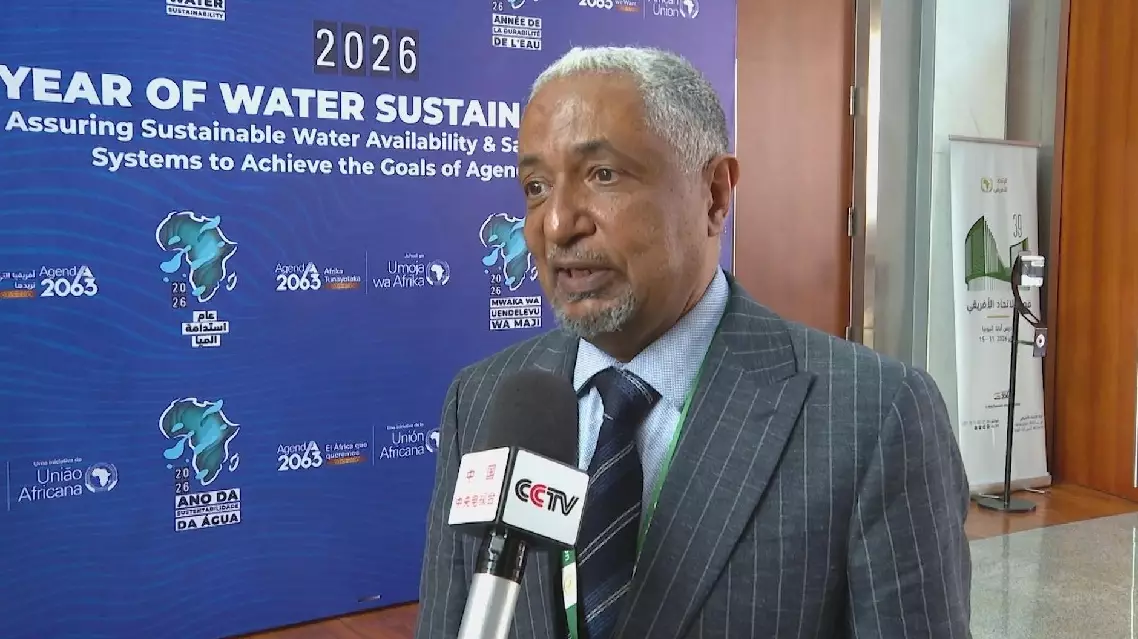
AU Summit hails China's landmark zero-tariff policy as "win-win" for Africa
Uruguay's Ambassador to China Anibal Cabral said China's five-year plan should be examined closely as a "basic input" to understand how the world will develop when talking about the significance of China's "two sessions" in a recent interview with China Central Television.
The "two sessions," or the annual gatherings of the National People's Congress (NPC) and the Chinese People's Political Consultative Conference (CPPCC), are currently being held in Beijing. The draft outline of the 15th Five-Year Plan (2026-2030) for China's national economic and social development was submitted to the fourth session of the 14th NPC for review on March 5.
Cabral said Uruguay is paying close attention to the new five-year plan, highlighting the growing ties between the two countries. He shared his views about China's development blueprint and its global importance.
"China has been Uruguay's main trading partner for the past 14 years, both for exports and imports. Of course, since it is a planned economy with five-year plans, we are always very interested in studying them. In fact, many staff members at the Ministry of Economy asked me to obtain a copy of the five-year plan so they could study it. What can we see in the five-year plan? The modernization of China, the rejuvenation of its population, and its development. It includes some of the highest planned growth rates today -- around 5 percent. But above all, it also emphasizes the consolidation of its domestic market and internal economy. The growth of income among the Chinese population is very important, as it creates a consumer base for the entire world and a very advantageous market. We should also highlight the developments China has achieved in green economy," he said.
Cabral also stressed China's positive role in promoting global stability, suggesting that China's five-year plans are good references to studying future development trends.
"It is a very uncertain world, with many changes, but China provides us with stability. With China, Uruguay shares very important principles in the international arena, especially the promotion of multilateralism, respect for international rules, and compliance with the regulations of the World Trade Organization -- topics on which Uruguay and China share a vision. This vision is part of a broader goal of a more multipolar, more democratic world with stronger global governance. I believe that nowadays, because of China's importance, most economists, politicians and international analysts are studying the Chinese five-year plan and examining it closely as a basic input to understand how the world will develop in the next five years," said the ambassador.
Uruguay's Ambassador calls China's five-year plan "basic input" to understand future world development