Skip to Content Facebook Feature Image

China's Shenzhou-21 crew celebrates Spring Festival with hearty, abundant meal aboard space station

China

China

China

China's Shenzhou-21 crew celebrates Spring Festival with hearty, abundant meal aboard space station

2026-02-16 16:30 Last Updated At:02-17 13:02

Though far from home, Chinese astronauts aboard China's space station hosted their own Chinese New Year's party in orbit, with a traditional New Year's Eve dinner with tasty snacks and a hearty meal.

The Shenzhou-21 trio have decorated the space station with red lanterns, Chinese knots and paper-cut craft. They have also enjoyed the traditions they usually share with their families on Earth, such as eating dumplings and delicacies that stand for prosperity, peace and good fortune.

As the highlight of the Chinese New Year's Eve, the reunion dinner was thoughtfully prepared by ground support teams for the three astronauts. For Wu Fei and Zhang Hongzhang, who were spending their first Spring Festival aboard Tiangong, the lavish space meal was especially exciting.

With kuaiban, a traditional Chinese performance art that combines rhythmic clapping with storytelling, performed by Zhang Hongzhang, the crew unveiled their festive menu: braised pork knuckles, pork with bamboo shoots, five-spice braised beef, and sweet and savory roasted pork. Each dish carried deep cultural symbolism, representing a wish for prosperity and good luck in the year ahead.

Boiled dumplings are also a must-have.

"Pork and daylily dumplings," mission commander Zhang Lu announced.

"We eat dumplings during the Spring Festival," said Wu Fei.

"Eating dumplings in the Year of the Horse brings fortune and blessings!" added Zhang Hongzhang.

Compared with their colleagues of previous missions, the Shenzhou-21 team has one more dish on their table: freshly-baked cakes made in the space oven.

Launched on Oct 31, 2025, the space journey of the Shenzhou-21 crew has already exceeded 100 days. All tasks including scientific experiments, equipment maintenance and health management are progressing smoothly, according to the space agency.

China's Shenzhou-21 crew celebrates Spring Festival with hearty, abundant meal aboard space station

China's Shenzhou-21 crew celebrates Spring Festival with hearty, abundant meal aboard space station

China's Shenzhou-21 crew celebrates Spring Festival with hearty, abundant meal aboard space station

China's Shenzhou-21 crew celebrates Spring Festival with hearty, abundant meal aboard space station
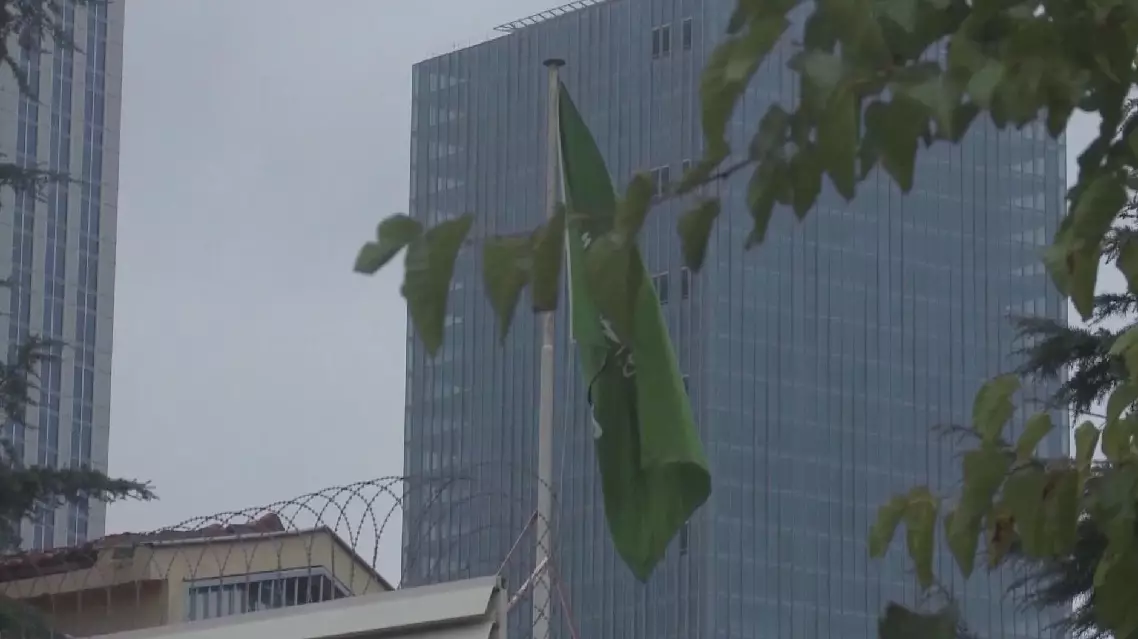
Saudi Arabia and Pakistan have reaffirmed that they will not seek normalization of ties with Israel, rejecting U.S. President Donald Trump's call for the two countries to join the Abraham Accords.

Saudi Arabia's position on the Palestinian issue remains unchanged, a Saudi source told Al Arabiya TV on Monday.

The source affirmed the need for "an irreversible pathway to a Palestinian state".

The remarks came after U.S. President Donald Trump urged Muslim-majority and regional countries to normalize relations with Israel and join the Abraham Accords before the U.S. reaches a peace agreement with Iran.

Saudi Arabia has repeatedly said it would not normalize relations with Israel without the establishment of a Palestinian state.

Pakistani Defense Minister Khawaja Asif said on Tuesday that Pakistan will not join any agreement to normalize ties with Israel, adding that the country will not accept any deal that "conflicts with its fundamental ideologies".

Trump on Monday urged Saudi Arabia, Qatar, Egypt, Jordan, Turkey and Pakistan -- countries involved in mediating U.S.-Iran talks -- to immediately join the Abraham Accords, warning that otherwise they should not participate in the mediation.

He added that if a U.S.-Iran deal is reached, Iran should also join the agreement.

The Abraham Accords, brokered by the United States in 2020 during Trump's first term, were established between the Israeli government and Arab countries including the United Arab Emirates, Bahrain, Sudan and Morocco, aimed at rapidly advancing the normalization of relations between Israel and Arab countries.

Before the outbreak of the latest round of Israeli-Palestinian conflict in October 2023, the United States had been pushing for normalization between Saudi Arabia and Israel.

After the conflict erupted, Saudi Arabia suspended normalization talks with Israel.

Saudi Arabia, Pakistan reject Trump's Abraham Accords demand

Saudi Arabia, Pakistan reject Trump's Abraham Accords demand

Recommended Articles