NEW DELHI (AP) — India is hoping to garner as much as $200 billion in investments for data centers over the next few years as it scales up its ambitions to become a hub for artificial intelligence, the country’s minister for electronics and information technology said Tuesday.
The investments underscore the reliance of tech titans on India as a key technology and talent base in the global race for AI dominance. For New Delhi, they bring in high-value infrastructure and foreign capital at a scale that can accelerate its digital transformation ambitions.
Click to Gallery
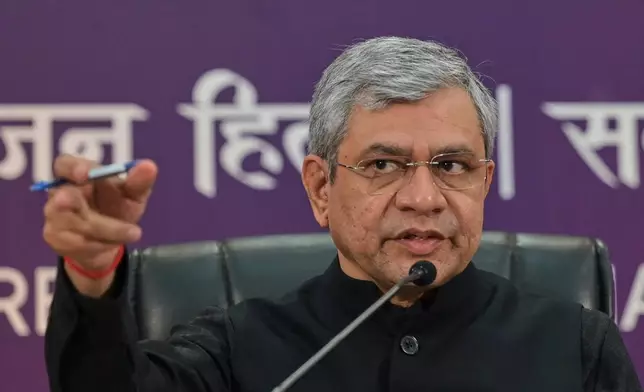
Indian Technology Minister Ashwini Vaishnaw addresses a press conference during AI-Summit in New Delhi, India, Tuesday, Feb. 17, 2026. (AP Photo)
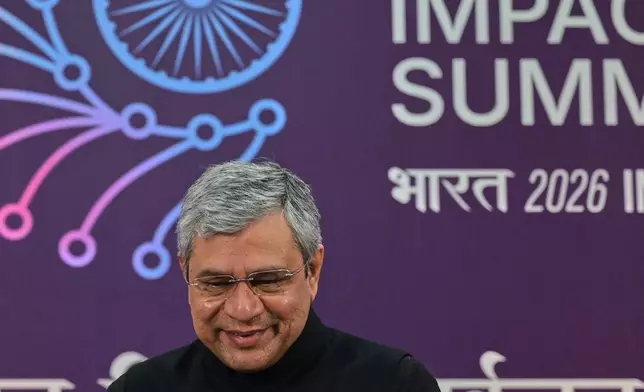
Indian Technology Minister Ashwini Vaishnaw greets media at a press conference during AI Impact Summit in New Delhi, India, Tuesday, Feb.17, 2026. (AP Photo)
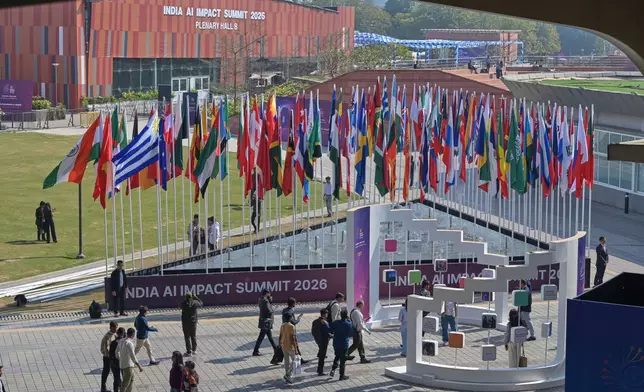
Delegates watch an exhibition in the sidelines of an AI Impact Summit in New Delhi, India, Tuesday, Feb.17, 2026. (AP Photo)
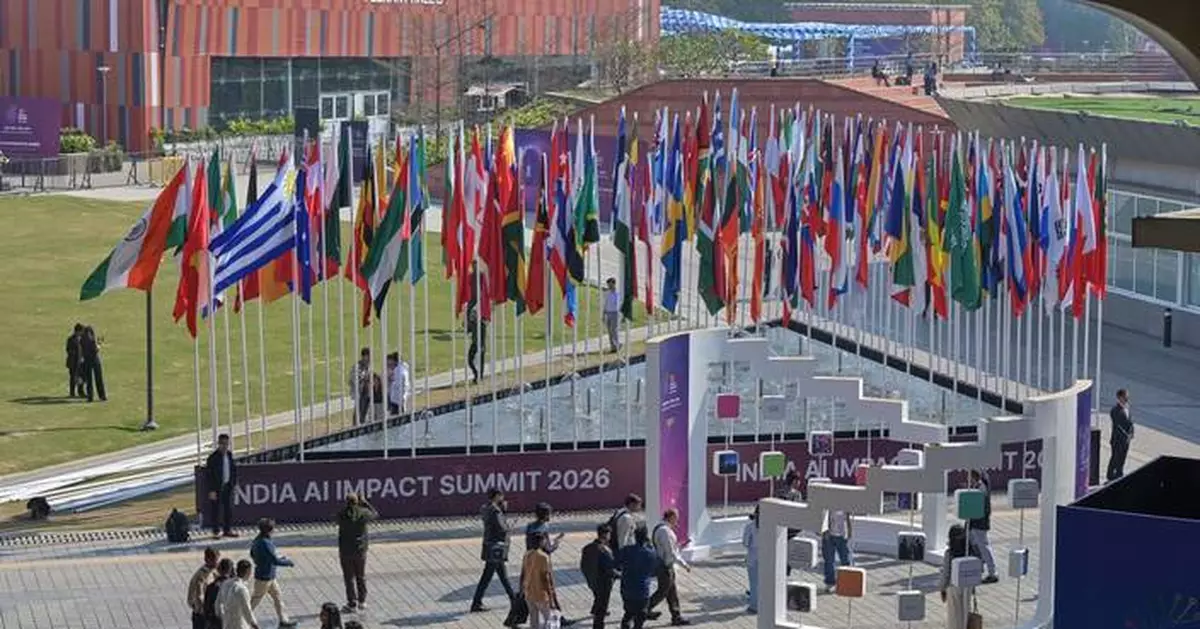
Delegates arrive for an AI Impact Summit in New Delhi, India, Tuesday, Feb.17, 2026. (AP Photo)
The push comes as governments worldwide race to harness AI's economic potential while grappling with job disruption, regulation and the growing concentration of computing power in a few rich countries and companies.
“Today, India is being seen as a trusted AI partner to the Global South nations seeking open, affordable and development-focused solutions,” Ashwini Vaishnaw told The Associated Press in an email interview, as New Delhi hosts a major AI Impact Summit this week drawing participation from at least 20 global leaders and a who’s who of the tech industry.
In October, Google announced a $15 billion investment plan in India over the next five years to establish its first artificial intelligence hub in the South Asian country. Microsoft followed two months later with its biggest-ever Asia investment announcement of $17.5 billion to advance India’s cloud and artificial intelligence infrastructure over the next four years.
Amazon too has committed $35 billion investment in India by 2030 to expand its business, specifically targeting AI-driven digitization. The cumulative investments are part of $200 billion in investments that are in the pipeline and New Delhi hopes would flow in.
Vaishnaw said India’s pitch is that artificial intelligence must deliver measurable impacts at scale rather than remain an elite technology.
“A trusted AI ecosystem will attract investment and accelerate adoption,” he said, adding that a central pillar of India’s strategy to capitalize on the use of AI is building infrastructure.
The government recently announced a long-term tax holiday for data centers as it hopes to provide policy certainty and attract global capital.
Vaishnaw said the government has already operationalized a shared computing facility with more than 38,000 graphics processing units, or GPUs, allowing startups, researchers and public institutions to access high-end computing without heavy upfront costs.
“AI must not become exclusive. It must remain widely accessible,” he said.
Alongside the infrastructure drive, India is backing the development of sovereign foundational AI models trained on Indian languages and local contexts. Some of these models meet global benchmarks and in certain tasks rival widely used large language models, Vaishnaw said.
India is also seeking a larger role in shaping how AI is built and deployed globally as the country doesn’t see itself strictly as a “rule maker or rule taker,” according to Vaishnaw, but an active participant in setting practical, workable norms while expanding its AI services footprint worldwide.
“India will become a major provider of AI services in the near future,” he said, describing a strategy that is “self-reliant yet globally integrated” across applications, models, chips, infrastructure and energy.
Investor confidence is another focus area for New Delhi as global tech funding becomes more cautious.
Vaishnaw said the technology’s push is backed by execution, pointing to the Indian government's AI Mission program which emphasizes sector specific solutions through public-private partnerships.
The government is also betting on reskilling its workforce as global concerns grow that AI could disrupt white collar and technology jobs. New Delhi is scaling AI education across universities, skilling programs and online platforms to build a large AI-ready talent pool, the minister said.
Widespread 5G connectivity across the country and a young, tech-savvy population are expected to help with the adoption of AI at a faster pace, he added.
Balancing innovation with safeguards remains a challenge though, as AI expands into sensitive sectors such as governance, health care and finance.
Vaishnaw outlined a fourfold strategy that includes implementable global frameworks, trusted AI infrastructure, regulation of harmful misinformation and stronger human and technical capacity to hedge the impact.
“The future of AI should be inclusive, distributed and development-focused,” he said.
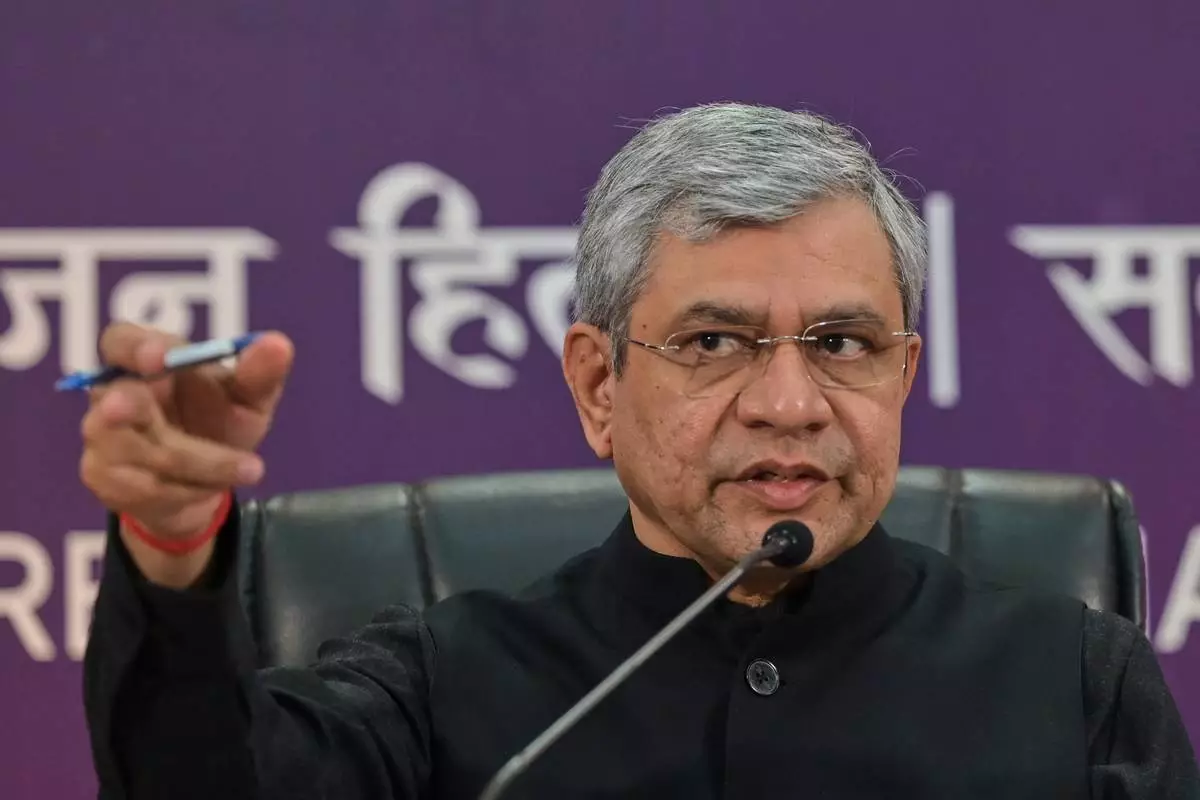
Indian Technology Minister Ashwini Vaishnaw addresses a press conference during AI-Summit in New Delhi, India, Tuesday, Feb. 17, 2026. (AP Photo)
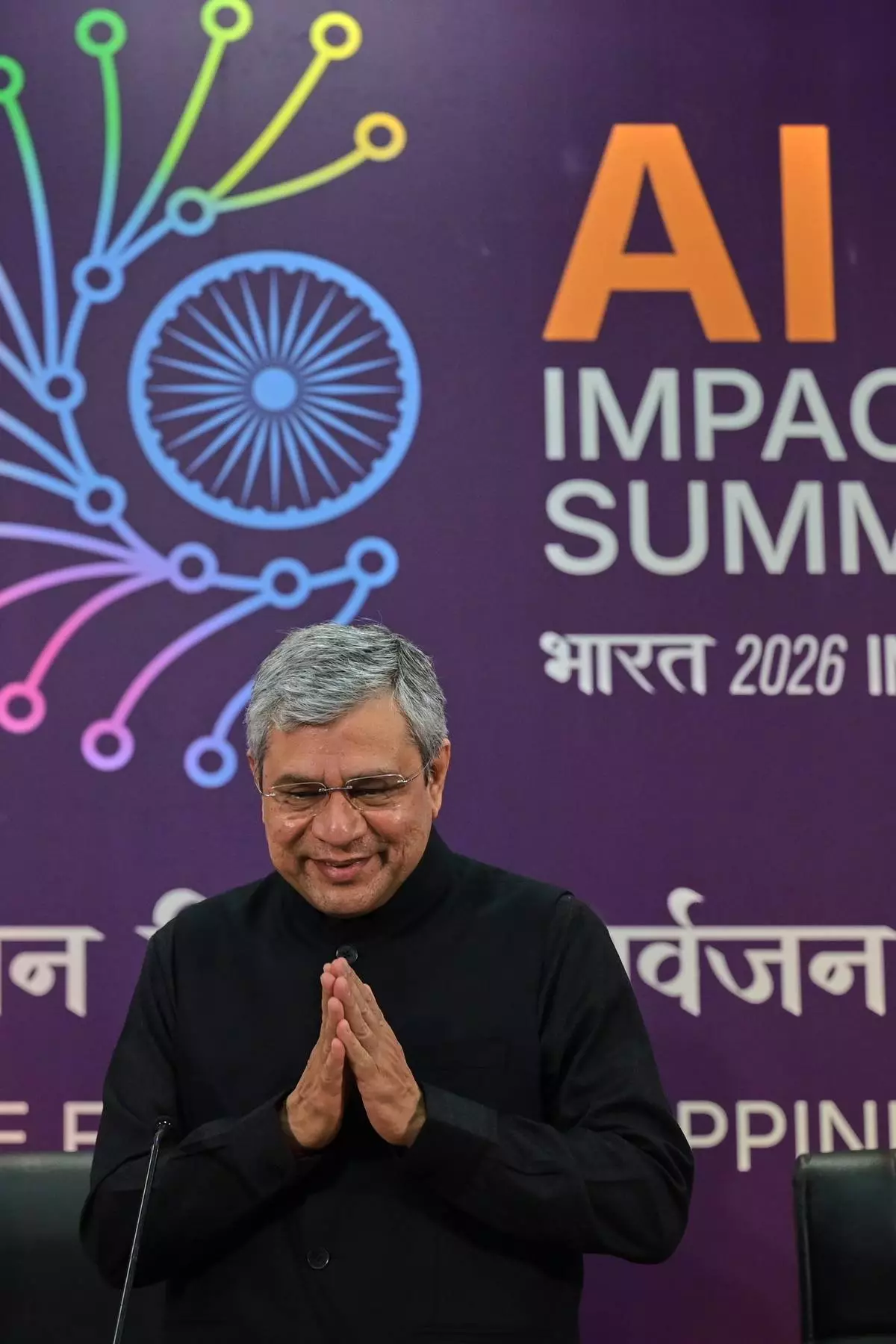
Indian Technology Minister Ashwini Vaishnaw greets media at a press conference during AI Impact Summit in New Delhi, India, Tuesday, Feb.17, 2026. (AP Photo)

Delegates watch an exhibition in the sidelines of an AI Impact Summit in New Delhi, India, Tuesday, Feb.17, 2026. (AP Photo)
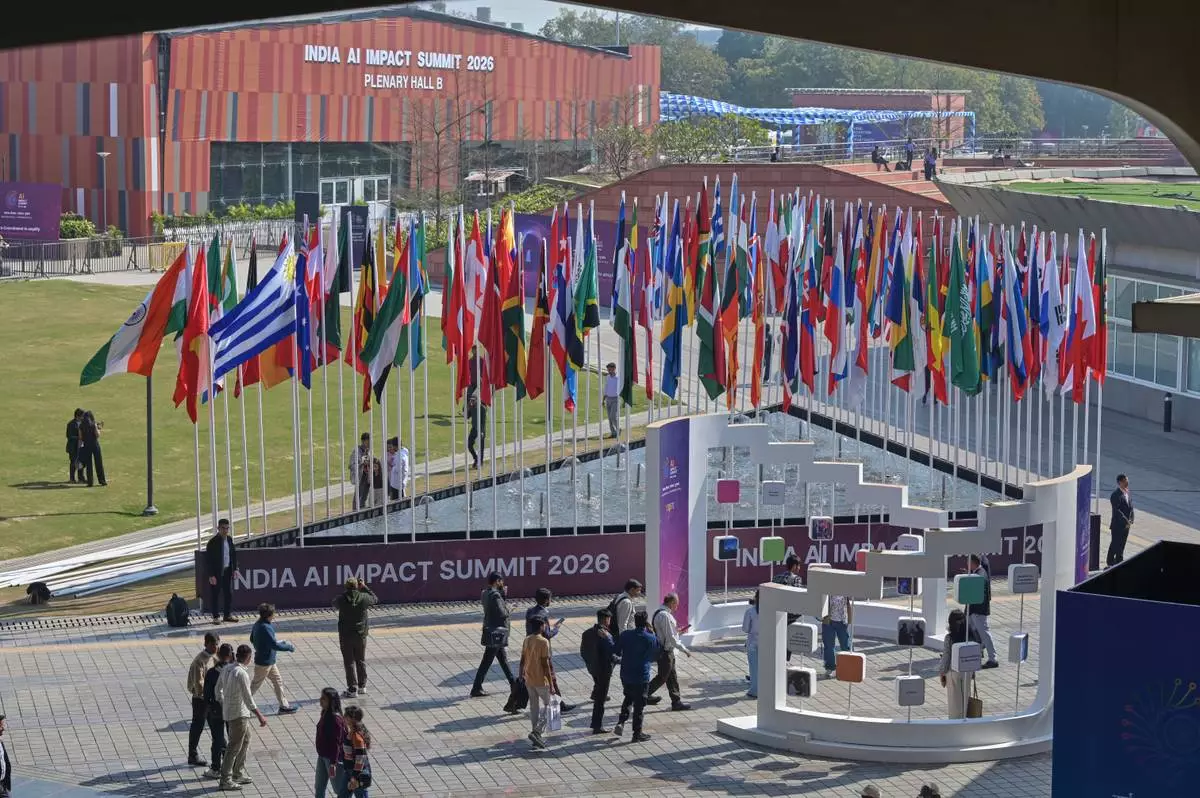
Delegates arrive for an AI Impact Summit in New Delhi, India, Tuesday, Feb.17, 2026. (AP Photo)
MELBOURNE, Australia (AP) — The Australian government will not repatriate from Syria a group of 34 women and children with alleged ties to the militant Islamic State group, Prime Minister Anthony Albanese said Tuesday.
The women and children from 11 families were supposed to fly from Syria to Australia, but Syrian authorities on Monday turned them back to Roj detention camp because of procedural problems, officials said.
Only two groups of Australians have been repatriated with government help from Syrian camps since the fall of the Islamic State group in 2019. Other Australians have also returned without government assistance.
Albanese would not comment on a report that the latest women and children had Australian passports.
“We’re providing absolutely no support and we are not repatriating people,” Albanese told Australian Broadcasting Corp. in Melbourne.
“We have no sympathy, frankly, for people who traveled overseas in order to participate in what was an attempt to establish a caliphate to undermine, destroy, our way of life. And so, as my mother would say, ‘You make your bed, you lie in it,’” Albanese added.
In his remarks, Albanese was referring to the IS militants' capture of wide swaths of land more than a decade ago that stretched across a third of Syria and Iraq, territory where the extremists established their so-called caliphate.
At the height of its control, IS declared the city of Raqqa its capital, with jihadis from foreign countries traveling to Syria to join the IS. Over the years, they had families and raised children there.
Opposition leader Angus Taylor demanded Albanese explain whether his government had considered banning the Australians from returning. So-called temporary exclusion orders enable a government minister to prevent high-risk citizens located overseas from returning to Australia for up to two years.
“These are individuals who chose to associate with a terrorist caliphate. This is not aligned with the values we as Australians believe in — democracy, the rule of law, our basic freedoms including freedom of religion,” Taylor told reporters.
“The door must be shut to people who do not believe in those things,” Taylor added.
Asked about using temporary exclusion orders in this case, Albanese did not directly answer. “What we will do on national security issues is we deal with it appropriately upon advice” of security agencies, Albanese told reporters.
Albanese noted that the child welfare-focused international charity Save the Children had failed to establish in Australia’s courts that the Australian government had a responsibility to repatriate citizens from Syrian camps.
After the federal court ruled in the government's favor in 2024, Save the Children Australia chief executive Mat Tinkler argued the government had a moral, if not legal, obligation to repatriate families.
Albanese said if the latest group made their way to Australia without government help, they could be charged.
Under Australian law, it was an offense punishable by up to 10 years in prison to travel to Raqqa in Syria and elsewhere in the caliphate without a legitimate reason from 2014 to 2017.
“It’s unfortunate that children are impacted by this as well, but we are not providing any support. And if anyone does manage to find their way back to Australia, then they’ll face the full force of the law, if any laws have been broken,” Albanese added.
The Islamic State group was defeated by a U.S.-led coalition in Iraq in 2017, and in Syria two years later, but IS sleeper cells still carry out deadly attacks in both countries. During the battles against IS, thousands of extremists and tens of thousands of women and children linked to them were taken to detention camps.
Manager Hakmiyeh Ibrahim of the Roj camp in northeastern Syria told The Associated Press that relatives of the Australians said the Australian government had prepared the camp residents' passports and travel paperwork and suggested that their families collect those documents.
The last group of Australians to be repatriated from Syrian camps arrived in Sydney in October 2022.
They were four mothers, former partners of Islamic State supporters, and 13 children.
Australian officials had assessed the group as the most vulnerable among 60 Australian women and children held in Roj camp, the government said at the time.
Eight children of two slain Australian IS fighters were repatriated from Syria in 2019 by the conservative government that preceded Albanese’s center-left Labor Party administration.
The issue of IS supporters resurfaced in Australia after the killings of 15 people at a Jewish festival at Bondi Beach on Dec. 14 — attackers allegedly inspired by IS.
Some countries are repatriating their citizens with alleged IS links from Syria while others are not. Iraq has repatriated most of its citizens, who accounted for the largest number of detainees, after Syrians. The United States, Germany, Britain, France, Italy, the Netherlands, Belgium and Canada have all repatriated citizens from Syrian camps.
Last year, families repatriated from Roj camp included German, British and French nationals.
Separately, thousands of accused IS militants who were held in detention centers in northeastern Syria have been transferred to Iraq by the U.S. military to stand trial there.
Associated Press journalist Hogir Al Abdo in Qamishli, Syria, contributed to this report.
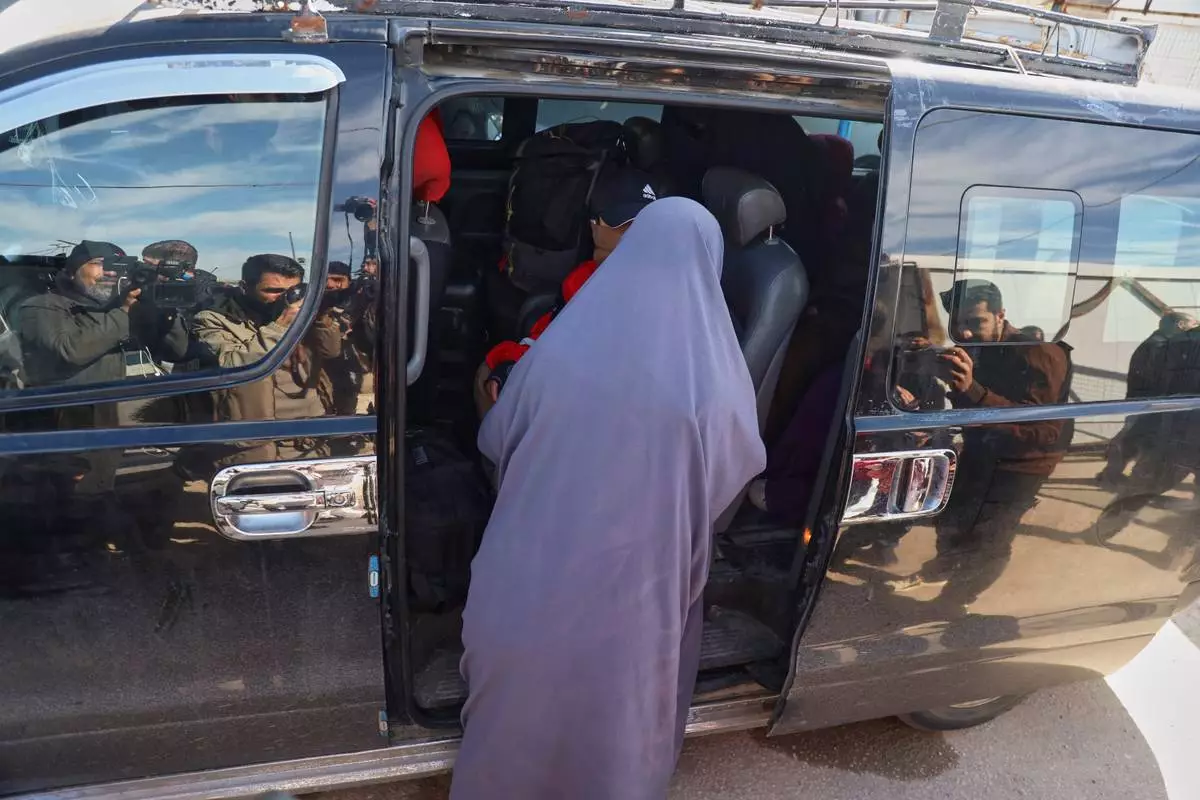
Family members of suspected Islamic State militants who are Australian nationals board a van heading to the airport in Damascus during the first repatriation operation of the year, at Roj Camp in eastern Syria, Monday, Feb. 16, 2026. Thirty-four Australian citizens from 11 families departed the camp. (AP Photo/Baderkhan Ahmad)
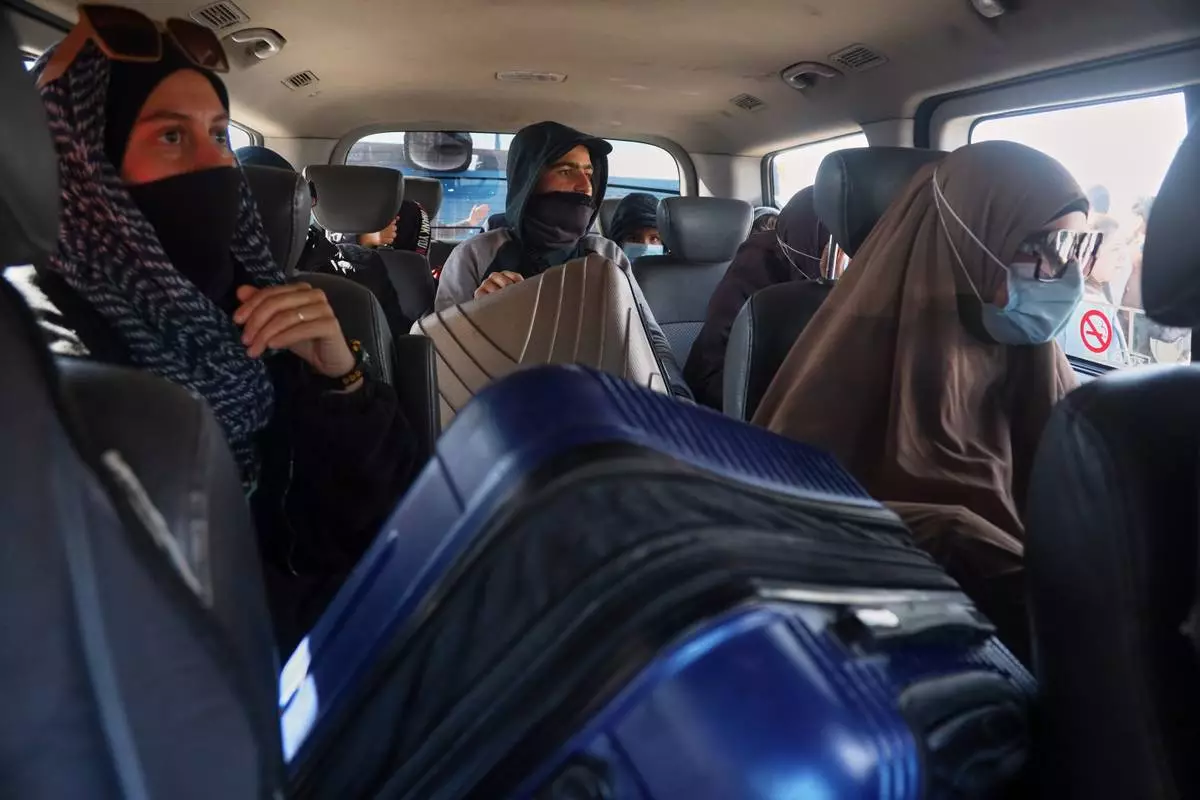
Family members of suspected Islamic State militants who are Australian nationals sit in a van heading to the airport in Damascus during the first repatriation operation of the year, at Roj Camp in eastern Syria, Monday, Feb. 16, 2026. Thirty-four Australian citizens from 11 families departed the camp. (AP Photo/Baderkhan Ahmad)
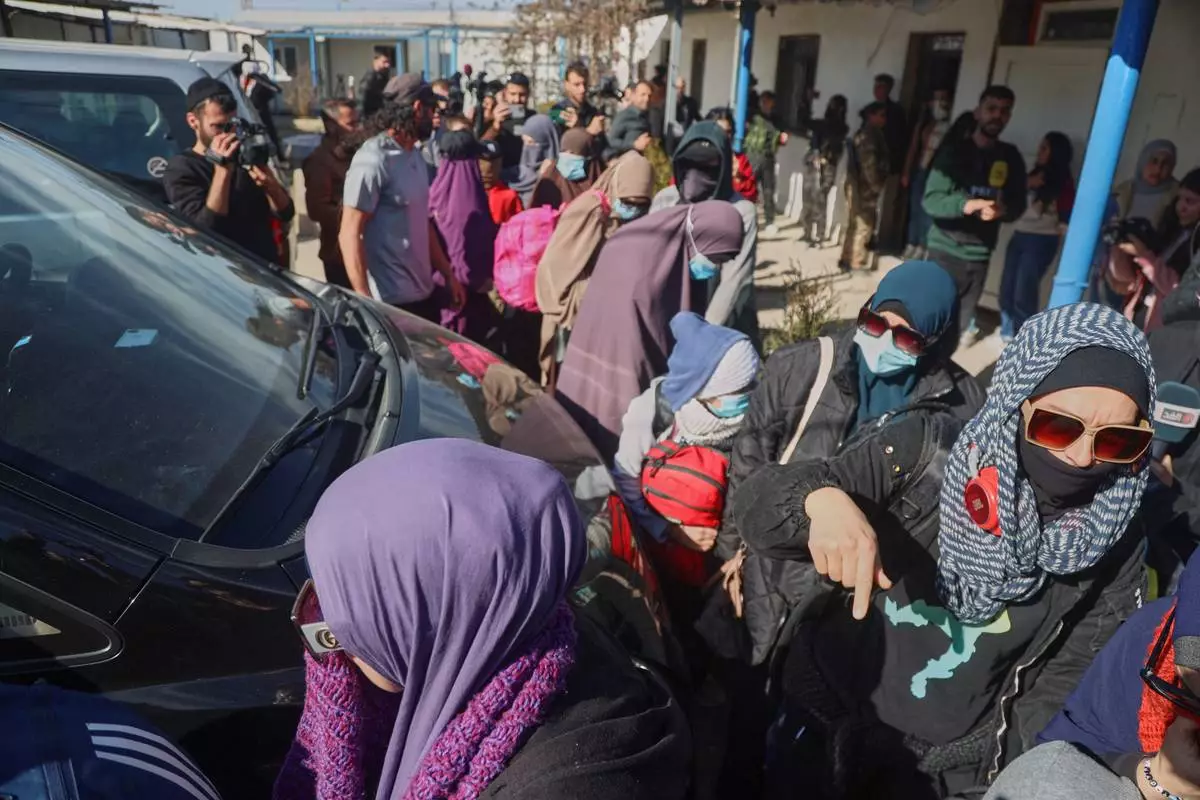
Family members of suspected Islamic State militants who are Australian nationals walk toward a van bound for the airport in Damascus during the first repatriation operation of the year at Roj Camp in eastern Syria, Monday, Feb. 16, 2026. Thirty-four Australian citizens from 11 families departed the camp. (AP Photo/Baderkhan Ahmad)
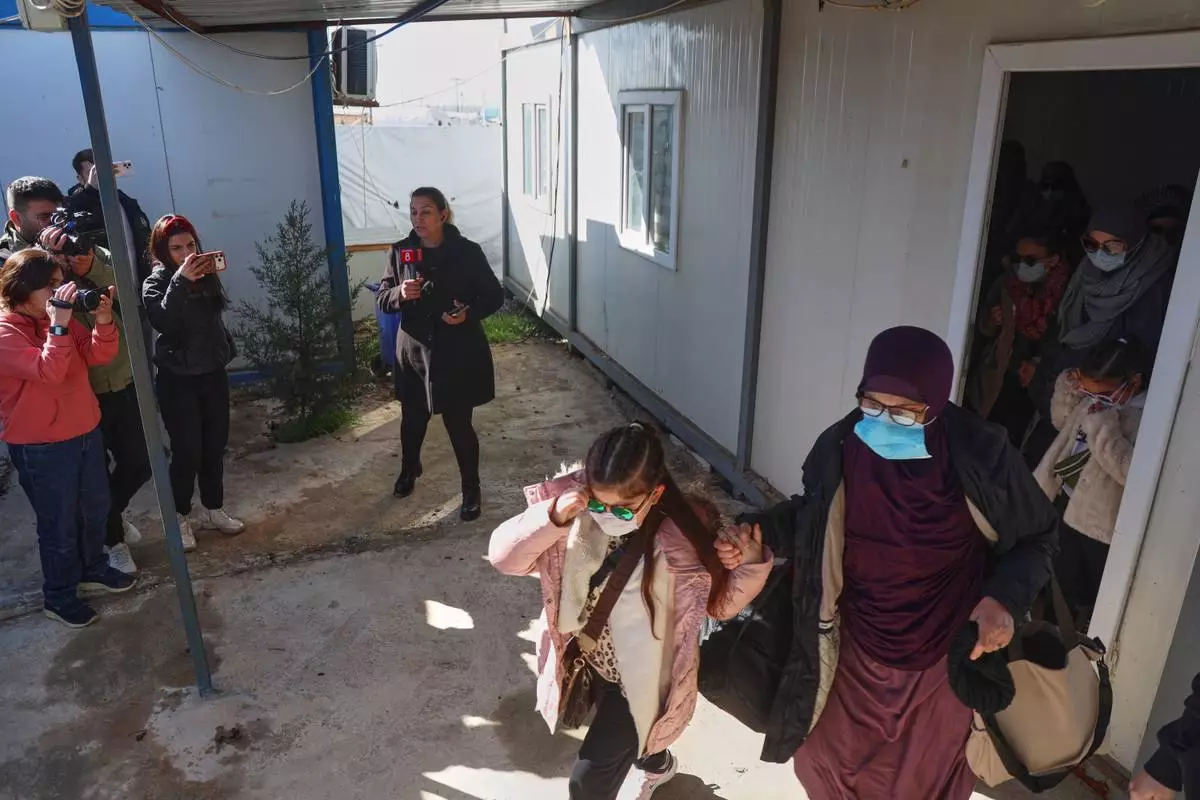
Family members of suspected Islamic State militants who are Australian nationals walk toward a van bound for the airport in Damascus during the first repatriation operation of the year at Roj Camp in eastern Syria, Monday, Feb. 16, 2026. Thirty-four Australian citizens from 11 families departed the camp. (AP Photo/Baderkhan Ahmad)
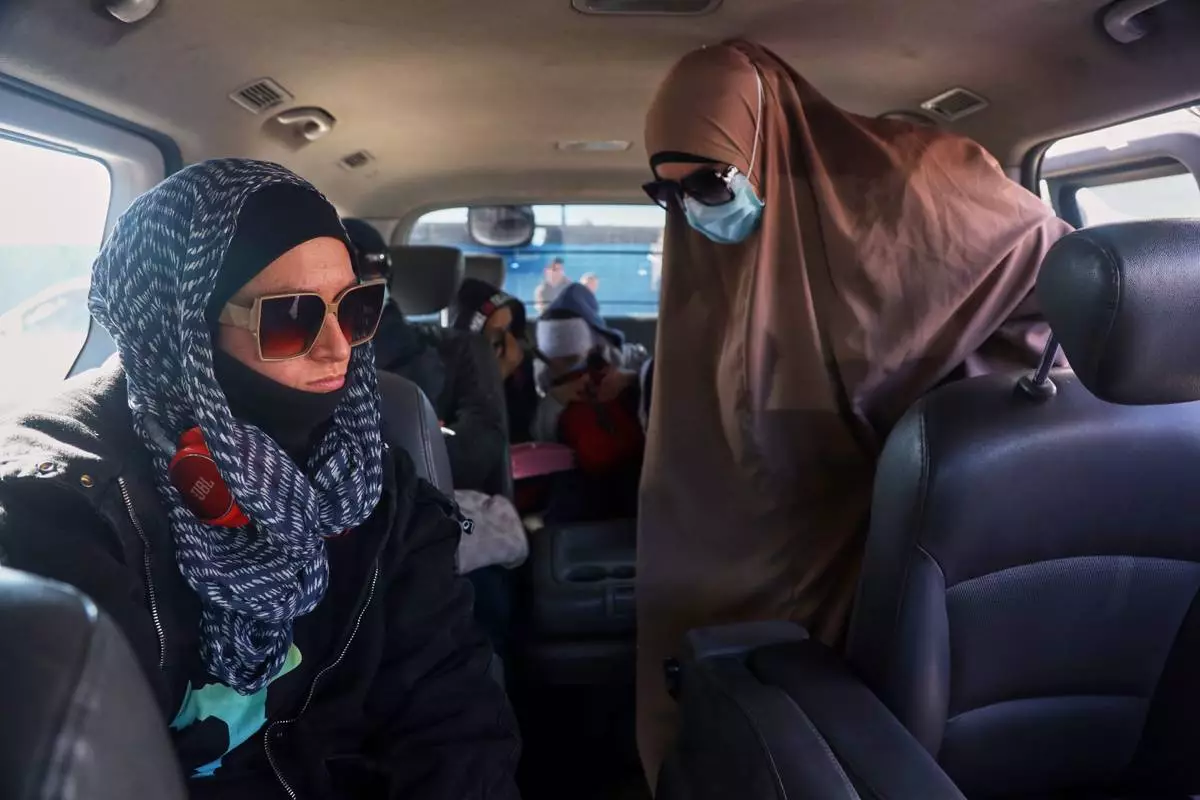
Family members of suspected Islamic State militants who are Australian nationals board a van heading to the airport in Damascus during the first repatriation operation of the year, at Roj Camp in eastern Syria, Monday, Feb. 16, 2026. Thirty-four Australian citizens from 11 families departed the camp. (AP Photo/Baderkhan Ahmad)