RIO DE JANEIRO (AP) — Samba and literature rarely share the same stage, but at this year's Carnival in Rio de Janeiro, two samba schools used their parades to tell the stories of Black Brazilian female authors. It's an unusual recognition of writers who have been historically marginalized due to their race and gender.
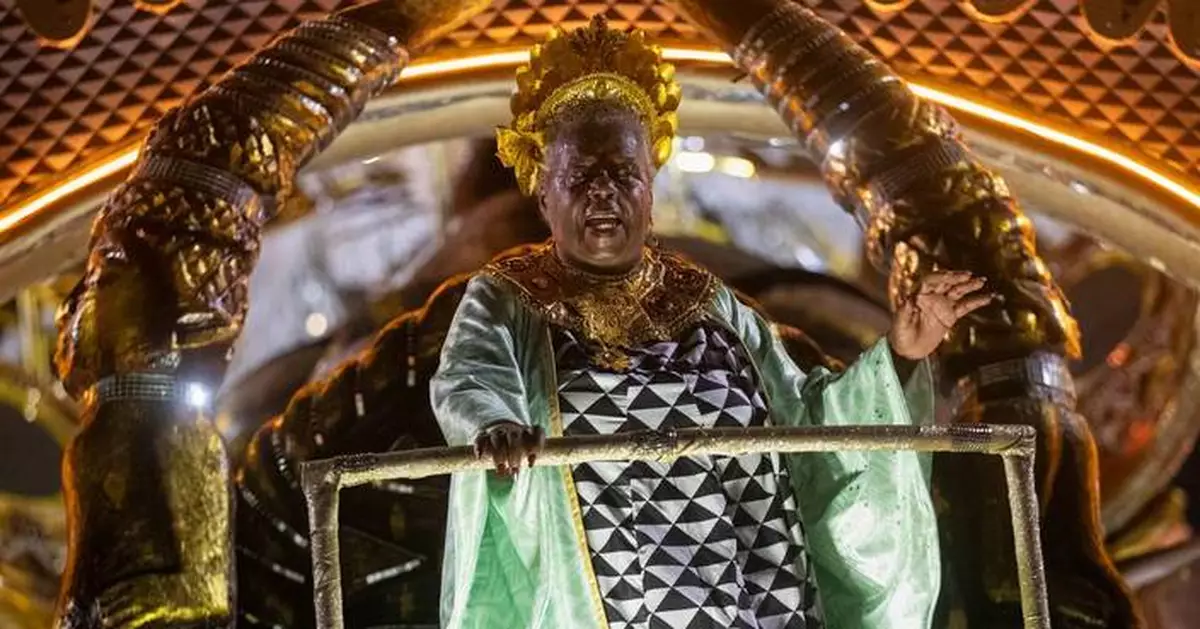
On Saturday, 79-year-old Conceição Evaristo, a writer from Minas Gerais known for her powerful works centering on Black women's experiences, sat majestically atop a float designed by samba school Imperio Serrano at Rio’s famed Sambodrome. Two days later, the samba school Unidos da Tijuca dedicated its parade to the late Carolina Maria de Jesus, a favela-based diarist who died nearly five decades ago, and also featured Evaristo.
Click to Gallery
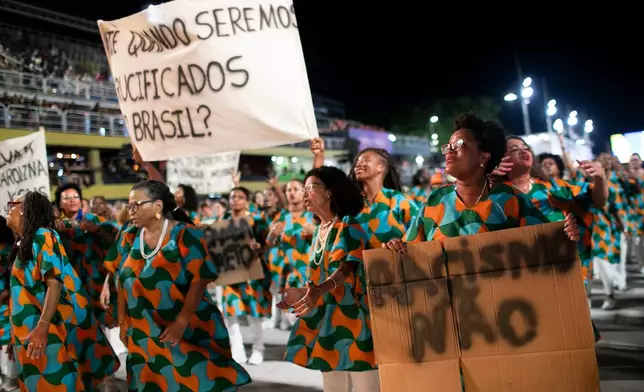
Performers from the Unidos da Tijuca samba school parade during Carnival celebrations at the Sambadrome in Rio de Janeiro, early Tuesday, Feb. 17, 2026. (AP Photo/Bruna Prado)
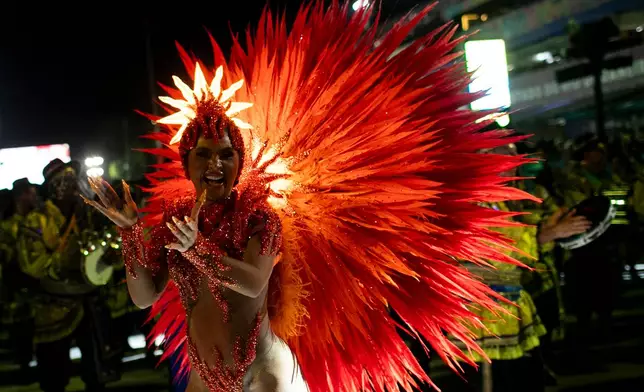
Drum queen Mileide Mihaile from Unidos da Tijuca samba school performs during Carnival celebrations at the Sambadrome in Rio de Janeiro, early Tuesday, Feb. 17, 2026. (AP Photo/Bruna Prado)
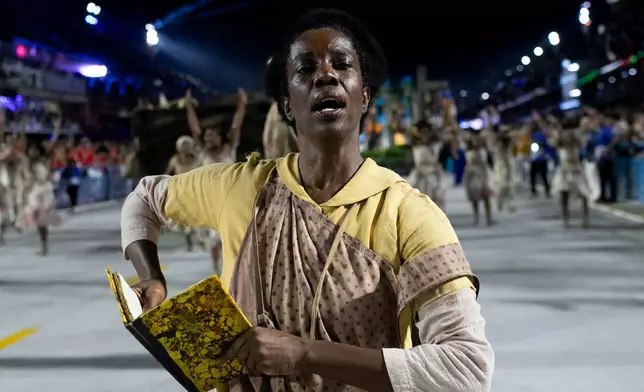
A performer from the Unidos da Tijuca samba school parades during Carnival celebrations at the Sambadrome in Rio de Janeiro, early Tuesday, Feb. 17, 2026. (AP Photo/Bruna Prado)
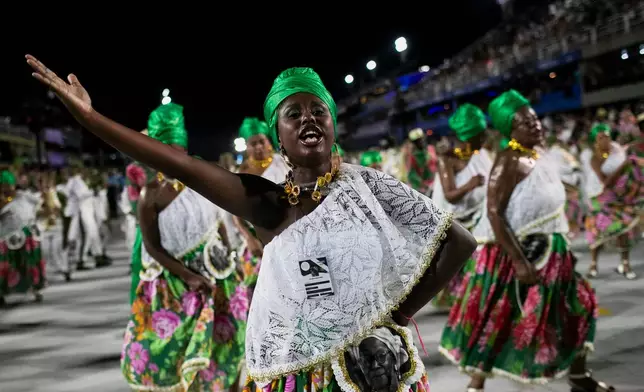
Performers from the Imperio Serrano samba school parade during Carnival celebrations at the Sambadrome in Rio de Janeiro, early Sunday, Feb. 15, 2026. (AP Photo/Bruna Prado)
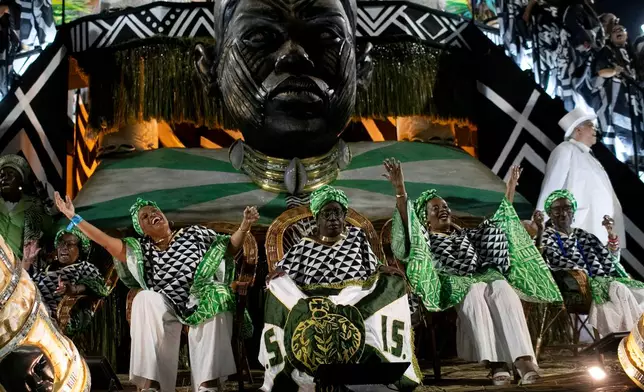
Performers from the Imperio Serrano samba school parade on a float during Carnival celebrations at the Sambadrome in Rio de Janeiro, early Sunday, Feb. 15, 2026. (AP Photo/Bruna Prado)
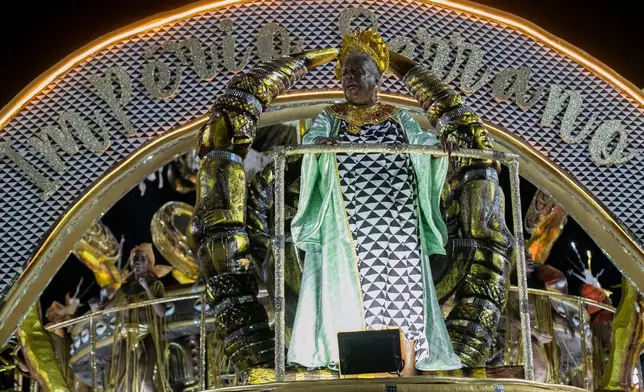
Brazilian writer Conceicao Evaristo is honored by the Imperio Serrano samba school during Carnival celebrations at the Sambadrome in Rio de Janeiro, early Sunday, Feb. 15, 2026. (AP Photo/Bruna Prado)
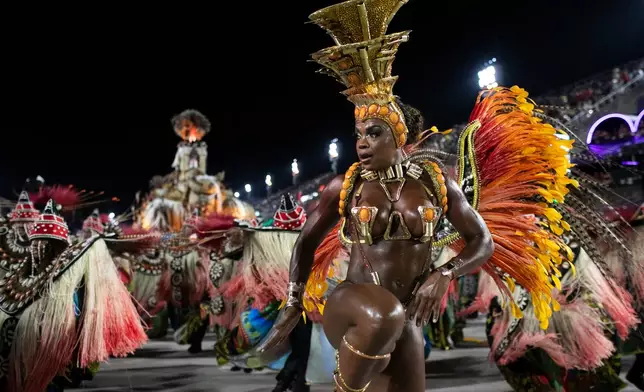
A performer from the Imperio Serrano samba school parades during Carnival celebrations at the Sambadrome in Rio de Janeiro, early Sunday, Feb. 15, 2026. (AP Photo/Bruna Prado)
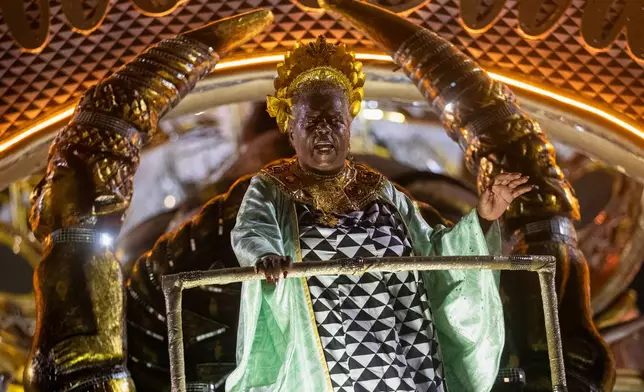
Brazilian writer Conceicao Evaristo is honored by the Imperio Serrano samba school during Carnival celebrations at the Sambadrome in Rio de Janeiro, early Sunday, Feb. 15, 2026. (AP Photo/Bruna Prado)
“For Black women in Brazil everything is very difficult,” Evaristo said during an interview at the school's warehouse while preparations were in full swing. The parade, she said, “presents other forms of knowledge that are born in Black communities” while celebrating Brazil’s diversity.
Samba is a Brazilian music and dance genre driven by syncopated rhythms that grew out of Afro-Brazilian traditions. Every year, schools based in low-income neighborhoods spend months preparing a parade complete with a samba song, towering floats and dazzling costumes, which they then present to judges at a fierce competition during Carnival.
Themes are often entwined with political messaging. This year, Porto da Pedra advocated for greater rights for sex workers, while schools in previous years have criticized former President Jair Bolsonaro or called attention to the plight of the Yanomami Indigenous people.
In the early hours of Tuesday morning, dancers, performers and percussionists from the Unidos da Tijuca school made their way down the Sambodrome’s central alley while a song about de Jesus rang out across the grounds. Books of all shapes, sizes and colors featured prominently on the floats and costumes.
It was “an act of historical reparation,” according to a leaflet presenting the parades at the venue, which also said that de Jesus died poor and forgotten in 1977.
Both de Jesus and Evaristo rose from humble backgrounds. In the 1950s, de Jesus kept a diary that chronicled her struggles to earn an income and feed her three children in a poor, urban community known as a favela in Sao Paulo.
Her diary has sold more than a million copies since its 1960 publication, according to a website dedicated to de Jesus run by the prestigious museum Instituto Moreira Salles.
While some critics have dismissed de Jesus' work as simplistic, Evaristo defends her unconventional style.
“The Brazilian model cannot choose a single language model ... based, for example, on European cultures,” said Evaristo, whose acclaimed works include the 2003 novel “Poncia Vivencio,” about a Black woman who leaves rural Brazil to try her luck in a city, and the 2014 collection of short stories “Water Eyes."
For actor Maria Gal, who portrays de Jesus in an upcoming film and during the parade, the late author remains relevant in contemporary Brazil because of her focus on education, gender equality and sustainable development.
“We are a country that often ends up forgetting our own history. And yet we have an incredibly rich cultural history. Carolina illustrates this very powerfully,” Gal said.
Black women in Brazil continue to face systemic discrimination. They are more likely than white women to be poor, illiterate and to suffer from hunger. They are also at greater risk of being a victim of gender-based violence.
Last year, Ana Maria Gonçalves became the first Black woman to earn a seat at the Brazilian Academy of Letters, the country’s most exclusive literature body. Yet, despite the milestone, scholars argue that racial and gender bias still define the academy's history.
“I have no doubt about the fact that if Conceição Evaristo were a white man, she would already be a part of the Brazilian Academy of Letters,” said Felipe Fanuel Xavier Rodrigues, a literature professor at the Federal University of Rio de Janeiro.
The parades are a transformative political act, Rodrigues said. “Carnival suspends everyday rules, including those of a structurally racist society like ours. It's when a crack appears.”
Follow AP’s coverage of Latin America and the Caribbean at https://apnews.com/hub/latin-america
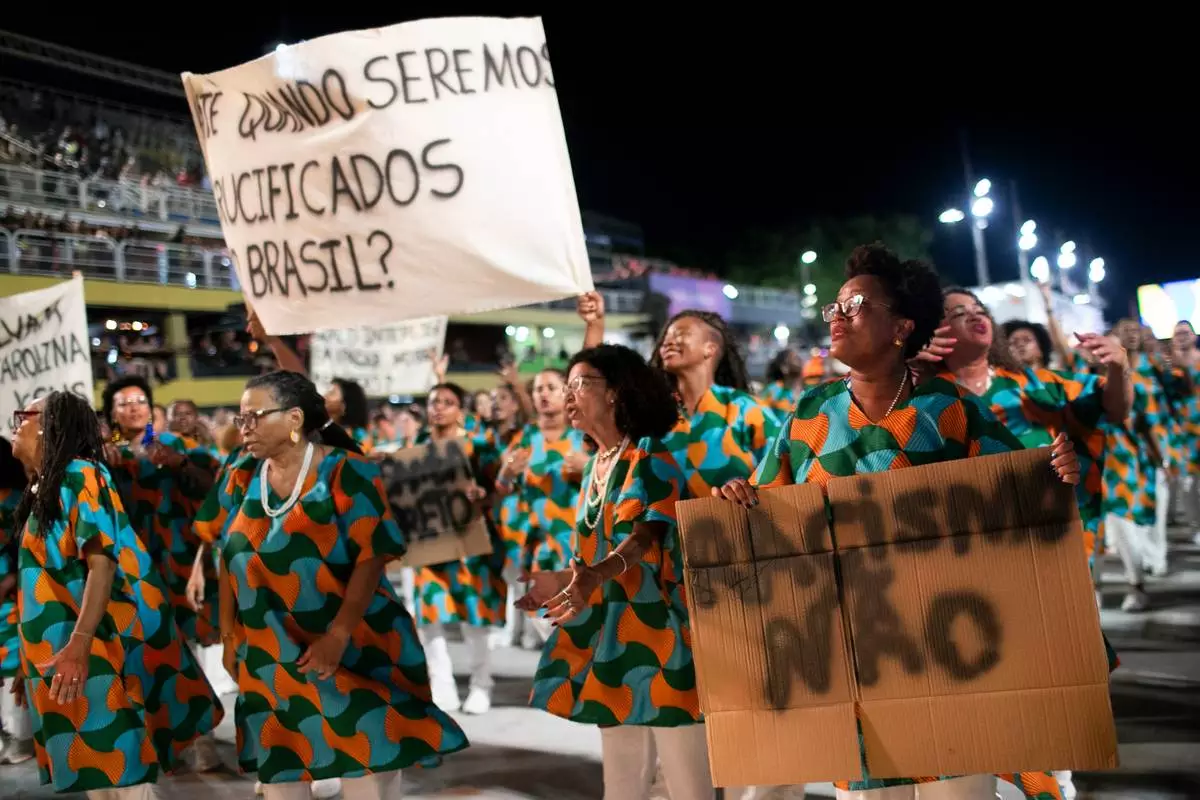
Performers from the Unidos da Tijuca samba school parade during Carnival celebrations at the Sambadrome in Rio de Janeiro, early Tuesday, Feb. 17, 2026. (AP Photo/Bruna Prado)
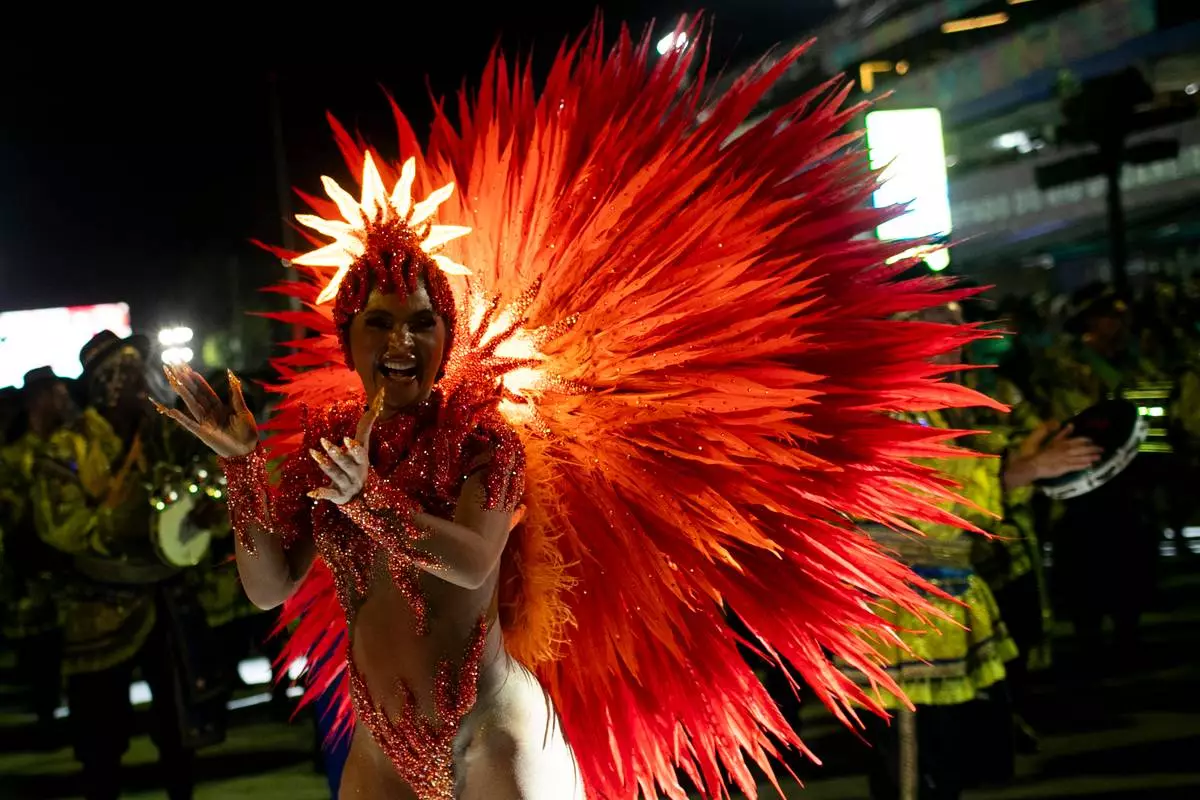
Drum queen Mileide Mihaile from Unidos da Tijuca samba school performs during Carnival celebrations at the Sambadrome in Rio de Janeiro, early Tuesday, Feb. 17, 2026. (AP Photo/Bruna Prado)
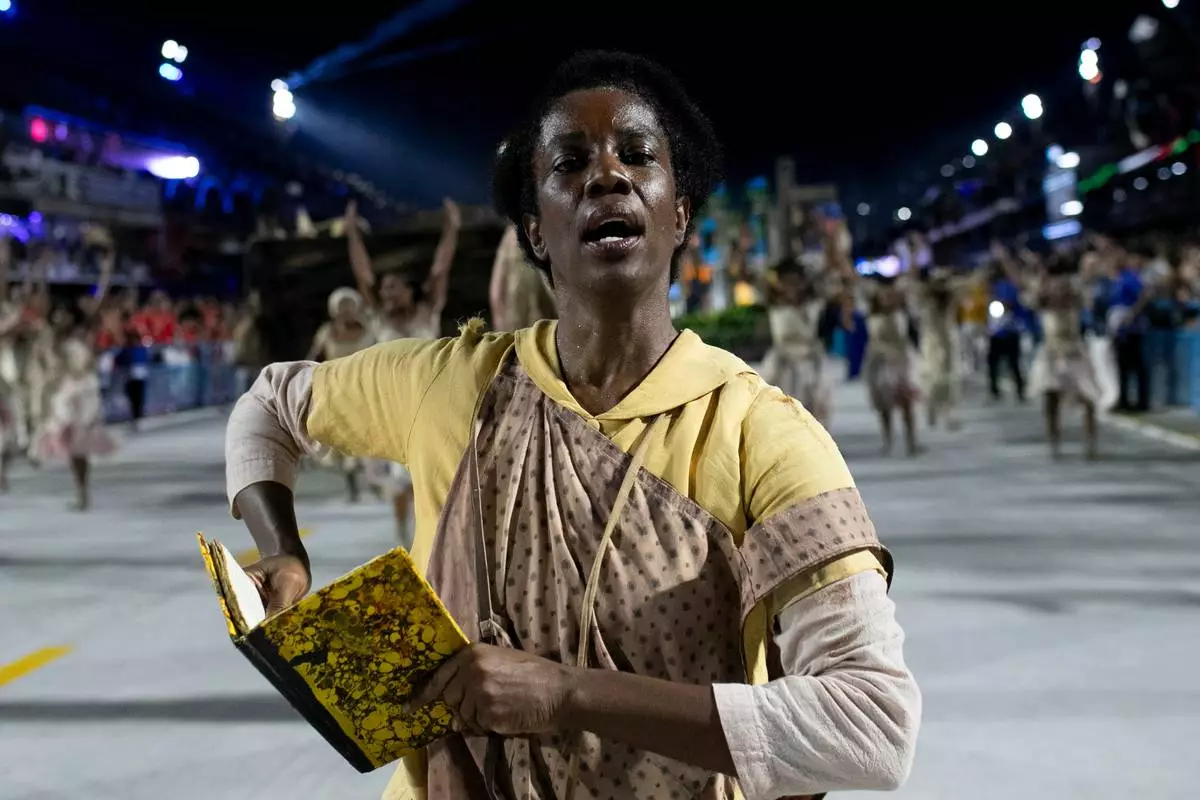
A performer from the Unidos da Tijuca samba school parades during Carnival celebrations at the Sambadrome in Rio de Janeiro, early Tuesday, Feb. 17, 2026. (AP Photo/Bruna Prado)
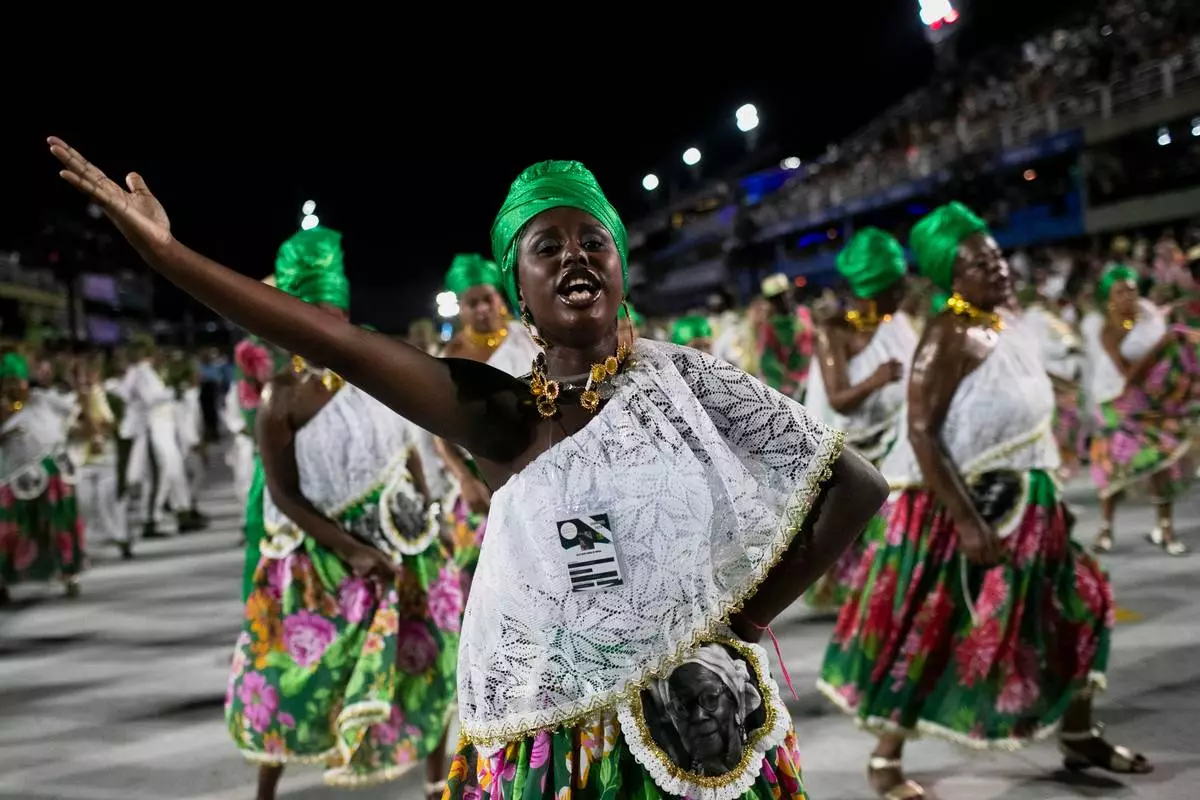
Performers from the Imperio Serrano samba school parade during Carnival celebrations at the Sambadrome in Rio de Janeiro, early Sunday, Feb. 15, 2026. (AP Photo/Bruna Prado)
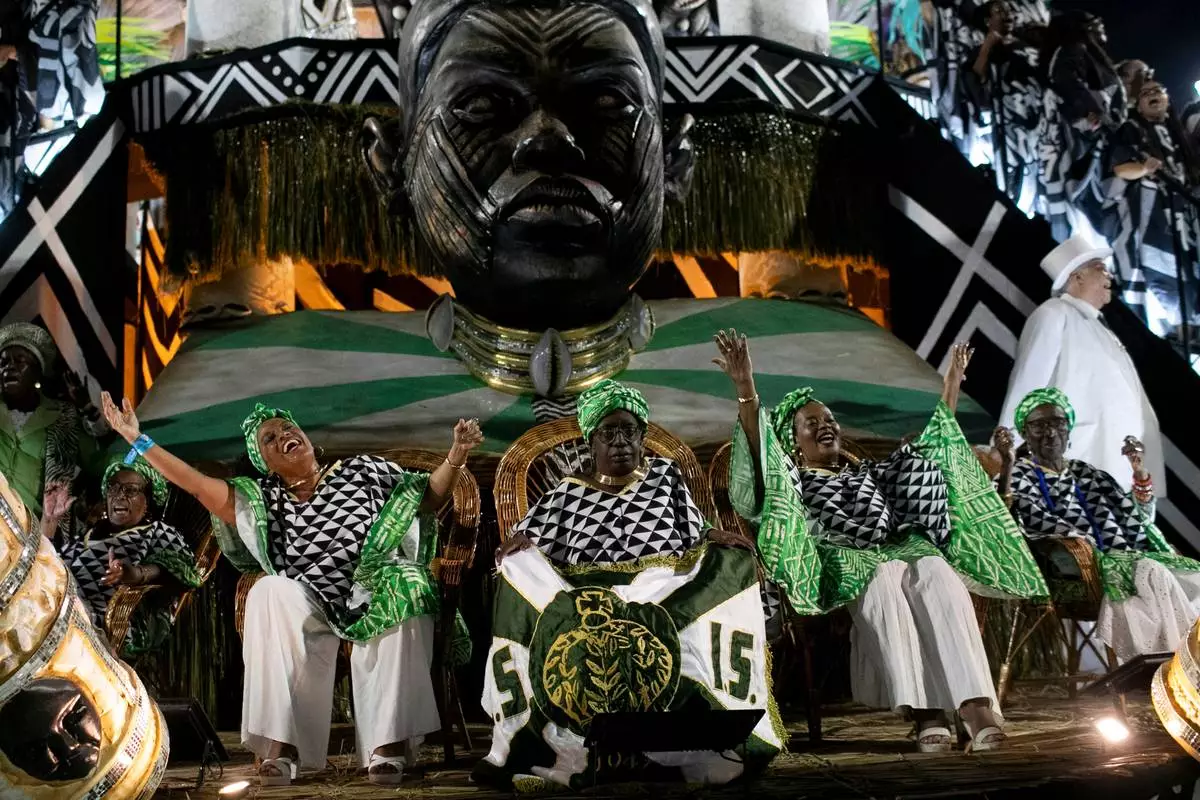
Performers from the Imperio Serrano samba school parade on a float during Carnival celebrations at the Sambadrome in Rio de Janeiro, early Sunday, Feb. 15, 2026. (AP Photo/Bruna Prado)
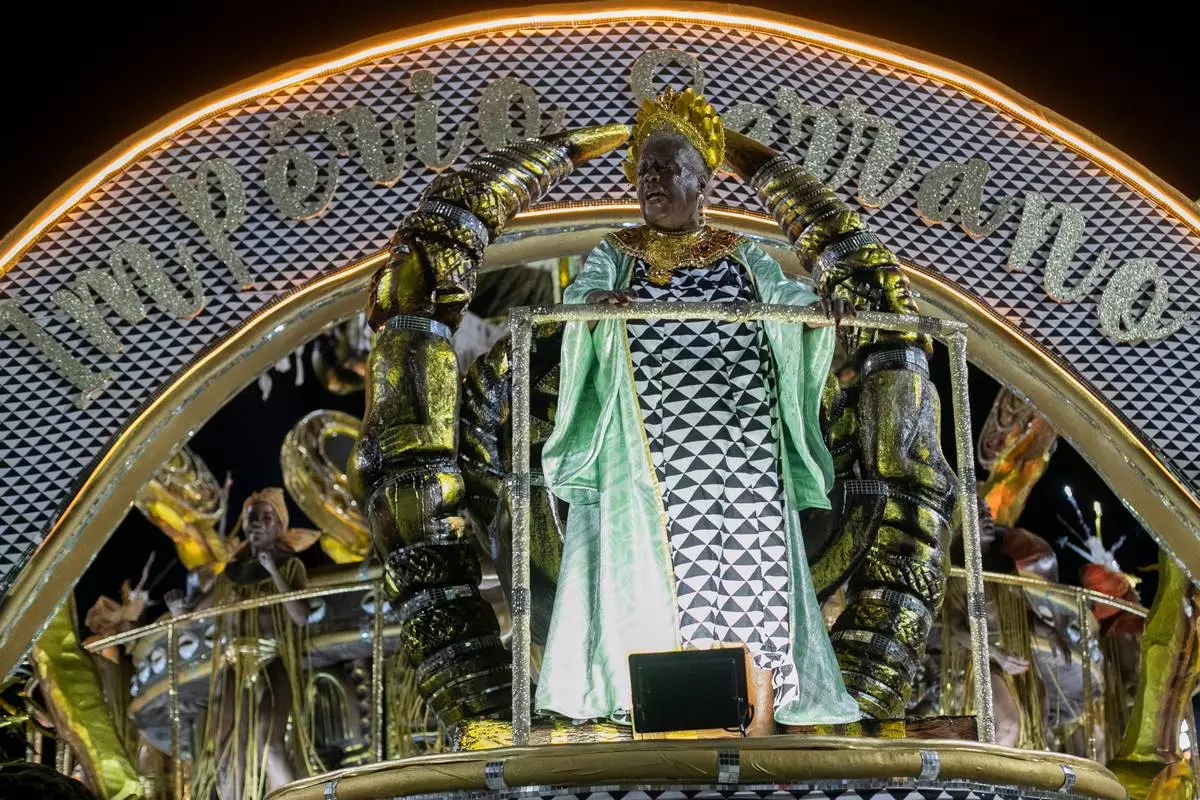
Brazilian writer Conceicao Evaristo is honored by the Imperio Serrano samba school during Carnival celebrations at the Sambadrome in Rio de Janeiro, early Sunday, Feb. 15, 2026. (AP Photo/Bruna Prado)
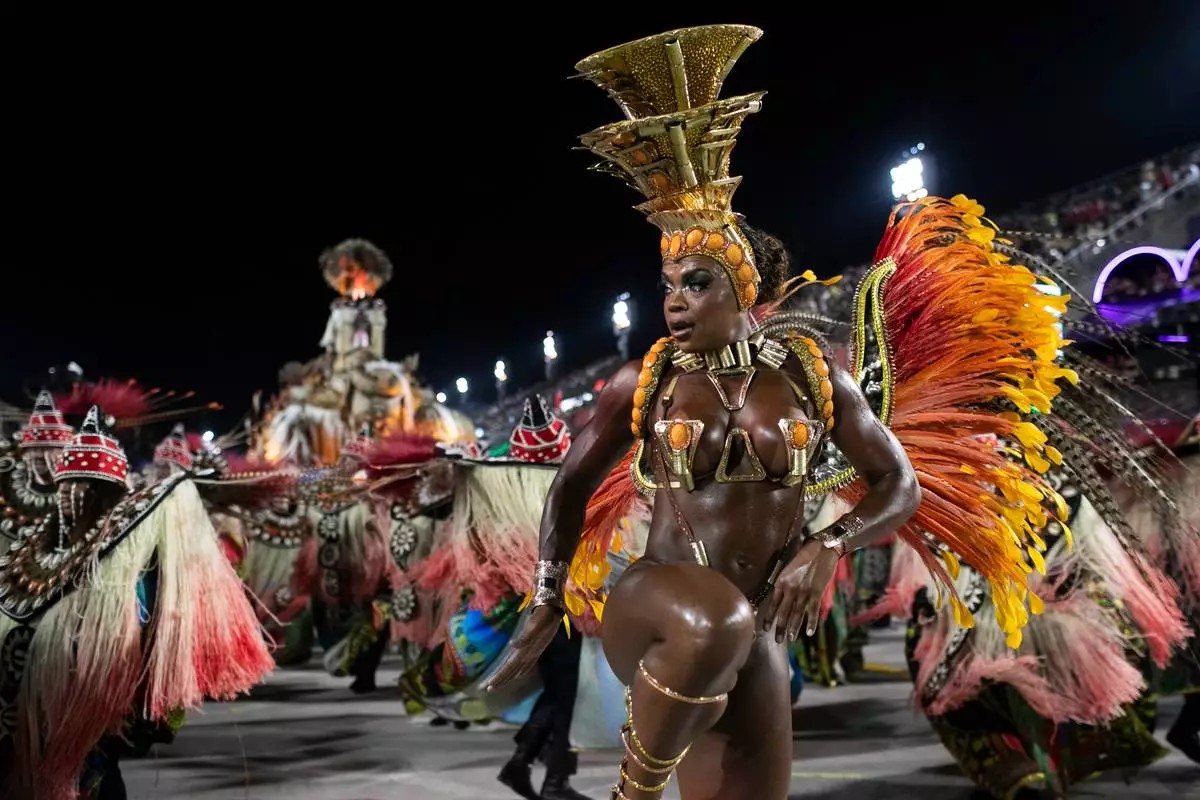
A performer from the Imperio Serrano samba school parades during Carnival celebrations at the Sambadrome in Rio de Janeiro, early Sunday, Feb. 15, 2026. (AP Photo/Bruna Prado)
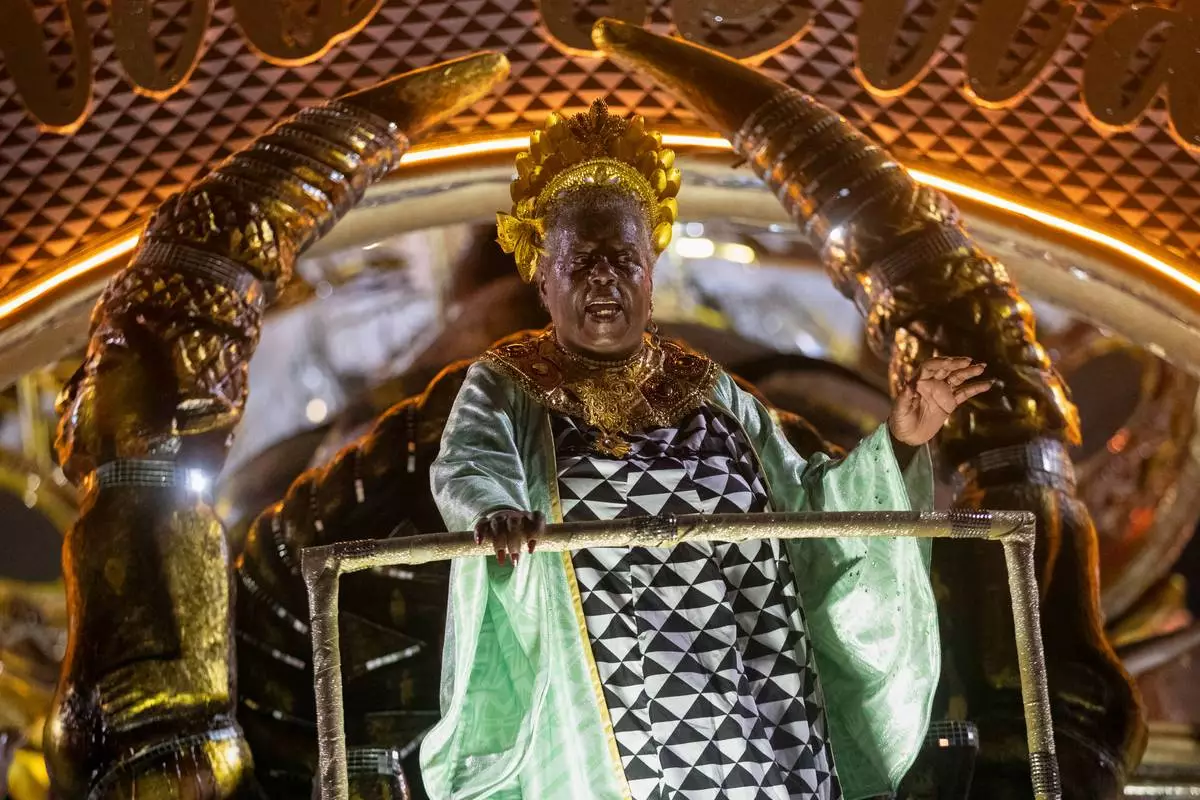
Brazilian writer Conceicao Evaristo is honored by the Imperio Serrano samba school during Carnival celebrations at the Sambadrome in Rio de Janeiro, early Sunday, Feb. 15, 2026. (AP Photo/Bruna Prado)
GENEVA (AP) — The U.S. and Iran are expected to hold their second round of talks about Iran’s nuclear program Tuesday in Geneva as the United States ramps up its military presence in the Middle East and Iran holds large-scale maritime exercises.
U.S. President Donald Trump has repeatedly threatened to use force to compel Iran to agree to constrain its nuclear program. Iran has said it would respond with an attack of its own. Trump has also threatened Iran over its deadly crackdown on recent nationwide protests.
The first round of talks Feb. 6 were held in Oman, a sultanate on the eastern edge of the Arabian Peninsula, and were indirect, with SUVs flying the American flag entering the palace venue only after it appeared the Iranian officials had left. The arrangements for Tuesday's round of negotiations were not clear.
Trump’s envoys Steve Witkoff and Jared Kushner were traveling for the new round of talks. U.S. Secretary of State Marco Rubio, visiting Budapest, Hungary, said Monday that the U.S. hopes to achieve a deal with Iran, despite the difficulties. “I’m not going to prejudge these talks,” Rubio said. “The president always prefers peaceful outcomes and negotiated outcomes to things.”
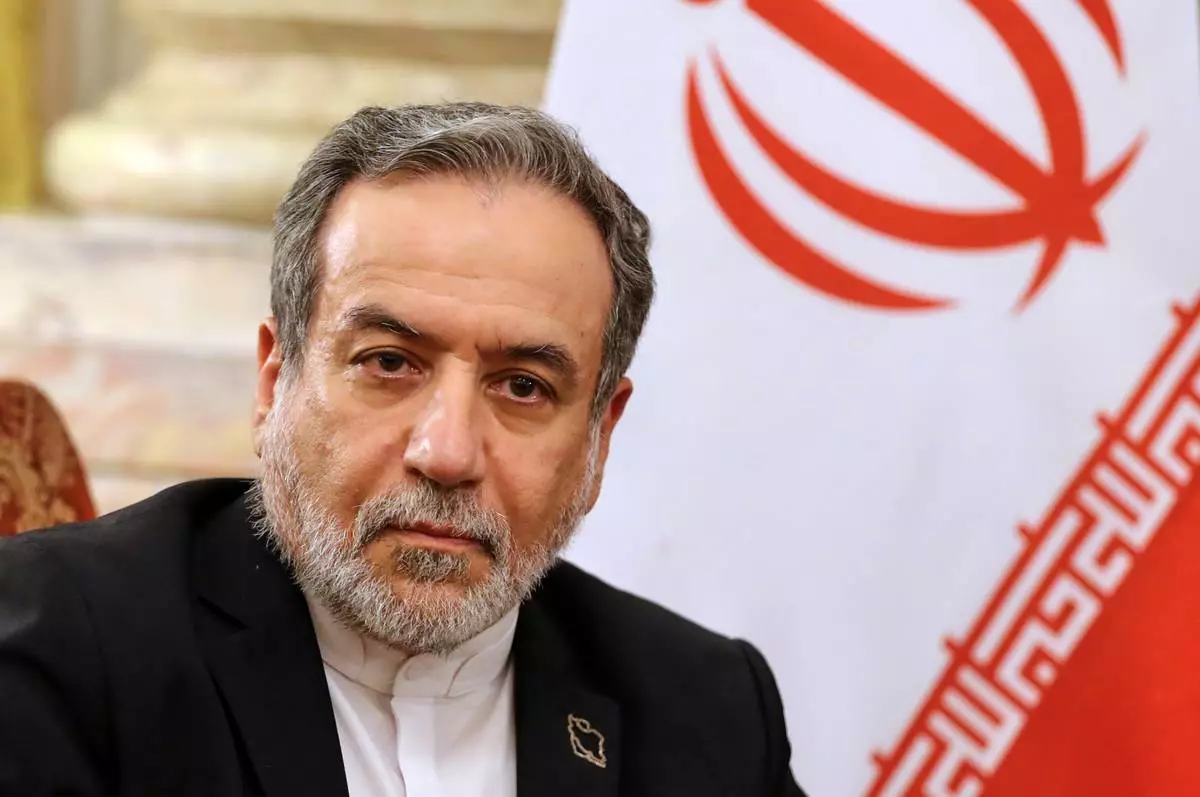
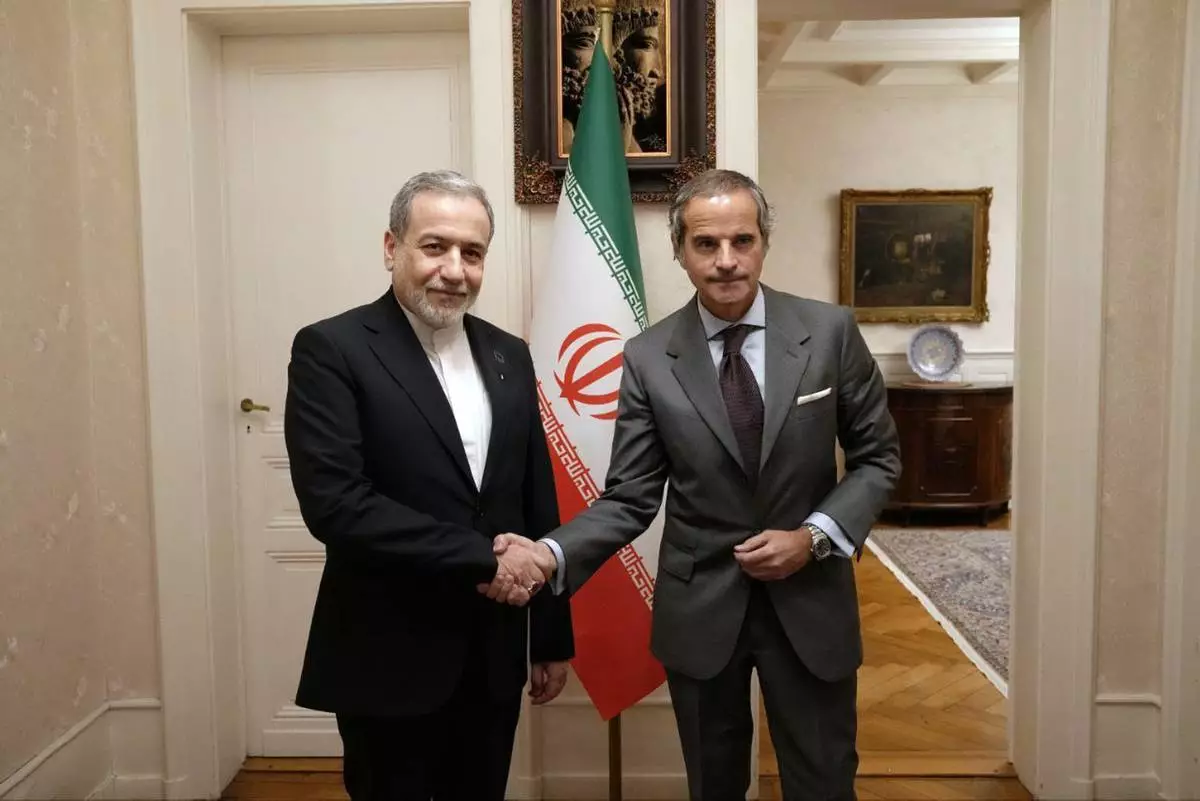
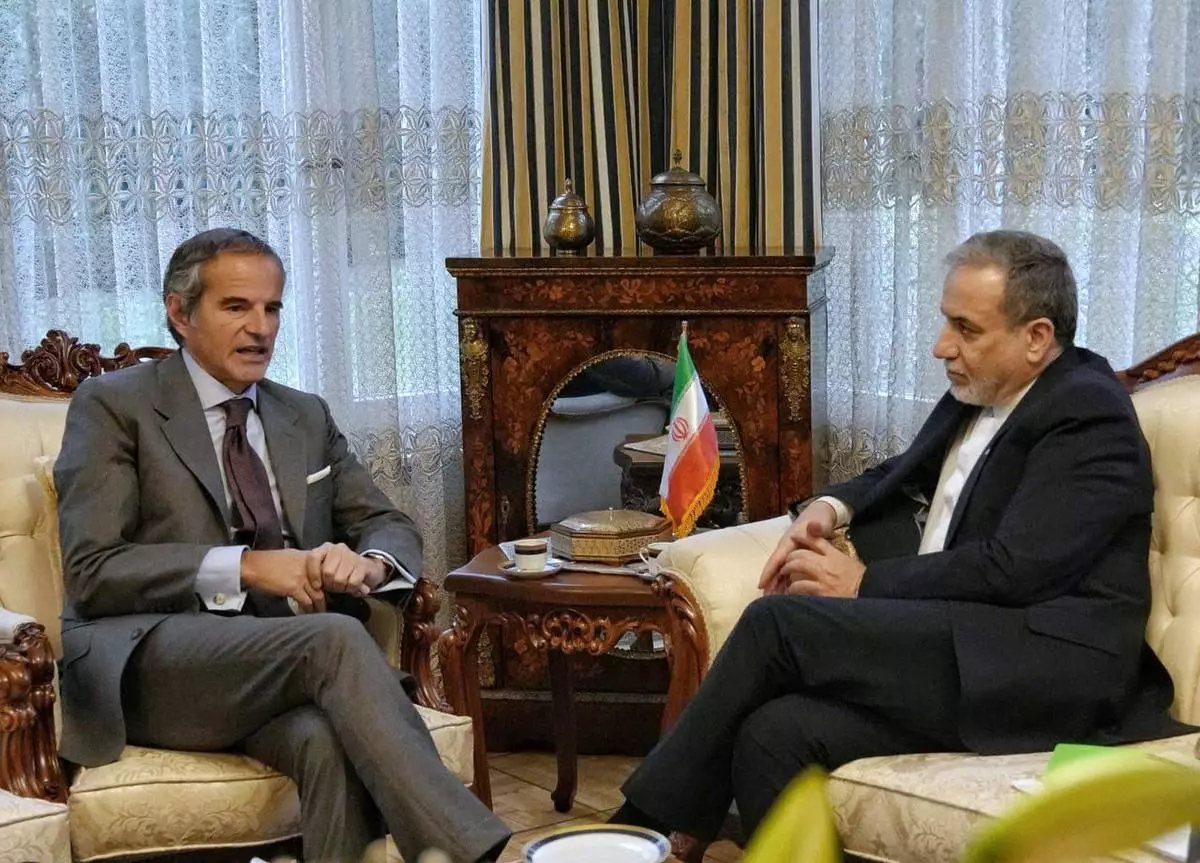
Iranian Foreign Minister Abbas Araghchi, who is leading the talks for Iran, met with the head of the U.N. nuclear watchdog agency Monday in Geneva.
“I am in Geneva with real ideas to achieve a fair and equitable deal,” Araghchi wrote on X. “What is not on the table: submission before threats.”
Talking to reporters Monday night aboard Air Force One on his way to Washington, U.S. President Donald Trump said of the U.S.-Iran talks, “I’ll be involved in those talks -- indirectly -- and they’ll be very important, and we’ll see what can happen.”
“Typically, Iran’s a very tough negotiator,” he said, first describing Iran as “good negotiators” before correcting himself. “I would say they’re bad negotiators, because we could have had a deal instead of sending the B2s in to knock out their nuclear potential, and we had to send the B2s. I hope they’re going to be more reasonable.”
Trump added: “I think they want to make a deal. I don’t think they want the consequences of not making a deal.”
The U.S. is also hosting talks between envoys from Russia and Ukraine in Geneva on Tuesday and Wednesday, days ahead of the fourth anniversary of the all-out Russian invasion of its neighbor.
Iran is marking 40 days, the traditional Muslim mourning period, since one of the deadliest days in the crackdown on protests that swept the country last month. Activists say at least 7,015 people have been killed, many in a bloody crackdown overnight between Jan. 8 and 9.
The U.S.-based Human Rights Activists News Agency, which offered the latest figures, has been accurate in counting deaths during previous rounds of unrest in Iran and relies on a network of activists in the country to verify deaths.
The Associated Press has been unable to independently assess the death toll, given authorities have disrupted internet access and international calls in Iran.
Iran’s state news agency said the government would hold a memorial marking 40 days at the Grand Mosalla mosque in Tehran, and blamed the demonstrations on “violent actions by armed groups allegedly directed by foreign intelligence agencies.”
Iran announced that its paramilitary Revolutionary Guard started a drill early Monday morning in the Strait of Hormuz, the Persian Gulf and the Gulf of Oman, waterways that are crucial international trade routes through which 20% of the world’s oil passes.
Separately, EOS Risk Group said sailors passing through the region received a radio warning that the northern lane of the Strait of Hormuz, in Iranian territorial waters, likely would see a live-fire drill Tuesday. Iranian state TV did not mention the live-fire drill.
It was Iran's second warning in recent weeks about a live-fire drill.
Last week, Trump said the USS Gerald R. Ford, the world’s largest aircraft carrier, was being sent from the Caribbean Sea to the Mideast to join other warships and military assets the U.S. has built up in the region.
The Ford, whose new deployment was first reported by The New York Times, will join the USS Abraham Lincoln and its accompanying guided-missile destroyers, which have been in the region for over two weeks. U.S. forces already have shot down an Iranian drone that approached the Lincoln on the same day last week that Iran tried to stop a U.S.-flagged ship in the Strait of Hormuz.
Gulf Arab nations have warned any attack could spiral into another regional conflict in a Mideast still reeling from the Israel-Hamas war in the Gaza Strip.
The Trump administration is seeking a deal to limit Iran’s nuclear program and ensure it does not develop nuclear weapons. Iran says it is not pursuing weapons and has so far resisted demands that it halt uranium enrichment or hand over its supply of uranium.
Iran’s Deputy Foreign Minister Majid Takht-Ravanchi signaled that Tehran could be open to compromise on the nuclear issue, but is looking for an easing of international sanctions led by the United States.
“The ball is in America’s court. They have to prove they want to have a deal with us,” Takht-Ravanchi told the BBC on Sunday. “If we see a sincerity on their part, I am sure that we will be on a road to have an agreement.”
“We are ready to discuss this and other issues related to our program provided that they are also ready to talk about the sanctions,” he added.
The U.S. and Iran were in the middle of months of meetings when Israel’s launch of a 12-day war against Iran back in June instantly halted the talks. The U.S. bombed Iranian nuclear sites during that war, likely destroying many of the centrifuges that spun uranium to near weapons-grade purity. Israel’s attacks decimated Iran’s air defenses and targeted its ballistic missile arsenal as well.
Iran has insisted its nuclear program is for peaceful purposes. Before the June war, Iran had been enriching uranium up to 60% purity, a short, technical step away from weapons-grade levels.
Associated Press writer Melanie Lidman contributed from Tel Aviv, Israel.
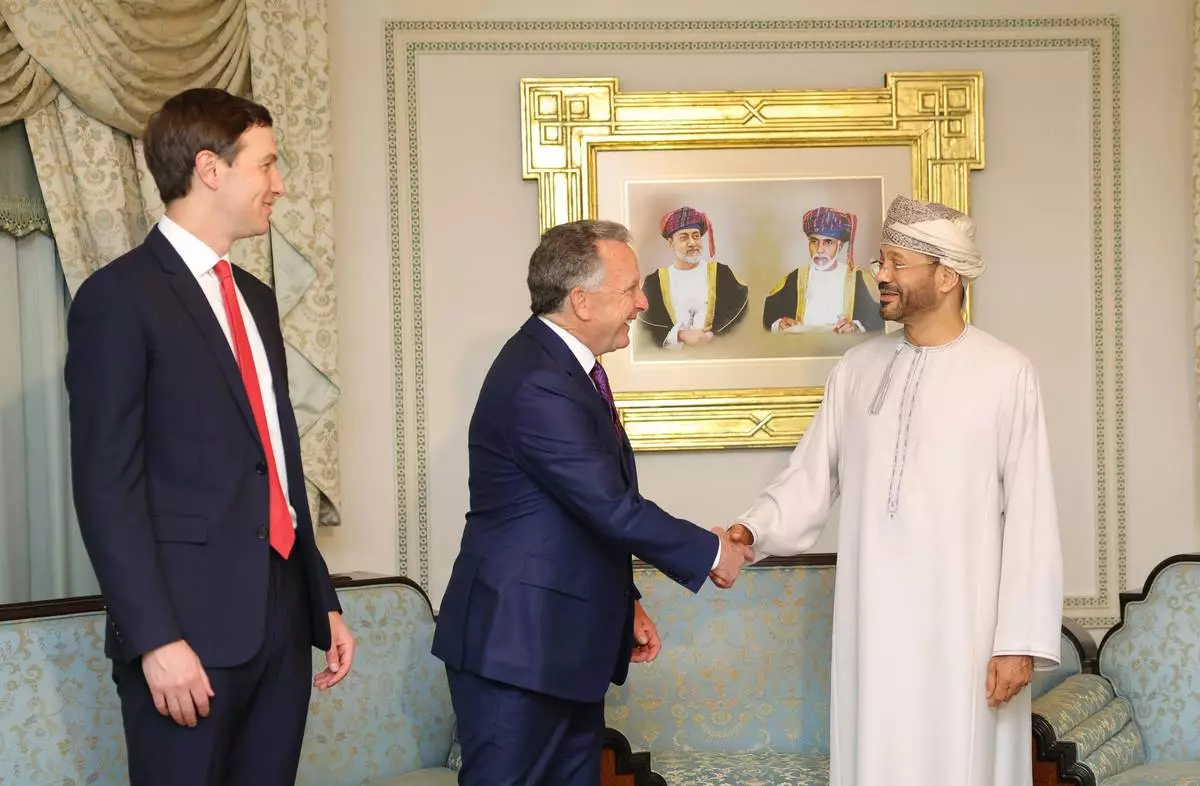
FILE - In this photo released by the Oman's Foreign Ministry, Steve Witkoff, White House special envoy, center, shakes hands with Oman's Foreign Minister Sayyid Badr Albusaidi, accompanied by Jared Kushner, left, during a meeting prior to Iran and U.S. negotiations in Muscat, Oman, Friday, Feb. 6, 2026. (Oman Foreign Ministry via AP, File)
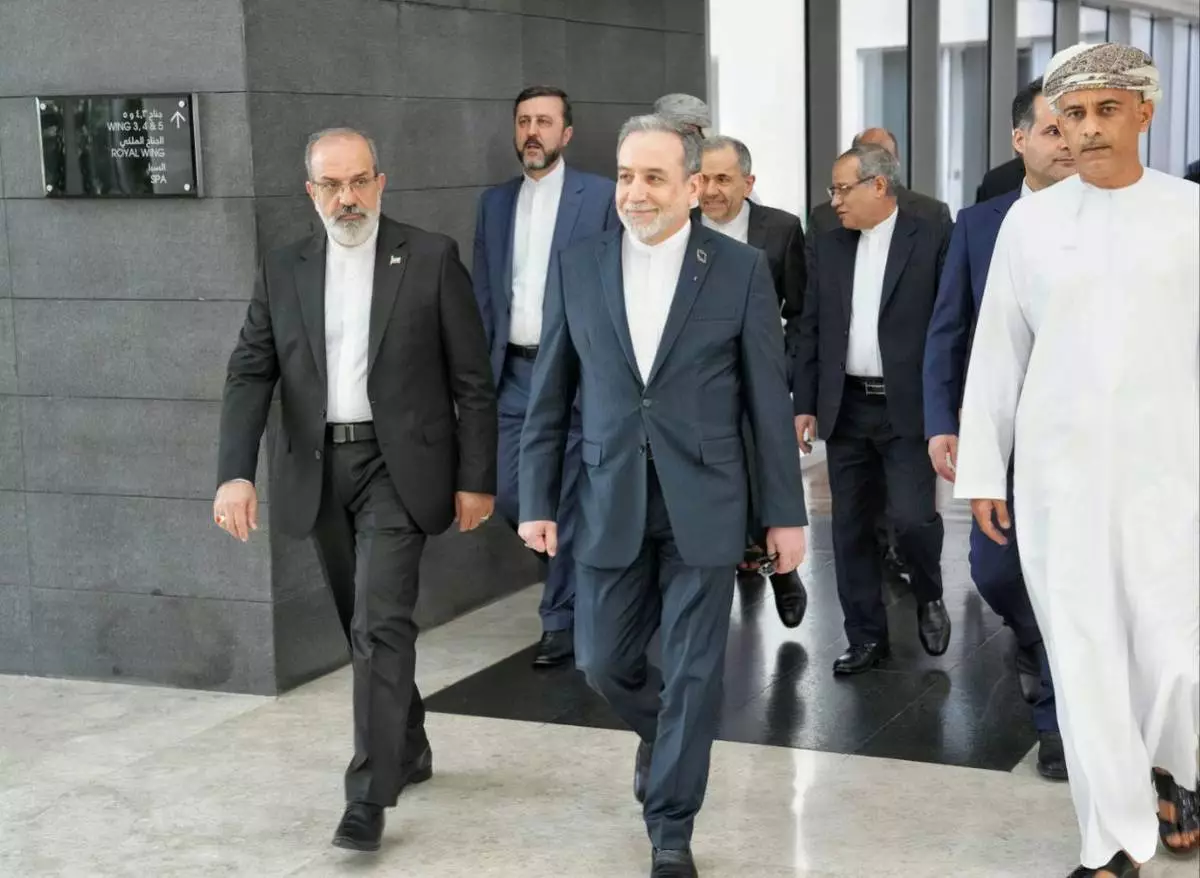
FILE - In this photo released by the Iranian Foreign Ministry, Iranian Foreign Minister Abbas Araghchi, center, heads to the venue for talks between Iran and the U.S., in Muscat, Oman, Friday, Feb. 6, 2026. (Iranian Foreign Ministry via AP, File)
FILE - Iranian Foreign Minister Abbas Araghchi looks on during a meeting with Director General of the International Atomic Energy Agency (IAEA) Rafael Grossi, and Egyptian Foreign Minister Badr Abdelatty, at Tahrir Palace in Cairo, Tuesday, Sept. 9, 2025. (AP Photo/Khaled Elfiqi, File)
In this photo released by the Iranian Foreign Ministry, Iranian Foreign Minister Abbas Araghchi, left, shakes hands with International Atomic Energy Agency (IAEA) Director-General Rafael Grossi during their meeting in Geneva, Switzerland, Monday, Feb. 16, 2026. (Iranian Foreign Ministry via AP)
In this photo released by the Iranian Foreign Ministry, Iranian Foreign Minister Abbas Araghchi, right, and International Atomic Energy Agency (IAEA) Director-General Rafael Grossi, left, hold a meeting in Geneva, Switzerland, Monday, Feb. 16, 2026. (Iranian Foreign Ministry via AP)