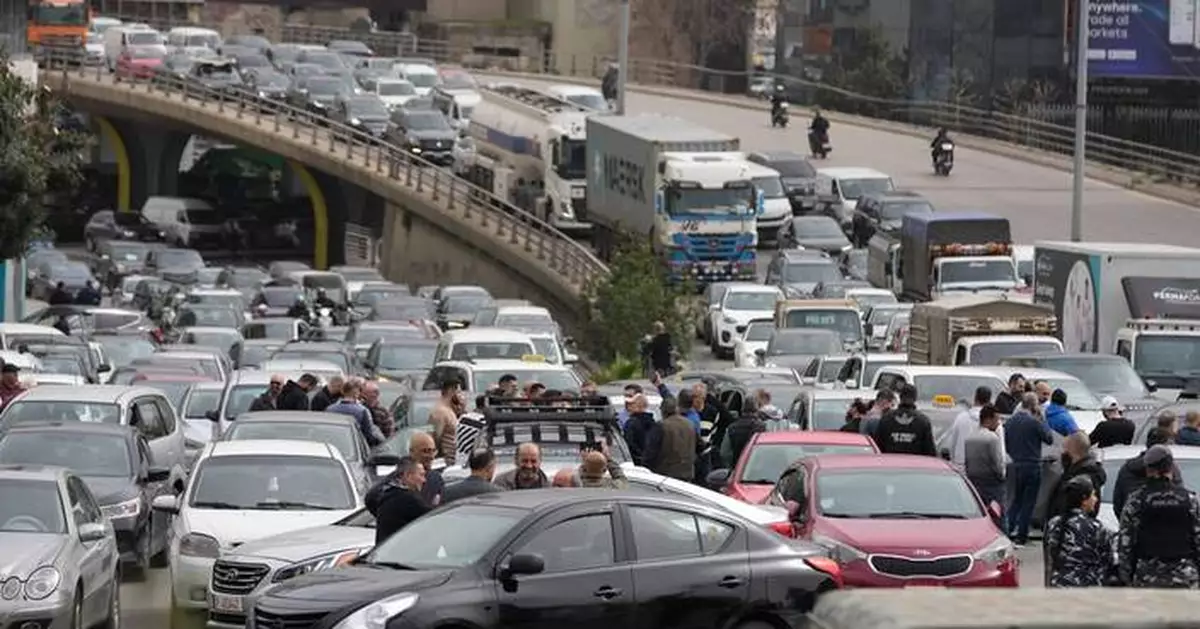
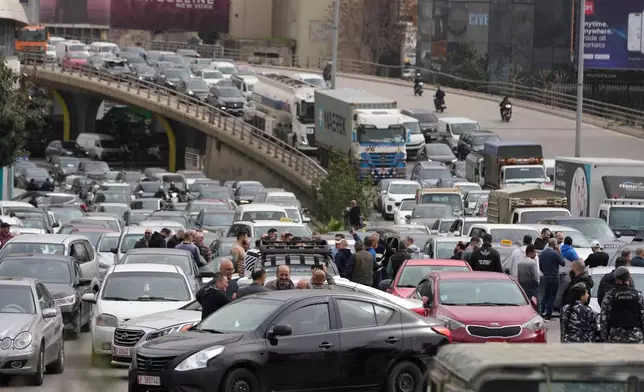
BEIRUT (AP) — Protesters blocked main roads in and around Beirut on Tuesday after Lebanon’s Cabinet approved new taxes that raise fuel prices and other products to fund public pay hikes.
The Cabinet approved a tax of 300,000 Lebanese pounds (about $3.30) on every 20 liters (5.3 gallons) of gasoline on Monday. Diesel fuel was exempted from the new tax, as most in Lebanon depend on it to run private generators to make up for severe shortages in state electricity.
Click to Gallery
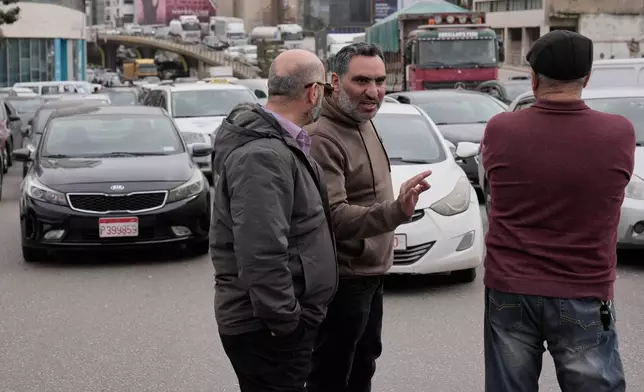
A taxi driver who blocks a main highway with his car, checks his mobile phone during a protest against the increased taxes and gasoline prices issued by the Lebanese Cabinet on Monday, in Beirut, Lebanon, Tuesday, Feb. 17, 2026. (AP Photo/Hussein Malla)
Taxi drivers block a main highway with their cars during a protest against the increased taxes and gasoline prices issued by the Lebanese Cabinet on Monday, in Beirut, Lebanon, Tuesday, Feb. 17, 2026. (AP Photo/Hussein Malla)
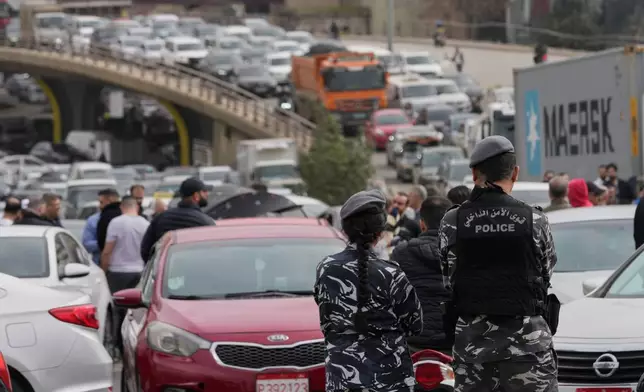
Lebanese police stand in front of taxi drivers who block a main highway with their cars during a protest against the increased taxes and gasoline prices issued by the Lebanese Cabinet on Monday, in Beirut, Lebanon, Tuesday, Feb. 17, 2026. (AP Photo/Hussein Malla)
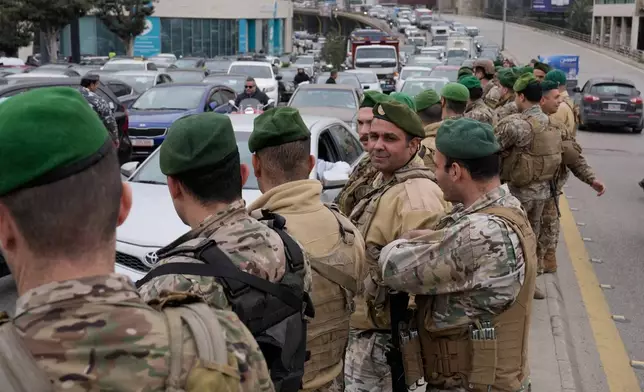
Lebanese army soldiers deploy after taxi drivers block a main highway with their cars during a protest against the increased taxes and gasoline prices issued by the Lebanese Cabinet on Monday, in Beirut, Lebanon, Tuesday, Feb. 17, 2026. (AP Photo/Hussein Malla)
Taxi drivers, foreground, block a main highway with their cars during a protest against the increased taxes and gasoline prices issued by the Lebanese Cabinet on Monday, in Beirut, Lebanon, Tuesday, Feb. 17, 2026. (AP Photo/Hussein Malla)
The government also agreed to increase the value-added tax on all products already subject to the levy from 11 to 12%, which the parliament still has to approve.
The tax increases are to support raises and pension boosts of public employees, after wages lost value in the 2019 currency collapse, giving them the equivalent of an additional six months’ salary. Information Minister Paul Morcos said the pay increases were estimated to cost about $800 million.
Though the Mediterranean country sits on one of the largest gold reserves in the Middle East, it suffers ongoing inflation and widespread corruption. The cash-strapped country also suffered about $11 billion in damages in the 2024 war between Israel and the Hezbollah militant group.
Ghayath Saadeh, one of a group of taxi drivers who blocked a main road leading into downtown Beirut, said the country’s leaders “consider us taxi drivers to be garbage.”
“Everything is getting more expensive, food and drinks, and Ramadan is coming,” he said. “We will block all the roads, God willing, if they don’t respond to us.”
When the Lebanese government proposed new taxes in 2019, including a $6 monthly fee for using internet calls through services such as WhatsApp, mass protests broke out that paralyzed the country for months. Demonstrators called for the country’s leaders to step down over widespread corruption, government paralysis and failing infrastructure, and for an end to the country’s sectarian power-sharing system.
Lebanon has been under international pressure to make financial reforms for years, but has so far made little progress.
Also Monday, the cabinet received a report from the Lebanese army on its progress on a plan to disarm non-state militant groups in the country, including Hezbollah.
Last month, the army announced it had completed the first phase of the plan, covering the area south of the Litani River, near the border with Israel. The second phase of the plan will cover segments of southern Lebanon between the Litani and the Awali rivers, which includes the port city of Sidon.
Morcos, the information minister, said following the cabinet session that the second stage is expected to take four months but could be extended “depending on the available resources, the continuation of Israeli attacks and the obstacles on the ground.”
The disarmament plan comes after a U.S.-brokered ceasefire nominally ended a war between Hezbollah and Israel in November 2024. Since then, Israel has accused Hezbollah of rebuilding and has continued to launch near-daily strikes in Lebanon and to occupy several hilltop points on the Lebanese side of the border.
Hezbollah has insisted that the ceasefire deal only requires it to disarm south of the Litani and that it will not discuss disarming in the rest of the country until Israel stops its strikes and withdraws from all Lebanese territory.
—
Associated Press writer Hussein Malla contributed to this report.
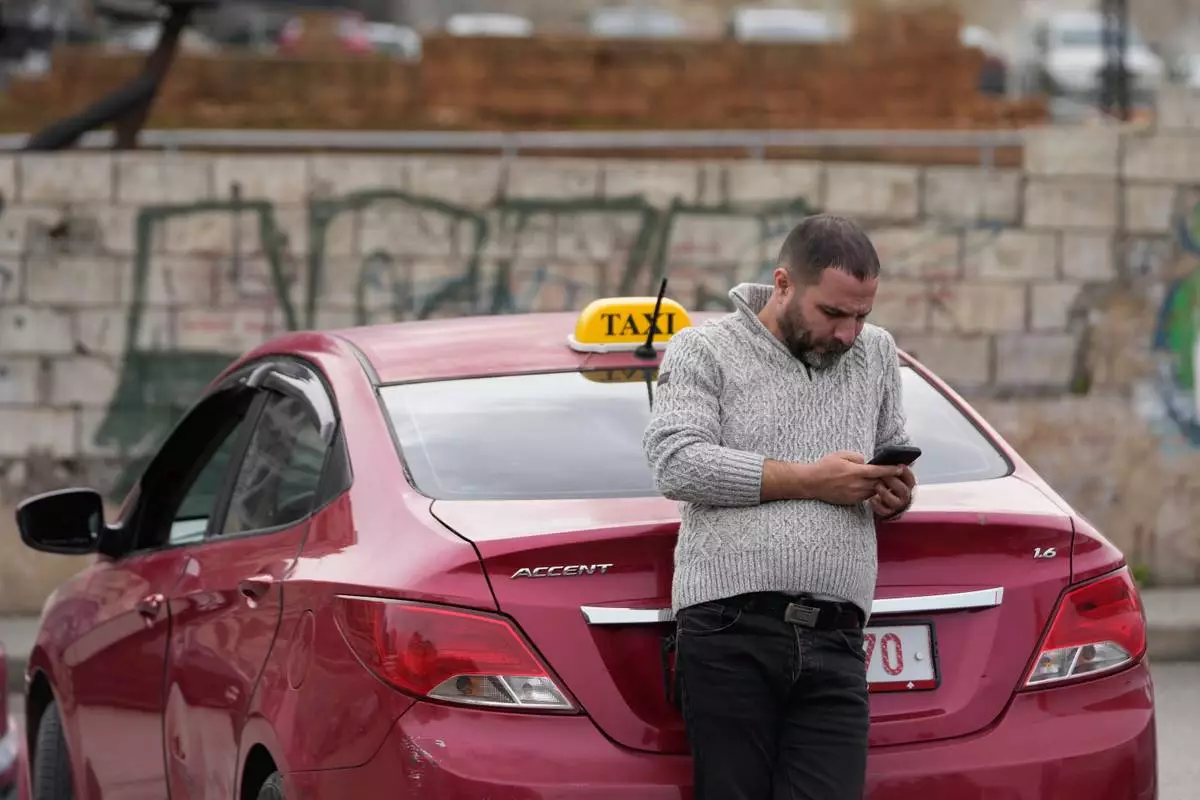
A taxi driver who blocks a main highway with his car, checks his mobile phone during a protest against the increased taxes and gasoline prices issued by the Lebanese Cabinet on Monday, in Beirut, Lebanon, Tuesday, Feb. 17, 2026. (AP Photo/Hussein Malla)
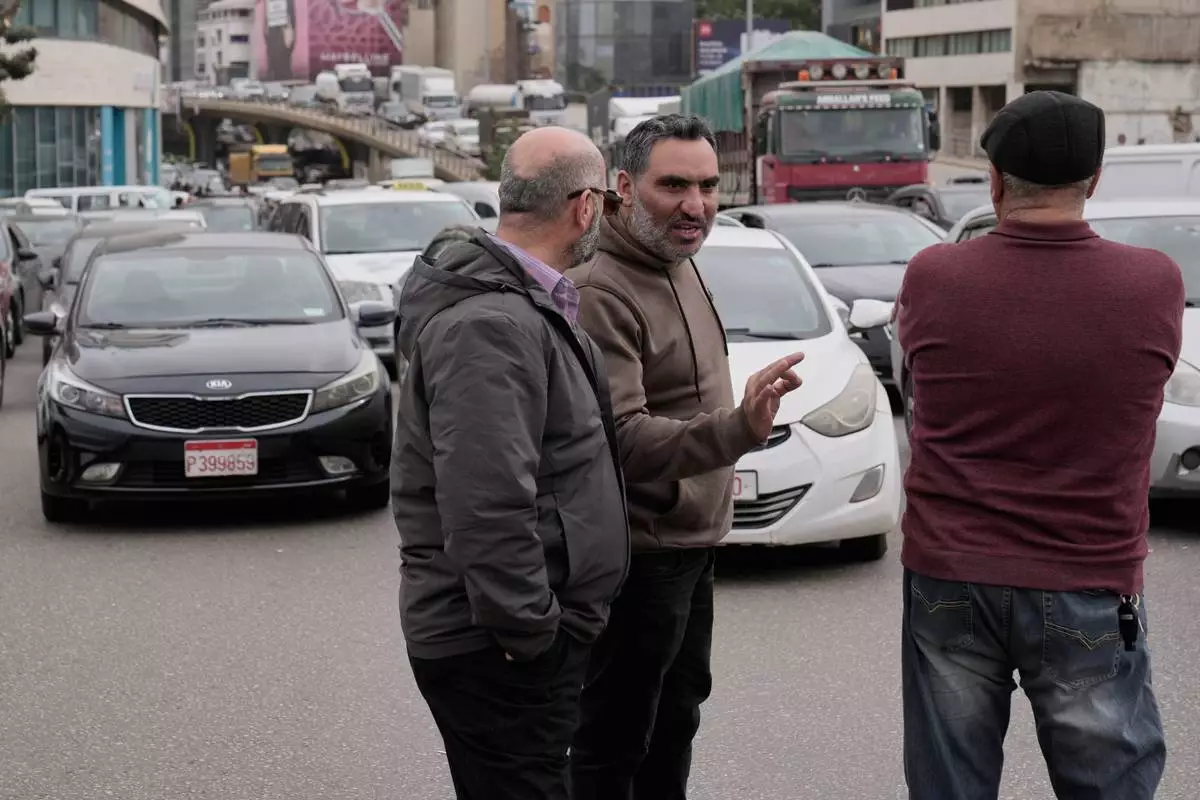
Taxi drivers block a main highway with their cars during a protest against the increased taxes and gasoline prices issued by the Lebanese Cabinet on Monday, in Beirut, Lebanon, Tuesday, Feb. 17, 2026. (AP Photo/Hussein Malla)
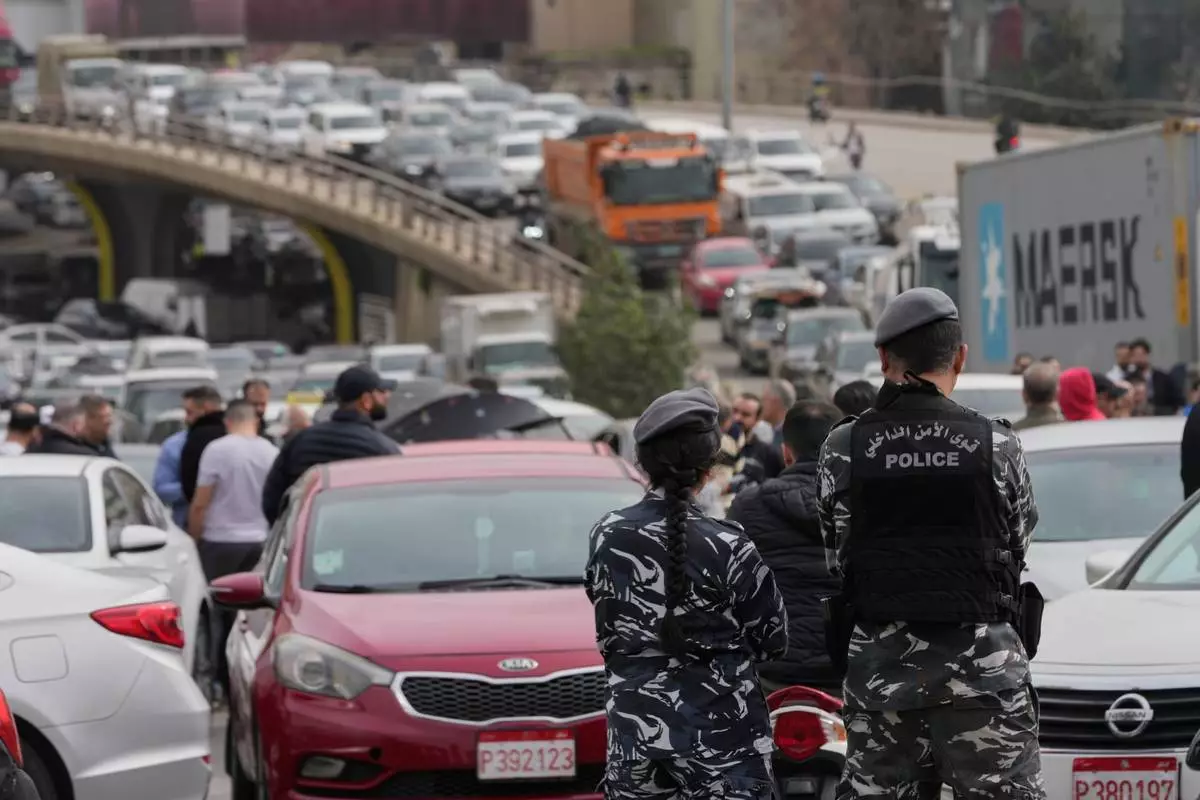
Lebanese police stand in front of taxi drivers who block a main highway with their cars during a protest against the increased taxes and gasoline prices issued by the Lebanese Cabinet on Monday, in Beirut, Lebanon, Tuesday, Feb. 17, 2026. (AP Photo/Hussein Malla)
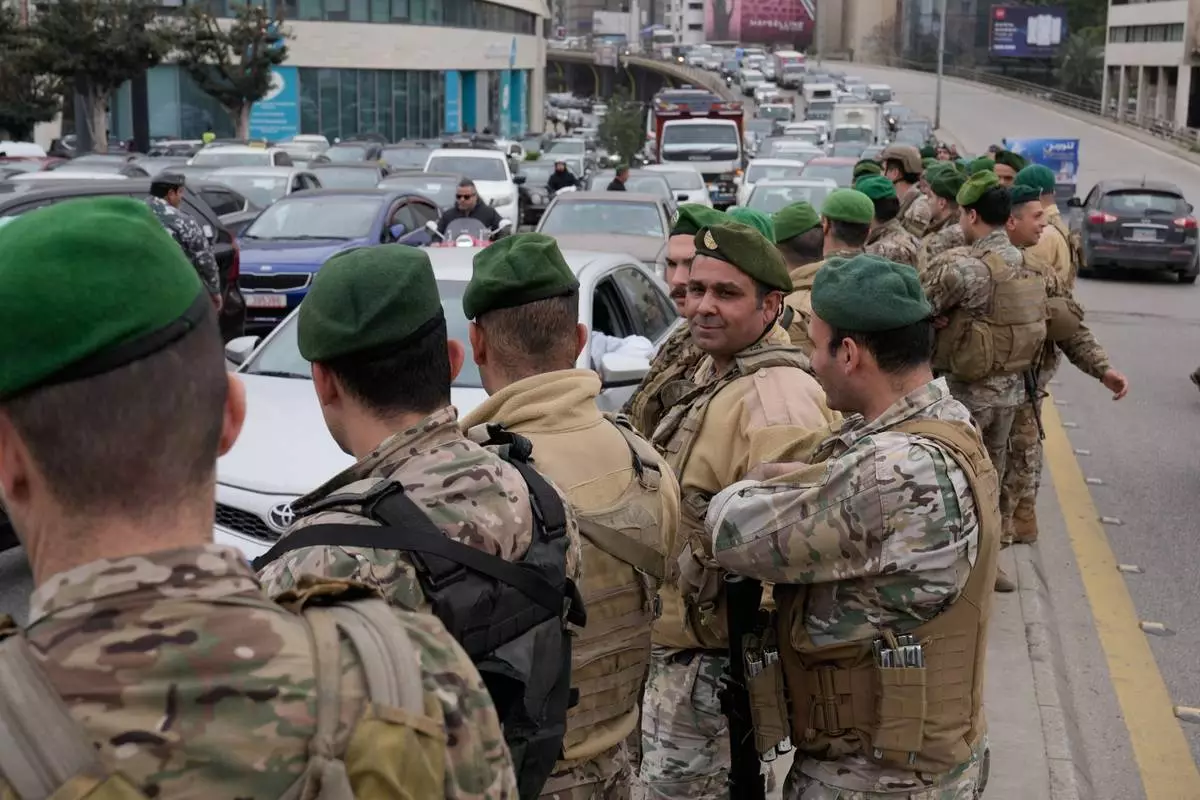
Lebanese army soldiers deploy after taxi drivers block a main highway with their cars during a protest against the increased taxes and gasoline prices issued by the Lebanese Cabinet on Monday, in Beirut, Lebanon, Tuesday, Feb. 17, 2026. (AP Photo/Hussein Malla)
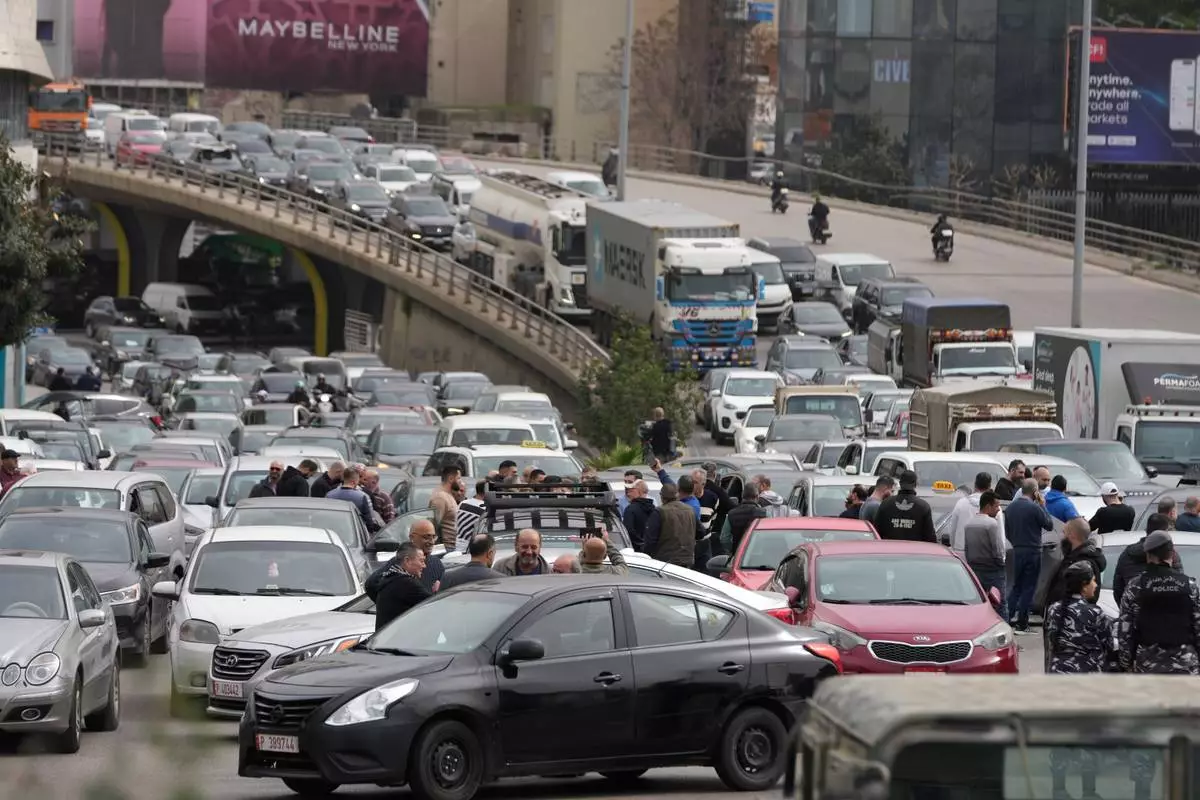
Taxi drivers, foreground, block a main highway with their cars during a protest against the increased taxes and gasoline prices issued by the Lebanese Cabinet on Monday, in Beirut, Lebanon, Tuesday, Feb. 17, 2026. (AP Photo/Hussein Malla)
GENEVA (AP) — Iranian state TV announced Tuesday that Iran will close the Strait of Hormuz, an essential international waterway, for several hours due to “safety and maritime concerns” as it conducts live fire drills.
This is the first time that Iran has closed parts of the strait since the U.S. began threatening Iran with military action. Earlier, state TV announced that Iran had launched missiles into the Strait of Hormuz.
The announcement comes as Iran is participating in nuclear negotiations with the U.S. in Geneva, Switzerland.
THIS IS A BREAKING NEWS UPDATE. AP’s earlier story follows below.
GENEVA (AP) — The U.S. and Iran are holding their second round of talks about Iran’s nuclear program Tuesday in Geneva as the United States ramps up its military presence in the Middle East and Iran holds large-scale maritime exercises.
As the talks began, Iranian media announced that Iran had fired live missiles toward the Strait of Hormuz. Iran had announced a maritime military exercise on Monday in waterways that are crucial international trade routes through which 20% of the world’s oil passes.
The semi-official Tasnim news agency, which is close to the paramilitary Revolutionary Guard, said missiles launched inside Iran and along its coast had struck their targets in the Strait of Hormuz.
Iranian state TV reported Tuesday that the negotiations with the U.S. will be indirect and will focus only on Iran’s nuclear program, not domestic policies including its bloody crackdown on protesters last month.
U.S. President Donald Trump has repeatedly threatened to use force to compel Iran to agree to constrain its nuclear program. Iran has said it would respond with an attack of its own. Trump has also threatened Iran over its deadly crackdown on recent nationwide protests.
The first round of talks Feb. 6 were held in Oman, a sultanate on the eastern edge of the Arabian Peninsula, and were indirect. Similarly to the last round of talks, the Iranians appeared to be meeting with Omani mediators separately from the Americans on Tuesday.
Trump’s envoys Steve Witkoff and Jared Kushner were traveling for the new round of talks. U.S. Secretary of State Marco Rubio, visiting Budapest, Hungary, said Monday that the U.S. hopes to achieve a deal with Iran, despite the difficulties. “I’m not going to prejudge these talks,” Rubio said. “The president always prefers peaceful outcomes and negotiated outcomes to things.”
Iranian Foreign Minister Abbas Araghchi, who is leading the talks for Iran, met with the head of the U.N. nuclear watchdog agency Monday in Geneva.
“I am in Geneva with real ideas to achieve a fair and equitable deal,” Araghchi wrote on X. “What is not on the table: submission before threats.”
Talking to reporters Monday night aboard Air Force One on his way to Washington, U.S. President Donald Trump said he planned to be involved in the talks, at least indirectly. “I think they want to make a deal. I don’t think they want the consequences of not making a deal," he said.
The U.S. is also hosting talks between envoys from Russia and Ukraine in Geneva on Tuesday and Wednesday, days ahead of the fourth anniversary of the all-out Russian invasion of its neighbor.
The semi-official Tasnim news agency, which is close to the paramilitary Revolutionary Guard, said missiles launched inside Iran and along its coast had struck their targets in the Strait of Hormuz.
Iran had announced that the Revolutionary Guard started a drill early Monday morning in the Strait of Hormuz, the Persian Gulf and the Gulf of Oman, which are crucial international shipping routes.
It is the second time in recent weeks that Iran has held a live fire drill in the Strait of Hormuz.
Iran's Supreme Leader Ayatollah Ali Khamenei stepped up his warnings to the U.S. over its buildup of military forces in the Middle East. “Of course a warship is a dangerous apparatus, but more dangerous than the warship is the weapon that can sink the warship into the depths of the sea,” Khamanei said, Iranian state TV reported.
He also warned the U.S. that “forcing the result of talks in advance is a wrong and foolish job."
Last week, Trump said the USS Gerald R. Ford, the world’s largest aircraft carrier, was being sent from the Caribbean Sea to the Mideast to join other warships and military assets the U.S. has built up in the region.
The Ford, whose new deployment was first reported by The New York Times, will join the USS Abraham Lincoln and its accompanying guided-missile destroyers, which have been in the region for over two weeks. U.S. forces already have shot down an Iranian drone that approached the Lincoln on the same day last week that Iran tried to stop a U.S.-flagged ship in the Strait of Hormuz.
Gulf Arab nations have warned any attack could spiral into another regional conflict in a Mideast still reeling from the Israel-Hamas war in the Gaza Strip.
The Trump administration is seeking a deal to limit Iran’s nuclear program and ensure it does not develop nuclear weapons. Iran says it is not pursuing weapons and has so far resisted demands that it halt uranium enrichment or hand over its supply of uranium.
The U.S. and Iran were in the middle of months of meetings when Israel’s launch of a 12-day war against Iran back in June instantly halted the talks. The U.S. bombed Iranian nuclear sites during that war, likely destroying many of the centrifuges that spun uranium to near weapons-grade purity. Israel’s attacks decimated Iran’s air defenses and targeted its ballistic missile arsenal as well.
Iran has insisted its nuclear program is for peaceful purposes. Before the June war, Iran had been enriching uranium up to 60% purity, a short, technical step away from weapons-grade levels.
Iran is marking 40 days, the traditional Muslim mourning period, since one of the deadliest days in the crackdown on protests that swept the country last month. Activists say at least 7,015 people have been killed, many in a bloody crackdown overnight between Jan. 8 and 9.
The U.S.-based Human Rights Activists News Agency, which offered the latest figures, has been accurate in counting deaths during previous rounds of unrest in Iran and relies on a network of activists in the country to verify deaths.
The Associated Press has been unable to independently assess the death toll, given authorities have disrupted internet access and international calls in Iran.
Iran’s state news agency said the government would hold a memorial marking 40 days at the Grand Mosalla mosque in Tehran, and blamed the demonstrations on “violent actions by armed groups allegedly directed by foreign intelligence agencies.”
Liechtenstein reported from Vienna. Associated Press writer Melanie Lidman contributed from Tel Aviv, Israel.
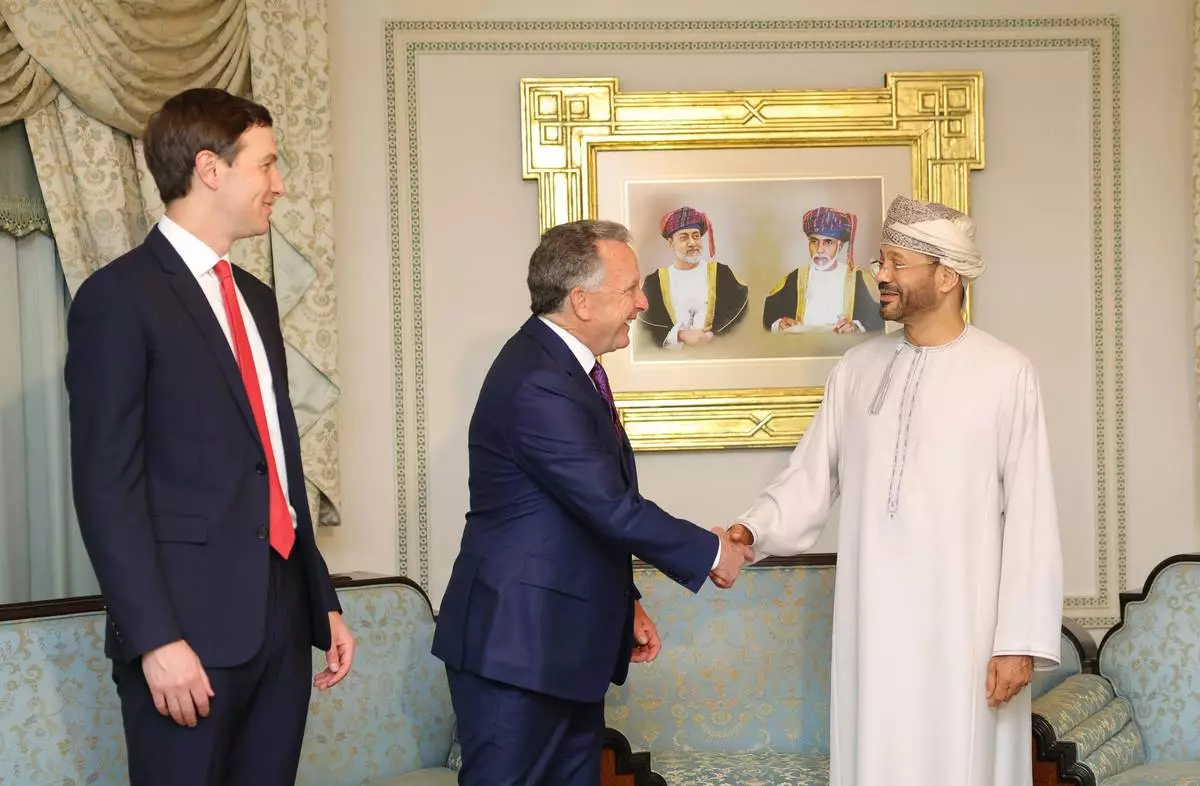
FILE - In this photo released by the Oman's Foreign Ministry, Steve Witkoff, White House special envoy, center, shakes hands with Oman's Foreign Minister Sayyid Badr Albusaidi, accompanied by Jared Kushner, left, during a meeting prior to Iran and U.S. negotiations in Muscat, Oman, Friday, Feb. 6, 2026. (Oman Foreign Ministry via AP, File)
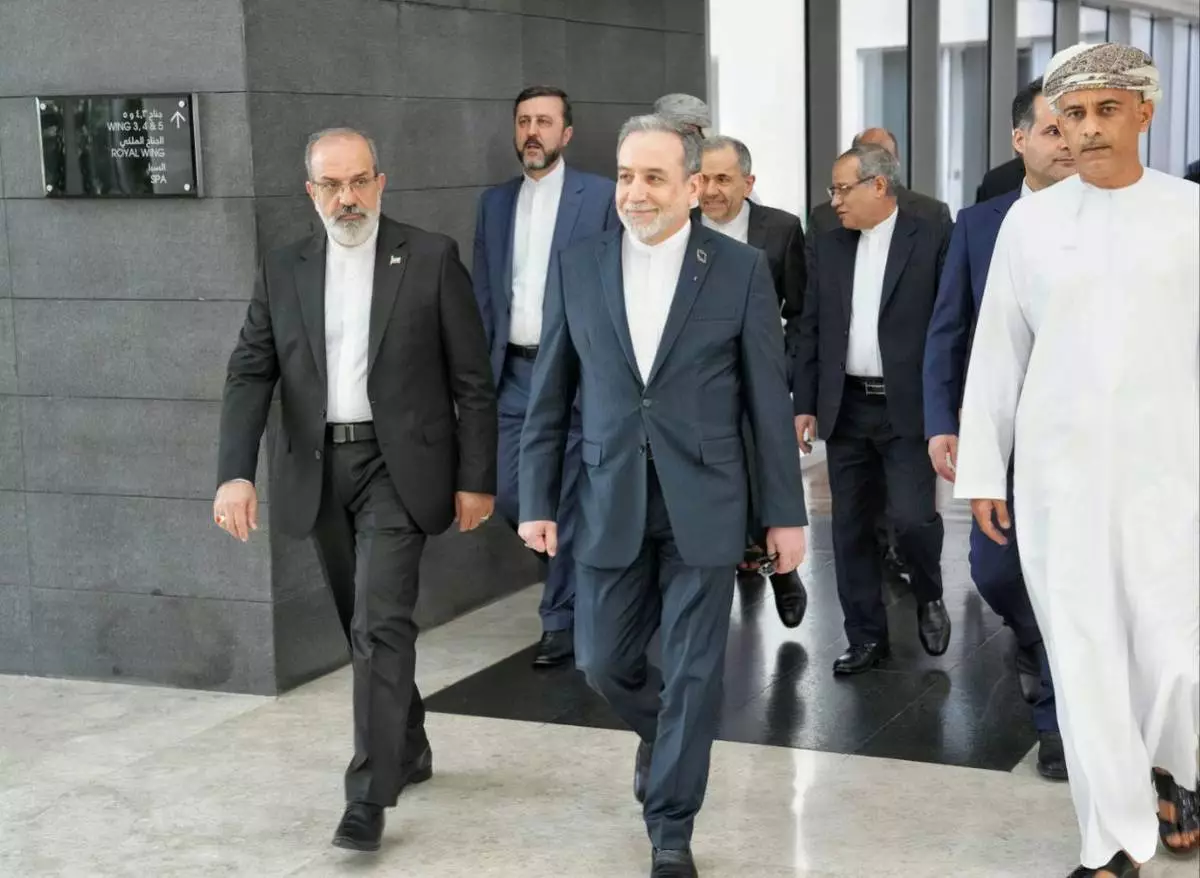
FILE - In this photo released by the Iranian Foreign Ministry, Iranian Foreign Minister Abbas Araghchi, center, heads to the venue for talks between Iran and the U.S., in Muscat, Oman, Friday, Feb. 6, 2026. (Iranian Foreign Ministry via AP, File)
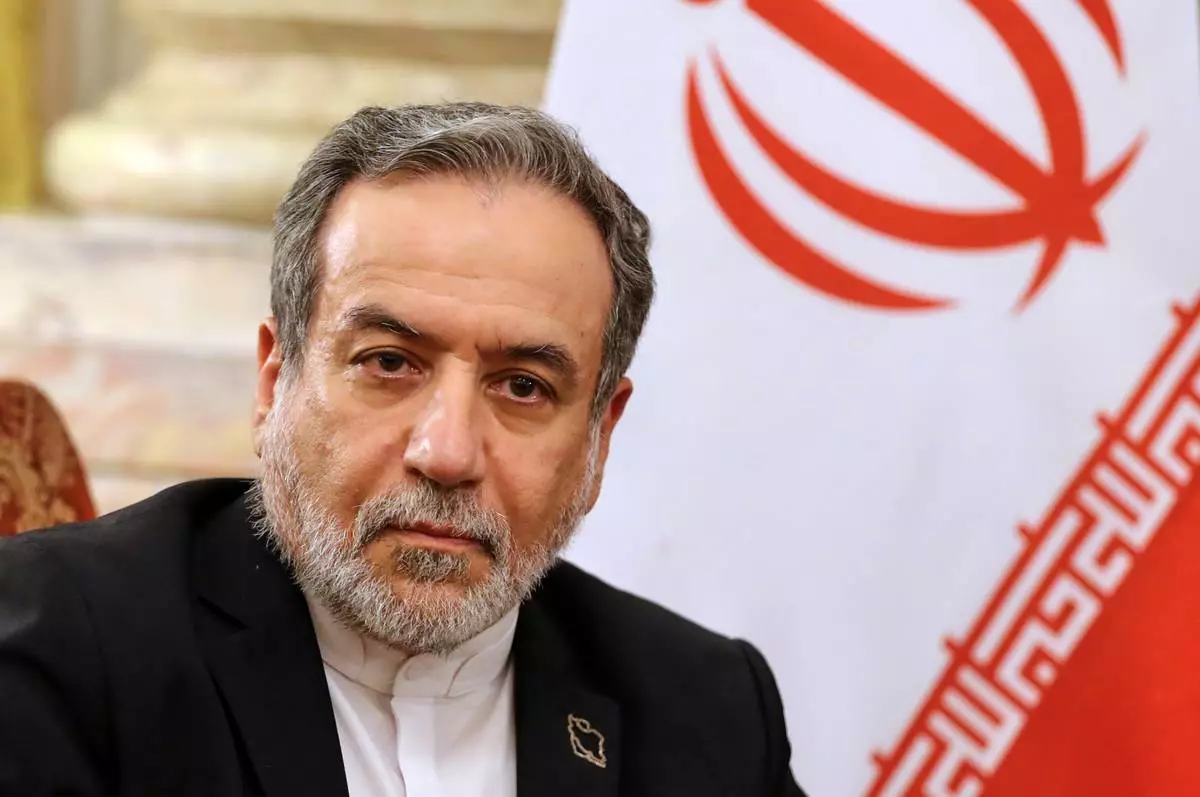
FILE - Iranian Foreign Minister Abbas Araghchi looks on during a meeting with Director General of the International Atomic Energy Agency (IAEA) Rafael Grossi, and Egyptian Foreign Minister Badr Abdelatty, at Tahrir Palace in Cairo, Tuesday, Sept. 9, 2025. (AP Photo/Khaled Elfiqi, File)
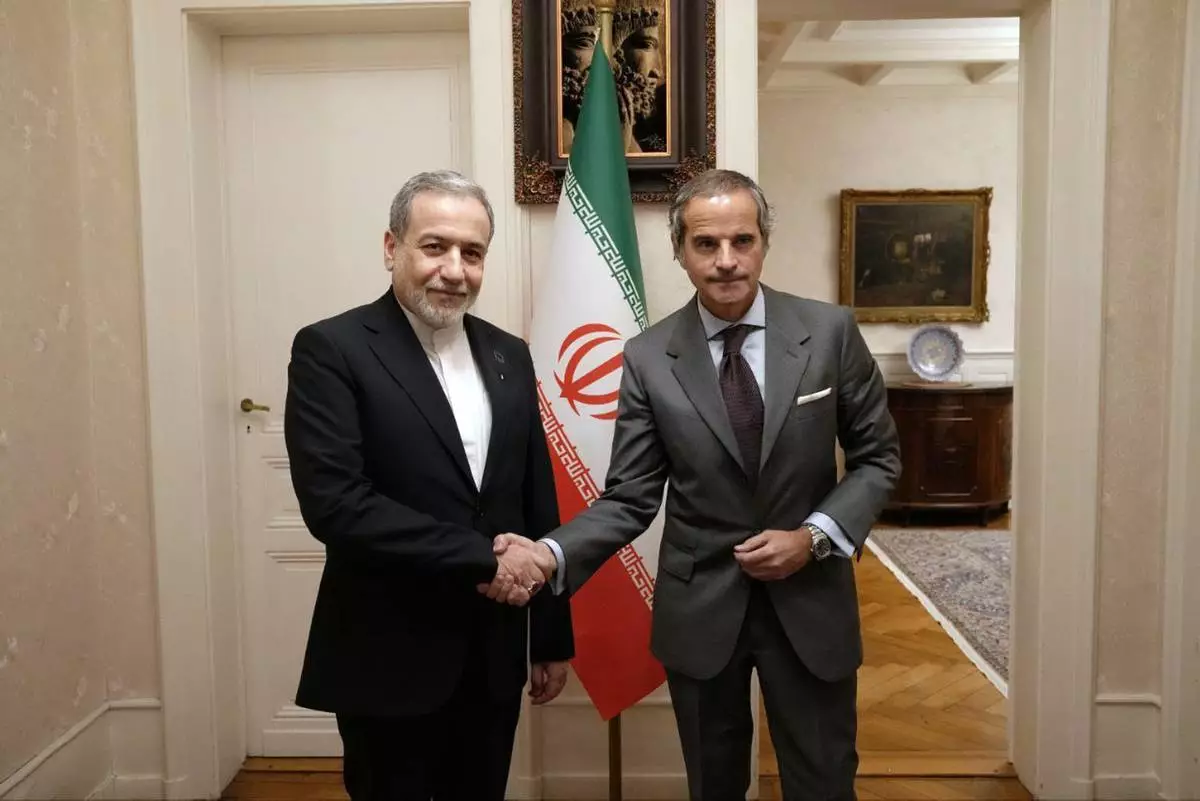
In this photo released by the Iranian Foreign Ministry, Iranian Foreign Minister Abbas Araghchi, left, shakes hands with International Atomic Energy Agency (IAEA) Director-General Rafael Grossi during their meeting in Geneva, Switzerland, Monday, Feb. 16, 2026. (Iranian Foreign Ministry via AP)
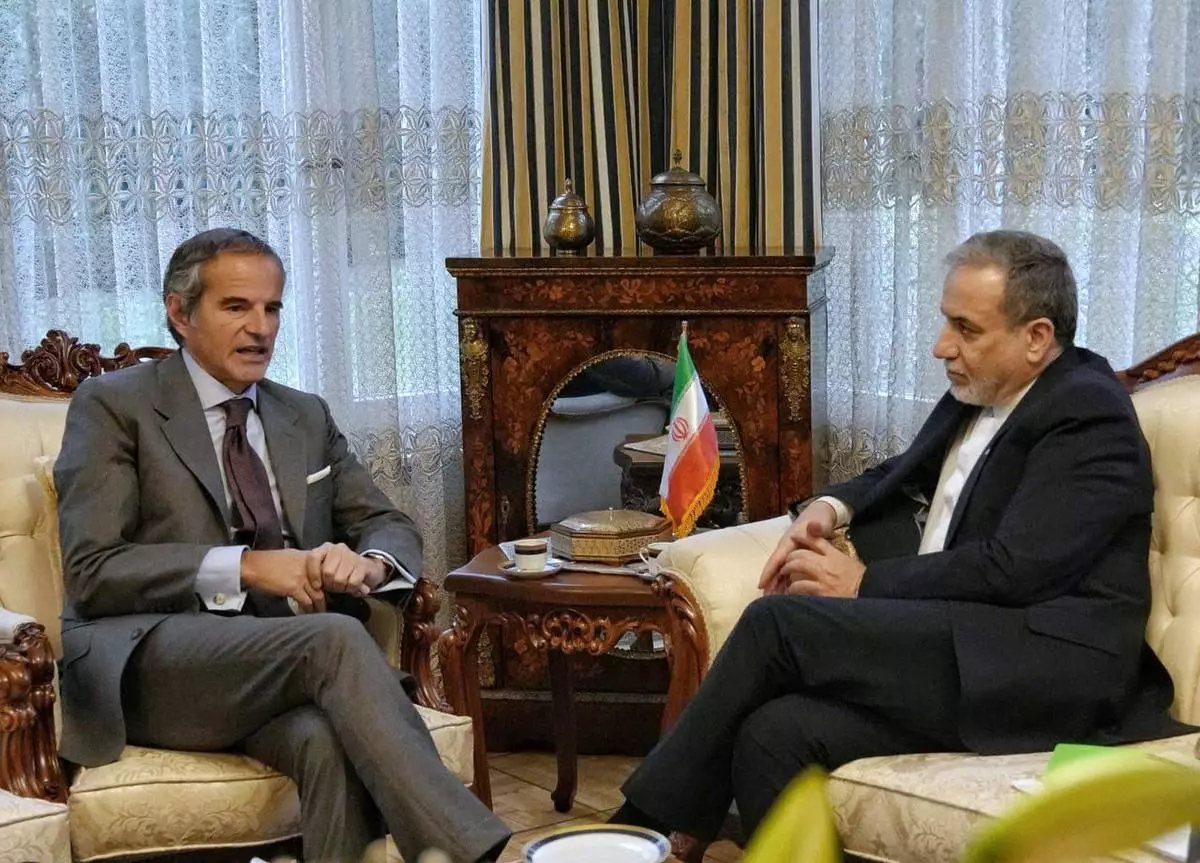
In this photo released by the Iranian Foreign Ministry, Iranian Foreign Minister Abbas Araghchi, right, and International Atomic Energy Agency (IAEA) Director-General Rafael Grossi, left, hold a meeting in Geneva, Switzerland, Monday, Feb. 16, 2026. (Iranian Foreign Ministry via AP)