Skip to Content Facebook Feature Image

Norway's Tormod Frostad wins big air gold in 'one of the greatest events ever' at Winter Olympics

Sport

Norway's Tormod Frostad wins big air gold in 'one of the greatest events ever' at Winter Olympics
Sport

Sport

Norway's Tormod Frostad wins big air gold in 'one of the greatest events ever' at Winter Olympics

2026-02-18 07:13 Last Updated At:07:20

LIVIGNO, Italy (AP) — The difference between silver and gold in Olympic men's big air was a matter of who did a trick called a “nose butter” better.

The fact anyone can do it at all was only one of the amazing things to come out of a contest that will be long remembered by anyone who saw it.

More Images
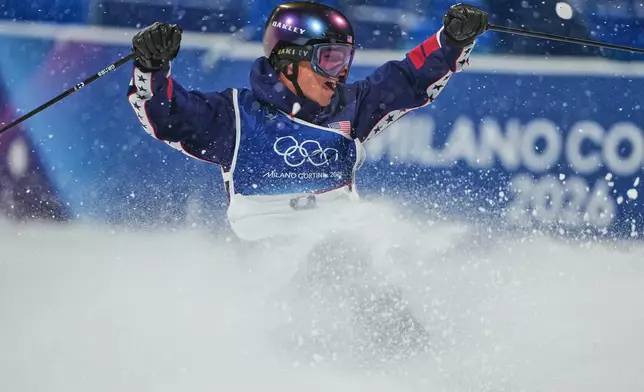
United States' Mac Forehand celebrates during the men's freestyle skiing big air finals at the 2026 Winter Olympics, in Livigno, Italy, Tuesday, Feb. 17, 2026. (AP Photo/Lindsey Wasson)
United States' Mac Forehand celebrates during the men's freestyle skiing big air finals at the 2026 Winter Olympics, in Livigno, Italy, Tuesday, Feb. 17, 2026. (AP Photo/Lindsey Wasson)
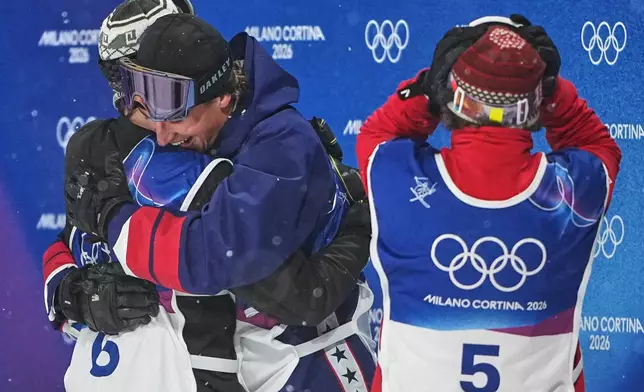
From left, gold medalist Norway's Tormod Frostad, silver medalist United States' Mac Forehand and bronze medalist Austria's Matej Svancer react after the men's freestyle skiing big air finals at the 2026 Winter Olympics, in Livigno, Italy, Tuesday, Feb. 17, 2026. (AP Photo/Lindsey Wasson)

From left, gold medalist Norway's Tormod Frostad, silver medalist United States' Mac Forehand and bronze medalist Austria's Matej Svancer react after the men's freestyle skiing big air finals at the 2026 Winter Olympics, in Livigno, Italy, Tuesday, Feb. 17, 2026. (AP Photo/Lindsey Wasson)

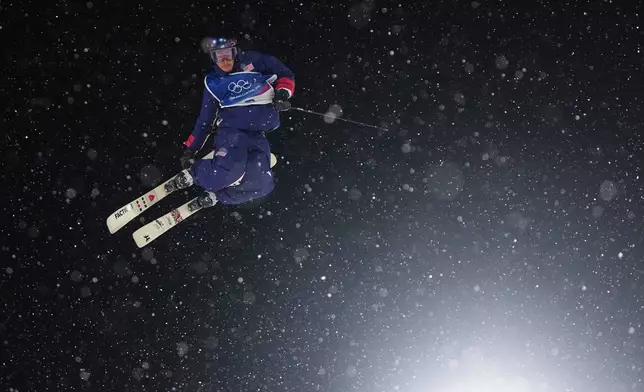
United States' Mac Forehand competes during the men's freestyle skiing big air finals at the 2026 Winter Olympics, in Livigno, Italy, Tuesday, Feb. 17, 2026. (AP Photo/Gregory Bull)
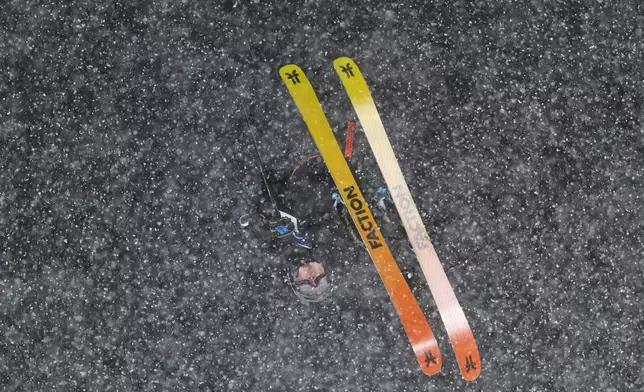
United States' Mac Forehand competes during the men's freestyle skiing big air finals at the 2026 Winter Olympics, in Livigno, Italy, Tuesday, Feb. 17, 2026. (AP Photo/Gregory Bull)

Norway's Tormod Frostad competes during the men's freestyle skiing big air finals at the 2026 Winter Olympics, in Livigno, Italy, Tuesday, Feb. 17, 2026. (AP Photo/Lindsey Wasson)
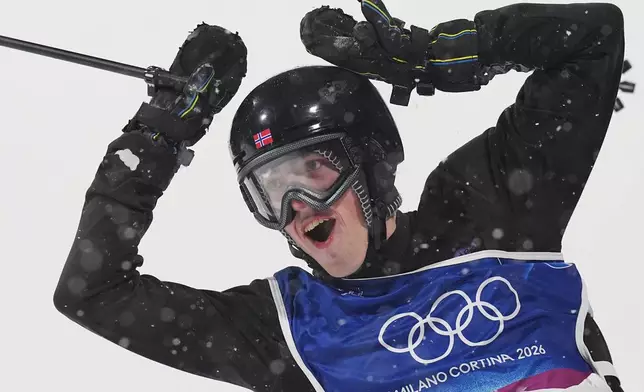
Norway's Tormod Frostad competes during the men's freestyle skiing big air finals at the 2026 Winter Olympics, in Livigno, Italy, Tuesday, Feb. 17, 2026. (AP Photo/Lindsey Wasson)

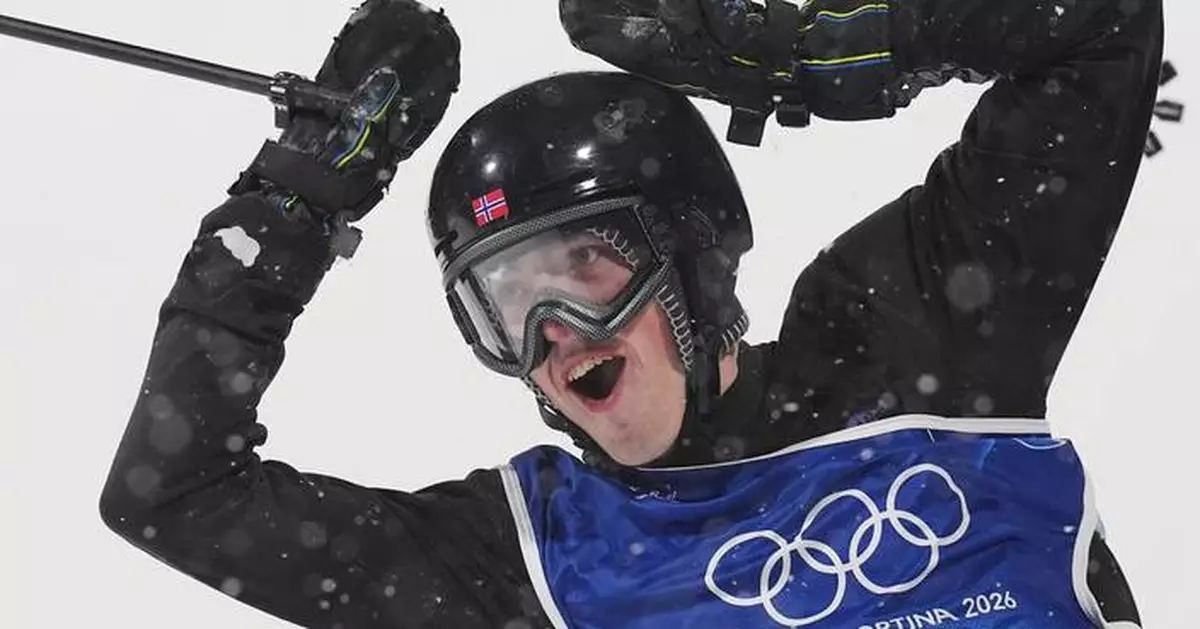
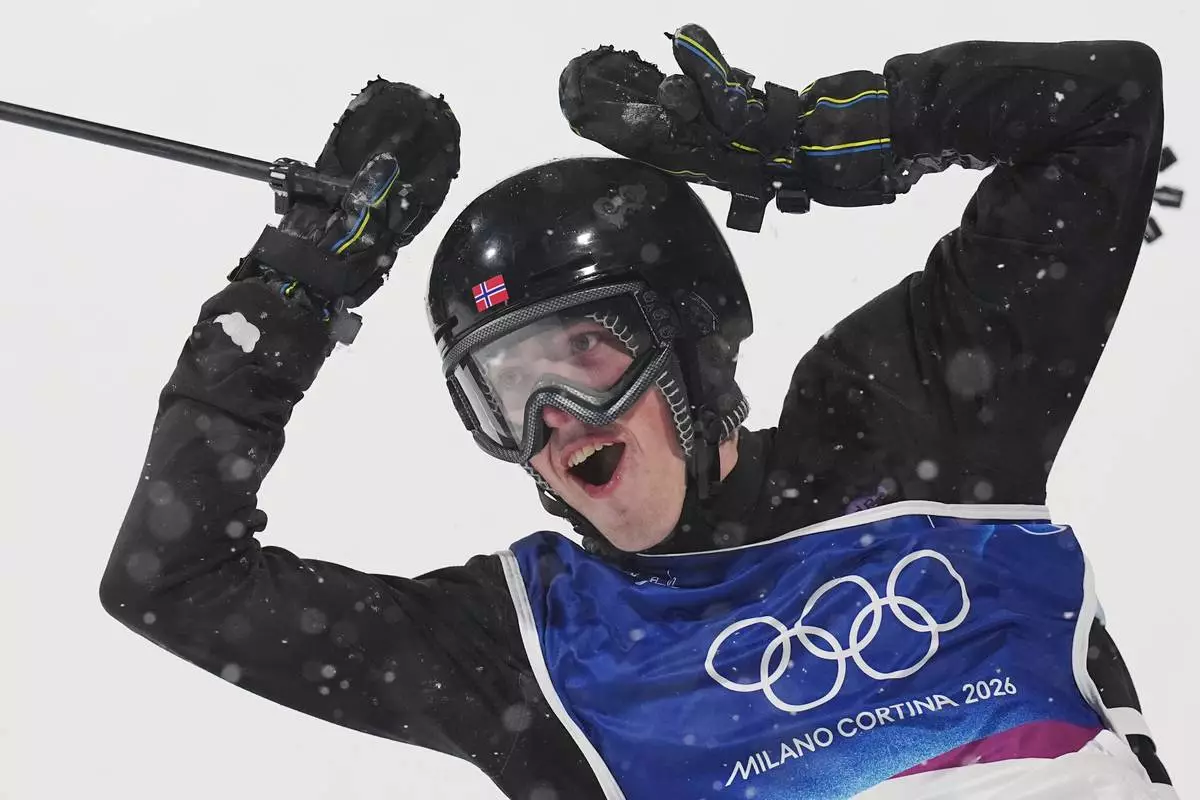
Norway's Tormod Frostad celebrates during the men's freestyle skiing big air finals at the 2026 Winter Olympics, in Livigno, Italy, Tuesday, Feb. 17, 2026. (AP Photo/Abbie Parr)

Norway's Tormod Frostad celebrates during the men's freestyle skiing big air finals at the 2026 Winter Olympics, in Livigno, Italy, Tuesday, Feb. 17, 2026. (AP Photo/Abbie Parr)

Tormod Frostad of Norway edged out Mac Forehand of the United States by 2.25 points in Tuesday's final with the scores approaching the maximum of 200 points each. Frostad did so by nailing the nose butter — but with a physics-defying twist of his own — on all three of his jumps of a snowy freeskiing nail-biter on the big hill Tuesday night.

The 24-year-old Forehand's reaction after such a narrow loss?

“I'm happy to walk away alive from that event,” he said. “It was super heavy, people are going crazy and this is a really dangerous sport. I’m just happy to ski away and be OK, and (to do so) with the silver medal is pretty cool as well.”

Frostad had the lead through most of the 12-man final after nailing two massive jumps. But Forehand flipped a thrilling competition on its head when he moved ahead of Frostad on the second-to-last jump of the night.

That turned what had been looking like a victory lap for Frostad into the most pressure-filled leap of his career.

But the 23-year-old Norwegian pulled out another flawlessly executed effort to secure his first gold medal in his second Games.

Frostad finished with 195.50 points to Forehand’s 193.25.

His key to facing the moment? Not really caring what happened next.

“Yeah, I didn’t really didn’t care because I was already super happy and I could ski the last run with joy in my body and just deliver a fun trick,” Frostad said.

While Forehand performed incredibly difficult tricks that focused on spins and flips, including a last one he had never landed and only recently “joked about,” Frostad did something more: He took the sport in a new direction. Literally.

Instead of vaulting off the jump that's built to send skiers hurtling backward, Frostad defied physics and spun forward off that ramp.

One of those tricks was something nobody had seen before on a big air jump. That, in essence, is the core concept of these sports — “progression,” the drive for each generation, each skier to develop a new twist, a new turn, a new something to take the sport that much further.

“That’s the hard part about my trick,” Frostad said. “And to get into that axis is really, you got to be super precise, and the judges are aware of that, and that’s why they scored me great.”

Great? They ate it up and gave him scores of 95.25, 97 and then a gold-clinching 98.50 on his last jump when it was all down to him or Forehand for the gold.

Sensing he was part of a history-making night, American Konnor Ralph tried a triple-cork 2160 — that's six full spins — for the first time ever. He landed it and finished fifth, one spot behind teammate Troy Podmilsak in what was the best overall performance by the U.S. in the snowpark events (freeskiing and snowboarding) at these Olympics.

“Even though I knew I needed a 115 to win, I figured, 'Whatever, you've got to go for it, it's the Olympics,'” Ralph said.

But this night wasn't just about spinning the most.

“Tormod today was doing two tricks that have ever been done before and it’s less rotations but the takeoffs are so proper and so cool and different and he’s totally deserved that win,” Forehand said. “It’s not all about the rotations in our sport, it’s about the style, the creativity.”

Birk Ruud, the 2022 gold medalist who finished eighth after two crashes, agreed that Frostad had won because he had done the unexpected.

“Torm had those aces with the ‘butter double bio,’” Ruud said.

“No matter what tricks would come” after that, nobody could better Frostad, Ruud said. “So that means the progression is not just in the spinning.”

Frostad and Forehand both said that they would have been happy with any color of medal after participated in what they agreed was a final for the ages — one frosted by a steady snow that did nothing to slow down the 12 finalists.

“I mean, shoutout to everyone. They killed it,” Frostad said. “We all did amazing and even though the conditions were quite challenging, it ended up being like probably one of the greatest events ever.”

AP Winter Olympics: https://apnews.com/hub/milan-cortina-2026-winter-olympics
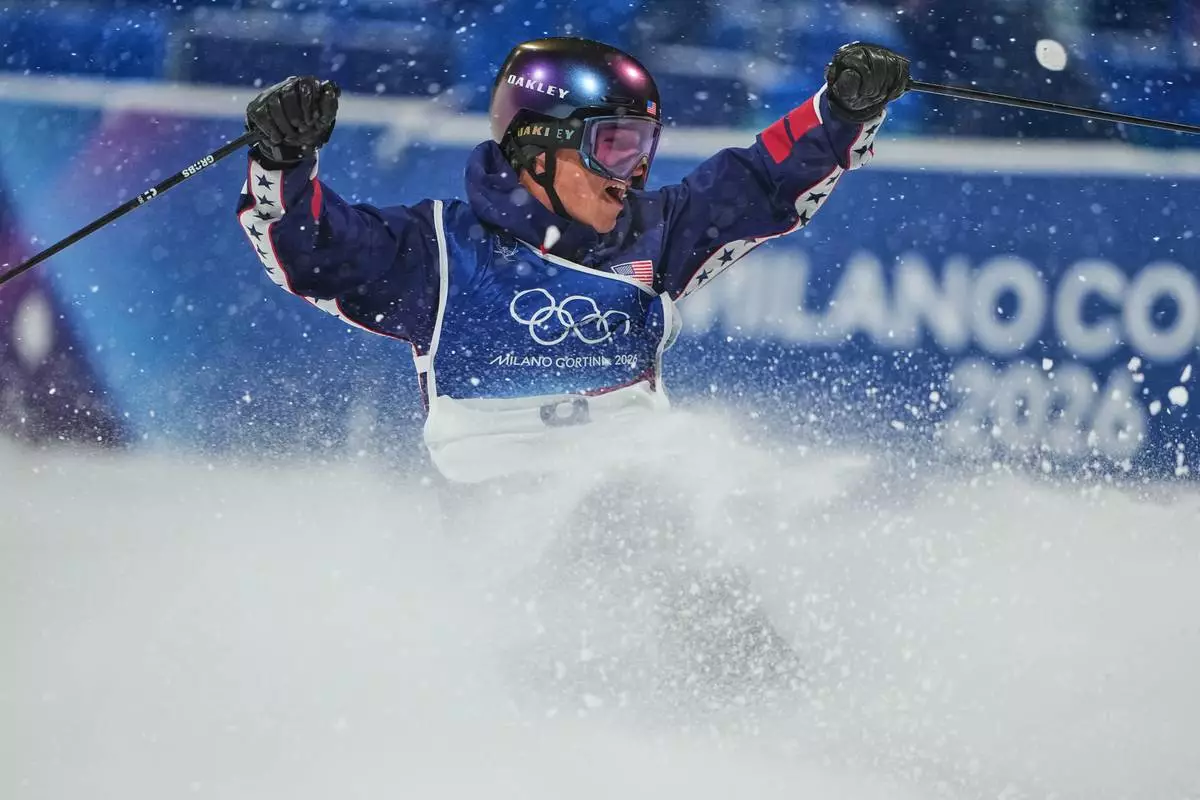
United States' Mac Forehand celebrates during the men's freestyle skiing big air finals at the 2026 Winter Olympics, in Livigno, Italy, Tuesday, Feb. 17, 2026. (AP Photo/Lindsey Wasson)
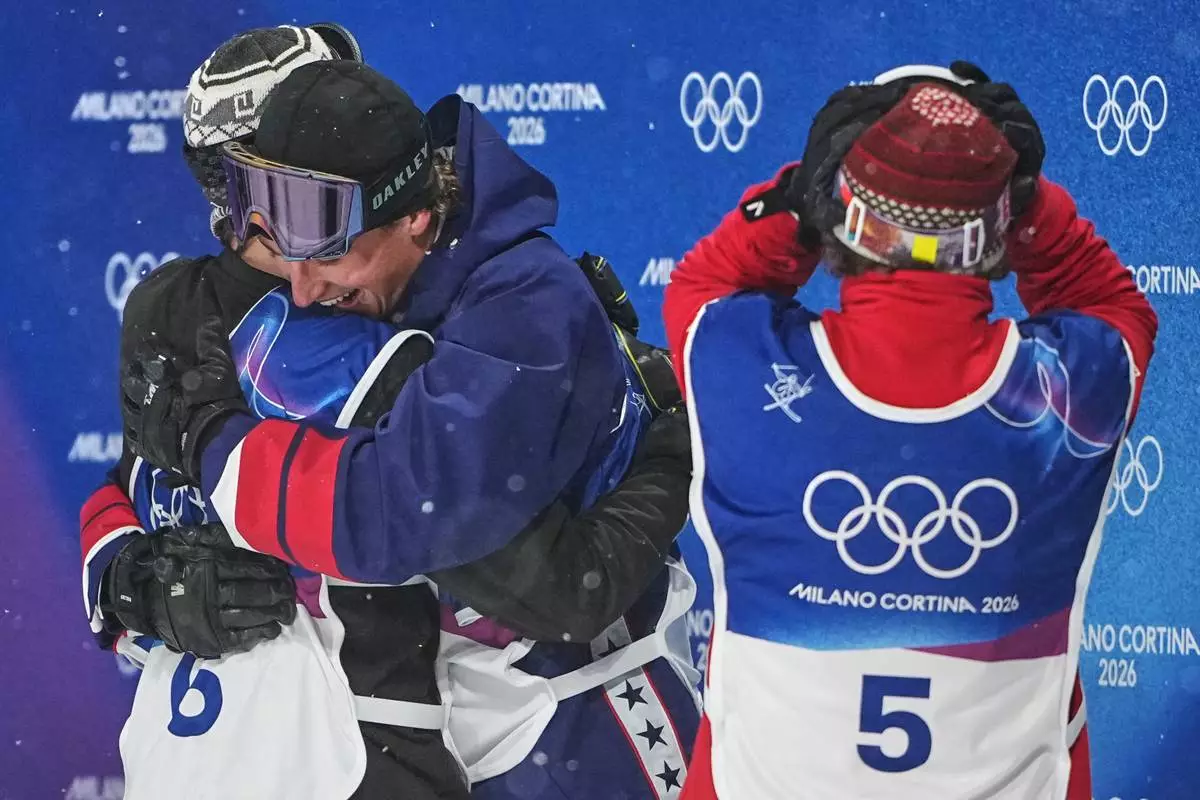
United States' Mac Forehand celebrates during the men's freestyle skiing big air finals at the 2026 Winter Olympics, in Livigno, Italy, Tuesday, Feb. 17, 2026. (AP Photo/Lindsey Wasson)
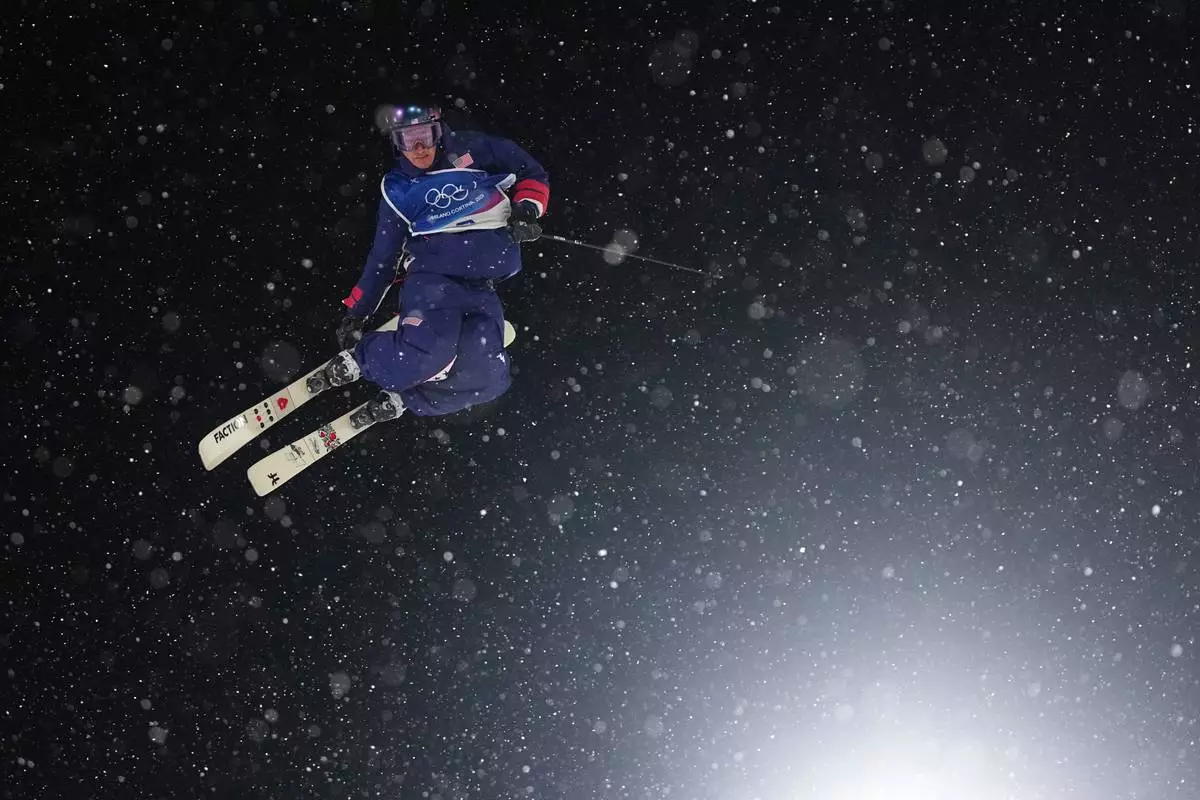
From left, gold medalist Norway's Tormod Frostad, silver medalist United States' Mac Forehand and bronze medalist Austria's Matej Svancer react after the men's freestyle skiing big air finals at the 2026 Winter Olympics, in Livigno, Italy, Tuesday, Feb. 17, 2026. (AP Photo/Lindsey Wasson)

From left, gold medalist Norway's Tormod Frostad, silver medalist United States' Mac Forehand and bronze medalist Austria's Matej Svancer react after the men's freestyle skiing big air finals at the 2026 Winter Olympics, in Livigno, Italy, Tuesday, Feb. 17, 2026. (AP Photo/Lindsey Wasson)

United States' Mac Forehand competes during the men's freestyle skiing big air finals at the 2026 Winter Olympics, in Livigno, Italy, Tuesday, Feb. 17, 2026. (AP Photo/Gregory Bull)
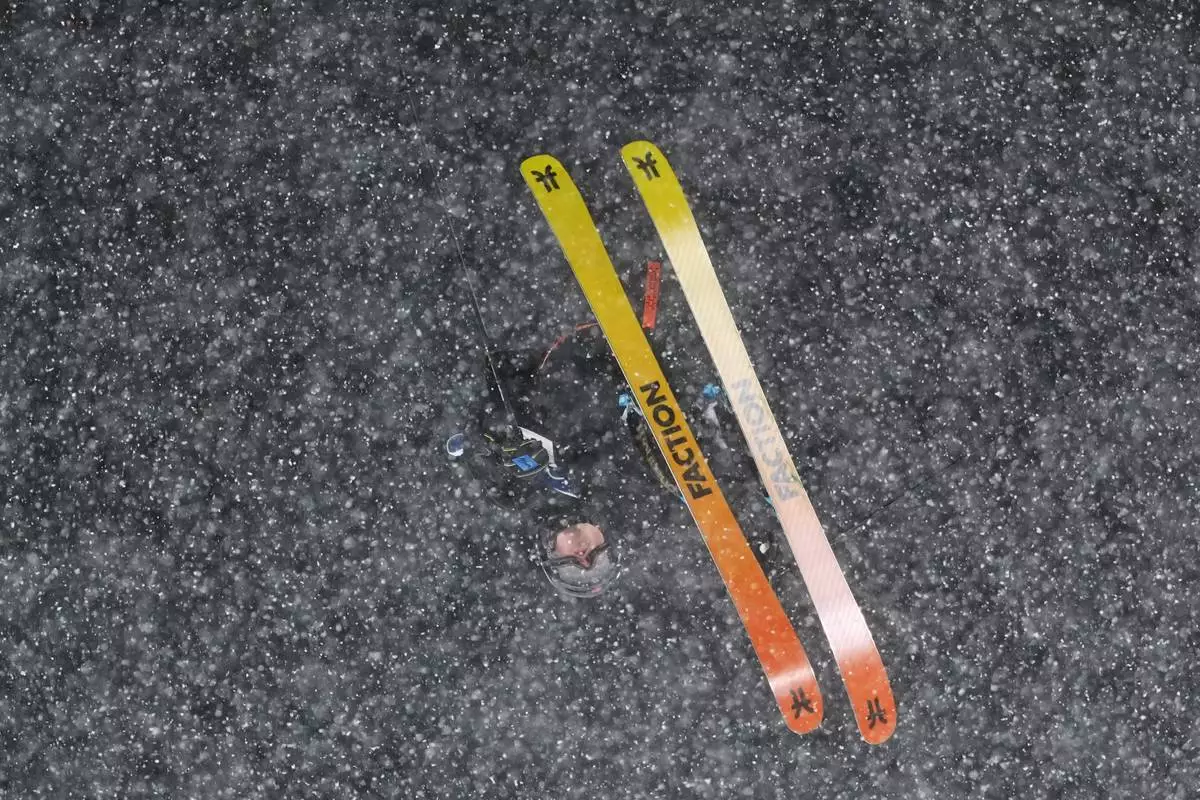
United States' Mac Forehand competes during the men's freestyle skiing big air finals at the 2026 Winter Olympics, in Livigno, Italy, Tuesday, Feb. 17, 2026. (AP Photo/Gregory Bull)

Norway's Tormod Frostad competes during the men's freestyle skiing big air finals at the 2026 Winter Olympics, in Livigno, Italy, Tuesday, Feb. 17, 2026. (AP Photo/Lindsey Wasson)
Norway's Tormod Frostad competes during the men's freestyle skiing big air finals at the 2026 Winter Olympics, in Livigno, Italy, Tuesday, Feb. 17, 2026. (AP Photo/Lindsey Wasson)

Norway's Tormod Frostad celebrates during the men's freestyle skiing big air finals at the 2026 Winter Olympics, in Livigno, Italy, Tuesday, Feb. 17, 2026. (AP Photo/Abbie Parr)
Norway's Tormod Frostad celebrates during the men's freestyle skiing big air finals at the 2026 Winter Olympics, in Livigno, Italy, Tuesday, Feb. 17, 2026. (AP Photo/Abbie Parr)
TOKYO (AP) — Many of Tokyo's popular and iconic Somei Yoshino cherry blossom trees were planted during Japan's postwar advancement in the 1960s, and are now getting old and frail.

Some have fallen and many others require support, triggering safety concern as the Japanese celebrate the season of their favorite flower.

Two cherry blossom trees collapsed on Thursday, one at Kinuta Park in downtown Tokyo and the other at the Chidorigafuchi greenway. The one in Kinuta Park damaged a fence while the other tree almost fell into the Imperial Palace moat, though nobody was injured.

The tree in Kinuta Park was 18 meters (59 feet) tall and 2.5 meters (8.2 feet) in diameter. It was among the oldest, believed to be more than 60 years old, officials said. In March, another old cherry tree collapsed at the park, injuring a passerby.

Last year, 85 trees fell in Tokyo parks, injuring three people, and many were cherry trees, according to Masakazu Noguchi, a Tokyo metropolitan official in charge of public parks.

People gather under the trees during the season of hanami, or cherry blossom viewing, and the collapse of trees has alarmed officials in Tokyo, the birthplace of the cherry blossom variety.

Tokyo assembly member Yutaka Kazama expressed concern on social media last month that“cherry blossom trees with their roots partially exposed or obviously rotten seem dangerous," calling for firm safety measures but without quickly resorting to tree felling.

Aging and erosion by internal fungus growth are among the main causes for the deterioration of the cherry blossom trees.

A tree doctor, Hiroyuki Wada, said heavy tilting, flowering on lower trunks and mushrooms growing at the bottom are signs to look for in order to avoid risk-prone trees. Risks increase when tree trunks retain water after rain, he said.

“Many trees in our daily lives were planted soon after the war and are now 70-80 years old and getting weaker," he said, adding that they are affected by extreme heat in the summer and an extensive dry season.

“I hope people think about the climate change through what's happening to the cherry blossom trees, which is very symbolic,” he said.

Following the March incidents, officials conducted tree health checks at Tokyo's main parks ahead of the cherry blossom viewing season.

At the Kinuta Park, officials have conducted preliminary inspections of more than 800 cherry trees. They chopped down a number of trees and posted warning signs near some trees but the tree that fell Thursday was without caution signs.

“At the moment, our measures are mostly temporary, not fundamental steps such as replanting,” Noguchi said. “We call on visitors to use caution because we cannot say it’s safe even after inspection.”

At the Inokashira Park, one of Tokyo’s most popular viewing spots, dozens of aging cherry blossom trees have been felled in recent years as part of a long-term replanting plan. Some people lamented on social media the empty spaces around a pond that used to be seamlessly encircled by flowering pink blossoms.

Cherry blossom viewers say the news of falling cherry trees is worrisome, but they didn't want to miss the short-lived fluffy pink blossoms.

“I'm a bit worried, but I guess it's OK if we stay away from tree trunks,” said Lisa Suzuki.

Another visitor Akira Kamiyashiki said he came with his daughter despite the safety concerns because rain is expected over the weekend. “Seeing the keep-off signs, I now feel safe,” he said.

Cherry blossoms, or “sakura,” are Japan’s favorite flower and usually reach their peak in late March to early April, just as the country celebrates the start of a new school and business year. Many Japanese enjoy walking or picnicking under the trees.

A fallen cherry trees is seen at the Inokashira Park, one of Tokyo’s most popular viewing spots, Saturday, April 4, 2026. (AP Photo/Mari Yamaguchi)

A fallen cherry trees is seen at the Inokashira Park, one of Tokyo’s most popular viewing spots, Saturday, April 4, 2026. (AP Photo/Mari Yamaguchi)

People walk past an aging cherry blossom tree at the Inokashira Park, one of Tokyo’s most popular viewing spots, Saturday, April 4, 2026. (AP Photo/Mari Yamaguchi)

People walk past an aging cherry blossom tree at the Inokashira Park, one of Tokyo’s most popular viewing spots, Saturday, April 4, 2026. (AP Photo/Mari Yamaguchi)

An aging cherry blossom tree is seen at the Inokashira Park, one of Tokyo’s most popular viewing spots, Saturday, April 4, 2026. (AP Photo/Mari Yamaguchi)

An aging cherry blossom tree is seen at the Inokashira Park, one of Tokyo’s most popular viewing spots, Saturday, April 4, 2026. (AP Photo/Mari Yamaguchi)

People sit down for a picnic outside a cordoned-off area set up to inspect the health of cherry blossom trees at Kinuta Park in Tokyo, Friday, April 3, 2026. (AP Photo/Mayuko Ono)

People sit down for a picnic outside a cordoned-off area set up to inspect the health of cherry blossom trees at Kinuta Park in Tokyo, Friday, April 3, 2026. (AP Photo/Mayuko Ono)

People sit down for a picnic outside a cordoned-off area set up to inspect the health of cherry blossom trees at Kinuta Park in Tokyo, Friday, April 3, 2026. (AP Photo/Mayuko Ono)

People sit down for a picnic outside a cordoned-off area set up to inspect the health of cherry blossom trees at Kinuta Park in Tokyo, Friday, April 3, 2026. (AP Photo/Mayuko Ono)

A damaged cherry blossom tree is seen after a nearby tree fell on it, at Kinuta Park in Tokyo, Friday, April 3, 2026, in Tokyo. (AP Photo/Mayuko Ono)

A damaged cherry blossom tree is seen after a nearby tree fell on it, at Kinuta Park in Tokyo, Friday, April 3, 2026, in Tokyo. (AP Photo/Mayuko Ono)

Recommended Articles