WASHINGTON (AP) — An evening rally to boost Democratic turnout for Texas' rapidly approaching primary featured plenty of the state party's political star power, but it was someone who won't be on a ballot who drew the most attention.
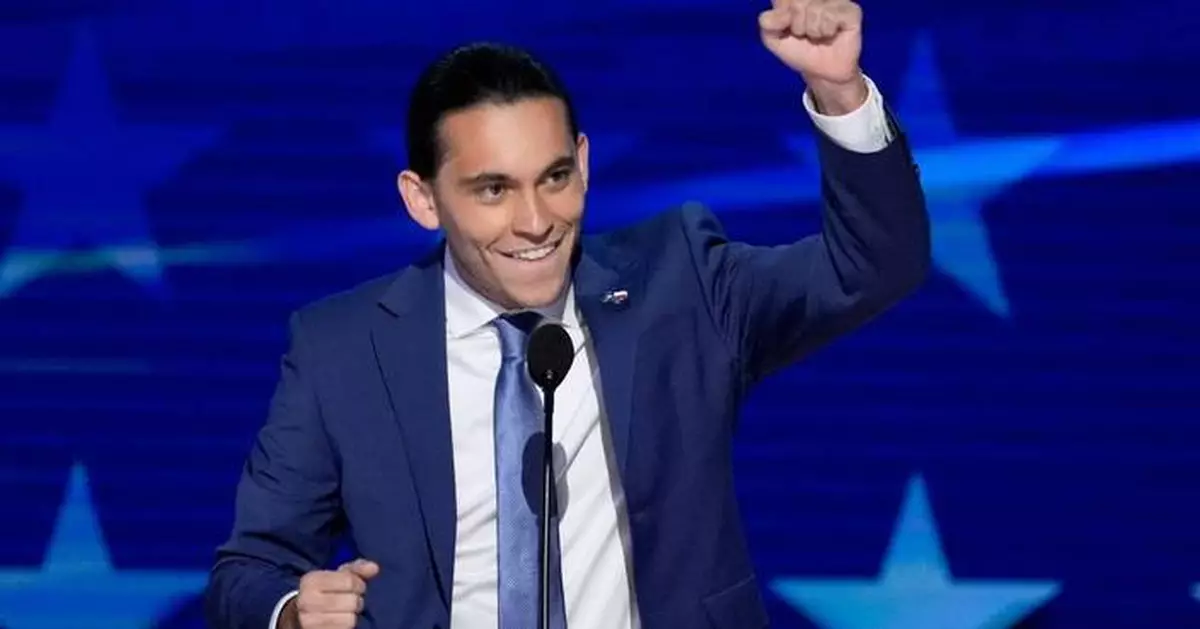
Carlos Eduardo Espina, a progressive political influencer who boasts more than 14 million followers on TikTok, mingled with lawmakers and took selfies with attendees who eagerly posted them online.
The Tuesday night gathering at a Houston Mexican restaurant was more than just a pre-primary rally. It also was a curtain-raiser of sorts for a campaign strategy Democrats hope will help them in this year's midterms and beyond.
Espina and nine other Houston influencers invited to the event are at the center of that strategy, which seeks to build a network of online content creators to better engage Latino voters after many of them gravitated toward Republicans two years ago.
Espina, who has promoted Democratic candidates and policies in the past, said the party finally appeared to be acknowledging that it needed to catch up with Republicans and find ways to connect with voters outside of traditional campaign events.
“I do think there’s a lot of failures in the past Democratic Party, but I think initiatives like this one are pretty cool,” Espina said in an interview.
The strategy, developed by the Congressional Hispanic Caucus’ political arm, is being rolled out in the Houston area as early voting begins for Texas' statewide primary on March 3. The idea is to capitalize on the popularity of local influencers and social media superstars such as Espina to more effectively spread Democrats’ messaging to Latino voters.
Strategists hope to expand the effort, called “ RUIDO ” — Spanish for noise — which consists of a network of online content creators, into other competitive primary and general election races where Latino candidates and voters could prove decisive. However, leaders of the Hispanic Caucus PAC have yet to decide when or where to invest next.
“The Trump campaign reached out to those nontraditional voices to amplify their message,” Rep. Linda Sanchez, a California Democrat and chair of the caucus' political action committee, said of the Republican's engagement with social media influencers and podcasters two years ago. “We didn’t anticipate that was going to be a way by which politics was disseminated. We’ve seen the contrary, that we do need to be in those spaces, as well.”
The program’s launch comes as Democrats continue to grapple with broad dissatisfaction with the party and questions about how to effectively engage voters, particularly younger ones, voters of color and those without college degrees who shifted away from the party during the 2024 presidential election.
President Donald Trump made inroads with Latino voters that year with a strategy that heavily leaned on engaging streamers, podcasters and other online content creators.
The Hispanic Caucus strategy offers stipends to content creators who are accepted into the program. The money is meant to support travel expenses for them to work with political campaigns, according to program materials.
In past elections, both major parties bought sponsored content from influencers, who are then required to disclose the relationship. Espina said the money offered to him was a fraction of what he makes on his frequent videos, which on average garner hundreds of thousands of views, but said that it might have a greater impact for influencers with smaller audiences.
Espina, who posts videos in Spanish about politics that regularly garner hundreds of thousands of likes, said lawmakers ultimately would need to make the case for their elections themselves. But authenticity and the substance of the message are paramount to winning over voters online, he said.
The party shifted from talking about issues affecting “working class people” and instead started discussing economic and cultural issues in ways that felt alien to how people lived their lives, Espina said.
“I think a lot of that messaging a few years back kind of got lost. But now I think, especially after the wake-up call from the 2024 election, things have definitely gotten better,” he said.
The nine Houston-area content creators recruited by the caucus — Republicans have their own Hispanic congressional group — range from political influencers to content creators discussing food, travel, sports and local attractions. Their online followings range from a few thousand to around 100,000.
“People are going to act more when they hear from a family member, when they hear from a friend,” said Carlos Castillo, one of the influencers who joined the network. “Just talking to people in an organic way, whether it’s through get-ready-with-me videos and just slightly mentioning, ‘Oh, also, by the way, the primaries are coming up in our state.'”
Castillo said the stipend from the program was comparable to what he was offered in commissions from companies such as Comcast, United Airlines and FIFA Houston.
It is unclear if the strategy of recruiting local influencers in areas with competitive races will be effective for Democrats. But both major parties have realized in recent election cycles that they need to supplement their traditional campaign methods to reach voters who don't typically engage in politics.
That is likely to boost the power of content creators such as Espina.
“Honestly, that I have more influence, at least right now, as a social media content creator, than I would in any kind of elected office, at least any that I can run for,” said Espina on whether he’d ever run for office himself.
“Who knows, maybe I’ll run against Ted Cruz in a few years,” he added, referring to the Republican senator from Texas. “That would be pretty fun.”
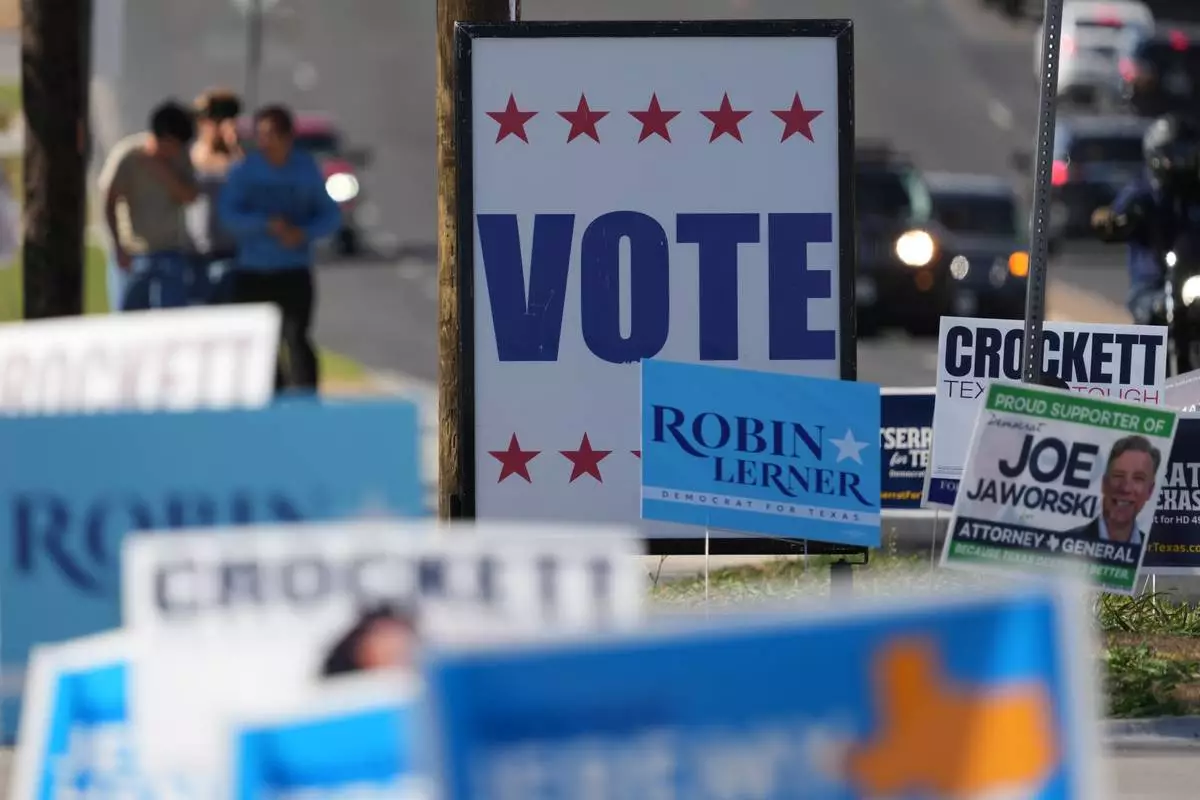
Election signs crowd an intersection near a polling place, in Austin, Texas, Tuesday, Feb. 17, 2026. (AP Photo/Eric Gay)
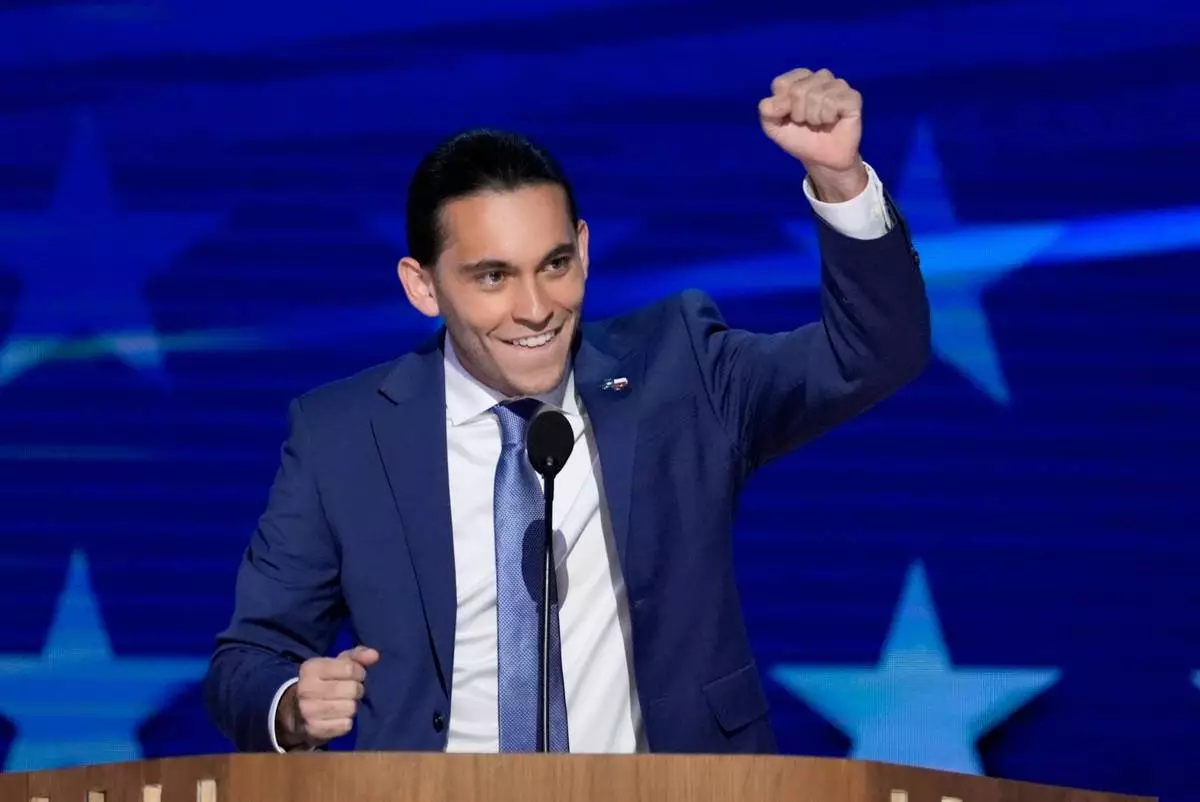
FILE - Carlos Eduardo Espina speaks during the Democratic National Convention, Aug. 21, 2024, in Chicago. (AP Photo/J. Scott Applewhite, File)
SURPRISE, Ariz. (AP) — Bruce Meyer was promoted to interim executive director of the baseball players’ association on Wednesday, a day after Tony Clark’s forced resignation.
It was a move for continuity ahead of the likely start in April of what figures to be contentious collective bargaining with team owners.
Matt Nussbaum was promoted to interim deputy executive director from general counsel.
The decisions were made by the Major League Baseball Players Association executive board during an online meeting. Both votes were unanimous.
A 64-year-old veteran labor lawyer, Meyer joined the union staff in 2018 and led negotiations through a 99-day lockout that led to a five-year agreement in March 2022. The deal barely avoided what would have been the first loss of regular-season games since 1995. He was promoted to deputy executive director in July 2022.
Meyer spent 30 years at Weil, Gotshal & Manges before joining the NHL Players Association in 2016 as senior director of collective bargaining, policy and legal.
Three members of the union’s eight-man executive subcommittee, Jack Flaherty, Lucas Giolito and Ian Happ, were among the players who in March 2024 advocated for the ouster of Meyer in an effort led by former union lawyer Harry Marino. Clark backed Meyer, the effort failed and those three players were dropped off the subcommittee that December.
The subcommittee voted 8-0 against approving the 2022 labor contract and Meyer had advocated pushing management for a deal more favorable to the union. Team player representatives, the overall group supervising negotiations, voted 26-4 in favor, leaving the overall ballot at 26-12 for ratification.
The current subcommittee includes Chris Bassitt, Jake Cronenworth, Pete Fairbanks, Cedric Mullins, Marcus Semien, Paul Skenes, Tarik Skubal and Brent Suter.
A former All-Star first baseman who headed the union since 2013, Clark resigned Tuesday just months ahead of the expected start of bargaining for a labor contract to replace the deal that expires Dec. 1.
He was asked to resign by the union’s eight-man executive subcommittee after an investigation by the union’s outside counsel discovered evidence Clark had an inappropriate relationship with his sister-in-law, a union employee since 2023, a person familiar with the union’s deliberations told The Associated Press. The person spoke on condition of anonymity because that detail was not announced.
“The information that really led to this came out within the last ... 72 hours or so,” Meyer said earlier Wednesday. “So this is not something that has been kind of sat on. When the information came out, the players on the subcommittee made their feelings known. And Tony, to his credit, he’s always been about the players first and Tony decided to take the action he did in the interest of the players.”
Clark did not respond to a text message seeking comment.
The start of the annual tour of spring training camps by union officials was pushed back a day and began Wednesday with the Kansas City Royals.
“Just on a personal level I think we’re all fairly devastated by things that have happened in the last 48, 72 hours,” Meyer said. “I’m not going to go beyond that in terms of personal feelings, but it’s fair to say that we were all personally upset, concerned about Tony. But I think this was something that the players determined had to happen at this particular point in time.”
Meyer, hired by Clark in 2018, headed the 2021-22 negotiations that led to an agreement on March 10 that ended a 99-day lockout. Meyer was promoted to deputy executive director in July 2022.
“I don’t anticipate that anybody’s going to be leading negotiations other than me,” Meyer said.
Clark’s departure took place during a probe by the U.S. Attorney in Brooklyn, New York, into OneTeam Partners, a licensing company founded by the union, the NFL Players Association and RedBird Capital Partners in 2019.
“There have been some issues hanging over, as you know, and in some respects it’s good to get them out of the way sooner rather than later,” Meyer said.
Meyer said the union’s entire executive board of 72 players was eligible to vote for executive director: the executive subcommittee, 30 major league team player representatives and 34 minor leaguers, who have been represented by the union since 2022.
MLB appears on track to propose a salary cap, which possibly could lead to a work stoppage that causes regular-season games to be canceled for the first time since 1995.
“We don’t expect anything to change in terms of bargaining,” Meyer said. “We’ve been preparing for bargaining for years. Players have been preparing. Players know what’s coming. At the end of the day leadership is important and leadership comes and goes, but what remains is the players. At the end of the day, it’s the players who determine the direction of the union. At the end of the day, it’s the players who determine our priorities and bargaining. Those priorities obviously have not changed and will not change.”
The union said it will resist a salary cap.
“Our position and the historic position of this union for decades on a salary cap is well known,” Meyer said. “It’s the ultimate restriction. It’s something that owners in all the sports have wanted more than anything and in baseball in particular there’s a reason for that, because it’s good for them and not good for players.”
Meyer spent 30 years at Weil, Gotshal & Manges before joining the NHL Players Association in 2016 as senior director of collective bargaining, policy and legal.
He wouldn’t directly address whether the union intends to restrict the hiring of family members.
“I think it’s fair to say there are issues that will be addressed,” Meyer said. “There are various issues that will be evaluated, re-evaluated with the advice of counsel and, as always, at the direction of players.”
Nussbaum, 47, succeeded Ian Penny as general counsel in July 2022. He was hired by the union in 2011 as staff counsel.
Blum reported from New York.
AP MLB: https://apnews.com/hub/mlb
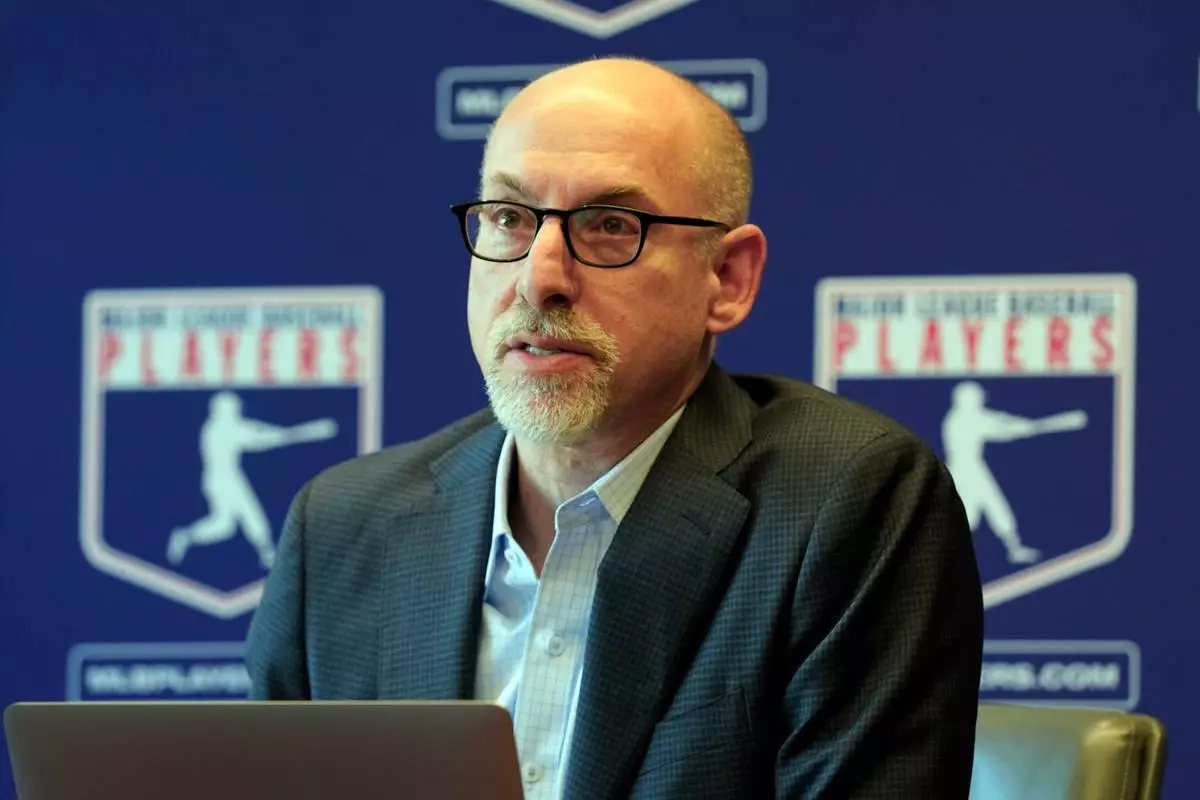
FILE - Major League Baseball Players Association Senior Director, Collective Bargaining & Legal, Bruce Meyer answers a question at a news conference in their offices in New York, March 11, 2022. (AP Photo/Richard Drew, File)
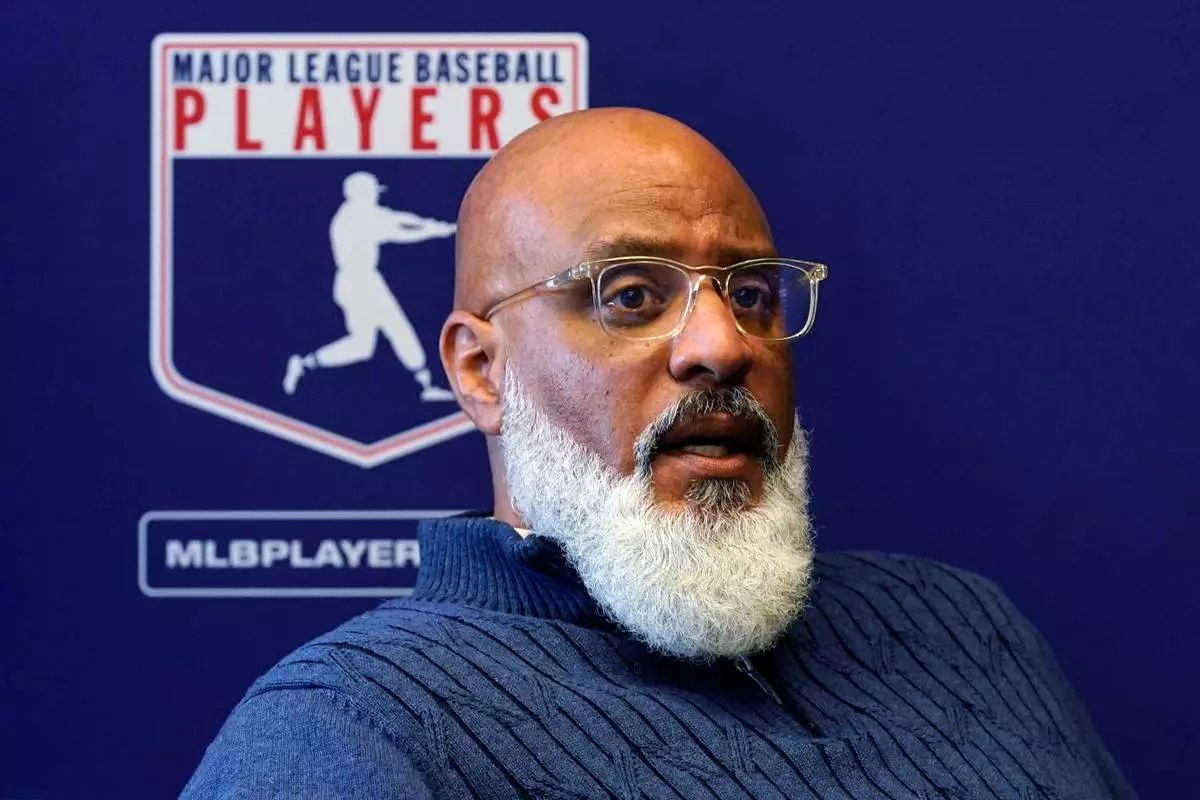
FILE - Major League Baseball Players Association Executive Director Tony Clark answers a question during a news conference in New York on March 11, 2022. (AP Photo/Richard Drew, File)