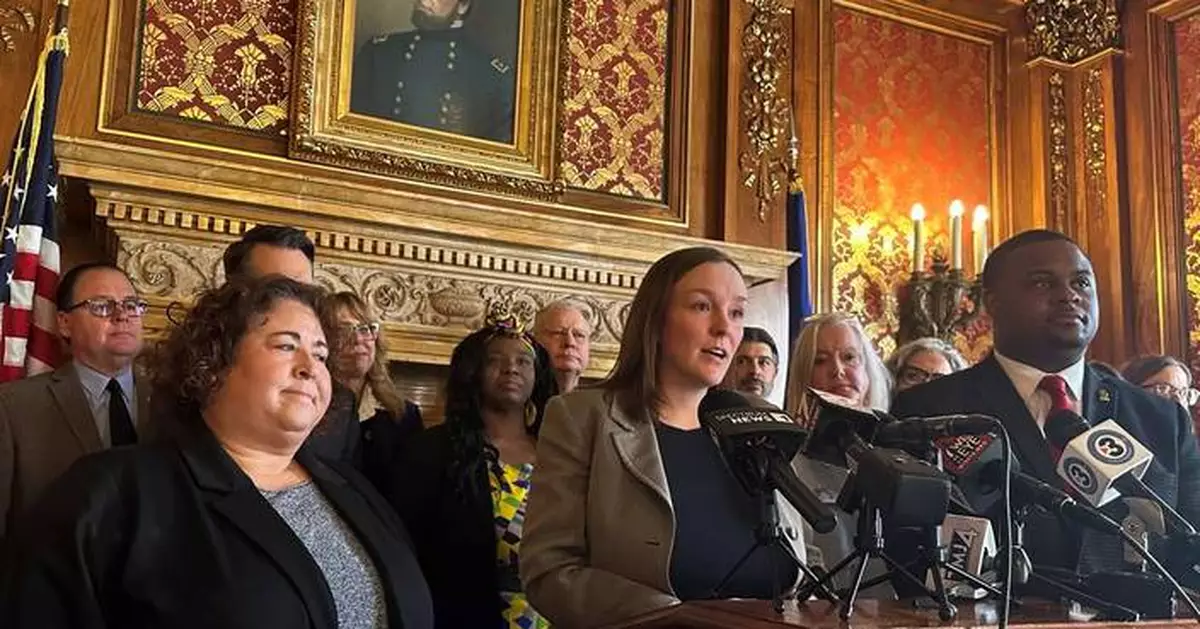
MADISON, Wis. (AP) — Women in Wisconsin will soon be eligible to receive expanded Medicaid coverage for up to a year after giving birth following near-unanimous passage of a measure Thursday by the Wisconsin Assembly that would leave Arkansas as the only state yet to expand such benefits.
Wisconsin Democrats, and even most Republicans, have pushed for years to expand Medicaid coverage for new mothers, only to be blocked by powerful Republican Assembly Speaker Robin Vos. Vos had argued that he opposed expanding welfare programs, but he relented late Wednesday.
The Assembly on Thursday also unanimously passed another bill with bipartisan support to require insurance to cover additional cancer screenings for women with dense breast tissue. The Medicaid bill passed 95-1.
Both measures overwhelming passed the state Senate already, meaning they will next go to Democratic Gov. Tony Evers who is expected to sign them next week.
Once that happens, Arkansas will be the only state without expanded Medicaid coverage for new mothers.
The state — which has one of the highest maternal mortality rates in the country — did pass significant maternal healthcare legislation last year. Pregnant women are now allowed to temporarily receive Medicaid coverage while their eligibility is being processed, and Medicaid covers doula services and remote monitoring of vitals.
But the legislation did not extend postpartum Medicaid coverage, to the chagrin of Democrats and some Republicans.
Gov. Sarah Huckabee Sanders, a Republican, called for the maternal health package after opposing the postpartum extension, saying that there are other coverage options.
In Wisconsin, the Medicaid expansion and breast cancer screening bills broke a logjam that comes amid a flurry of last-minute negotiations near the end of the two-year legislative session. Republicans and Evers were also trying to negotiate a package of tax cuts, school spending and other measures, tapping the state's estimated $2.5 billion budget surplus.
Democratic Assembly Minority Leader Greta Neubauer led the charge for passage of the Medicaid and breast cancer screening bills. Neubauer announced on Wednesday that she was pregnant and that her mother had breast cancer, saying that Democrats would “stop at nothing to get a vote on these bills.” She called the expected passage of both measures "an incredible win for women and the people of Wisconsin.”
Republican lawmakers, including Senate Majority Leader Devin LeMahieu, had also shared stories about how their loved ones had been affected by breast cancer as part of the push for passage of the screening bill.
The Medicaid expansion will allow low-income mothers who make more than the poverty level to remain on the state's Medicaid program for a full year after giving birth, instead of the current two months.
Despite agreement on those measures, several other high-profile bills were poised to die at the end of the session. Republicans have not agreed on a measure to provide funding to keep WisconsinEye, a nonprofit state version of CSPAN, on the air.
And the state's nearly 40-year-old land conservation program also faced extinction as lawmakers had yet to agree on a plan to continue funding beyond June 30.
Republicans have complained for years that the program is too expensive and removes too much land from property tax rolls, hurting municipalities. Bills to keep it alive, but with dramatically less funding, have yet to pass.
Associated Press writers Todd Richmond in Madison, Wisconsin, and Isabella Volmert in Lansing, Michigan, contributed to this report.
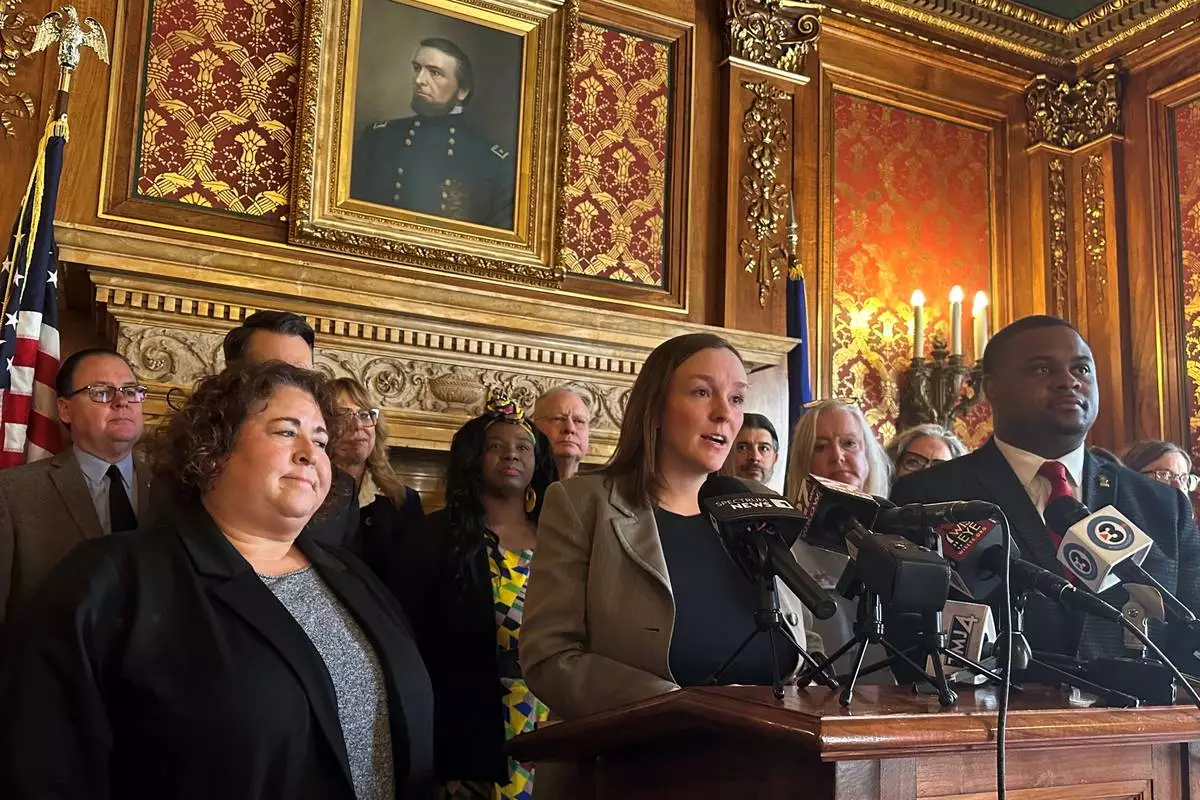
Democratic Wisconsin Assembly Minority Leader Greta Neubauer, surrounded by Democratic colleagues, speaks in support of measures to expand Medicaid coverage for new mothers and insurance coverage for breast exams at a news conference in the state Capitol on Wednesday, Feb. 18, 2026, in Madison, Wis. (AP Photo/Scott Bauer)
JEFFERSON CITY, Mo. (AP) — Missouri is poised to hold its November election with congressional districts passed after the last census, after the U.S. Supreme Court on Thursday again rejected a new map backed by President Donald Trump that Republicans hoped could help them win an additional seat in the pivotal midterms.
The Supreme Court's decision marked a defining moment in a pitched legal battle that has lasted nearly a year and caused confusion for voters. Citing the court's latest action, Missouri's chief election official directed local authorities to use U.S. House districts passed in 2022, as the state’s highest court had ordered.
Trump wanted courts to allow the use of his preferred map, which lawmakers approved last year at his urging.
The decision means Missouri could run the November general election with different U.S. House districts than were used in the August primary — an extremely rare situation that could switch the candidate choices for more than a million potential voters, or nearly 1 in 4 voters statewide, according to an Associated Press estimate.
No Supreme Court justices publicly dissented from the brief order. It did not detail the court’s legal reasoning, as is typical in emergency appeals.
The White House did not immediately respond to a request for comment on the U.S. Supreme Court decision.
Earlier Thursday, Missouri's top court convened a hearing on whether to hold Republican Secretary of State Denny Hoskins in contempt for not following its orders to use the districts passed after the last census. Hoskins had instead told local election authorities to use the new Trump-backed map, pointing to a competing order from a federal judge on Tuesday that forbade him from using anything other than the new districts.
Missouri Supreme Court judges, while questioning a state attorney representing Hoskins, repeatedly pressed for Hoskins to send out guidance Thursday to use the 2022 version of the congressional districts.
“We’re in a precarious situation,” Chief Justice W. Brent Powell said.
Hoskins later released a statement acknowledging the U.S. Supreme Court decision, saying “my Office is directing local election authorities to use the 2022 congressional map.”
The court then reconvened, finding Hoskins in contempt for violating its order not to use the Trump-backed map but then quickly declaring that he had corrected the problem with his latest order to use the 2022 map. The court imposed no consequences on Hoskins.
Outside the court, progressive activist Keith Rose stood in the rain protesting Hoskins’ legal maneuverings to try to use the Trump-backed map. Rose, who helped gather petition signatures to put the new map to a statewide vote, said he hopes the U.S. Supreme Court’s decision Thursday ends the uncertainty.
“We need some finality. We need to focus on the real issues that Missourians care about,” Rose said.
Candidates who won Missouri’s August primary already have been certified for the November ballot according to the number of the district they won. But those districts could substantially change shape.
The 5th Congressional District encompasses only the Kansas City area under the 2022 map that Republican lawmakers passed after the last census. Under the revised map backed by Trump, portions are shed to neighboring districts and the remainder is stretched into rural Republican areas. About 59% of the potential voters are new to the district under that version, according to an AP estimate.
Some other states that have switched congressional districts after their primaries have redone their primary votes. Alabama held a new primary in August under revised districts when the U.S. Supreme Court allowed a change to occur after voting in the original May primary.
In Missouri’s case, however, no court has suggested redoing the primary.
Missouri’s battle over its congressional districts has spanned more than a year and spawned confusion over which districts will be in place for voters.
It was the second Republican-led state, after Texas, to enact new districts after Trump urged Republicans last year to redraw House districts to their advantage ahead of the midterm elections.
The revised districts target a Kansas City-based seat held by Democratic Rep. Emanuel Cleaver of Kansas City, aiming to help Republicans win seven of the state’s eight House seats in the midterm elections.
Redistricting opponents collected hundreds of thousands of petition signatures seeking to force a statewide vote on the new districts. They submitted the signatures in December. But Hoskins waited until August — on the same day as Missouri’s primary — to reject the petition. Hoskins asserted that a referendum petition could not be used for congressional redistricting.
The delay allowed Missouri to use the new districts in its August primary. Cleaver was unopposed for the Democratic nomination. State Sen. Rick Brattin won the Republican primary for the right to challenge Cleaver. Brattin was among those suing in federal court to try to prevent the state from reverting to the prior districts.
Republican U.S. Rep. Bob Onder, who was also among those suing, said Thursday: “This isn’t over.” He noted that the 8th U.S. Circuit Court of Appeals will hear arguments on the merits of his case.
Republican state officials have argued that it would violate voters’ federal rights to switch districts before the general election.
But the Missouri Supreme Court last week ordered Hoskins to put the redistricting referendum on the November ballot, which he did. It also ruled that the new districts never became law and instead were suspended retroactively to the December petition submission. The court barred Hoskins from using the new map and said the old map — passed by Republican lawmakers in 2022 after the last census — must be used in the November election.
The state then appealed to the U.S. Supreme Court to block the state court decision. Justice Brett Kavanaugh rejected the request.
The group People Not Politicians Missouri, which sponsored the redistricting referendum, applauded the Supreme Court decisions that left the state court ruling in place.
“The law is the law, the Missouri constitution is clear as was the Missouri Supreme Court,” said Executive Director Richard von Glahn. “The courts have settled this, now it’s up to Missouri voters to finish the job and vote NO on Proposition A.”
Whitehurst reported from Washington. Associated Press journalist Hannah Recht in Washington contributed.
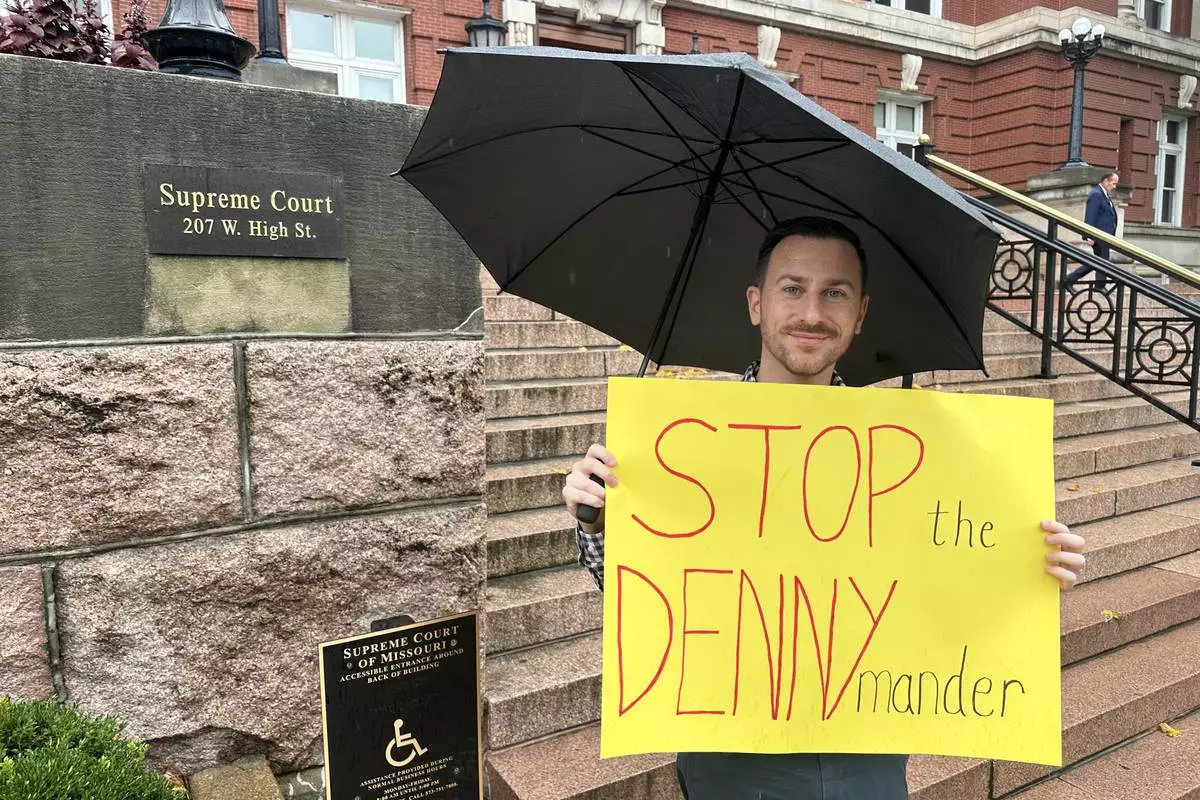
This photo taken with a smartphone shows Keith Rose holding a sign opposed to new Missouri congressional districts supported by Secretary of State Denny Hoskins outside the Missouri Supreme Court in Jefferson City, Mo., Thursday, Sept. 10, 2026. (AP Photo/David A. Lieb)
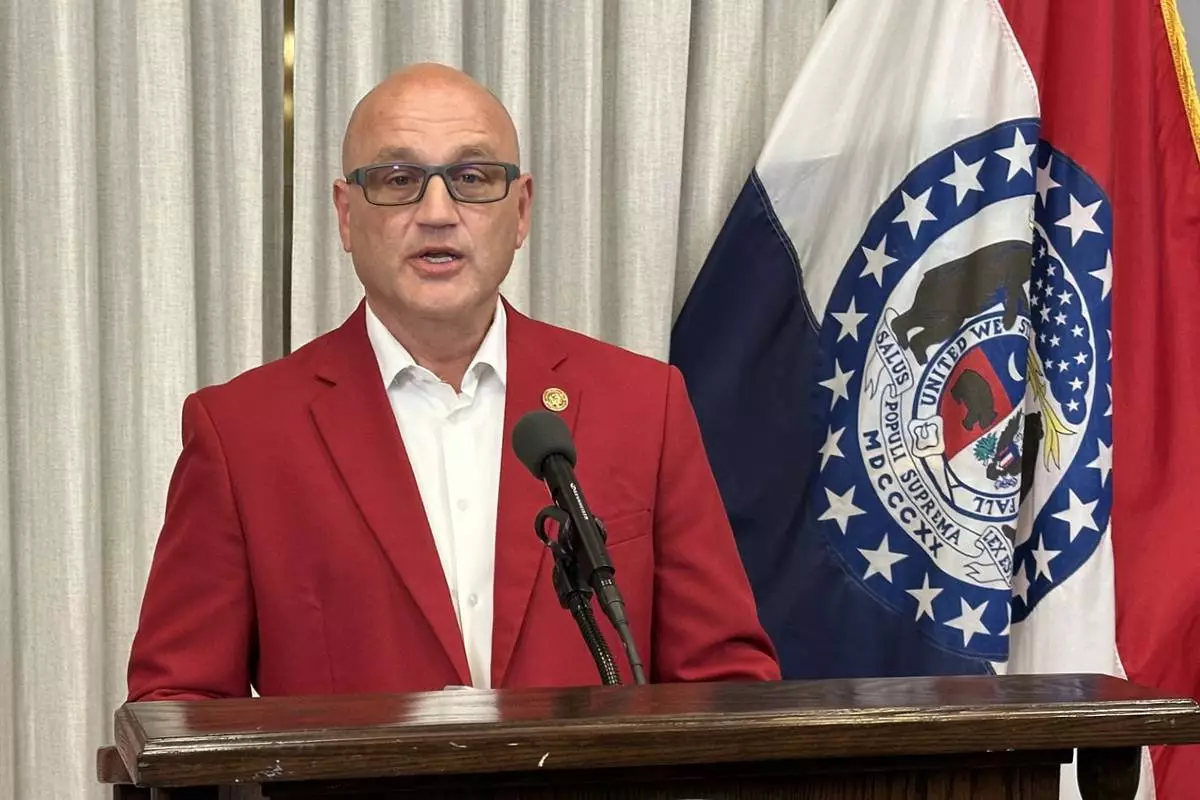
FILE - Missouri Secretary of State Denny Hoskins talks to reporters Tuesday, Aug. 4, 2026, at his office in the state Capitol in Jefferson City, Mo. (AP Photo/David A. Lieb, File)
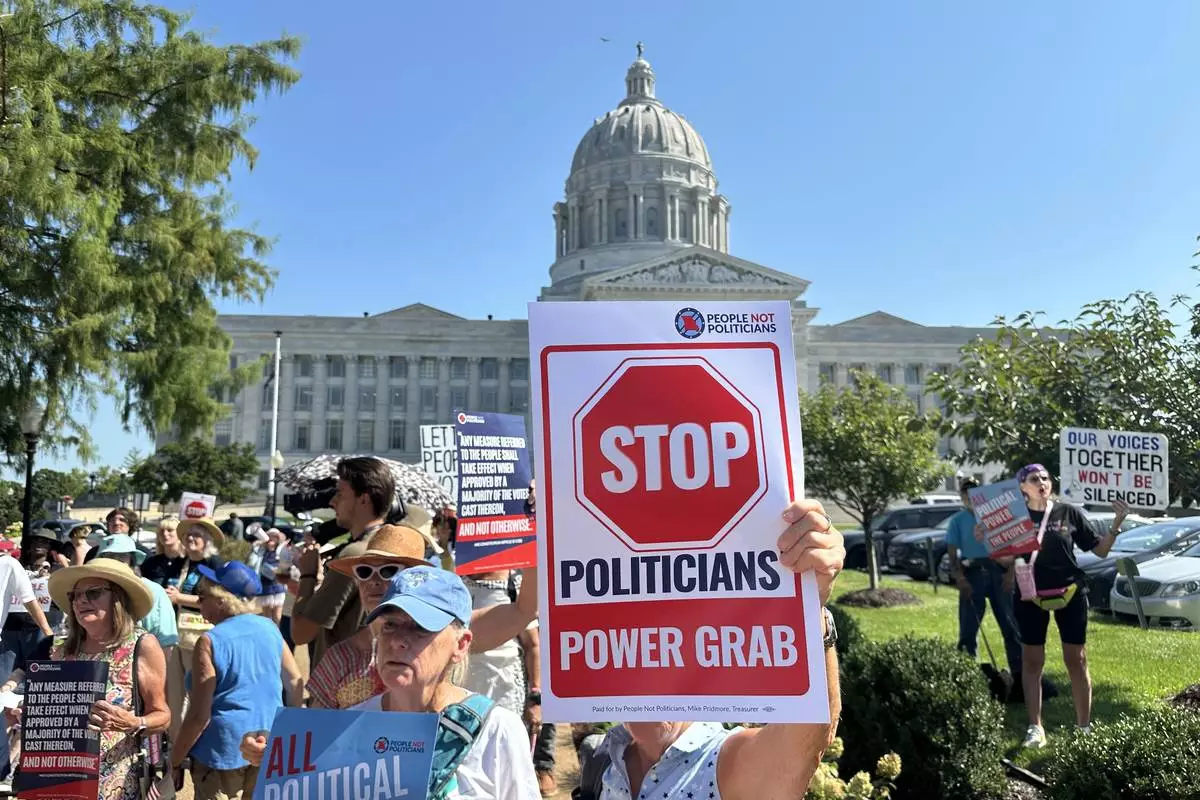
In this photo taken with a smartphone, people opposed to a congressional redistricting plan rally outside the Missouri Capitol in Jefferson City, Mo., Wednesday, Sept. 2, 2026. (AP Photo/David A. Lieb)