
Skip to Content Facebook Feature Image

Will the Olympics bid farewell to one of its toughest winter sports?

News

Will the Olympics bid farewell to one of its toughest winter sports?
News

News

Will the Olympics bid farewell to one of its toughest winter sports?

2026-02-20 05:39 Last Updated At:05:40

TESERO, Italy (AP) — Nordic goodbye?

It could be the last Olympics for a sport that mixes the grace of ski jumping with the grind of cross-country skiing.

More Images
Silver medalists Eero Hirvonen and Ilkka Herola, of Finland, gold medalists Andreas Skoglund and Jens Luraas Oftebro, of Norway, and bronze medalists Stefan Rettenegger and Johannes Lamparter, of Austria, pose after finishing the nordic combined team sprint at the 2026 Winter Olympics, in Tesero, Italy, Thursday, Feb. 19, 2026. (AP Photo/Evgeniy Maloletka)

Silver medalists Eero Hirvonen and Ilkka Herola, of Finland, gold medalists Andreas Skoglund and Jens Luraas Oftebro, of Norway, and bronze medalists Stefan Rettenegger and Johannes Lamparter, of Austria, pose after finishing the nordic combined team sprint at the 2026 Winter Olympics, in Tesero, Italy, Thursday, Feb. 19, 2026. (AP Photo/Evgeniy Maloletka)

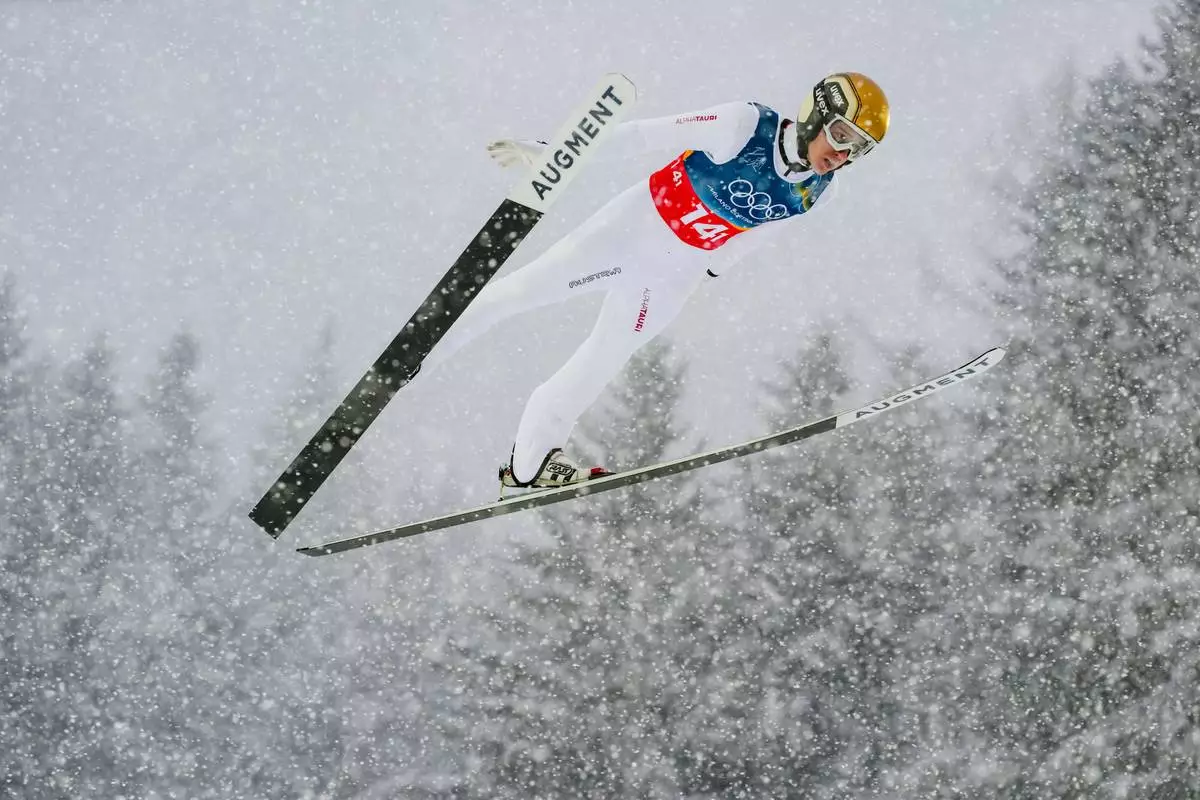
Stefan Rettenegger, of Austria, soars through the air during the nordic combined team sprint at the 2026 Winter Olympics, in Predazzo, Italy, Thursday, Feb. 19, 2026. (AP Photo/Evgeniy Maloletka)

Stefan Rettenegger, of Austria, soars through the air during the nordic combined team sprint at the 2026 Winter Olympics, in Predazzo, Italy, Thursday, Feb. 19, 2026. (AP Photo/Evgeniy Maloletka)

Eero Hirvonen, of Finland, reacts after crossing the finish line to win the silver medal in the nordic combined team sprint at the 2026 Winter Olympics, in Tesero, Italy, Thursday, Feb. 19, 2026. (AP Photo/Matthias Schrader)

Eero Hirvonen, of Finland, reacts after crossing the finish line to win the silver medal in the nordic combined team sprint at the 2026 Winter Olympics, in Tesero, Italy, Thursday, Feb. 19, 2026. (AP Photo/Matthias Schrader)

Stefan Rettenegger, left, and Johannes Lamparter, of Austria, pose with supporters after winning the bronze medal in the nordic combined team sprint at the 2026 Winter Olympics, in Tesero, Italy, Thursday, Feb. 19, 2026. (AP Photo/Matthias Schrader)

Stefan Rettenegger, left, and Johannes Lamparter, of Austria, pose with supporters after winning the bronze medal in the nordic combined team sprint at the 2026 Winter Olympics, in Tesero, Italy, Thursday, Feb. 19, 2026. (AP Photo/Matthias Schrader)

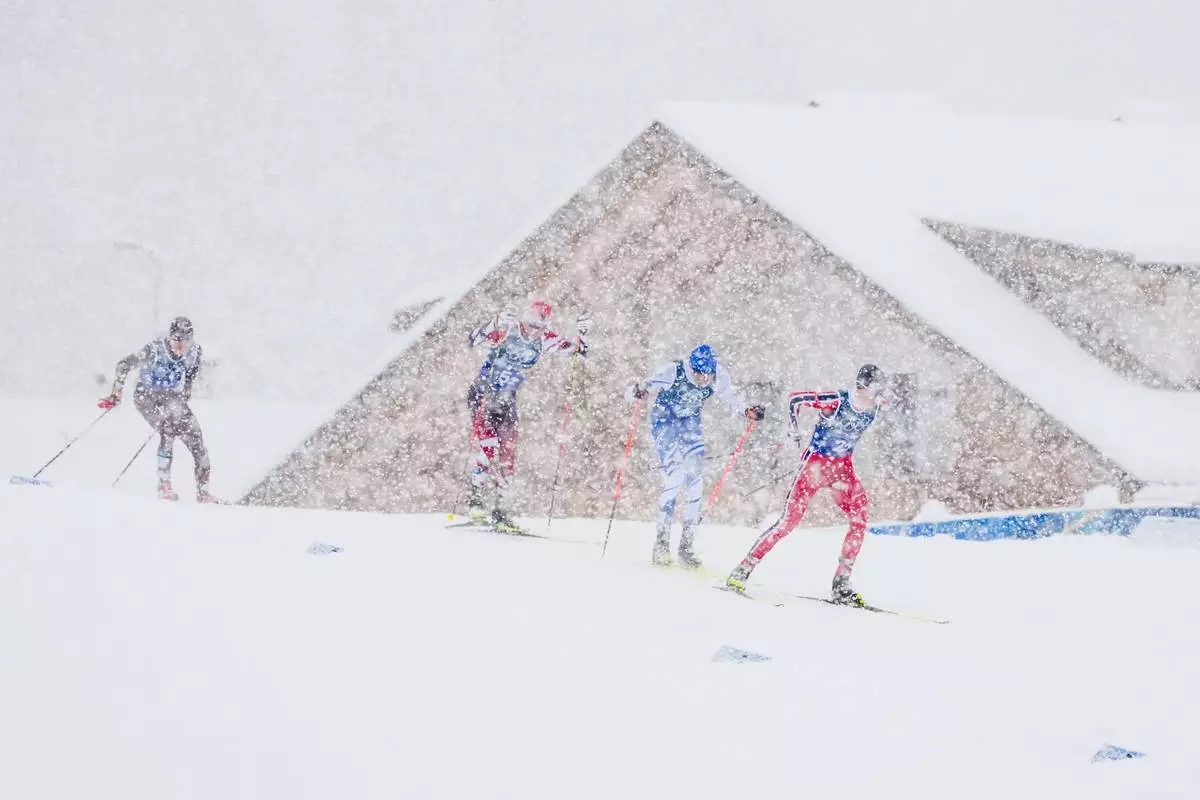
Jens Luraas Oftebro, of Norway, from right, Eero Hirvonen, of Finland and Johannes Lamparter, of Austria, compete in the nordic combined team sprint at the 2026 Winter Olympics, in Tesero, Italy, Thursday, Feb. 19, 2026. (AP Photo/Kirsty Wigglesworth)

Jens Luraas Oftebro, of Norway, from right, Eero Hirvonen, of Finland and Johannes Lamparter, of Austria, compete in the nordic combined team sprint at the 2026 Winter Olympics, in Tesero, Italy, Thursday, Feb. 19, 2026. (AP Photo/Kirsty Wigglesworth)

Nordic combined events at the Milan Cortina Games ended Thursday. And the International Olympic Committee is considering scrapping it from future Games because of a small TV audience and podium positions dominated by a tiny group of nations.

As if to illustrate that point, Norway took gold in all three events — including Thursday's men’s team sprint — and the same countries stood on the podium at all three Nordic combined events at these Winter Games.

“Hopefully these three events have been fun to watch and I think it has been a lot of nations fighting for their medals,” Jen Luraas Oftebro, who won three golds, said after sharing the win with teammate Andreas Skoglund. “Hopefully the IOC will see the value in that.”

Nordic combined was invented some 150 years ago when a Norwegian crown prince seeking glory as a champion paired the two disciplines he excelled at.

The contest opens with a daredevil ski jump to determine the starting order for a lung-busting cross-country ski race.

“Nordic combined is such a beautiful sport and I think it deserves much more popularity because I think the races are really, really fun to watch and the athletes are doing amazing,” said Jan Vytrval, a Czech competitor. “It deserves much more than to be deleted from the Olympics.”

The sport has been included since the first Winter Games in 1924, but it is the only winter sport that doesn’t include women. Female athletes who compete on the World Cup tour and in world championships have lobbied hard to change that.

But their fate is tied to the larger sport.

The IOC has previously put off a decision on the sport's future but will revisit the question after the Games wrap up Sunday.

“If it stays, it’s for both,” said Lasse Ottesen, the Nordic combined director of the International Ski Federation. “It makes no sense to say, ‘Yes, we’re just going to have the Nordic combined men in or, yes, we're going to take the men out and we’re going to throw the women in.’ I mean why would anyone do that in these times?”

Ottesen said FIS had exceeded requirements the IOC set out in 2022, increasing the competition in the women’s sport and building media interest globally. While audience numbers grew slightly over each of the last three Olympics, he conceded it was not as much as FIS expected.

Two of the three events — the men’s individual normal hill jump and large hill ski jump competitions that were each followed by 10 kilometer ski races — sold out all 4,500 tickets allocated and 90% of the team event tickets were sold, Ottesen said.

But, he added, the cross-country venue has twice that capacity, so it “looks a little bit thinner.”

FIS President Johan Eliasch attended the Feb. 11 normal hill event with IOC President Kirsty Coventry to try to showcase the excitement that two disciplines generate.

IOC member Ingmar de Vos, a member of the committee reviewing the fate of the sport, attended the large hill event.

The IOC also is reviewing the fate of parallel giant slalom snowboarding to make sure it meets the goal of being balanced, youth-focused and cost-efficient.

If either sport is removed, it would go the way of tug-of-war, polo and croquet — all once featured around the turn of the 20th century.

In the last three Olympics, all Nordic combined contests were won by Norway, Austria, Germany or Japan. At Milan Cortina, Germany and Japan — despite starting two of the races in first place — were shut out as Finland took two individual bronzes and a team silver.

That is progress in the eyes of the sport’s supporters — and the Finns, who gave a thrilling chase for the silver medal Thursday.

“We have done our part with competing,” said Eero Hirvonen, who shared the silver with Ilkka Herola — and each won an individual bronze. “We have had really interesting competitions here and I think all the attention with what our success and medals have got in Finland ... I hope it helps.”

AP Olympics: https://apnews.com/hub/milan-cortina-2026-winter-olympics

Silver medalists Eero Hirvonen and Ilkka Herola, of Finland, gold medalists Andreas Skoglund and Jens Luraas Oftebro, of Norway, and bronze medalists Stefan Rettenegger and Johannes Lamparter, of Austria, pose after finishing the nordic combined team sprint at the 2026 Winter Olympics, in Tesero, Italy, Thursday, Feb. 19, 2026. (AP Photo/Evgeniy Maloletka)
Silver medalists Eero Hirvonen and Ilkka Herola, of Finland, gold medalists Andreas Skoglund and Jens Luraas Oftebro, of Norway, and bronze medalists Stefan Rettenegger and Johannes Lamparter, of Austria, pose after finishing the nordic combined team sprint at the 2026 Winter Olympics, in Tesero, Italy, Thursday, Feb. 19, 2026. (AP Photo/Evgeniy Maloletka)

Stefan Rettenegger, of Austria, soars through the air during the nordic combined team sprint at the 2026 Winter Olympics, in Predazzo, Italy, Thursday, Feb. 19, 2026. (AP Photo/Evgeniy Maloletka)

Stefan Rettenegger, of Austria, soars through the air during the nordic combined team sprint at the 2026 Winter Olympics, in Predazzo, Italy, Thursday, Feb. 19, 2026. (AP Photo/Evgeniy Maloletka)

Eero Hirvonen, of Finland, reacts after crossing the finish line to win the silver medal in the nordic combined team sprint at the 2026 Winter Olympics, in Tesero, Italy, Thursday, Feb. 19, 2026. (AP Photo/Matthias Schrader)

Eero Hirvonen, of Finland, reacts after crossing the finish line to win the silver medal in the nordic combined team sprint at the 2026 Winter Olympics, in Tesero, Italy, Thursday, Feb. 19, 2026. (AP Photo/Matthias Schrader)
Stefan Rettenegger, left, and Johannes Lamparter, of Austria, pose with supporters after winning the bronze medal in the nordic combined team sprint at the 2026 Winter Olympics, in Tesero, Italy, Thursday, Feb. 19, 2026. (AP Photo/Matthias Schrader)

Stefan Rettenegger, left, and Johannes Lamparter, of Austria, pose with supporters after winning the bronze medal in the nordic combined team sprint at the 2026 Winter Olympics, in Tesero, Italy, Thursday, Feb. 19, 2026. (AP Photo/Matthias Schrader)

Jens Luraas Oftebro, of Norway, from right, Eero Hirvonen, of Finland and Johannes Lamparter, of Austria, compete in the nordic combined team sprint at the 2026 Winter Olympics, in Tesero, Italy, Thursday, Feb. 19, 2026. (AP Photo/Kirsty Wigglesworth)


Jens Luraas Oftebro, of Norway, from right, Eero Hirvonen, of Finland and Johannes Lamparter, of Austria, compete in the nordic combined team sprint at the 2026 Winter Olympics, in Tesero, Italy, Thursday, Feb. 19, 2026. (AP Photo/Kirsty Wigglesworth)

WASHINGTON (AP) — Tariffs paid by midsize U.S. businesses tripled over the course of past year, new research tied to one of America’s leading banks showed on Thursday — more evidence that President Donald Trump 's push to charge higher taxes on imports is causing economic disruption.

The additional taxes have meant that companies that employ a combined 48 million people in the U.S. — the kinds of businesses that Trump had promised to revive — have had to find ways to absorb the new expense, by passing it along to customers in the form of higher prices, employing fewer workers or accepting lower profits.

“That’s a big change in their cost of doing business,” said Chi Mac, business research director of the JPMorganChase Institute, which published the analysis Thursday. “We also see some indications that they may be shifting away from transacting with China and maybe toward some other regions in Asia.”

The research does not say how the additional costs are flowing through the economy, but it indicates that tariffs are being paid by U.S. companies. The study is part of a growing body of economic analyses that counter the administration's claims that foreigners pay the tariffs.

The JPMorganChase Institute report used payments data to look at businesses that might lack the pricing power of large multinational companies to offset tariffs, but may be small enough to quickly change supply chains to minimize exposure to the tax increases. The companies tended to have revenues between $10 million and $1 billion with fewer than 500 employees, a category known as “middle market.”

The analysis suggests that the Trump administration’s goal of becoming less directly reliant on Chinese manufacturers has been occurring. Payments to China by these companies were 20% below their October 2024 levels, but it’s unclear whether that means China is simply routing its goods through other countries or if supply chains have moved.

The authors of the analysis emphasized in an interview that companies are still adjusting to the tariffs and said they plan to continue studying the issue.

The White House did not respond to questions about the analysis, which showed that U.S. companies are paying tariffs that the president had previously claimed would be paid by foreign entities.

But Trump defended his tariffs during a trip to Georgia on Thursday while touring Coosa Steel, a company involved in steel processing and distribution. The president said he couldn't believe the Supreme Court would soon decide on the legality of some of his tariffs, given his belief that the taxes were helping U.S. manufacturers.

“The tariffs are the greatest thing to happen to this country," Trump said.

The president imposed a series of tariffs last year for the ostensible goal of reducing the U.S. trade imbalance with other countries, so that America was not longer importing more than it exports. But trade data published Thursday by the Census Bureau showed that the trade deficit climbed last year by $25.5 billion to $1.24 trillion. The president on Wednesday posted on social media that he expected there would be a trade surplus “during this year.”

The Trump administration has been adamant that the tariffs are a boon for the economy, businesses, and workers. Kevin Hassett, director of the White House National Economic Council, lashed out on Wednesday at research by the New York Federal Reserve showing that nearly 90% of the burden for Trump's tariffs fell on U.S. companies and consumers.

“The paper is an embarrassment,” Hassett told CNBC. “It’s, I think, the worst paper I’ve ever seen in the history of the Federal Reserve system. The people associated with this paper should presumably be disciplined.”

Trump increased the average tariff rate to 13% from 2.6% last year, according to the New York Fed researchers. He declared that tariffs on some items such as steel, kitchen cabinets and bathroom vanities were in the national security interest of the country. He also declared an economic emergency to bypass Congress and impose a baseline tax on goods from much of the world in April 2025 at an event he called “Liberation Day.”

The high rates provoked a financial market panic, prompting Trump to walk back his rates and then engage in talks with multiple countries that led to a set of new trade frameworks. The Supreme Court is expected to rule soon on whether Trump surpassed his legal authority by declaring an economic emergency.

Trump was elected in 2024 on his promise to tame inflation, but his tariffs have contributed to voter frustration over affordability. While inflation has not spiked during Trump's term thus far, hiring slowed sharply and a team of academic economists estimate that consumer prices were roughly 0.8 percentage points higher than they would otherwise be.

President Donald Trump gestures during a Black History Month event in the East Room of the White House, Wednesday, Feb. 18, 2026, in Washington. (AP Photo/Nathan Howard)

President Donald Trump gestures during a Black History Month event in the East Room of the White House, Wednesday, Feb. 18, 2026, in Washington. (AP Photo/Nathan Howard)

Recommended Articles