Skip to Content Facebook Feature Image

Domestic passenger trips hit peak as Spring Festival holiday ends

China

China

China

Domestic passenger trips hit peak as Spring Festival holiday ends

2026-02-22 12:17 Last Updated At:15:37

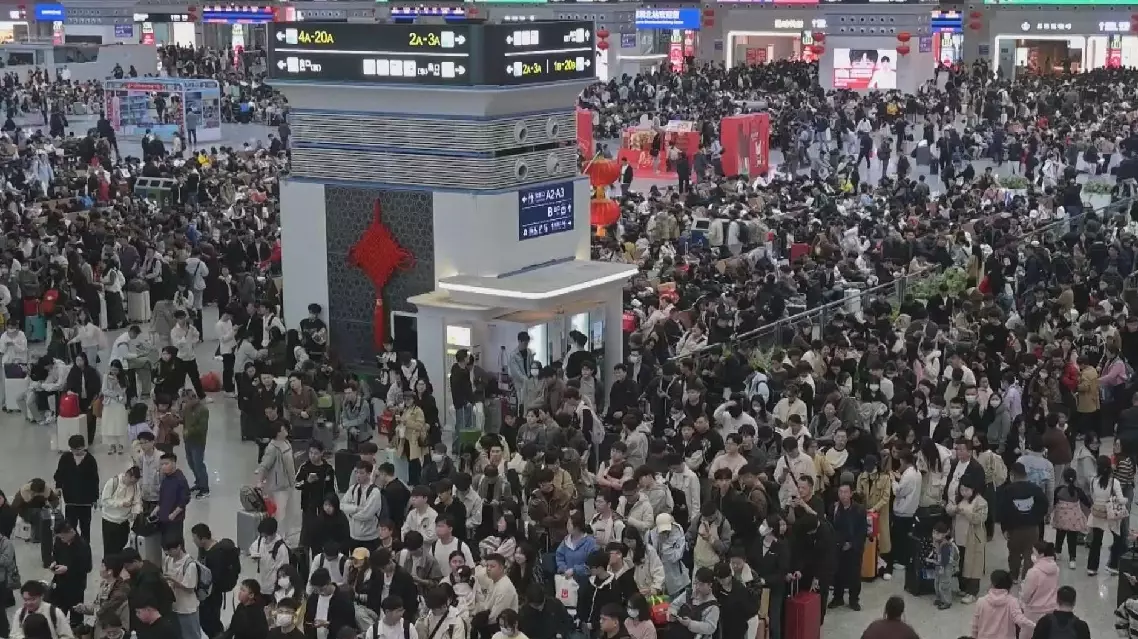
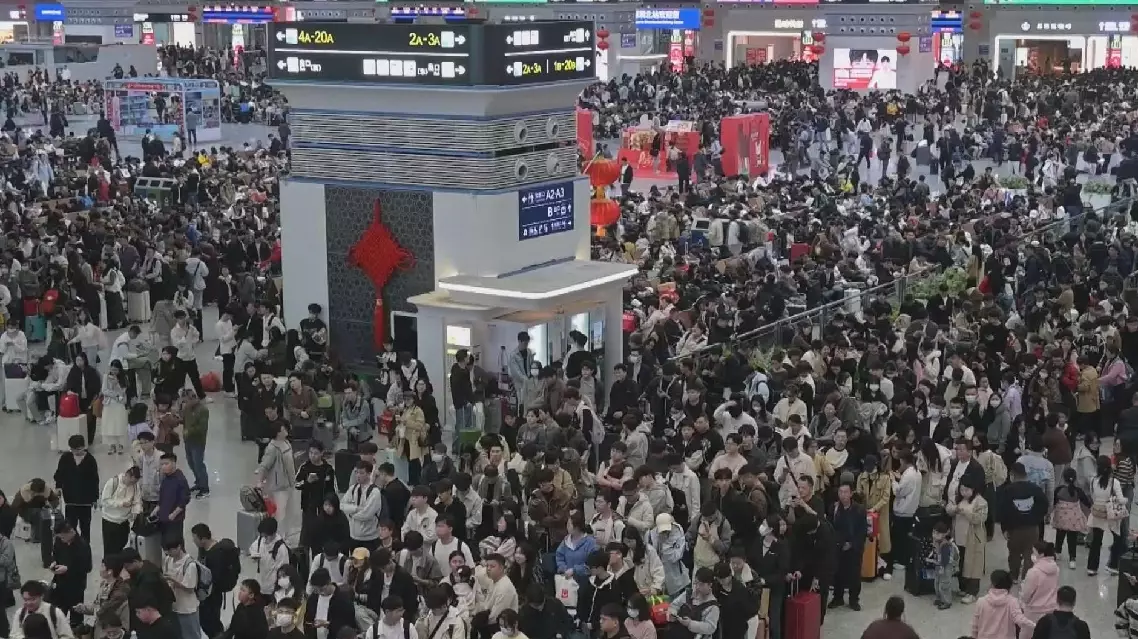
Millions of holiday makers across China are heading back to their workplaces or homes this weekend as the official nine-day Spring Festival holiday draws to a close on Monday, with transportation authorities expecting the number of domestic passenger trips to hit its peak on Sunday during the 40-day Spring Festival travel rush.

The Spring Festival travel rush, also known as "chunyun," amounts to the world's largest annual human migration as millions embark on journeys across the nation to reunite with loved ones to celebrate the arrival of the Chinese New Year.

The Spring Festival in the start of the Chinese New Year fell on Feb 17 this year. The official holiday lasts nine days from Feb 15 to 23, with the travel rush period lasting through March 13.

From Tuesday to Saturday, more than 1.6 billion inter-regional passenger trips were made across China, averaging 320 million trips per day, a year-on-year increase of over 11 percent.

The country's railway system is expected to handle 17.93 million passenger trips, with 2,203 additional passenger trains scheduled for Sunday.

Highway traffic is projected to surpass 71 million vehicle trips on Sunday, marking a peak during the holiday, according to the Ministry of Public Security's Traffic Safety Research Center.

Also on Sunday, the country's waterway transport system is expected to handle 1.42 million passenger trips.

Multiple measures, such as adding special trains for migrant workers and extending subway operating hours, have been adopted to ensure safety and convenience on the return journey.
Domestic passenger trips hit peak as Spring Festival holiday ends
Domestic passenger trips hit peak as Spring Festival holiday ends


Gaza's humanitarian crisis remains severe as the Muslim holy month of Ramadan got underway.

Despite a ceasefire, hundreds of thousands of displaced Palestinians are struggling to survive amid critical shortages of food, clean water and medical supplies.

For displaced families in Gaza, Ramadan began inside fragile tents rather than their homes.

Raed Hajjaj lives with his family in a tent. Securing food has become a daily concern. With no stable source of income, they depend almost entirely on charity kitchens and humanitarian assistance.

"We are a family of seven. We receive one food parcel every week or ten days, if we succeed in getting it. We are living like beggars, relying on charity kitchens, food parcels, or even just a bundle of bread. Honestly, this is not enough at all," said Hajjaj.

For many displaced Palestinians, fasting from food during the day is not new. As Raghdah Hajjaj explained, hunger has already become part of their daily reality, even before Ramadan began.

"Ramadan has come, and I swear tonight we shared half a box of cheese with a little fava beans with my children. We divided the cheese between us [so] we could all have something. And we thank God for that," she said.

As the humanitarian situation continues to deteriorate, United Nations organizations have warned that ongoing restrictions on the entry of basic supplies are increasing the suffering of hundreds of thousands of displaced people and undermining efforts to provide even minimum assistance.

"Whilst 1.5 million have lost their homes and are staying in damaged tents, they are in bad need of basic assistance. Israel continues restricting the entry of basic supplies in all humanitarian sectors, food, water, medical supplies and hygiene items," said Amjad Al-Shawa, general director of the Palestinian NGO Network.

Displaced Gaza families face acute shortages of food, medical supplies during Ramadan

Displaced Gaza families face acute shortages of food, medical supplies during Ramadan

Recommended Articles