A deputy to the National People's Congress (NPC) and a veteran technical worker from southwestern China's Chongqing Municipality, Fu Guotao, is advocating deeper reform of vocational education and more diversified training of skilled workers, based on years of his field research and industrial surveys ahead of the upcoming 2026 NPC annual session, which he will attend in Beijing.
"We need to deepen the integration of industry and education. This involves systemic changes, including bringing master craftsmen into campuses and sending teachers to our factories for internships. Only by combining theoretical knowledge with practical operational experience can we cultivate the applied skilled talents that factories actually need," said Fu.
During his surveys, Fu observed that as industrial roles become increasingly specialized, the requirements for the comprehensive qualities of skilled personnel have risen. He noted that while China has successfully established a widespread vocational school system, the priority must now shift from simply having these institutions to ensuring they are high-performing and robust.
As a frontline technician, Fu has long focused on the evolution of vocational training with his 36 year experience in a production factory. He conducted extensive field research across various enterprises to understand the shifting demands of the industrial frontline.
The revised Vocational Education Law has already laid the legal groundwork for a modern system that bridges vocational and general education. During his visits, Fu found that various regions are exploring different ways to deepen this integration.
In the Western Region's Vocational Education Base in Chongqing's Yongchuan District, plans are underway to introduce vocational career planning courses to over 70 percent of local primary and secondary schools over the next five years. To support this, skilled experts are being invited into classrooms to provide career guidance. Fu also brought component models into local classrooms to interact with students.
"The integration of vocational and general education includes the mutual recognition of qualifications. In Yongchuan, our vocational education operates on a credit system, with points that can be accumulated. These points provide a boost for future development, offering tangible benefits in areas such as employment, school enrollment for children, and even housing incentives," Fu explained.
Consolidating his field findings, Fu has prepared a proposal for this year's NPC session, China's top legislature. He hopes that a coordinated effort between multiple sectors can turn vocational schools into "cradles for craftsmen."
"I believe everyone can shine in their own way. Education should 'let a flower be a flower, and a tree be a tree.' Through the joint efforts of schools, enterprises, and the government, we can elevate the quality of vocational education. By forming this synergy, we can cultivate the innovative and versatile skilled talents required to meet the demands of our society's development," said Fu.
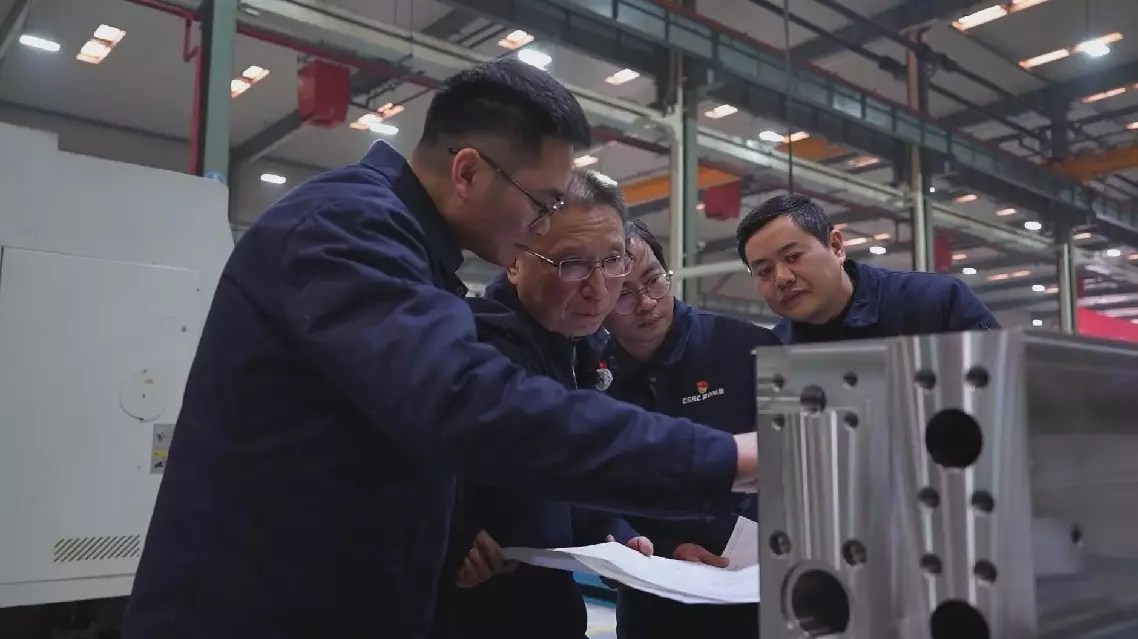
NPC deputy calls for deeper vocational education reform to cultivate diversified skilled talent