China remains a pivotal partner for the Port of Hamburg, Germany's largest universal seaport and vital gateway to Europe, said the CEO of Hamburger Hafen und Logistik AG (HHLA) Angela Titzrath, the port's operator.
Titzrath said that HHLA maintains a partnership of mutual trust with COSCO Shipping Ports Limited, a subsidiary of China COSCO Shipping Corporation, which currently holds a 24.99-percent stake in the Container Terminal Tollerort (CTT), the smallest of the Port of Hamburg's four container terminals.
Titzrath emphasized that the partnership between the two sides will help more Chinese goods reach European markets through the Port of Hamburg.
"The partnership we established last year ensures that trade with China, and especially COSCO's port calls, will utilize the Port of Hamburg and the Tollerort terminal as a crucial initial hub. This translates into efficient distribution of COSCO's goods via the Port of Hamburg to the German and European hinterland. Naturally, we anticipate that this long-standing, trusting collaboration will lead to further growth, with Chinese cargo arriving first in Hamburg to supply the European markets," she said.
According to the Port of Hamburg Marketing, China has remained the Port of Hamburg's most important trading partner for many years, and the German shipping hub is connected to major ports in China via 15 shipping routes. Cargo moving between China and the Port of Hamburg mainly consists of consumer goods, chemical products, and machinery.
"It is a very long-standing and enduring relationship that has connected China and Hamburg for over 40 years. COSCO and Hamburger Hafen und Logistik AG have been exchanging services and goods in close partnership for more than 40 years. China is of great importance. [Our partnership] reflects the significance of the industrial integration of services and goods flows between Europe and Germany and China. Therefore, China is an important partner for HHLA and for Hamburg," Titzrath said.
According to both Titzrath and Wang Mingfeng, president of COSCO Shipping Europe, COSCO Shipping and HHLA are on their way to achieving the goal of carbon neutrality at the Port of Hamburg by reducing greenhouse gas emissions from vessels at berth and building a green and low-carbon supply chain.
The sustainable and green development of the port plays a key role in COSCO Shipping's continued efforts to expand its regional supply chain network in Europe, said Wang.
"In terms of tonnage, we are number one in the world so far, because we have diversified multipurpose ships. And we need to build us a world-class shipping technology enterprise. That's our vision. And also, we've made it very clear on the mission side. One is digital supply chain. The second is green shipping and intelligent shipping. So, Hamburg is very important for us to build up our network," Wang said.
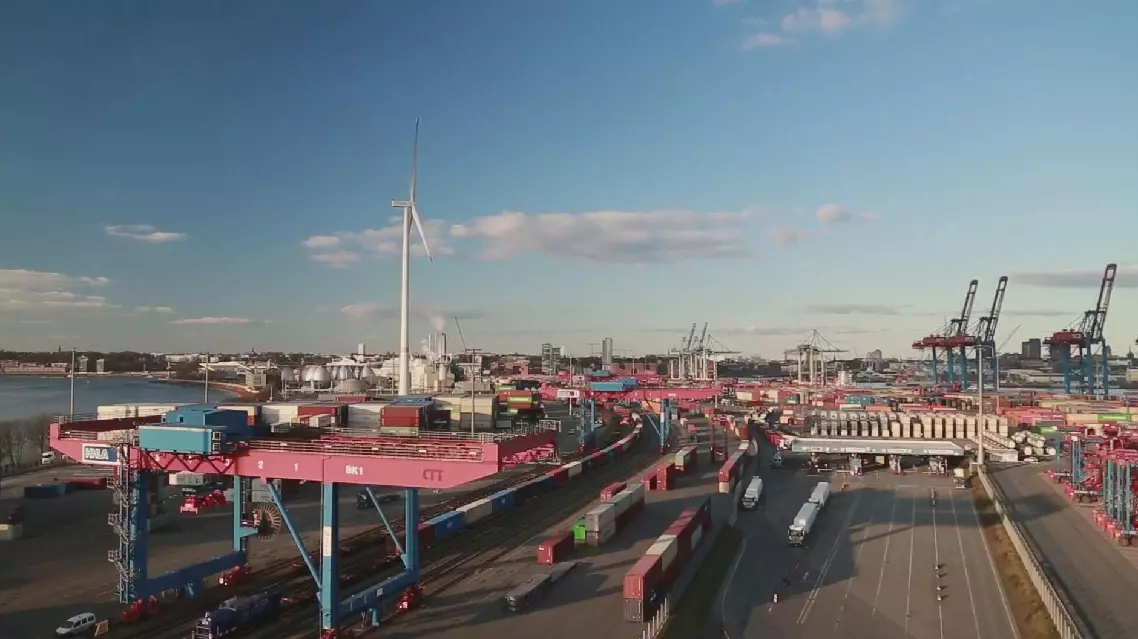
China strengthens Hamburg Port's role as gateway to Europe: port operator
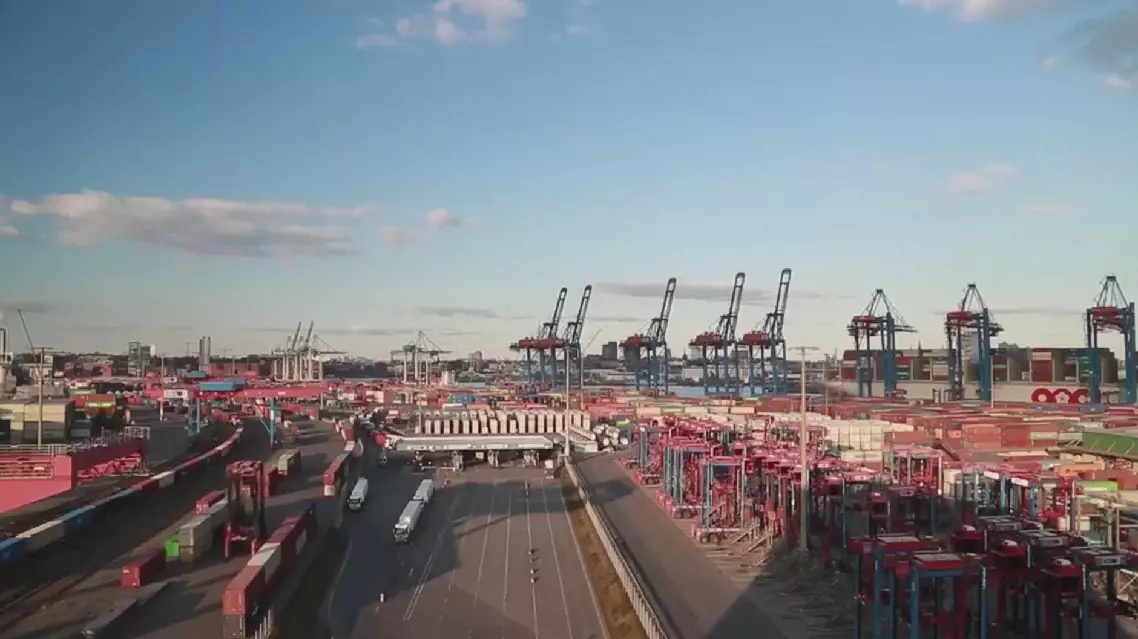
China strengthens Hamburg Port’s role as gateway to Europe: port operator