Skip to Content Facebook Feature Image

UAE to exit OPEC, OPEC+ from May 1

China

China

China

UAE to exit OPEC, OPEC+ from May 1

2026-04-29 00:58 Last Updated At:07:17

The United Arab Emirates (UAE) will withdraw from the Organization of the Petroleum Exporting Countries (OPEC) and the wider OPEC+ alliance, effective from May 1, 2026, the Emirates News Agency (WAM) reported on Tuesday.

Minister of Energy and Infrastructure Suhail Al Mazrouei, speaking in a media interview, said the UAE's decision to quit the OPEC and the OPEC+ mechanism is aligned with a policy-based evolution of the sector and in line with long-term market fundamentals. It will enable the UAE to cooperate more flexibly with its partners and investors, ensuring that future global market demand for crude oil products, petrochemicals, natural gas, and other energy sectors can be met, he said.

The UAE joined OPEC in 1967, seven years after the organization was founded.

Data shows that in February this year, the UAE ranked third in oil production among OPEC members, trailing only Saudi Arabia and Iraq.

OPEC was founded in September 1960 in Iraq, with the aim of coordinating and unifying the petroleum policies and prices of member countries to ensure stability in the international oil market.

Before the UAE announced its withdrawal, OPEC members states accounted for about 36 percent of global oil production and controlled roughly 80 percent of the world's proven oil reserves.

UAE to exit OPEC, OPEC+ from May 1

UAE to exit OPEC, OPEC+ from May 1


UAE to exit OPEC, OPEC+ from May 1

UAE to exit OPEC, OPEC+ from May 1
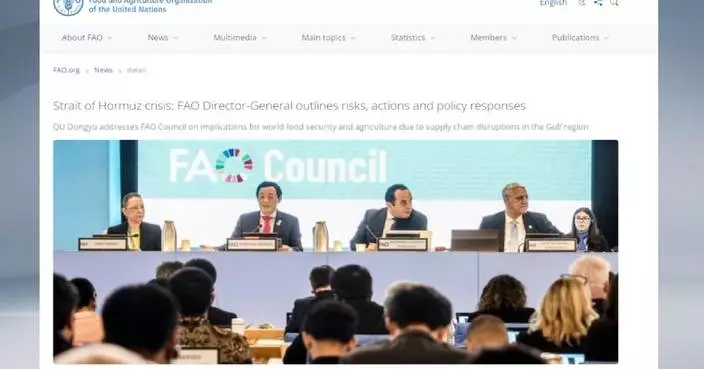
The World Bank predicted Tuesday that energy prices may surge 24 percent in 2026 to their highest level since the Russia-Ukraine conflict erupted in 2022 due to the war in the Middle East, while overall commodity prices are projected to increase 16 percent.

In its latest Commodity Markets Outlook released on Tuesday, the World Bank said that attacks on energy infrastructure and shipping disruptions in the Strait of Hormuz, which handles about 35 percent of global seaborne crude oil trade, have triggered the largest oil supply shock on record, with an initial reduction in global oil supply of about 10 million barrels per day.

Fertilizer prices are projected to increase by 31 percent in 2026, driven by a 60-percent jump in urea prices, while prices for base metals, including aluminum, copper and tin, are expected to reach all-time highs.

Precious metals prices are forecast to increase 42 percent as geopolitical uncertainty fuels demand for safe-haven assets.

Commodity prices could rise even higher if hostilities escalate or supply disruptions from the Iran war last longer than projected, the report said.

Indermit Gill, the World Bank Group's chief economist and senior vice president for Development Economics, said the war is hitting the global economy in cumulative waves, warning that poorer populations will be hardest hit.

World Bank forecasts 24-pct surge in energy prices in 2026

World Bank forecasts 24-pct surge in energy prices in 2026

Recommended Articles