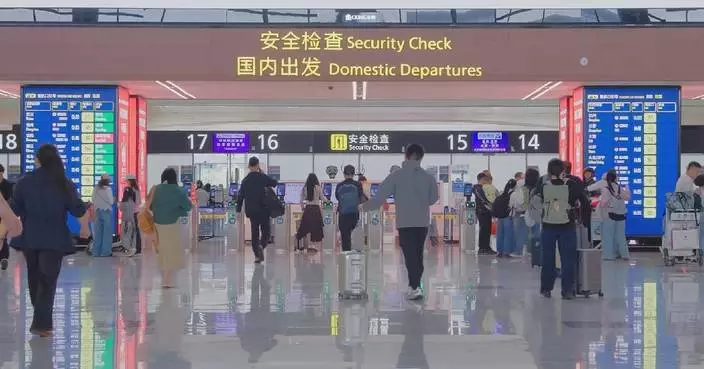
More than 370 million inter-regional passenger trips are expected to be made across China on Sunday, the 21st day of the 40-day Spring Festival travel rush and the penultimate day of the Spring Festival holiday, marking the peak of this year's Spring Festival travel rush.
The Spring Festival travel rush, also known as "chunyun," amounts to the world's largest annual human migration as millions embark on journeys across the nation to reunite with loved ones to celebrate the arrival of the Chinese New Year.
The Spring Festival marking the start of the Chinese New Year fell on Feb 17 this year. The official holiday lasts nine days from Feb 15 to 23, with the travel rush period lasting through March 13.
The country's railway system is expected to handle 17.95 million passenger trips, with 2,203 additional passenger trains scheduled for Sunday.
As of Sunday, railway stations in Chengdu, capital of southwest China's Sichuan Province, had handled 8.094 million passenger trips during the Spring Festival travel rush. Among them, Chengdu East Railway Station ranked second nationwide in passenger volume for five consecutive days.
On Sunday, China Railway Wuhan Group handled 985,000 passenger trips. Among them, Wuhan Railway Station recorded 162,000 passenger trips for the day, setting a new record for the same period during the Spring Festival travel rush, while Hankou Railway Station handled 119,000 passenger trips.
By 18: 00 Sunday, Hefei Railway Station had handled 172,000 passenger trips for the day. Since the start of this year's Spring Festival travel rush, the station has served a total of 3,058,400 passenger trips.
Multiple measures, such as adding special trains for migrant workers and extending subway operating hours, have been adopted to ensure safety and convenience for passengers on their return journey.
Expressway traffic is projected to surpass 71 million vehicle trips on Sunday, marking a peak during the holiday, according to the Ministry of Public Security's Traffic Safety Research Center.
The national expressway network saw a surge in new energy vehicles, with demand for charging reaching its peak on Sunday afternoon. To meet the increased demand, transportation departments across the country have implemented multiple measures, including deploying mobile charging facilities at service areas and guiding vehicles to charge at alternative service areas.
The civil aviation sector recorded an estimated passenger volume of 2.66 million trips on Sunday.
China Southern Airlines has been operating over 230 flights daily in northwest China's Xinjiang Uygur Autonomous Region over the past two days, deploying wide-body aircraft on popular routes including Beijing and Guangzhou. Currently, flight bookings on routes connecting Urumqi with popular destinations such as Sanya, Kunming and Altay have exceeded 90 percent, while international route bookings remain above 80 percent.
Also on Sunday, the country's waterway transport system is expected to handle 1.42 million passenger trips.
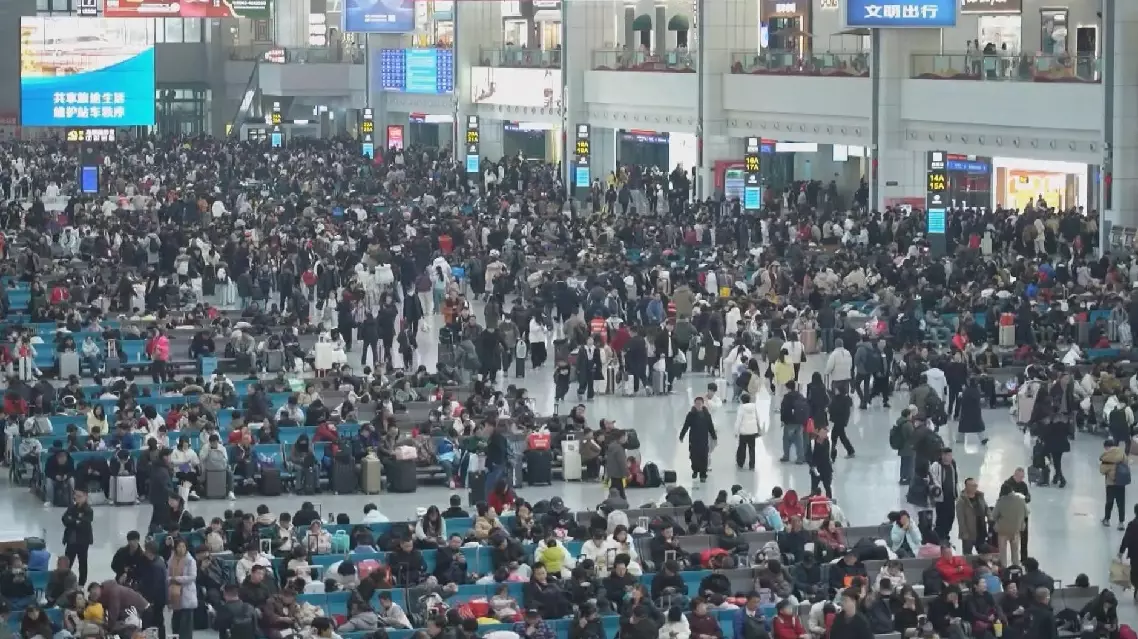
Over 370 mln inter-regional passenger trips handled on Day 21 of Spring Festival travel rush
Over 370 mln inter-regional passenger trips handled on Day 21 of Spring Festival travel rush
Over 370 mln inter-regional passenger trips handled on Day 21 of Spring Festival travel rush