Communities worldwide have marked the Chinese New Year, or Spring Festival, with colorful festivities and cultural events in recent days, as the holiday fell on Feb 17.
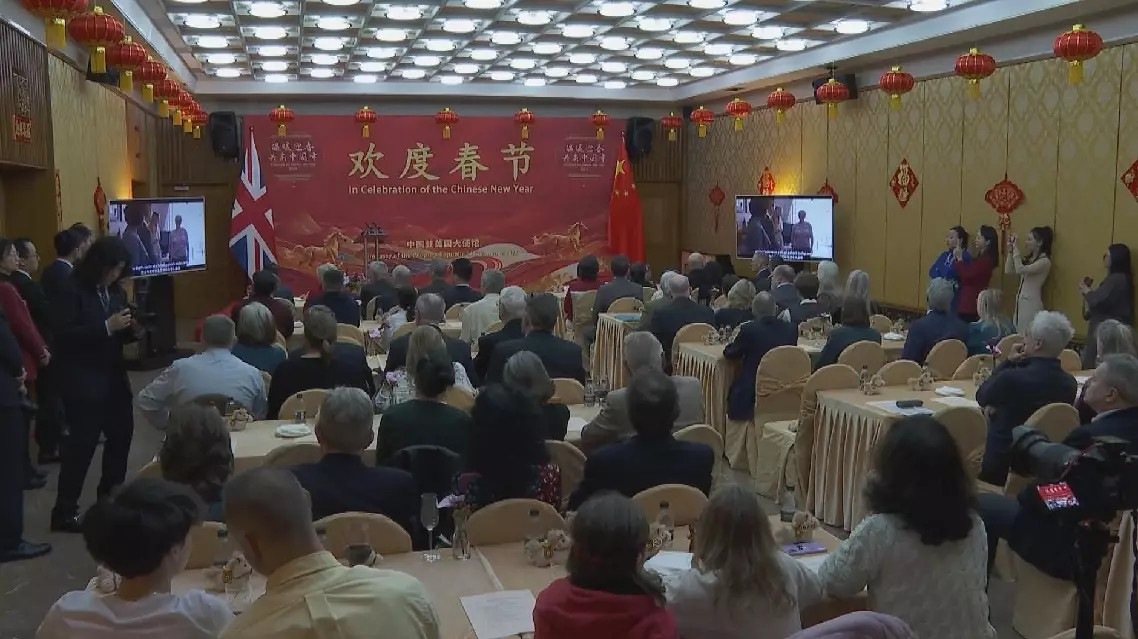
The Chinese Embassy in the United Kingdom hosted a special Chinese New Year reception on Saturday for the families of survivors of the Lisbon Maru and members of the Society for Anglo-Chinese Understanding (SACU).
The event was attended by more than 100 guests, including relatives of British prisoners of war rescued after the sinking of the Lisbon Maru during World War II, as well as representatives committed to promoting China-UK friendship.
"It's a fantastic gathering. We thank the embassy very much for putting it on every year for the families of the men that were on board the Lisbon Maru," said Anthony Jones, chairman of the Lisbon Maru Memorial Association.
On Saturday morning, the Community of Madrid in Spain held a race to mark the start of the Year of the Horse.
"The event is very good, and we are very excited to celebrate the festival here with the community," said Alberto, a participant.
In France, Paris Saint-Germain players took to the field wearing special jerseys featuring Chinese New Year elements during a Ligue 1 match on Saturday.
The Parc des Princes, the club's home stadium, was also festively decorated.
In Indonesia, a "Good Luck on Horseback" flash mob was held at Jakarta's Halim High-Speed Railway Station, drawing large crowds who watched the performances and interacted with the Chinese artists.
On Friday, the premiere of "Harmony of Spring," a Chinese New Year Gala celebrating Chinese intangible cultural heritage, was held in Perth, the capital of Western Australia.
The gala featured 14 performances, including a lion dance, a suona solo and acrobatics, delivering a colorful celebration of Chinese culture to audiences from all walks of life in Perth.
Chinese New Year ignites global celebrations
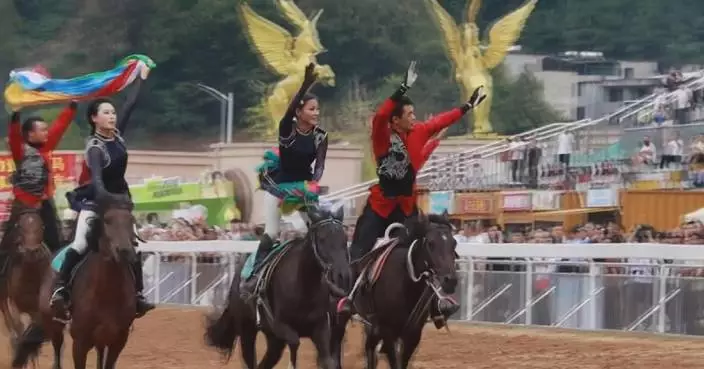
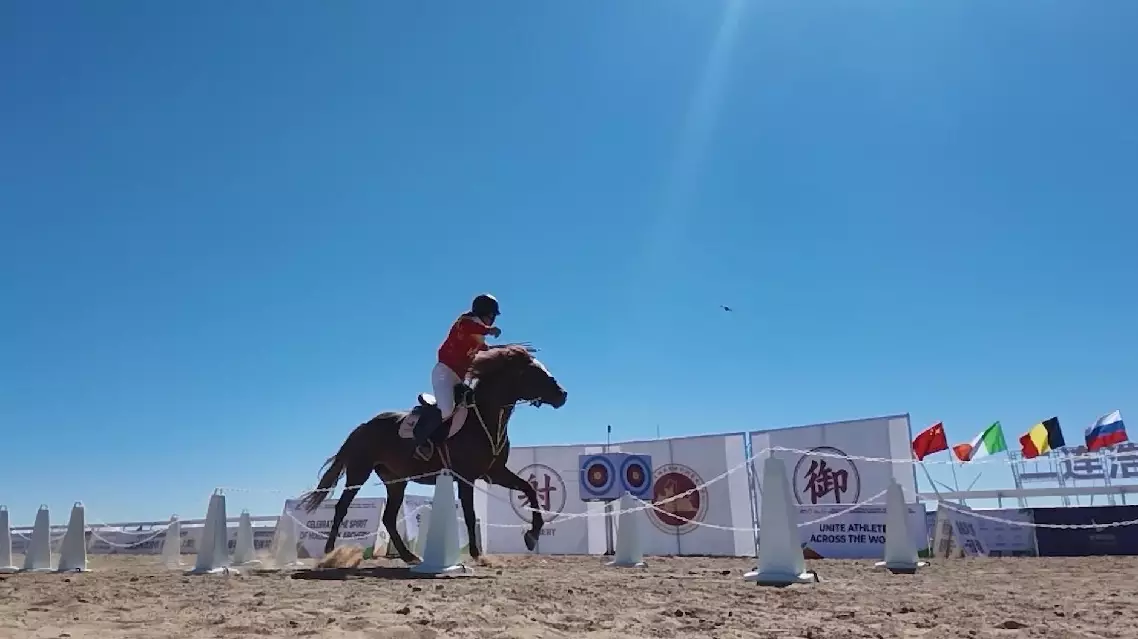
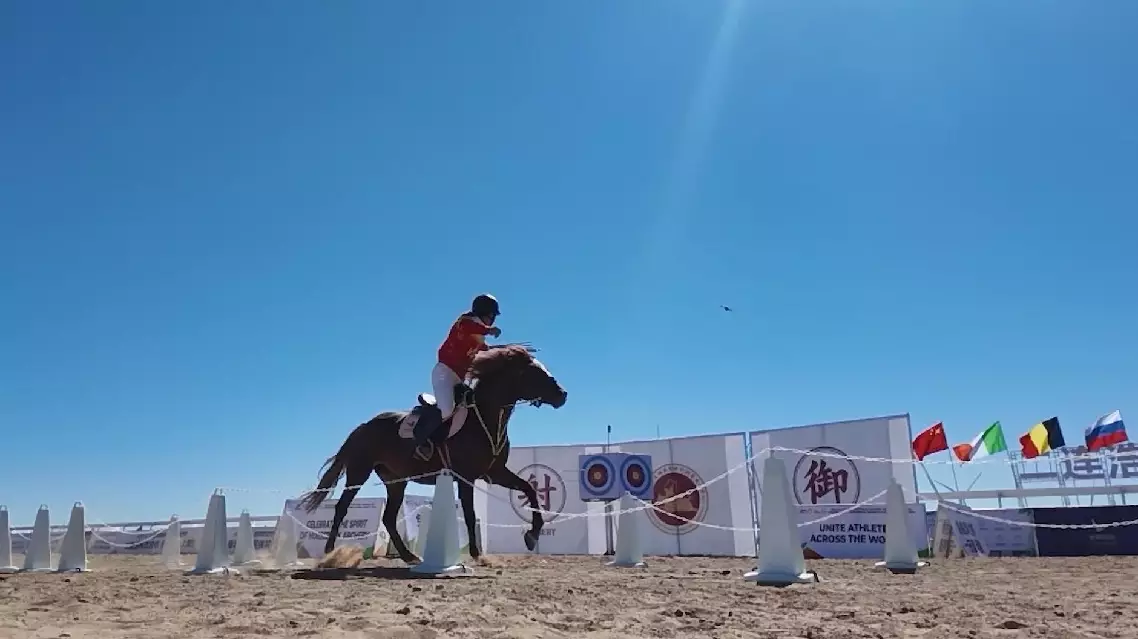
The first national traditional horseback archery competition has drawn riders from across China and abroad to Inner Mongolia in the north during the National Day holiday from Oct 1-7, as the sport is now listed for the 2030 Doha Asian Games.
The event, which kicked off last Thursday in the border city of Erenhot and ran through the week-long National Day holiday. The competition comprises three major tournaments: the inaugural National Mongolian Horse Super League, the National Mounted Archery Tour, and the Erenhot International Masters Tournament.
Together, they drew more than 150 domestic riders from 22 provincial-level regions, alongside 139 competitors from 23 countries and regions, competing across five major disciplines: horseback archery, endurance racing, horse racing relay, horse racing, and trick riding.
The mounted archery event requires competitors to nock arrows and draw bows while their horses gallop at top speed, hitting targets within seconds amid intense motion.
"This is my first time participating in such a large-scale international competition. I feel it quite rewarding to be able to perform near my usual level under such intense competitive pressure," said Sun Fu'an, a Chinese rider.
International players also shared their impressions of the grassland.
"It's very exotic. I've never been to China before. And here, Inner Mongolia is really beautiful with an exceptionally vast expanse of land. It's not at all what I'm used to at home. I'm very happy to be here," said Manon Depas, a Belgian competitor.
Having secured a spot as a competition event at the 2030 Doha Asian Games, mounted archery is emerging as a growing segment in equestrian sports.
At present, China has over 100 mounted archery clubs and 22 standardized training bases. The country's archery competition system is also improving.
"The traditional and cultural traditions from China are really appreciated there. So we in IHAA, we promote and develop this traditional sport to bring up to ... our goal is to make it Olympic," said Alan Le Gall, president of the International Horseback Archery Alliance.
The tournaments also serve a practical purpose for livestock development, organizers said.
"We need suitable competitions, tailored specifically for domestic horses and Mongolian horses, to showcase their significance and value," said Wu Gangfang, president of the horse culture sports committee under the China Ethnic Sports Association.
China's first traditional horseback archery competition draws global riders to Inner Mongolia
China's first traditional horseback archery competition draws global riders to Inner Mongolia