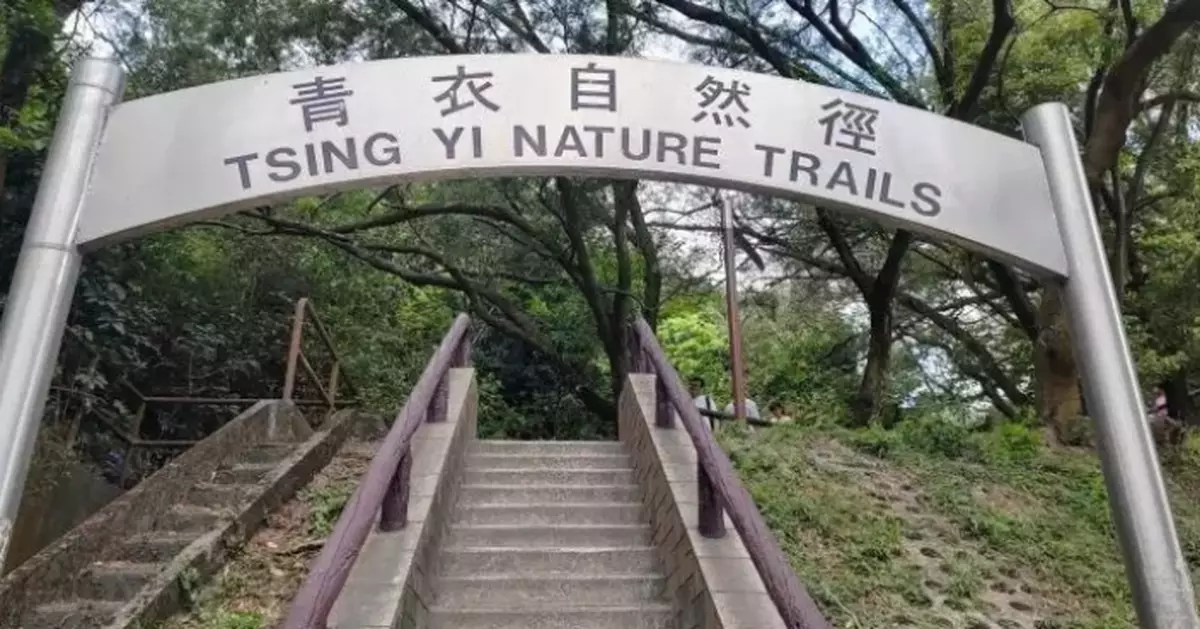
Tsing Yi Nature Trails reopens this evening following completion of environmental remediation work
The Centre for Health Protection (CHP) of the Department of Health announced today (February 23) that relevant government departments have conducted mosquito control and environmental remediation along the Tsing Yi Nature Trails. Over the past month, the mosquito infestation level at the Tsing Yi Nature Trails has remained low. After a thorough evaluation, the CHP considered that the mosquito situation there was under control, and decided to reopen the Tsing Yi Nature Trails starting from this evening.
Reopening of Tsing Yi Nature Trails
--------------------------------------------
Given that five local cases of Chikungunya Fever (CF) had acquired the infection in the Tsing Yi Nature Trails or its surrounding area in late November last year, the CHP held a interdepartmental meeting in early December last year with representatives from the Food and Environmental Hygiene Department (FEHD), the Home Affairs Department, the Drainage Services Department, the Lands Department, and the Civil Engineering and Development Department, and announced the temporary closure of the trails to the public on December 9 last year to facilitate large-scale mosquito control and environmental remediation work by relevant government departments to minimise the mosquito infestation and safeguard public health.
The last local CF case related to the Tsing Yi Nature Trails visited the trails on November 30, 2025. Subsequently, no other local cases have been recorded. The CHP's case tracing also confirmed that local cases infected along the trails did not further spread in the local community. The relevant transmission chain was interrupted. Over the past two months, the aforementioned government departments have conducted comprehensive environmental remediation and mosquito control along the trails. The trails stretch approximately seven kilometres, with various natural or man-made breeding grounds for vectors in the complex surroundings, including discarded containers left by hikers and workers, miscellaneous items and garbage that could collect water, and puddles on soil surfaces. The government departments concerned have conducted multiple inspections to eliminate potential mosquito breeding sites and remove waste conducive to mosquito breeding. Intensive fogging operations continue to eliminate adult mosquitoes and mosquito trapping devices have been installed along the trails. At the same time, the FEHD has been monitoring the mosquito infestation levels using mosquito traps along the trails. Data recorded over the past month has remained at a low level.
The CHP held another interdepartmental meeting today to assess the latest situation. After evaluating the current environmental hygiene of the Tsing Yi Nature Trails, the CHP believes that the Tsing Yi Nature Trails no longer pose a threat to public health. Therefore, the Tsing Yi Nature Trails will be reopened this evening. The FEHD will continue to enhance the vector surveillance at the Tsing Yi Nature Trails and in the surrounding area.
Mosquito preventive measures for the public
-------------------------------------------------------
As of 5pm today, no new cases of CF had been recorded. Hong Kong has recorded two confirmed CF cases so far this year, all of which were imported cases.Last year, Hong Kong recorded a total of 82 confirmed CF cases. Among them, 11 were local cases and the rest were imported cases.
In general, the natural environment in rural areas is more complex, making it easier for mosquito breeding sites to develop. Members of the public should refrain from discarding litter or containers that can accumulate water, such as plastic bottles or bags, while engaging in outdoor activities or hiking in rural areas. These items may lead to water accumulation and mosquito breeding. Furthermore, although the risk of Chikungunya virus transmission in Hong Kong has decreased, members of the public should stay vigilant against mosquito-borne diseases. Temperatures in subtropical and some temperate regions remain high, creating favourable conditions for mosquito breeding. In addition, CF outbreaks continue to occur in many countries/regions worldwide. The risk of imported cases persists. Members of the public should check the situation of the destinations before travelling abroad, especially when travelling to Southeast Asian countries/regions, and should use DEET-containing insect repellents or other effective active ingredients properly to prevent mosquito bites, but the following precautions should be taken when using them:
- read the label instructions carefully first;
- apply right before entering an area with a risk of mosquito bites;
- apply on exposed skin and clothing;
- use DEET of up to 30 per cent for pregnant women and up to 10 per cent for children (for children who travel to countries or areas where mosquito-borne diseases are endemic or epidemic and where exposure is likely, those aged 2 months or above can use DEET-containing insect repellents with a DEET concentration of up to 30 per cent);
- apply sunscreen first, then insect repellent;
- reapply only when needed and follow the instructions; and
- in addition to DEET, there are other insect repellents available on the market containing different active ingredients, such as IR3535 and picaridin. When using any insect repellent, the public should follow the usage instructions and precautions on the product label.
The FEHD also appeals to members of the public to continue to stay alert and work together to carry out mosquito prevention and control measures early, including inspecting their homes and surroundings to remove potential breeding grounds, changing water in vases and scrubbing their inner surfaces, removing water in saucers under potted plants at least once a week, and properly disposing of containers such as empty cans and lunch boxes. The FEHD also advises members of the public and property management agencies to keep drains free of blockage and level all defective ground surfaces to prevent the accumulation of water. They should also scrub all drains and surface sewers with an alkaline detergent at least once a week to remove any mosquito eggs.
The public should call 1823 in case of mosquito problems, and may visit the following pages for more information: the CF page of the CHP and the Travel Health Service, the latest Travel Health News,tips for using insect repellents, and the CHP Facebook Page,Instagram Account and YouTube Channel, and also the Mosquito Prevention and Control dedicated page of the FEHD.
In view of the reduced risk of Chikungunya virus transmission in Hong Kong, the CHP will henceforth release the number of imported cases of mosquito-borne diseases (including dengue fever and CF) recorded over the preceding seven days every Friday. Monthly statistics on confirmed CF cases will also be uploaded to the "Number of notifiable infectious diseases by month" page of the CHP's website (www.chp.gov.hk/en/static/24012.html) in a timely manner.
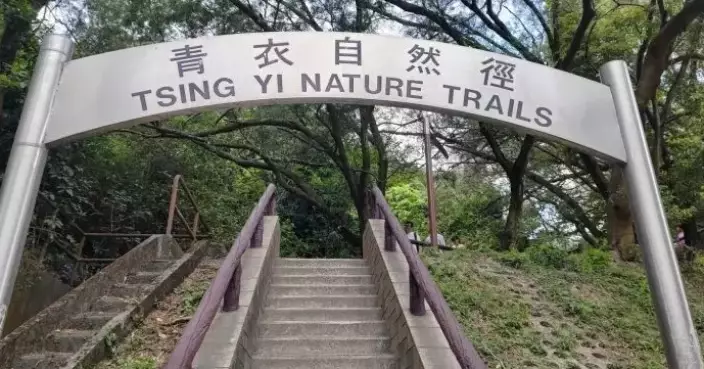
The Tsing Yi Nature Trails, Photo source: rednote
Court of Appeal delivers judgement on appeals of conspiracy to commit subversion case
The Court of Appeal of the High Court today (February 23) delivered its judgment on the appeals in a case of "conspiracy to commit subversion", dismissing the appeals against conviction or sentence lodged by 12 defendants. Furthermore, with regard to one defendant against whom the evidence was insufficient for the trial court to be sure of his participation in the conspiracy offence, the Court of Appeal upheld the trial court's verdict.
The Court of Appeal, in its judgment on the appeals in this case, rejected each of the grounds of appeal against conviction or sentence raised by the respective defendants. With regard to the appeals against conviction, the Court of Appeal noted that the relevant provisions of the Basic Law establish an executive-led system headed by the Chief Executive (CE), recognises that the CE, the Government, the Legislative Council (LegCo), and the Judiciary have different constitutional roles. Interaction and co-ordination between them is inevitable in areas where both the executive and legislative authority are required. As seen from the budgetary process, examining the merits of a budget by reference to fiscal considerations to see if it warrants approval must form the core of the LegCo's powers and functions under Article 73(2) of the Basic Law. The LegCo must exercise its powers and functions in accordance with, and not in contravention of, the provisions of the Basic Law. In particular, it cannot act in contravention of the fundamental provisions of the Basic Law which establish the constitutional order in the Hong Kong Special Administrative Region (HKSAR), and the LegCo members cannot contravene the constitutional duty to uphold the constitutional order in the HKSAR under the LegCo Oath. In this case, as envisaged and publicised by the first defendant Tai Yiu-ting and known to any participant who chose to join it, the "Project 35+" was a "constitutional mass destruction weapon" aiming to compel the CE to resign, to paralyse the Government and to force the Central People's Government to declare an end to the "one country, two systems" policy, which constituted an unlawful means of subverting the constitutional order of the HKSAR. Pursuing that aim in the pretext of examining budgets necessarily amounted to a breach of a LegCo member's duty to uphold the constitutional order in the HKSAR. The defendants agreed to join the "Project 35+" and participate in the relevant course of conduct with the intent to achieve the subversive consequences, and therefore constituted the offence of "conspiracy to commit subversion".
The Court of Appeal also considered that the trial court was entitled to make the impugned findings based on the totality of the evidence adduced. With all the evidence considered in context, the conclusions that each defendant was a party to the conspiracy could not be faulted. The Court of Appeal further held that there was no unfairness in the conduct of the trial proceedings.
Regarding the appeals against sentence, the Court of Appeal pointed out that the trial court's categorisation of all defendants who ran for the "primary election" as "actively participants" could not be faulted. The goal of the "Project 35+" was to cause havoc to the constitutional order in the HKSAR, by getting the concerned defendants elected. The Court of Appeal further pointed out that the defendants exploited the system in such a way intending to bring about potentially devastating consequences to the HKSAR. Therefore, "ignorance of the law" was not a valid mitigating factor in this case. All the discounts that had been given by the trial court under this head must be regarded as entirely gratuitous.
A spokesman for the HKSAR government said, "45 defendants have been convicted in this case. The trial court pointed out clearly in its reasons for verdict handed down earlier that by March and April 2020, the ultimate aim and purpose of the so-called 'Project 35+' had been very clear and made known to the public, which was to undermine, destroy or overthrow the existing political system and structure of the HKSAR established under the Basic Law and the 'one country, two systems' principle. The court pointed out that the defendants, led by Tai Yiu-ting, have invested a great deal of time and money in premeditating and planning the so-called 'primary election'. The other defendants all participated actively and made every effort to ensure the success of the 'Project 35+'. Had the plan been fully implemented, it would have given rise to profoundly far-reaching negative consequences, the severity of which would have been no less than the overthrow of the HKSAR Government."
"During the trial, it was revealed that the persons concerned put forward the '10 Steps to mutual destruction' which would bring Hong Kong society to a standstill through large-scale street riots and other means at the same time. Coupled with international political and economic sanctions, 'mutual destruction' would be achieved, causing suffering to members of the public. The severity of the crime in this case was supported by irrefutable evidence. The convicted individuals deserved their punishment. The Court of Appeal's dismissal of relevant appeals against conviction and sentence demonstrates that any person who intends to commit subversion and endanger national security will be punished in accordance with the law."
"As for the decision to uphold the verdict of a defendant against whom the evidence was insufficient for the trial court to be sure of his participation in the conspiracy, the Department of Justice will study the judgment carefully and consider whether to lodge an appeal."
The spokesman pointed out, "Hong Kong is a society underpinned by the rule of law. The Hong Kong National Security Law (HKNSL) and the Safeguarding National Security Ordinance (SNSO) clearly stipulate that the principle of the rule of law shall be adhered to in preventing, suppressing and imposing punishment for offences endangering national security. The court’s judgment in this appeal case shows that the Judiciary of the HKSAR exercises judicial power independently in accordance with the law, and everyone charged with a criminal offence will receive a fair trial strictly in accordance with laws applicable and as protected by the Basic Law and the Hong Kong Bill of Rights. The courts decide cases strictly in accordance with the evidence and all applicable laws. Cases will never be handled any differently owing to the profession, political beliefs or backgrounds of the persons involved. The prosecution has the burden to prove beyond reasonable doubt the commission of an offence before a defendant may be convicted by the court."
"Safeguarding national security is the inherent responsibility of every citizen. The HKSAR Government is resolutely determined to crack down on acts and activities that endanger national safety, ensuring that laws are observed and strictly enforced, so as to bring offenders to account. The HKSAR Government will, as always, resolutely, fully and faithfully implement the HKNSL, the SNSO and other relevant laws safeguarding national security in the HKSAR, to effectively prevent, suppress and impose punishment for acts and activities endangering national security in accordance with the law, while upholding the rights and freedoms of Hong Kong people in accordance with the law, to ensure the steadfast and successful implementation of the principle of 'one country, two systems'."

Source: AI-found images