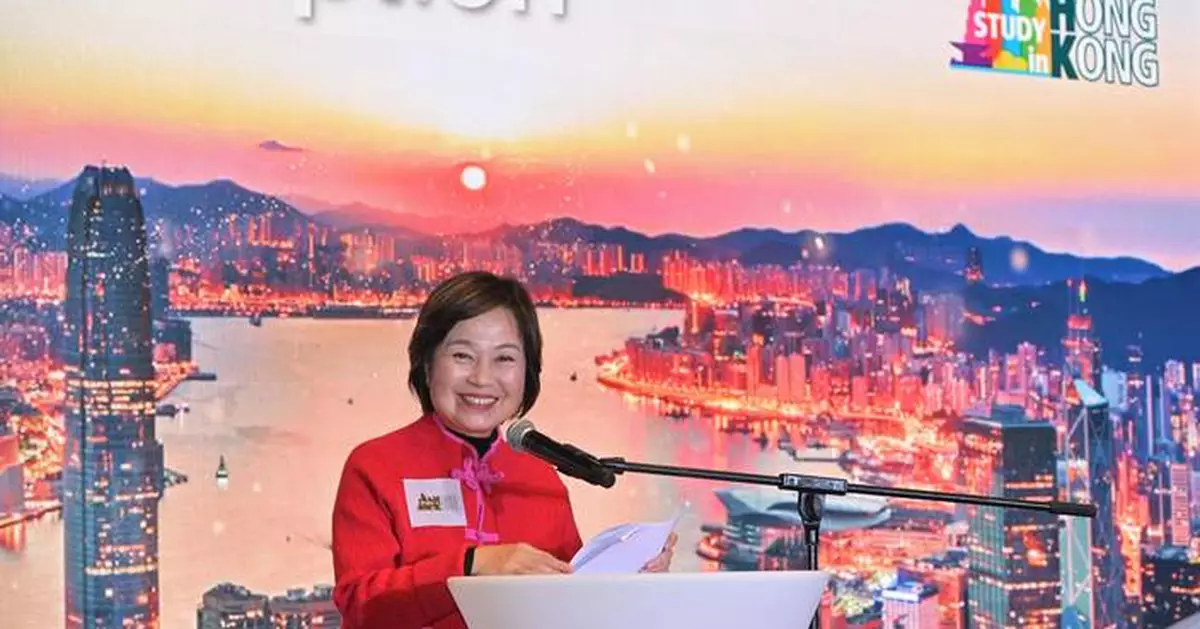
Speech by SED at Hong Kong Reception of APAIE 2026 Conference and Exhibition
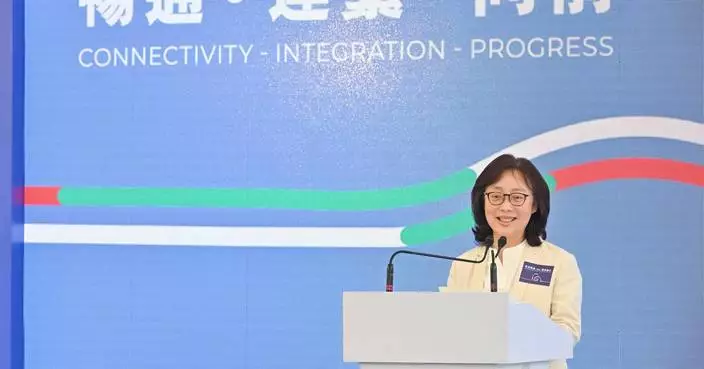
Following is the speech by the Secretary for Education, Dr Choi Yuk-lin, at the Hong Kong Reception of the Asia-Pacific Association for International Education (APAIE) 2026 Conference and Exhibition today (February 23):
Professor Dennis Lo (Vice-Chancellor and President of the Chinese University of Hong Kong and Convenor of the Heads of Universities Committee), distinguished guests, ladies and gentlemen,
Happy Chinese New Year and Happy Birthday! Tonight's gathering is especially auspicious as it falls on the seventh day of , the first month of the traditional Chinese calendar. This day is known as which legend says is "everyone's birthday". It is fitting that we celebrate this day of shared humanity here, as we come together to shape the future of education for our youths.
It is a great pleasure to join you this evening at the Hong Kong Palace Museum, one of our city's iconic cultural landmarks. I am pleased to welcome educators and friends from across the globe to Hong Kong for the APAIE 2026 Conference and Exhibition. We are honoured that Hong Kong once again has the privilege of hosting this important gathering of leaders and practitioners in international higher education.
Over the coming days, the APAIE will serve as a platform for meaningful global dialogue on the future of international education, while also offering participants a special opportunity to experience Hong Kong during the vibrant Chinese New Year period. I hope you can feel the positivity and energy that the Chinese New Year brings – a spirit that also guides our approach to education – to groom our next generations with innovative ideas and future-ready skills.
Tonight, I would like to highlight Hong Kong's evolving role as an international education hub, and how we can deepen our collaboration with you at all levels – from undergraduate education, postgraduate study, research and beyond. As a super-connector of global education networks, we have been maintaining our academic environment highly internationalised and diversified. Under the "one country, two systems" principle, Hong Kong enjoys the distinctive advantages of being part of China with strong support from our Motherland and at the same time being centrally located in Asia. Our universities are globally recognised, with five of them within the world's top 100 and the Asia's top 20. Hong Kong claimed all top four spots in the ranking of the world's most international universities last year. Indeed, one in every four of our students come from outside Hong Kong. The proportion is even higher for academic staff, with around 70 per cent from elsewhere.
To further promote higher education in Hong Kong to the world, we are dedicating this week as the "Study in Hong Kong" Week, during which we will share our success stories and connect more closely with partners worldwide. The key highlight is of course the APAIE. Our Economic and Trade Offices (ETOs) around the world will also promote "Study in Hong Kong" at their Chinese New Year celebratory events worldwide. We warmly encourage our overseas partners to approach our ETOs if you need support or facilitation in exploring new opportunities to study, teach, or collaborate with institutions in Hong Kong.
At the post-secondary level, we will continue to promote quality and expand opportunities for non-local students to pursue our high-quality and internationally recognised programmes in Hong Kong. We are welcoming more non-local students whose number has been growing and developing deeper research collaborations with institutions from around the world. We certainly appreciate the support from our partner universities, especially those of you present here tonight. While Hong Kong is highly popular among students from the Chinese Mainland, those from other parts of the world, especially in the Association of Southeast Asian Nations (ASEAN) and Belt and Road countries or regions, have increased significantly in recent years. Hong Kong is also playing a pivotal role as a knowledge and innovation hub through our extensive research partnerships in the Chinese Mainland as well as North America and Europe. Meanwhile, we have expanded collaborations with institutions in African and Central and South American regions.
At the same time, the Government is extending Hong Kong's role as an international education hub with a more comprehensive approach. We are recruiting more non-local students in our primary and secondary Direct Subsidy Scheme schools to enrich our classrooms by bringing in more students from Asia and other regions, as well as providing more schooling options for expat families. We are therefore building up a larger pool of students with more diverse backgrounds for higher education opportunities here. As we welcome more non-local students to our schools and universities, we hope Hong Kong can serve as a springboard for them to engage with the Chinese Mainland and the wider Asia-Pacific, and as a pathway to widen collaborations across this vibrant region.
In a moment, you will see a short video that encapsulates the essence of "Study in Hong Kong" – a place where world-class education, cultural diversity and opportunities in Hong Kong and the Greater Bay Area converge. The tagline of the video is "Live the Future", and it speaks directly to the aspirations of our students. By choosing Hong Kong, overseas students are not just selecting a university, they are securing a front-row seat to the rapid growth of Asia. They are equipping themselves with the networks and insights necessary for a glorious career, ensuring they do not just witness what comes next, but actively live and shape the future. I invite your students, your faculty and your institutions to embark on an exciting journey together with us in the years ahead.
I would like to thank the Heads of Universities Committee for bringing us together in this magnificent setting tonight. To all our guests, thank you for your support, your partnership and your commitment to international education. We look forward to working with you beyond the exciting activities this week at the APAIE and our "Study in Hong Kong" Week to build even stronger and more impactful partnerships for our students and our shared future.
Finally, let me wish you a most enjoyable evening and a rewarding week at the APAIE and in Hong Kong. Thank you.
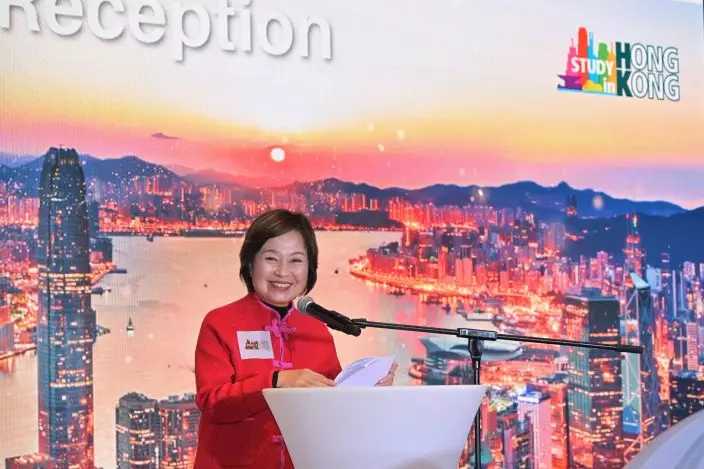
Speech by SED at Hong Kong Reception of APAIE 2026 Conference and Exhibition Source: HKSAR Government Press Releases
Promulgation of Hong Kong Railway Standards and establishment of Railway Checking Unit by Highways Department to optimise implementation of railway projects through multipronged approach
The Highways Department (HyD) promulgated the Hong Kong Railway Standards and also announced the official establishment of the Railway Checking Unit (RCU) today (February 23) to expedite implementation of new railway projects. The establishment ceremony was officiated by the Director of Highways, Mr Tony Yau, with numerous railway experts and representatives of relevant government departments in attendance.
In his address, Mr Yau remarked that, "The HyD is always committed to staying abreast of the times, optimising the implementation of railway projects and striving to construct railways in an efficient and robust manner. Capitalising on the opportunities brought by two cross-boundary railway projects, namely the Northern Link and the Hong Kong-Shenzhen Western Rail Link, we formulated the Hong Kong Railway Standards in collaboration with relevant government departments and railway experts. In addition to retaining the prevailing railway standards in Hong Kong, the Hong Kong Railway Standards have introduced suitable railway standards of the Nation and various places in the world (including European Norm (EN), Institute of Electrical and Electronics Engineers (IEEE)'s standards, International Electrotechnical Commission (IEC)'s standards and International Organization for Standardization (ISO)'s standards) with adaptation to local circumstances, as a result of detailed analyses and comparisons on the premise of ensuring railway safety, quality, and performancebased outcomes."
He continued, "The new Hong Kong Railway Standards could facilitate the use of a broader selection of advanced construction technologies, construction materials, equipment, and railway systems for railway projects, provide clear technical specifications as the approval basis of the supervisory authorities, and also facilitate the development and optimisation of work processes by the industry. This move helps to leverage and introduce the extensive experience and world-leading technologies in railway construction of our nation, as well as the recognised standards in other parts of the world, with a view to driving the new railway projects of Hong Kong with enhanced speed and efficiency, and striving for shorter construction times and lower costs."
Under the Hong Kong Railway Standards, the industry could flexibly apply suitable standards to different railway projects on account of their individual needs and characteristics, after holistic consideration of factors such as cost-effectiveness, technical requirements, supply chain conditions, site environment and labour and machinery resources. The Standards encourage the use of innovative construction machinery, technologies and materials (such as use of larger or more extensive use of standardised prefabrication technology, high-strength structural steel and ultra-high-performance concrete), as well as advanced equipment and construction specifications (such as the model selection, design, construction, and control of tunnel boring machines).
The benefits of Hong Kong Railway Standards can be summarised into four key highlights, namely:
(1) Keeping abreast of the times and embracing technology: promoting more unification and standardisation in different aspects of railway design, which would be conducive to introducing the latest construction technologies and advanced operating systems;
(2) Clear basis for expedited approval: providing a clear basis through introduction of more technical specifications for station design, construction equipment, rolling stock, construction methods, etc to help simplify and expedite approval processes;
(3) Diversified options and leveraging strengths: broadening options for construction materials, construction equipment and railway systems, which could enable better use of regional and local supply chains; and
(4) Optimising procedures for enhancing benefits: facilitate the industry in optimising construction procedures and enhance cost-effectiveness through provision of guidelines on construction procedures and recommendations on best practices.
The electronic copy of the Hong Kong Railway Standards has been uploaded to the HyD's website for public access
(www.hyd.gov.hk/en/technical_references/technical_document/railway_standards/index.html).
To effectively implement the Hong Kong Railways Standards, the HyD redeployed internal resources to set up the RCU, with professionals including building surveyors, structural engineers and civil engineers as members. The RCU is dedicated to handling the approval for the building plans of new railway projects, and an electronic centralised approval platform is also established to facilitate the convenient submission of documents and approvals of building plans, thereby enhancing administrative efficiency. The RCU will be responsible for the approvals relating to various new railway projects, including the Northern Link, the Hong Kong-Shenzhen Western Rail Link (Hung Shui Kiu-Qianhai) and new Smart and Green Mass Transit System projects.
The performance target of the RCU is to substantially reduce the processing time frame for first plan submissions from 60 days to 30 days, and that for amendment plan submissions from 30 days to 21 days, with key performance indicators for completing no less than 90 per cent of the approval decisions of the plan submissions within the aforementioned time frame. Meanwhile, the RCU also includes a monitoring and intervention mechanism. If the RCU encounters a major issue that could not be resolved within 15 days, the matter would be escalated to an officer at the Assistant Director level for handling, so that senior officers could intervene in a timely manner and explore viable solutions.
Photo shows the Director of Highways, Mr Tony Yau (second right); the Deputy Director of Highways, Mr Richard Ng (second left); the Commissioner for Northern Metropolis Railways, Mr Raymond Ip (first right); and Assistant Director/Railways of Electrical and Mechanical Services Department, Mr Chan Yiu-hon (first left), conducting the unveiling for the establishment of the Railway Checking Unit. Source: HKSAR Government Press Releases
The pictured attendees include the Director of Highways, Mr Tony Yau (seventh right); the Deputy Director of Highways, Mr Richard Ng (seventh left); the Commissioner for Northern Metropolis Railways, Mr Raymond Ip (sixth right); representatives of Government departments (namely the Buildings Department, Civil Engineering and Development Department, Electrical and Mechanical Services Department, Fire Services Department, Hong Kong Police Force and Transport Department); and railway experts including Mr Perran Coak (first left), Mr Xu Chengyong (second right) of Beijing Urban Construction Design & Development Group Co., Limited; the Chairman of the Association of Hong Kong Railway Transport Professional, Mr Cheung Nin-sang (third left); the Executive Director of the Smart Transportation Alliance, Mr Gary Zhang (second left); and Mr Kelvin Wong (first right) of the MTR Corporation Limited. Source: HKSAR Government Press Releases
Photo shows the cover of Hong Kong Railway Standards. Source: HKSAR Government Press Releases