ST. LOUIS--(BUSINESS WIRE)--Feb 23, 2026--
Bruker Corporation (Nasdaq: BRKR) today announced new advancements to enable Functional Proteomics 2.0 workflows on the timsOmni™ mass spectrometer to enable disease researchers to move beyond canonical protein lists toward biologically or pathologically functional proteoforms and PTM-resolved peptide variants. New releases in Bruker ProteoScape ™, OmniScape ™, and GlycoScape ™ software now support database-independent PTM discovery, confident proteoform characterization, and eXd-enabled glycoproteomics for deeper biological, disease and drug discovery insights.
This press release features multimedia. View the full release here: https://www.businesswire.com/news/home/20260223057286/en/
Similarly, the now enabled timsOmni deep proteoform methods are equally powerful in interrogating drug targets, as well as biologics, including therapeutic antibodies, ADCs, multispecifics, and their PTM distributions and glyco-heterogeneity.
Confident proteoform characterization and eXd-enabled glycoproteomics on timsOmni
The latest version OmniScape™ 2026b strengthens timsOmni proteoform workflows by integrating the novel OmniWave™ algorithm, which enables top-down sequencing and proteoform identification at scale with high-confidence annotation of critical PTMs that drive disease signaling. Researchers can now move beyond protein group read-outs to proteoform-centric mechanisms, e.g., distinguishing signaling relevant protein variants that indicate disease states or treatment response. In biotherapeutics research, OmniScape supports verification of expected sequences and non-canonical modifications and can flag sequence variants or heterogeneity that may affect side effects or efficacy.
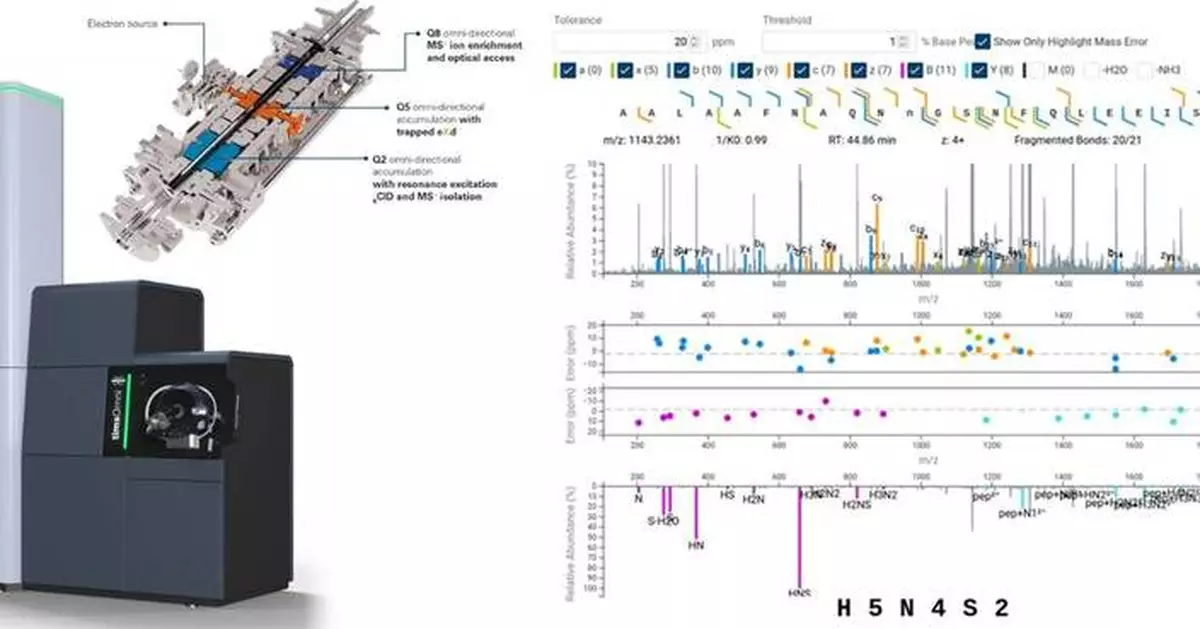
Bruker is greatly enhancing glycoproteomics with support for trapped electron‑based dissociation (eXd) data in GlycoScape software, enabling confident glycopeptide characterization while preserving fragile glycan structures and supporting localization and topology insights. GlycoScape also provides interactive visualization of eXd fragment ions within annotated MS/MS spectra to simplify the validation of results.
“The timsOmni gives scientists access to eXd-enabled fragmentation that can resolve complex PTMs and proteoforms with outstanding fidelity,” said Professor Yehia Mechref, Director of the Texas Tech University Center for Biotechnology & Genomics. “The new software capabilities—especially eXd N-glycopeptide analysis and improved top-down workflows—support deeper understanding of disease biology and provide new avenues for target discovery and translational research.”
Bruker ProteoScape™ adds AI‑enhanced de novo peptide sequencing for database‑independent discovery in metaproteomics and immunopeptidomics
Bruker is introducing a new de novo peptide sequencing workflow in Bruker ProteoScape v2026b software that pairs an AI‑enhanced scoring model—trained on more than seven million MS/MS spectra—with a proven dynamic‑programming foundation to deliver accurate de novo sequences from high‑resolution timsTOF data. This supports the demand for database‑independent proteomics, enabling discovery of peptide variants across complex samples in applications such as metaproteomics and immunopeptidomics, including neoantigen research in immuno-oncology.
“Researchers are increasingly studying biological systems where reference databases alone do not capture the true molecular diversity,” said Bin Ma, founder of Rapid Novor Inc. “Our collaboration with Bruker has enabled Novor.AI to take advantage of large, high-quality timsTOF datasets and combine them with our AI model to deliver the speed, confidence, and precision needed for next-generation de novo peptide sequencing applications.”
About Bruker Corporation – Leader of the Post-Genomic Era
Bruker is enabling scientists and engineers to make breakthrough post-genomic discoveries and develop new applications that improve the quality of human life. Bruker’s high-performance scientific instruments and high value analytical and diagnostic solutions enable scientists to explore life and materials at molecular, cellular, and microscopic levels. In close cooperation with our customers, Bruker is enabling innovation, improved productivity, and customer success in post-genomic life science molecular and cell biology research, in specialty diagnostics, in applied and biopharma applications, in microscopy and nanoanalysis, as well as in industrial and cleantech research, and next-gen semiconductor metrology in support of AI. Bruker offers differentiated, high-value life science and diagnostics systems and solutions in preclinical imaging, clinical phenomics research, proteomics and multiomics, spatial and single-cell biology, functional structural and condensate biology, as well as in clinical microbiology and molecular diagnostics. For more information, please visit www.bruker.com.
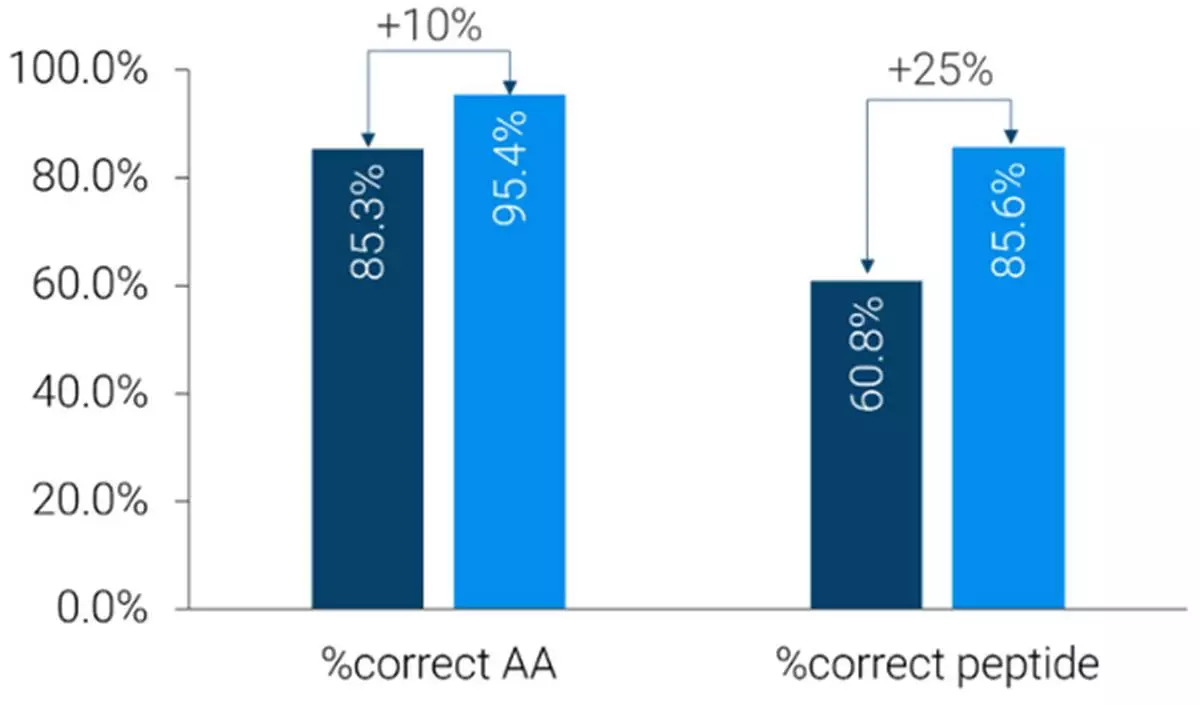
Significantly improved de novo inference of peptide sequences from complex high-resolution timsTOF data with Bruker ProteoScape™
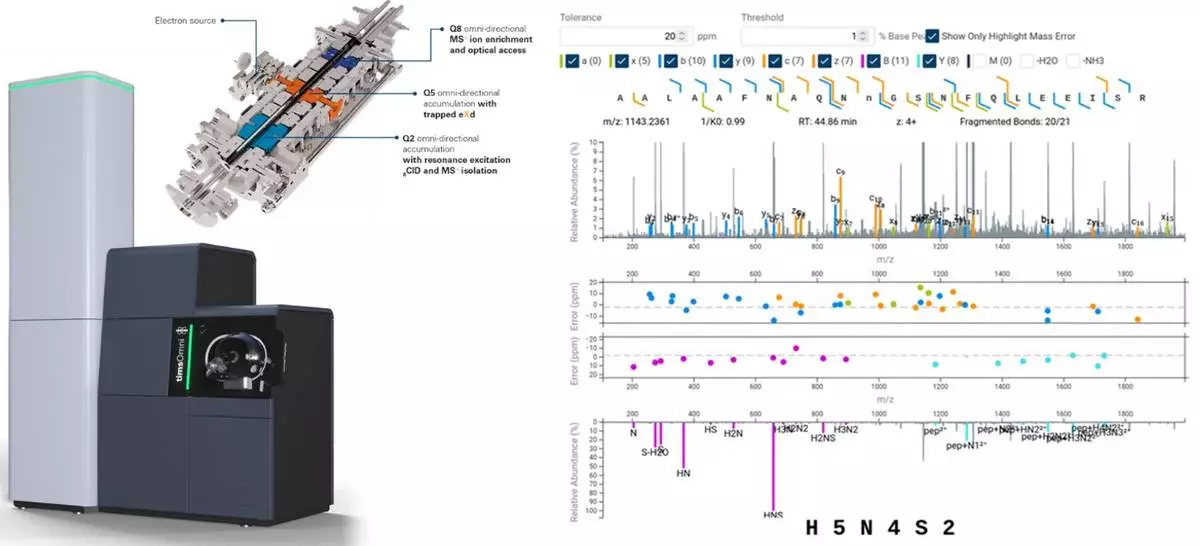
Annotated timsOmni™ glycopeptide eXd spectrum from GlycoScape™ highlighting both glycan fragment ions as well as peptide fragment ions
Russia’s invasion of Ukraine four years ago launched Europe’s biggest conflict since World War II, causing immense suffering for civilians and harrowing ordeals for soldiers while rewriting the post-Cold War security order.
The fighting enters its fifth year on Tuesday, and it shows no signs of stopping anytime soon.
The U.S. has brokered talks with delegations from Moscow and Kyiv as part of the Trump administration's yearlong push for peace. But reconciling key differences, such as the future of Russian-occupied Ukrainian land and postwar security for Ukraine, has thwarted progress.
Meanwhile, thousands of each countries’ troops have died on the battlefield, and Ukrainian civilians have been battered by Russian aerial strikes that have brought years of power outages and water cuts.
Here’s a look at the conflict, by the numbers, since the full-scale invasion on Feb. 24, 2022.
The upper end of the estimated number of soldiers killed, wounded or missing on both sides, according to a report last month by the Center for Strategic and International Studies, a think tank.
It estimated that Russia suffered 1.2 million casualties, including up to 325,000 troop deaths, between February 2022 and December 2025 — what it said was the largest number of troop deaths for any major power in any conflict since World War II.
Russia has not released figures on battlefield deaths since January 2023, when it said more than 80 soldiers were killed in a Ukrainian strike, bringing the total military deaths Moscow has confirmed to just over 6,000.
CSIS estimated that Ukraine has seen 500,000 to 600,000 military casualties, including up to 140,000 deaths.
Ukrainian President Volodymyr Zelenskyy said earlier this month that 55,000 Ukrainian troops have died in the war. Many are missing, he said.
Neither Moscow nor Kyiv gives timely data on military losses. Independent verification is not possible.
The U.N. Human Rights Monitoring Mission’s count for civilian deaths in Ukraine since Russia’s all-out invasion, though it says that is likely an underestimate. More than 40,600 civilians were injured over the same period, it said in a December report.
The war has killed at least 763 children, according to the U.N.
Last year was the deadliest for civilians in Ukraine since 2022. The conflict killed 2,514 civilians and injured 12,142 in the country in 2025 — a 31% increase in civilian casualties over 2024, it said.
The percentage of Ukrainian land occupied by Russia, according to the Institute for the Study of War.
Over the past year, Russia has gained just 0.79% of Ukraine’s territory in the grinding war of attrition, the Washington-based think tank said in calculations provided earlier this month to The Associated Press, underscoring the little progress Moscow's forces have made despite huge costs in troops and armor.
Before Russia’s all-out invasion, it controlled nearly 7% of Ukraine, including Crimea and parts of the Donetsk and Luhansk regions in the east, as Moscow-backed separatists fought the Ukrainian army, according to Ukrainian officials and Western analysts.
The percentage drop in foreign military aid to Kyiv last year compared with the annual average between 2022 and 2024, according to Germany’s Kiel Institute, which tracks assistance to Kyiv.
U.S. President Donald Trump stopped sending American weapons paid for by the U.S. to Ukraine after he took office just over a year ago. European countries, striving to make up the difference, increased their military aid last year by 67% compared with the 2022-2024 period, the institute said in a report this month.
Foreign humanitarian and financial aid to Ukraine fell by 5% last year in comparison with the average in the previous three years, it said.
The number of Ukrainian civilians who have left their country.
Some 5.3 million of those people have found refuge in Europe, according to a report this month from the U.N. office in Ukraine.
Additionally, around 3.7 million Ukrainians forced out of their homes have moved elsewhere within the country, the U.N. said in December.
Ukraine's prewar population was more than 40 million.
The number of Russian attacks that affected the provision of medical care in Ukraine, according to the World Health Organization. The figure covers the period from the full-scale invasion through Feb. 11.
The attacks include 2,347 strikes on health care facilities, as well as ones that damaged vehicles and the storage of medical supplies.
Follow AP’s coverage of the war in Ukraine at https://apnews.com/hub/russia-ukraine
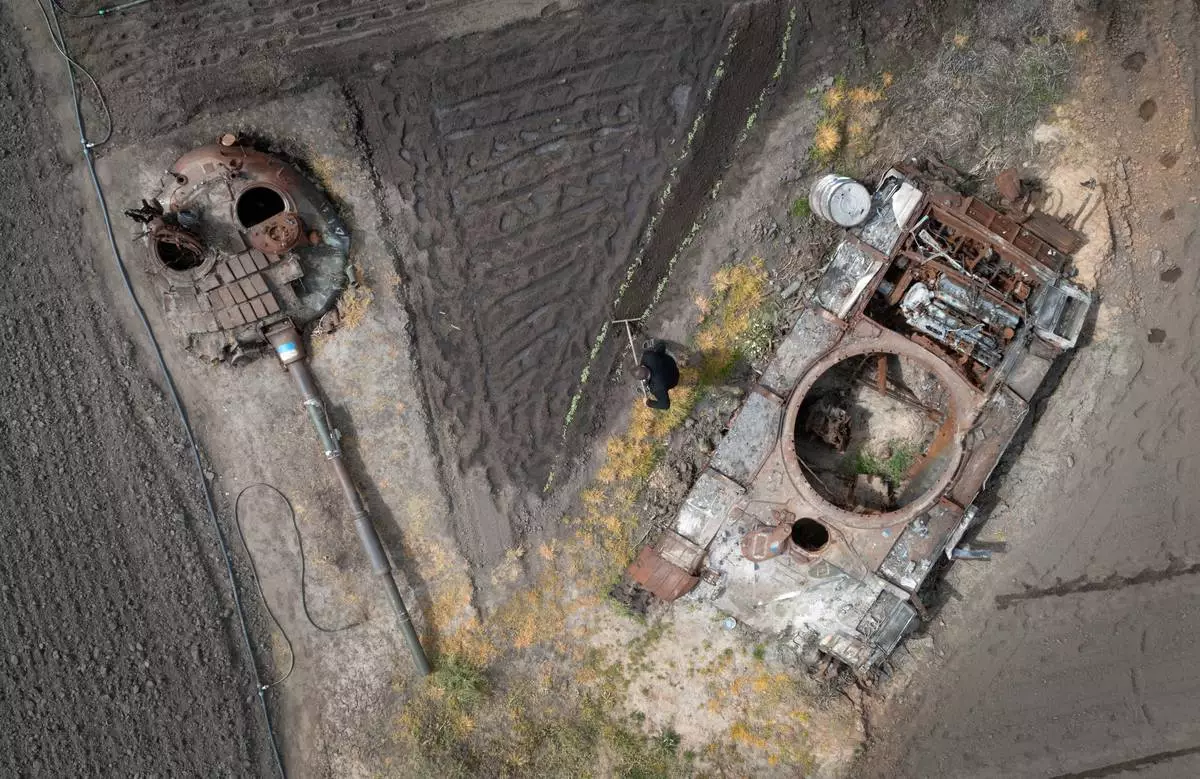
FILE - A man plants sunflowers in his garden between a damaged Russian tank and its turret in the village of Velyka Dymerka, Kyiv region, Ukraine, Wednesday, May 17, 2023. (AP Photo/Efrem Lukatsky, File)

FILE - Emergency tents are set up in a residential neighborhood where people can warm up following Russia's regular air attacks against the country's energy infrastructure that leave residents without power, water and heating in the dead of winter, in Kyiv, Ukraine, Thursday, Jan. 15, 2026. (AP Photo/Vladyslav Musiienko, File)
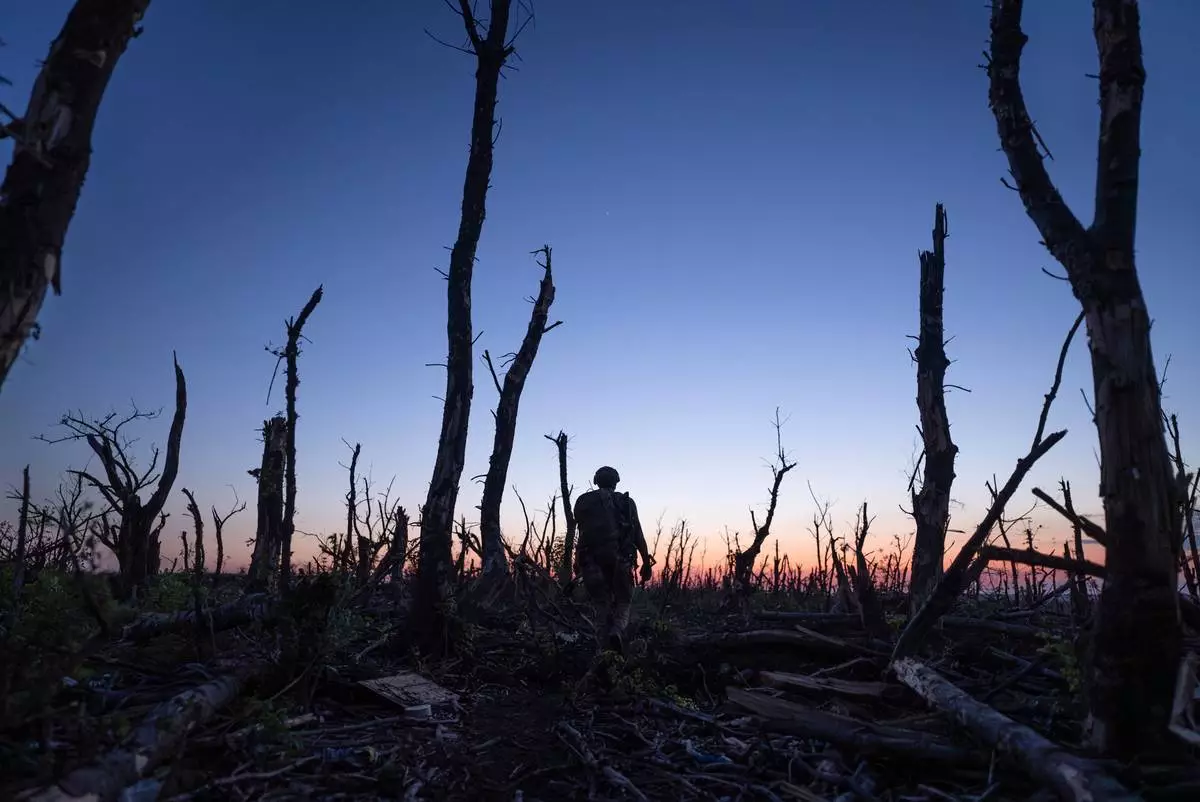
FILE - Ukrainian servicemen walk through a charred forest along the front line, a few kilometers from Andriivka, Donetsk region, Ukraine, Saturday, Sept. 16, 2023. (AP Photo/Mstyslav Chernov, File)
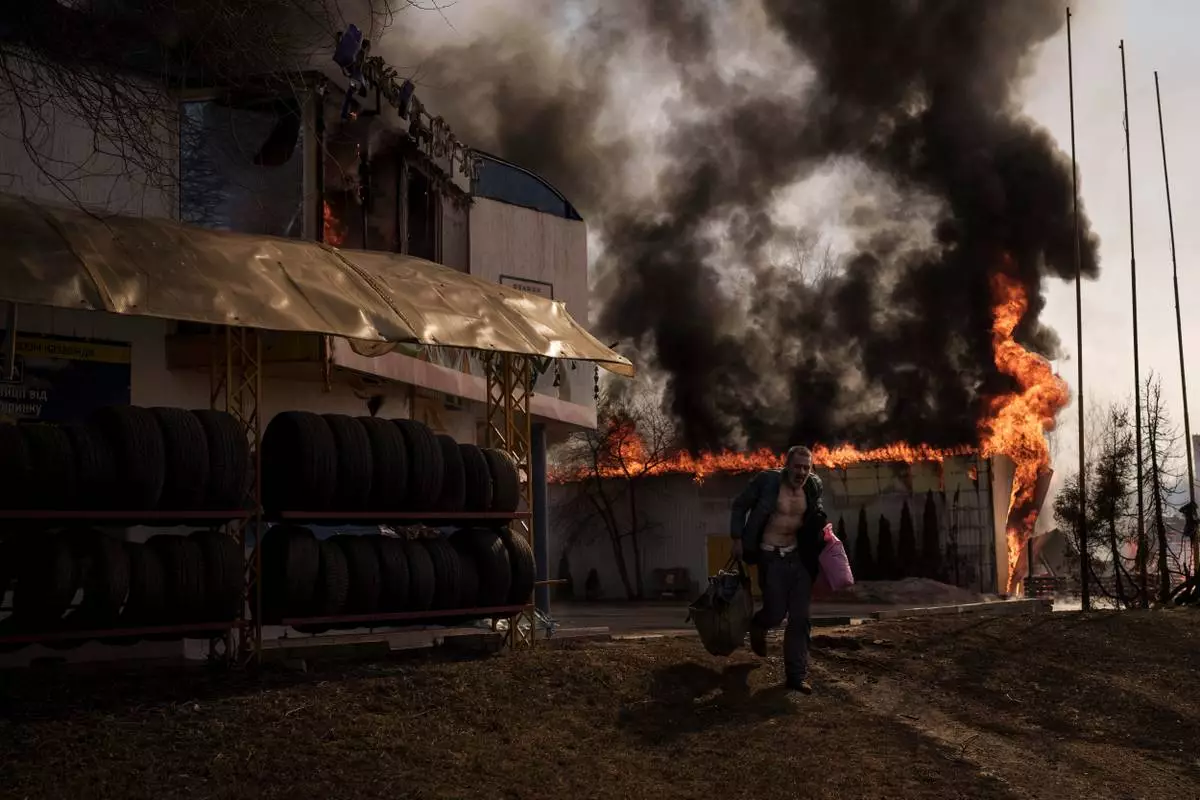
FILE - A man recovers items from a shop that caught fire in a Russian attack in Kharkiv, Ukraine, Friday, March 25, 2022. (AP Photo/Felipe Dana, File)
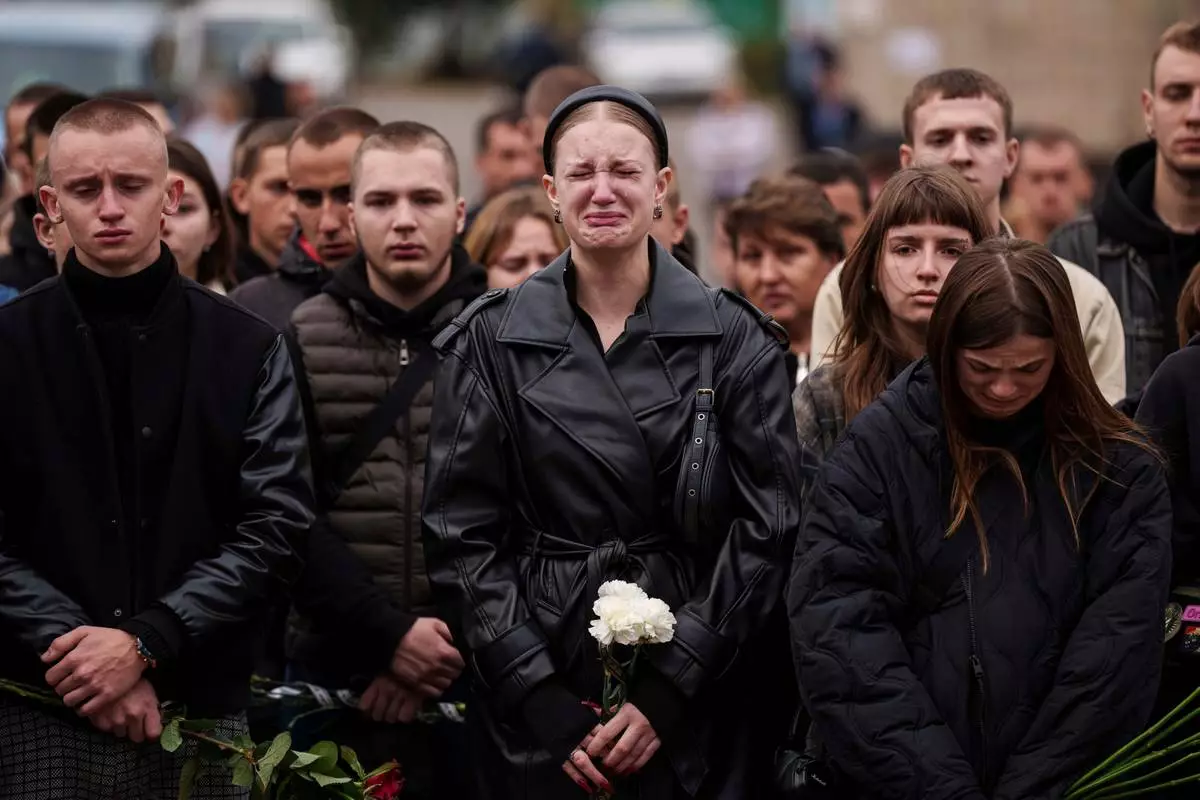
FILE - A woman cries during the funeral ceremony of Ihor Kusochek, a Ukrainian soldier of the Azov brigade in Bobrovytsia, Chernihiv region, Ukraine, Friday, Oct. 4, 2024. (AP Photo/Evgeniy Maloletka, File)