SANTIAGO, Chile (AP) — The U.S. ambassador to Chile on Monday defended the recent visa restrictions against three high-ranking Chilean officials, saying it is a “sovereign decision" to determine who enters its territory.
Ambassador Brandon Judd was responding to the controversy generated after the Trump administration hit the officials with travel bans for their alleged involvement in activities that the U.S. says have undermined regional security. Among those sanctioned is Chile's Minister of Transport and Telecommunications Juan Carlos Muñoz.
“It’s our sovereign right to take actions when we feel that the region’s security is being threatened,” Judd said at a news conference in Santiago.
The sanctions were announced Friday by U.S. Secretary of State Marco Rubio, who accused the three officials of carrying out “activities that compromised critical telecommunications infrastructure and eroded regional security.” The reference alludes to a project — still in the evaluation phase — that envisions the construction of a submarine fiber optic cable connecting Chile with China.
The Chilean government later said one of the sanctioned officials was Muñoz, but did not comment on the identities of the other two.
Judd claimed the U.S. exhausted all diplomatic avenues before resorting to sanctions and said that despite specific warnings regarding the submarine cable, Chilean authorities failed to provide the necessary transparency.
Washington’s decision has sparked outrage within Chile’s left-wing government. President Gabriel Boric condemned the move, accusing the Trump administration of issuing “indeterminate accusations” and “applying unilateral sanctions” that infringe upon Chilean sovereignty.
Boric, who will hand over power to far-right politician José Antonio Kast in two weeks, has been one of the most vocal critics of U.S. President Donald Trump in the region.
Asked about the strong reactions within the Chilean government, the U.S. ambassador said there are “no threats” from the United States. “We are not making any threats. What we have strictly told you all the time is that everything we do depends upon communication and security,” he added.
Judd argued, without naming specific countries, that “there are many malicious actors in this region that want to cause harm, not just to this region and to Chile, but to the United States as well.”
Relations between Chile and the United States have deteriorated significantly under the second Trump administration. Boric has leveled sharp criticism against his U.S. counterpart, characterizing the Republican’s leadership style as that of a “new emperor”.
Trump, for his part, has openly expressed dissatisfaction with Boric and has welcomed the upcoming presidency of far-right politician Kast, following his landslide victory in Chile’s national election in December.
“We look forward to working with the new government to provide what the Chilean people demanded,” Judd said.
Follow AP’s coverage of Latin America and the Caribbean at https://apnews.com/hub/latin-america
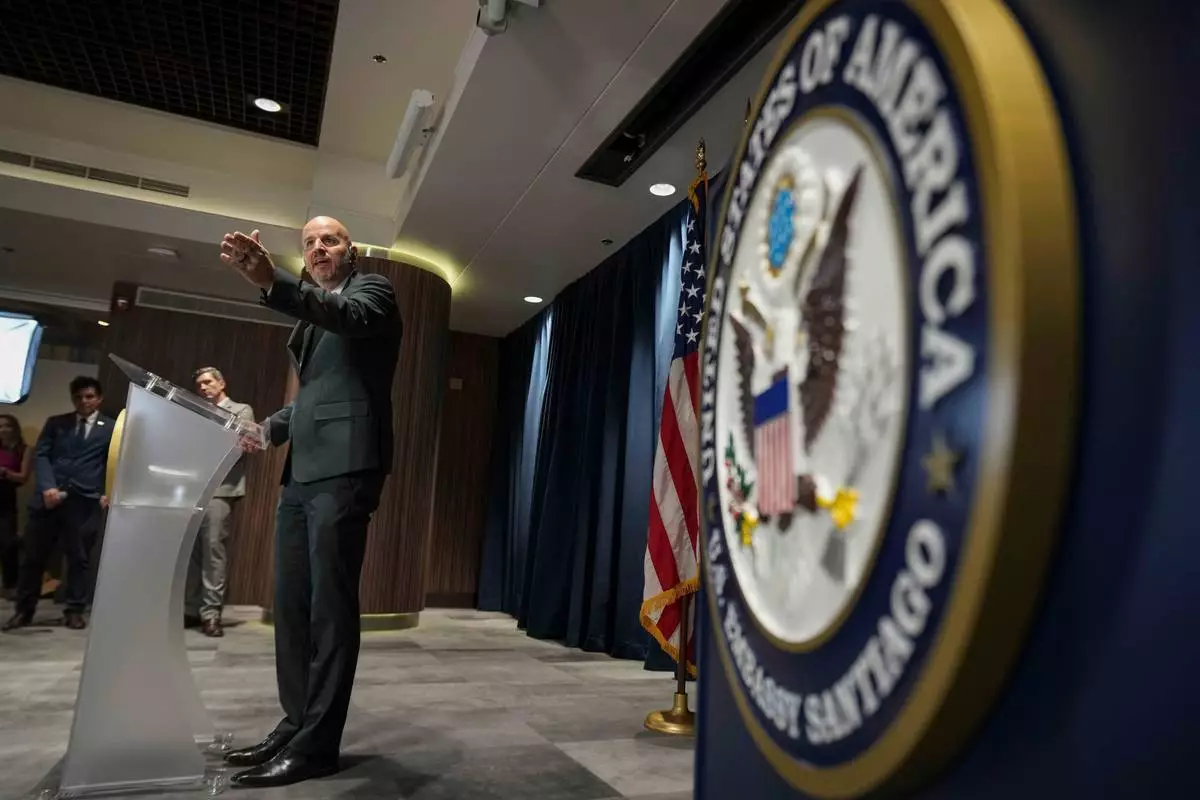
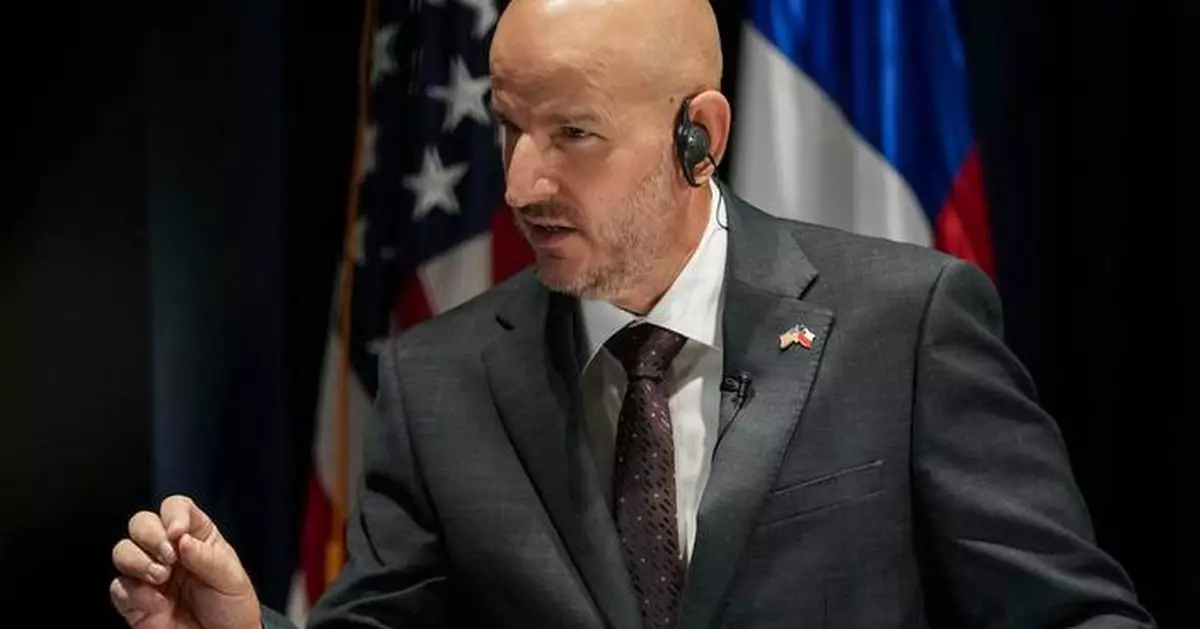
Brandon Judd, U.S. ambassador to Chile, gives a press conference at a U.S embassy in Santiago, Chile, Monday, Feb. 23, 2026. (AP Photo/Esteban Felix)
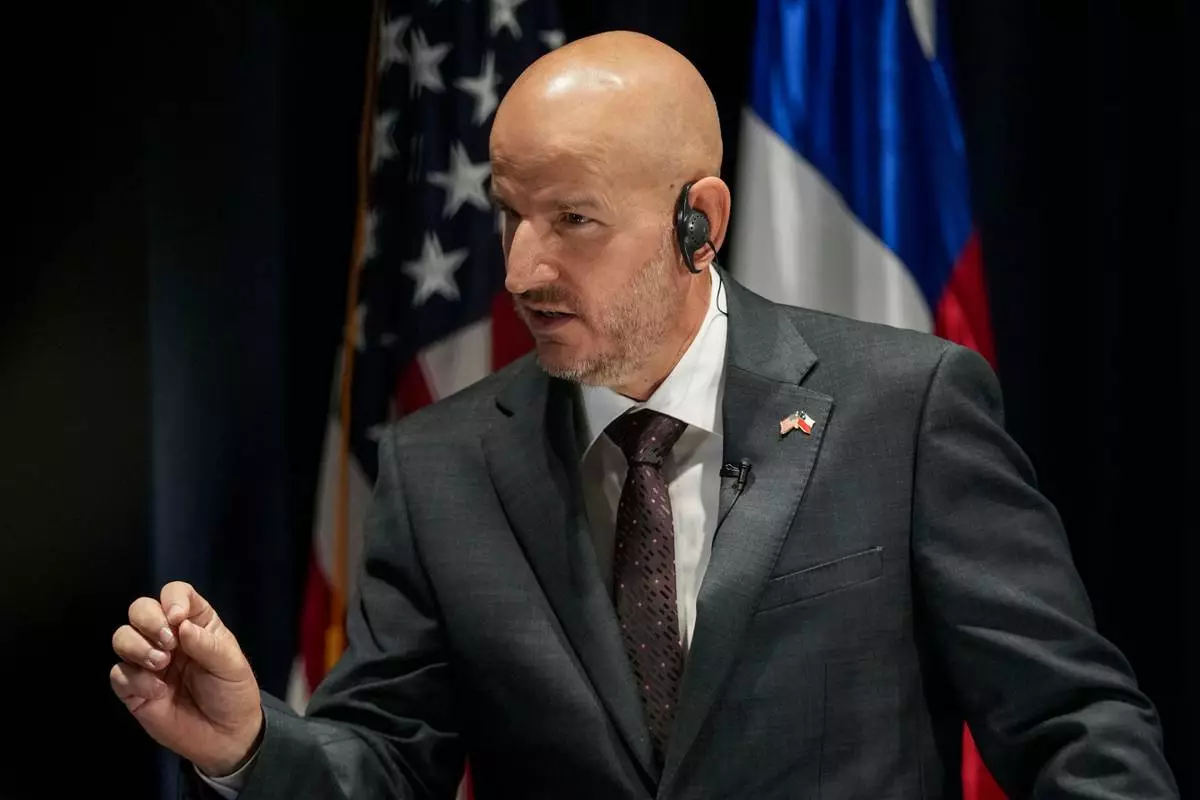
Brandon Judd, U.S. ambassador to Chile, gives a press conference at a U.S embassy in Santiago, Chile, Monday, Feb. 23, 2026. (AP Photo/Esteban Felix)
Ships have stopped moving through the Strait of Hormuz, an intelligence firm said, and oil prices resumed their climb Monday after U.S. President Donald Trump announced on social media that the United States would blockade the waterway.
U.S. Central Command later said the blockade would involve all vessels entering or departing Iranian ports and coastal areas, and that it would still allow ships traveling between non-Iranian ports to transit the strait, a step down from the president’s earlier threat to blockade the entire strait.
Trump confirmed the timing and some details of the CENTCOM statement in a post on his social media site early Monday.
Iran’s Revolutionary Guard said the strait remained under Iran’s “full control” and was open for non-military vessels, but military ones would get a “forceful response,” two semiofficial Iranian news agencies reported.
The moves came after marathon U.S.-Iran ceasefire talks in Pakistan ended without an agreement, setting the stage for a showdown.
Iranian parliament speaker, Mohammad Bagher Qalibaf, who led Iran’s side in the talks, addressed Trump in a statement on his return to Iran: “If you fight, we will fight.”
The war, which is entering its seventh week, has killed thousands of people and shaken global markets.
Here is the latest:
Japan has expressed support for the U.S.-Iran talks held in Pakistan over the weekend and that it continues to closely watch further development in hopes of an early de-escalation.
Chief Cabinet Secretary Minoru Kihara told reporters Monday that his government believes that the most important thing is actually to achieve de-escalation, including ensuring the safe passage through the Strait of Hormuz.
“We hope a final agreement will be reached swiftly through diplomatic efforts,” Kihara said.
Kihara, asked if Japan is considering sending Japanese warships to join minesweeping effort in the key waterway, said nothing has been decided.
Southeast Asian countries urged the United States and Iran Monday to keep going with peace negotiations, enforce a ceasefire and restore the safe passage of ships, seafarers and aircraft in the Strait of Hormuz.
The foreign ministers of the Association of Southeast Asian Nations made the urgent plea as they held an emergency video conference, the second in recent weeks, to assess the impact of the war in the Middle East, including soaring fuel prices, and how they could cooperate in the face of global crises.
The 11-nation bloc reminded “the obligations of all states to resolve their differences through peaceful means, to respect the sovereignty and territorial integrity of all nations, to protect civilians and civilian infrastructure in armed conflicts.”
It called “for the full and effective implementation of the ceasefire, aimed at preventing further suffering and loss of lives, ensuring maritime security and freedom of navigation and overflight.”
Iran threatened ports in the Persian Gulf and the Gulf of Oman after the U.S. announced a blockade on Iran’s ports and coastline.
“Security in the Persian Gulf and the Sea of Oman is either for everyone or for NO ONE,” according to the Islamic Republic of Iran Broadcasting, IRIB. “NO PORT in the region will be safe,” the Iranian military said.
Oil prices started climbing and Asian markets mostly declined Monday as the U.S. military prepared to blockade ships bound for or coming from Iranian ports and transiting the Strait of Hormuz.
On Monday, benchmark U.S. crude jumped $6.71 or nearly 7% to $103.28 a barrel. Brent crude, the international standard, rose $6.20, or 6.5%, to $101.40 a barrel.
Oil prices have been rising as shipping through the strait has essentially stalled since late February. Brent crude oil, the international standard, has gone from roughly $70 per barrel before the war in late February to more than $119 at times.
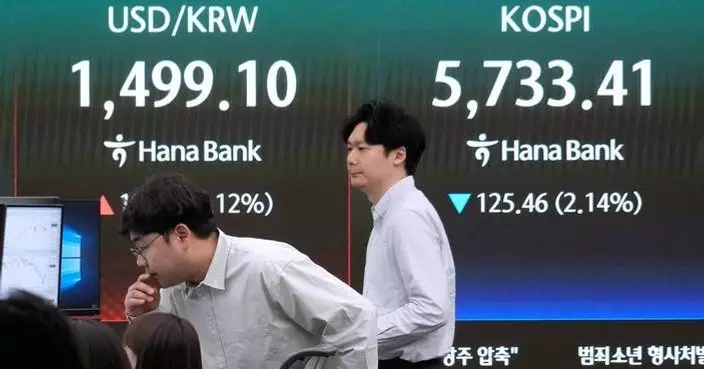
Japan’s benchmark Nikkei 225 lost 0.7% to finish at 56,502.77. Australia’s S&P/ASX 200 shed 0.4% to 8,926.00. South Korea’s Kospi dipped 0.9% to 5,808.62. Hong Kong’s Hang Seng slipped 1.1% to 25,613.85, while the Shanghai Composite was little changed, inching up less than 0.1% to 3,988.56.
Iraq’s oil exports plunged in March to 18.6 million barrels, down from 99.87 million in February due to the closure of the Strait of Hormuz, according to official figures released Monday.
The state-run Organization for Marketing of Oil said revenues also have fallen to just $1.95 billion, down from over $6.81 billion.
The figures showed that exports from the Kurdistan Region through Turkey’s Ceyhan port also dropped to 1.27 million barrels, down from 5.55 million barrels in February.
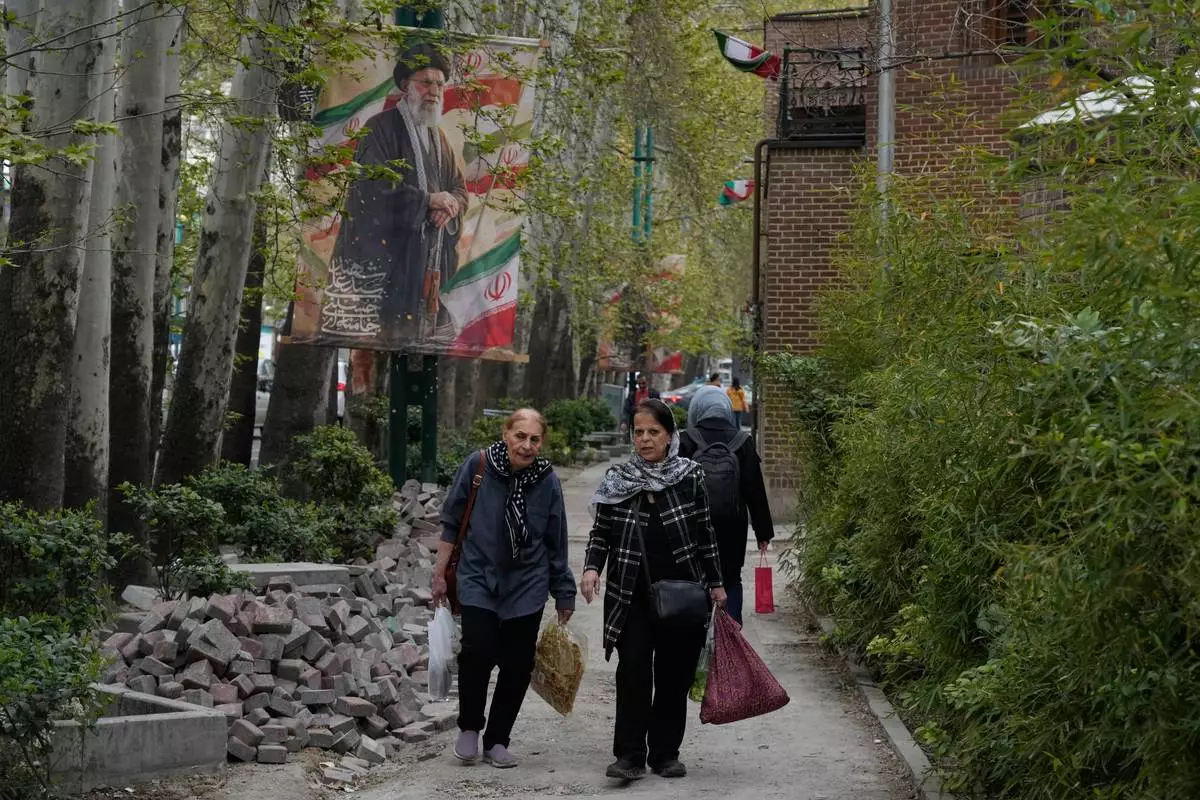
Women walk past a banner depicting the late Iranian Supreme Leader Ayatollah Ali Khamenei, who was killed in the U.S. and Israel strikes on Feb. 28, in northern Tehran, Iran, Sunday, April 12, 2026. (AP Photo/Vahid Salemi)
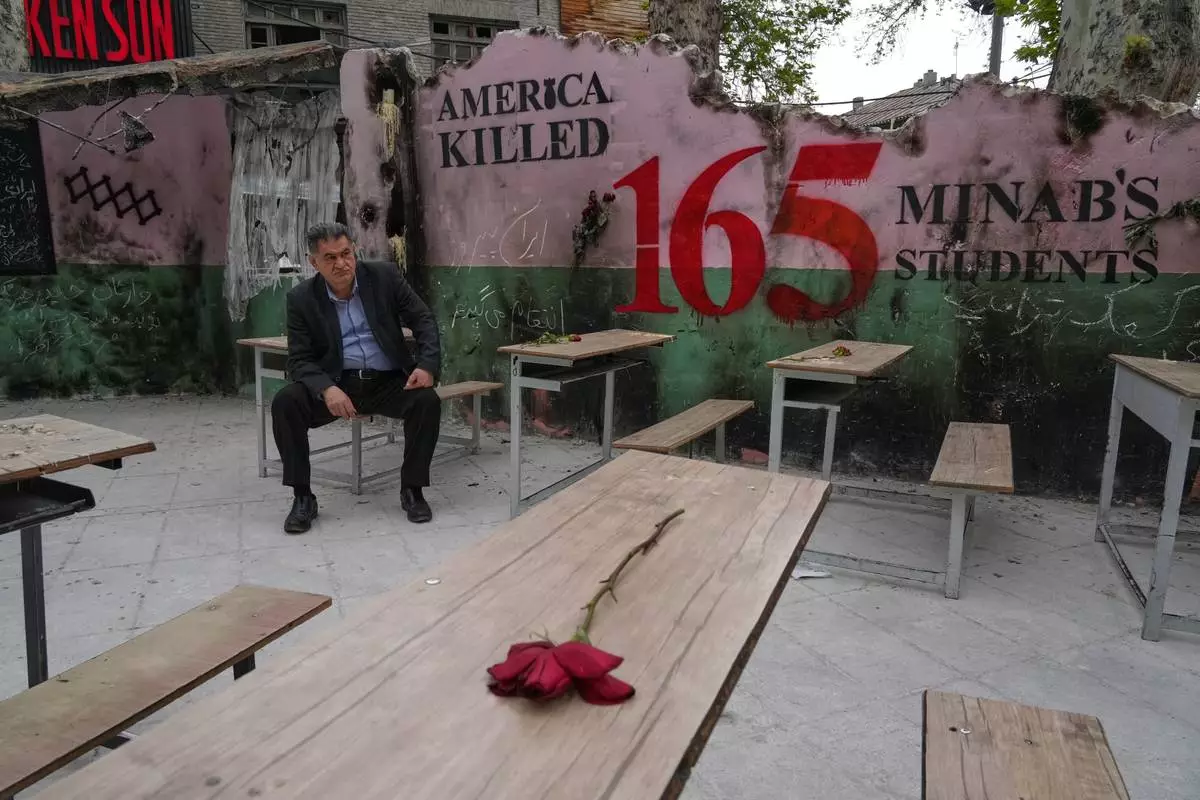
A man sits on a bench in a memorial, set for the school children who were killed during a strike on a school in southern town of Minab on Feb. 28, in northern Tehran, Iran, Sunday, April 12, 2026. (AP Photo/Vahid Salemi)
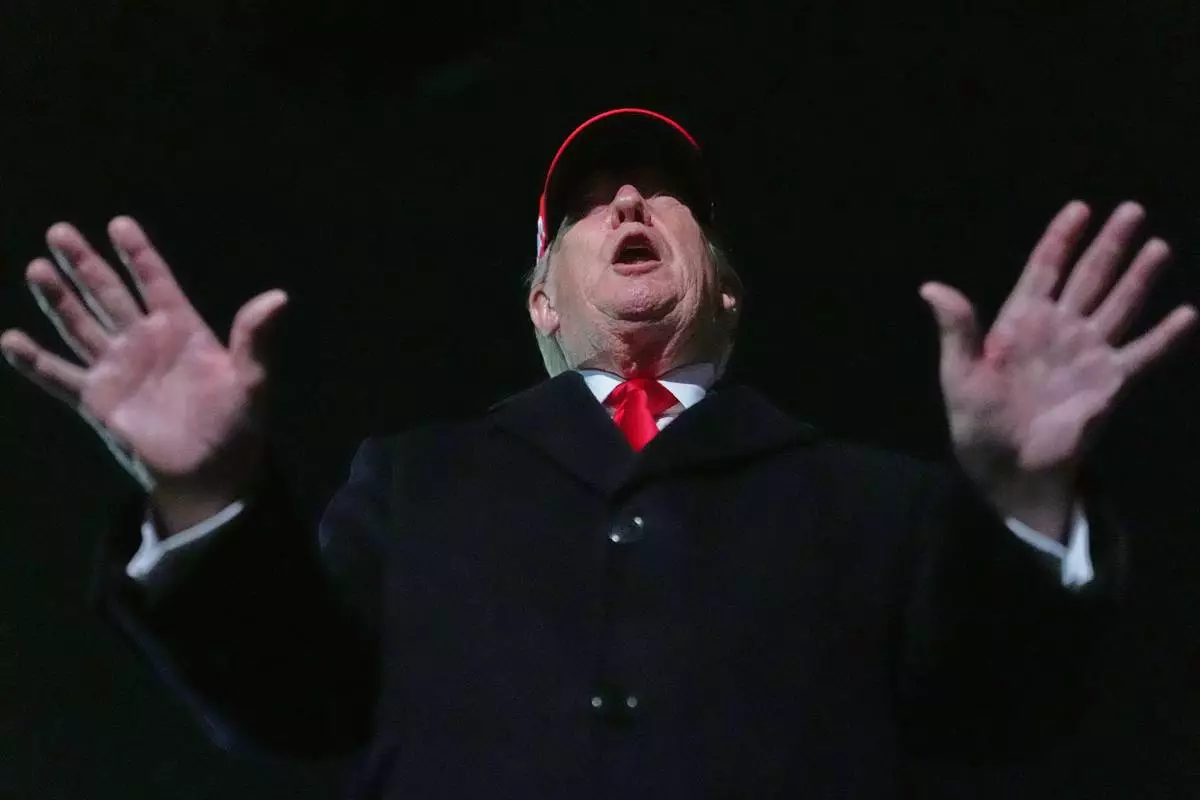
President Donald Trump speaks with reporters at Joint Base Andrews, Md., Sunday, April 12, 2026, after he returned from Miami. (AP Photo/Julia Demaree Nikhinson)
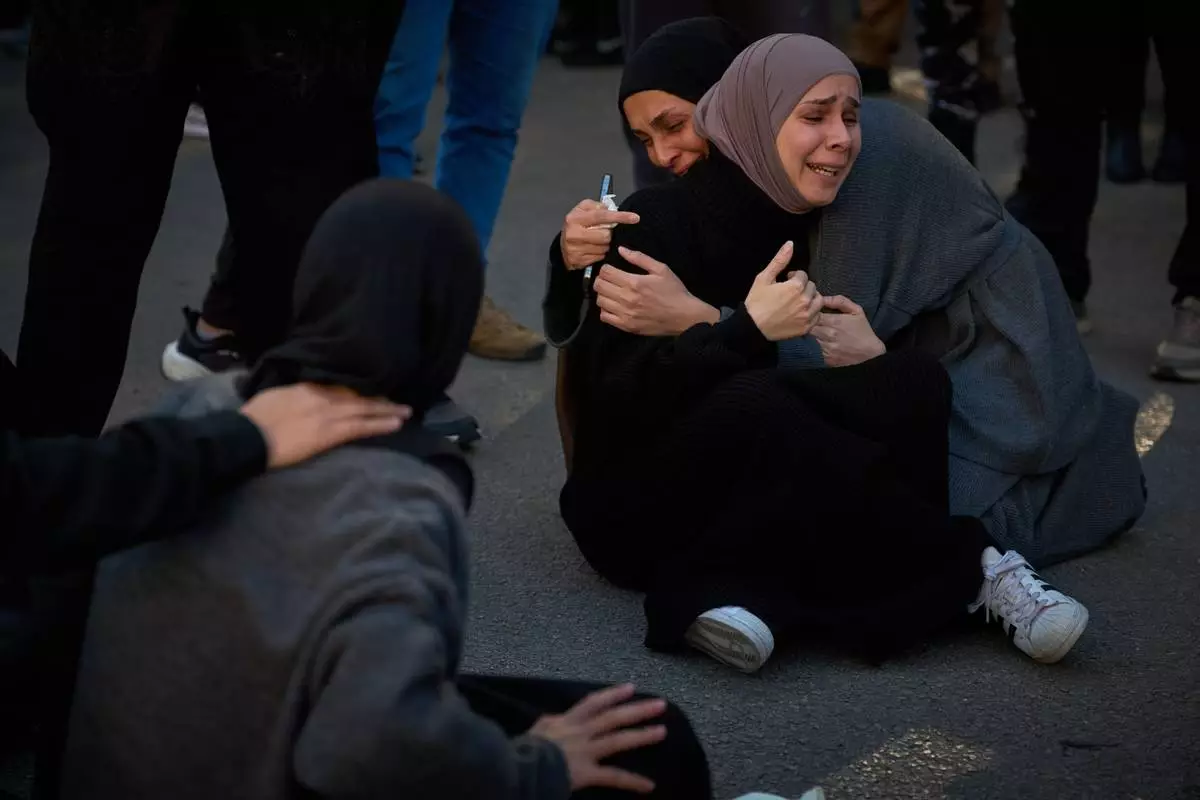
Mourners react during the funeral of 13 state security officers killed the previous day in an Israeli strike in Lebanon's coastal city of Sidon, Saturday, April 11, 2026. (AP Photo/Emilio Morenatti)