A Hong Kong deputy to the National People's Congress (NPC) has been dedicated to gathering public opinion in local communities, crafting proposals focused on the city's long-term development within the Guangdong-Hong Kong-Macao Greater Bay Area, fulfilling his duty as a bridge between Hong Kong and the mainland.
The "two sessions" are the annual meetings of China's top legislature, the NPC, and the top political advisory body, the National Committee of the Chinese People's Political Consultative Conference (CPPCC), which will open on March 5 and March 4 in Beijing this year, respectively.
Chan Yung, also a member of the eighth-term Legislative Council of the Hong Kong Special Administrative Region (HKSAR), recently visited Kwai Fong, one of Hong Kong's most densely populated communities. His visit was not only to explain the timing and agenda of the two sessions but, more importantly, to hear directly from residents. Through face-to-face exchanges, he gathered their concerns and opinions, which he will turn into policy suggestions to bring to Beijing.
Youth development is one of Chan's top priorities. He said many young people in Hong Kong are eager to live and start businesses across the Guangdong-Hong Kong-Macao Greater Bay Area. To address this aspiration, Chan noted that while policy support and internship opportunities have expanded in recent years, practical challenges remain, from career pathways to long-term development prospects.
"Some young people raise very specific concerns. For example, if they work in the Greater Bay Area, taxes can be relatively high. They suggested introducing preferential arrangements at the initial stage to help them adapt before gradually transitioning to the standard rates. That would make it easier for them to settle down," Chan said.
Another group Chan closely follows is the elderly. In Hong Kong, seniors receiving government assistance get about 1,400 U.S. dollars a month, an amount that can be stretched thin by the city's high cost of living.
This has caused a growing number of Hong Kong seniors to consider retiring across the border, where the same sum can provide access to quality elderly care in some Greater Bay Area cities.
In response, Hong Kong deputies have put forward a range of proposals at the two sessions aimed at better supporting this trend and improving cross-border elderly services.
"Another suggestion we made was implemented last year by the central government and the HKSAR government; that is, the cross-border ambulance service. The cross-border ambulances can transport emergency or long-term patients in the mainland who need to return to Hong Kong for medical treatment. The ambulances can transfer both patients in emergency conditions and long-term patients across the border to Hong Kong hospitals," Chan said.
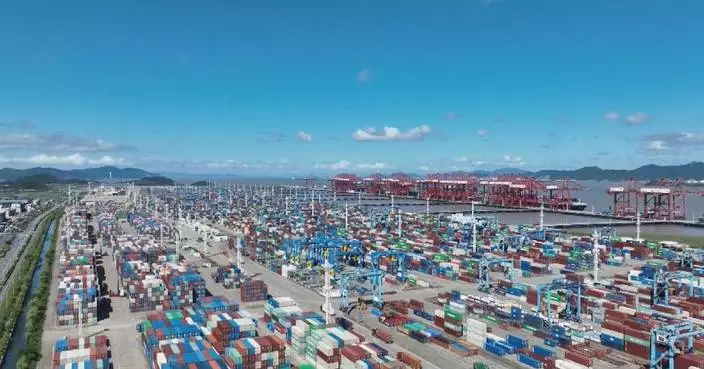
With 2026 marking the beginning of China's 15th Five-Year Plan (2026-2030), Chan said his proposals this year will focus on Hong Kong's long-term development. They include strengthening integrated port development across the Greater Bay Area and supporting Hong Kong's northern region with a more coordinated and sustainable energy framework.
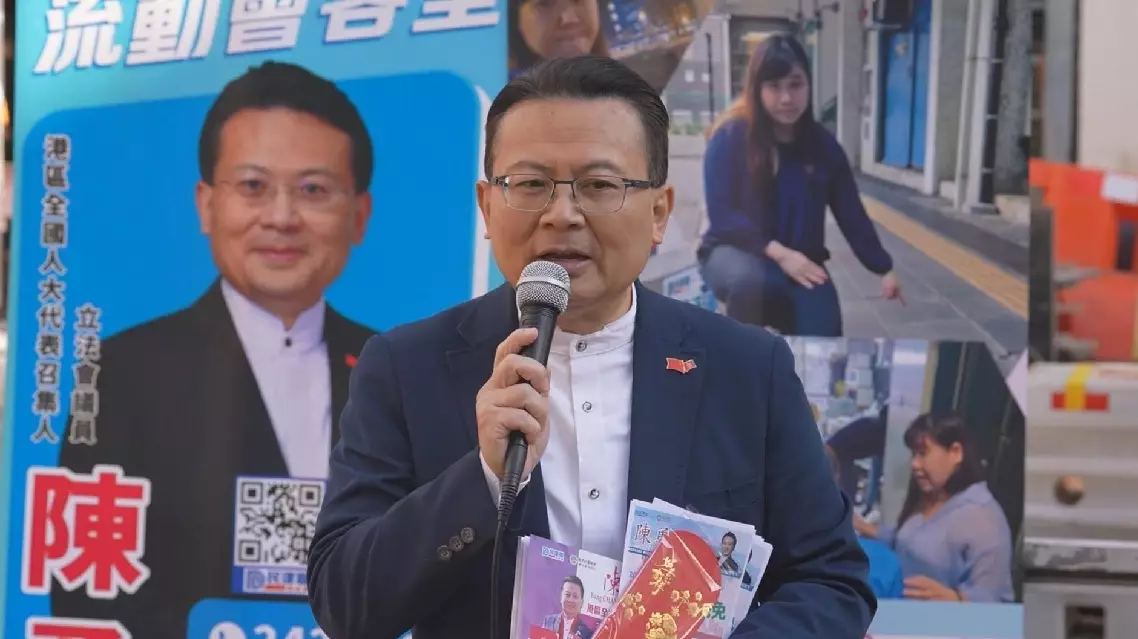
Hong Kong lawmaker gathers grassroots opinions ahead of annual "two sessions"
The stocks in Hong Kong edged down on Tuesday, while Japanese shares closed higher, said Timothy Pope, a market analyst for China Global Television Network (CGTN).
While Chinese mainland stocks closed higher on Tuesday, the first trading day after the nine-day Spring Festival, or Chinese New Year, holiday, Hong Kong's stock market ended lower with the benchmark Hang Seng Index down 1.82 percent to close at 26,590.32 points.
On Monday, Hong Kong's stock market ended higher with the benchmark Hang Seng Index up 2.53 percent to close at 27,081.91 points. The analyst attributed the increase largely to the U.S. Supreme Court's tariff ruling, which said on Feb 20 that the U.S. President Donald Trump's sweeping tariffs under a law meant for use in national emergencies are illegal.
"Hong Kong's market didn't have quite as long a holiday as we enjoyed the Chinese mainland and had its tariff ruling bump yesterday, when Hang Seng added almost 2.5 percent. Today though things slipped back. We saw the index down 1.8 percent, mirroring a pull-back on Wall Street overnight," said Pope.
The analyst pointed out that one of the most closely watched events on the bourse is a takeover by Panamanian authorities of two Panama Canal ports operated by Hong Kong-based conglomerate CK Hutchison.
"One of the major movers was investment holding company CK Hutchison, which had all those port contracts along the Panama Canal, until they were ruled to be in violation of Panama's constitution by Panamanian courts. Two rival port contractors -- Maersk and MSC have taken over operations at the moment and CK Hutchison's subsidiary staff have been removed from those ports today under the threat of prosecution if they remain. This story is still far from over. CKH told the Hong Kong Stock Exchange today that the court-ordered takeover is unlawful and that the company is considering legal action both within the Panama and internationally as well. The ruling was made at the end of January, as it said, but was only fully officially published on Monday. The Hong Kong government has also weighed in on this, issuing a statement, saying that Panama should respect the spirit of business deals and commit to making the country a fair business environment. CKH shares were down 2.7 percent today," said Pope.
As for Japan, the 225-issue Nikkei Stock Average ended up 495.39 points, or 0.87 percent, from Friday at 57,321.09. The broader Topix index finished 7.50 points, or 0.20 percent, higher at 3,815.98.
The analyst attributed the increases largely to optimism on huge investment opportunities generated from Nvidia's reported plan to invest in OpenAI.
"Over in Tokyo, the Nikkei 225 rose after a long weekend in Japan, adding 0.9 percent. A lot of that was on boosted tech investment hopes. The major fuel for those gains are reports of a potential investment by Nvidia into OpenAI. Reuters has reported that the chip maker and the AI developer are close to agreeing terms for a 30-billion U.S. dollar deal. This would almost certainly mean more data centers on which to train AI models and more chips to be made, all of which need Japanese tech. Some of the biggest companies on the Nikkei are tech infrastructure providers like chip testing equipment makers and fiber optic cable manufacturers. One of the latter -- Furukawa Electric, rose 15 percent today," said Pope.
The analyst noted that shares of Japanese arms makers dipped.
"Elsewhere on the Japanese markets we saw defense-linked stocks fall. That came after the Chinese government published an export control list that is aimed at slowing what it called Japan's re-militarization," said Pope.
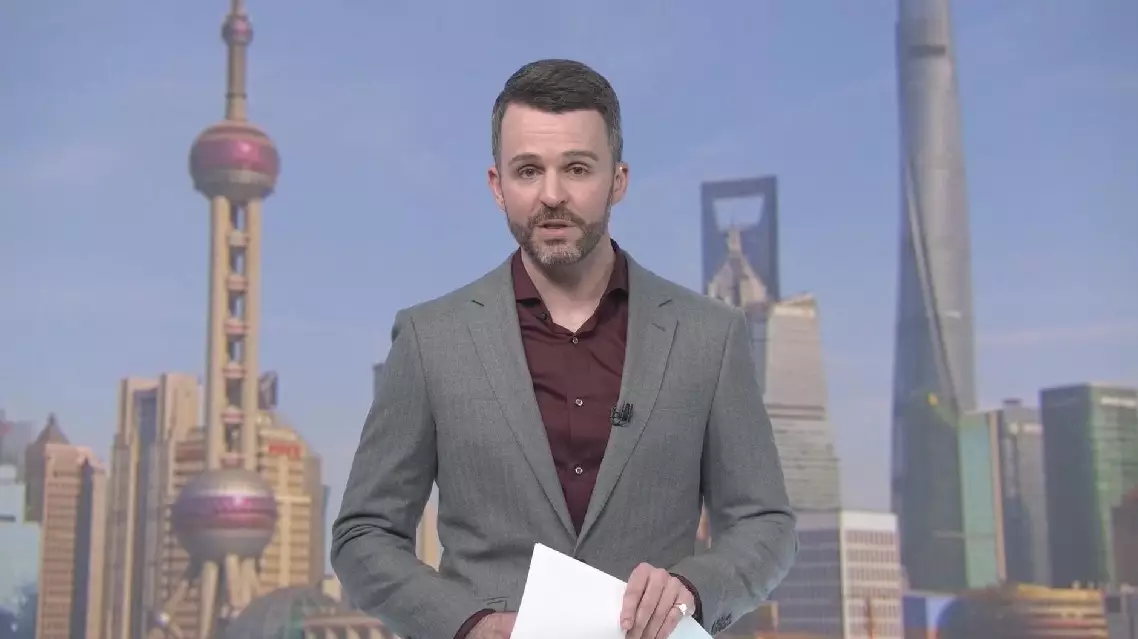
Hong Kong stocks slip, Japanese shares end higher on Monday