Vietnam's cassava industry, which used to struggle with outdated planting techniques and traditional farming methods, has reached global markets with technical support from China in recent years.
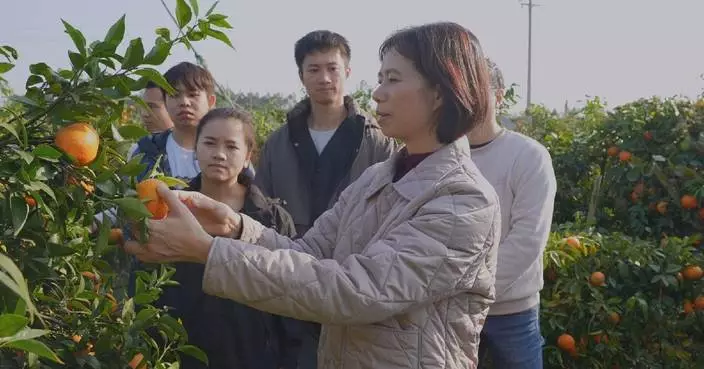
Chinese companies have introduced high-yielding, pest-resistant cassava varieties and helped standardize farming methods. Through the Belt and Road Initiative (BRI), some Chinese companies have also set up local operations, entering secured supply relationships with local farmers.
Vietnam, with its favorable climate, soil, and certain other unique natural conditions, has become the world's third-largest cassava producer.
Cassava is identified by the Food and Agriculture Organization (FAO) as a source of food security. The refined, processed cassava starch is an indispensable core raw material across numerous sectors, including food processing, chemical manufacturing, and pharmaceutical research and development.
Across its sprawling farmlands, cassava plantations in Vietnam stretch endlessly, bearing the hopes of countless farmers.
However, local ordinary growers had long struggled to secure a stable income due to outdated planting techniques, traditional farming methods, and narrow sales channels. Things began to change after Chinese assistance came. The two countries' cooperation, dating back to the establishment of diplomatic ties in 1950, has gained momentum over the last two decades. Chinese companies have brought enormous technical expertise and investment into Vietnam, largely under the China-proposed Belt and Road Initiative.
"In line with the Belt and Road Initiative, we have set up factories here, with the aim of boosting the development of local industries," said Chen Mingyu, chairman of Guangxi Nongken Mingyang Starch Development.
Upon arriving in Vietnam, Chinese enterprises pinpointed the crux of the sluggish production.
"First, the crop yield was relatively low, because the original cassava varieties they grew were not the optimal ones. So we introduced several improved cassava varieties to the region, specifically high-yield and pest-resistant ones. Second, the local farmers adopted quite expansive farming methods back then. For example, they failed to control the planting space properly -- it was sometimes too dense and sometimes too sparse. As a result, there was no real standardized cultivation, which led to low yields and sapped the farmers' enthusiasm for growing cassava," said Chen.
Having identified the core problems, Chinese companies adopted targeted solutions by establishing standardized planting systems, regulating harvest season, and developing formal procurement standards, with the purpose of turning cassava farming from an experience-based practice into science-guided production.
Their efforts have partly paid off.
"At present, the total cassava cultivation area has increased 3.5 times, and the cassava output has risen from approximately three million tonnes to 15 million tonnes," said Chen.
Behind these figures lies a comprehensive upgrade of the entire cassava industry.
Many local farmers have joined Chinese enterprises in Vietnam. Starting from scratch, they learned advanced deep-processing technologies for cassava starch. Step by step, they have completed a remarkable transformation for rain-dependent farmers who lived at the mercy of the weather into skilled technicians with professional expertise.
"Now I have steady incomes. I feel more secure and I have real confidence in the future," said Tran Thi Them, a cassava farmer.
"Over time, I have grown with the company -- from a farmer to a technician, and now I'm working toward research and development," said Nguyen Hong Kiet, an employee of Minhyang Biochemistry Vietnam.
Today, Chinese enterprises operating in Vietnam have signed minimum price purchase agreements with more than 2,000 local farming households, giving farmers the confidence to plant and the peace of mind to sell their harvests.
In 2025, Minhyang Biochemistry Vietnam's annual starch output surpassed 100,000 tonnes.
Beyond supplying markets in Southeast Asia and China, its products now reach Europe, America, and South Africa, carrying Vietnam's cassava industry onto the global stage.
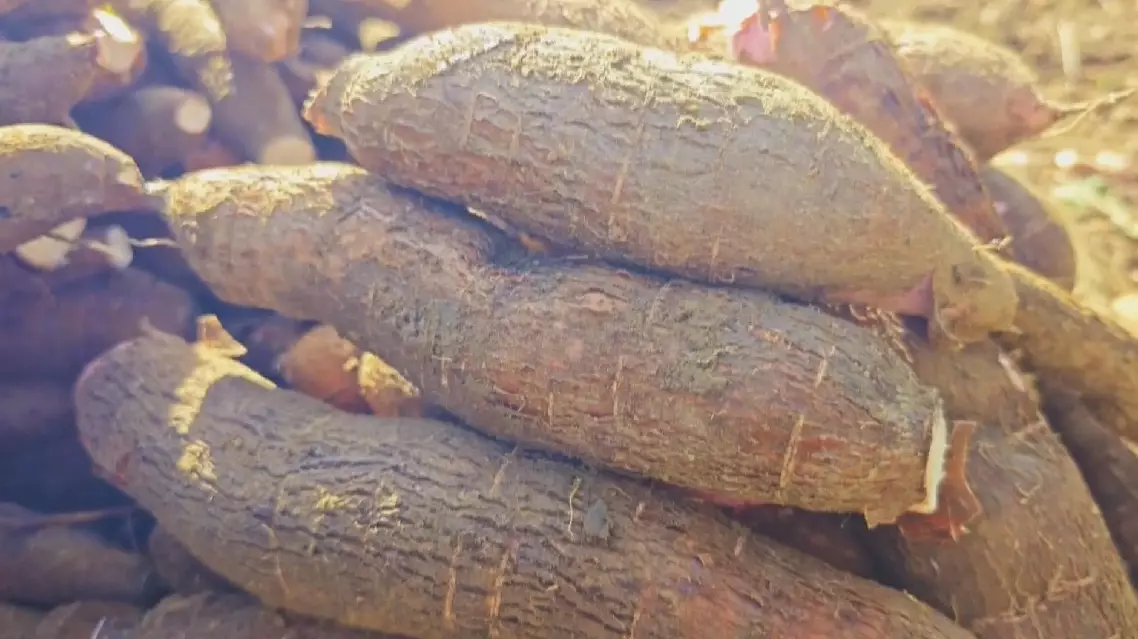
Chinese agricultural firms empower Vietnam's cassava industry