In Thailand's sprawling sugarcane fields, Chinese-made harvesters now move steadily through the rows, offering a lifeline to an agricultural sector grappling with climate change, labor shortages, and an aging workforce.
For centuries, Thai farmers have been the backbone of the nation, ensuring global food supplies remained stable. Today, however, the very land they nurture is becoming less predictable. Rising temperatures, erratic rainfall, and economic pressures are forcing a reevaluation of traditional farming methods.
"For the agricultural sector, I can say that it's very critical right now that we have to be concerned. By the middle of this century, at the national level, the rice production will drop around 10 to 13 percent. The production of sugarcane will drop roughly around 40 percent. So I can say that in the future, the food security will be adversely affected. And also, Thailand will export less amount of food to the world market," said Witsanu Attavanich, associate professor of economics at Kasetsart University in Bangkok.
Amid these challenges, mechanization is emerging as a key adaptation strategy. In Thailand's sugarcane belt, machines manufactured by Chinese company World Agricultural Machinery are increasingly visible. Designed to handle dense crops, uneven terrain, and extended operating hours, the equipment offers farmers speed, reliability, and consistency -- critical advantages as labor becomes scarcer and more expensive.
"Since 2019, our company has actively responded to the Belt and Road Initiative, expanding beyond China's borders and using this as a springboard to reach global markets. I believe the benefit this brings to Thai agriculture lies in introducing China's advanced agricultural machinery and farming techniques to Thailand, enabling local farmers to truly experience the convenience and efficiency that Chinese agricultural machinery can offer," said Chen Long, sales manager at World Agricultural Machinery (Thailand).
Many of these machines begin their journey at a factory in Ayutthaya, a historic city north of Bangkok. World Agricultural Machinery established its Thai production facility here, launching full operations in 2023. The plant now manufactures sugarcane harvesters, tractors, and other farm equipment tailored to local needs.
"This is our factory located in Ayutthaya Province. We went into full production in 2023. Currently, we have created over 700 jobs for the local community," Chen said while showing around the factory floor.
For employees like Klai Loongpung, the factory represents stability in a region with limited economic opportunities.
"My life is getting better. I need to send money back to support my children and build a house. There are few jobs with good income in my hometown, but I still need to send my children to school. This job requires Chinese language skills, which suits me," said Klai.
The company's commitment extends beyond the factory floor. After-sales teams conduct regular inspections, maintenance, and follow-ups across Thailand's farming regions, often during off-seasons to address issues before they escalate.
Mechanization has become essential for farmers like Kudan Jeerangkokkraud. Facing rising labor costs and falling crop prices, he turned to machinery to sustain his livelihood.
"Labor shortages have increased, and wages have risen. Agricultural products are selling at lower prices, creating an imbalance. I think I made the right decision, and I am happy with it. When I plowed four to eight acres (about 1.6 to 3.2 hectares) of land, it only took half a day to finish. It is very convenient. I can plow the land whenever I want," said Kudan.
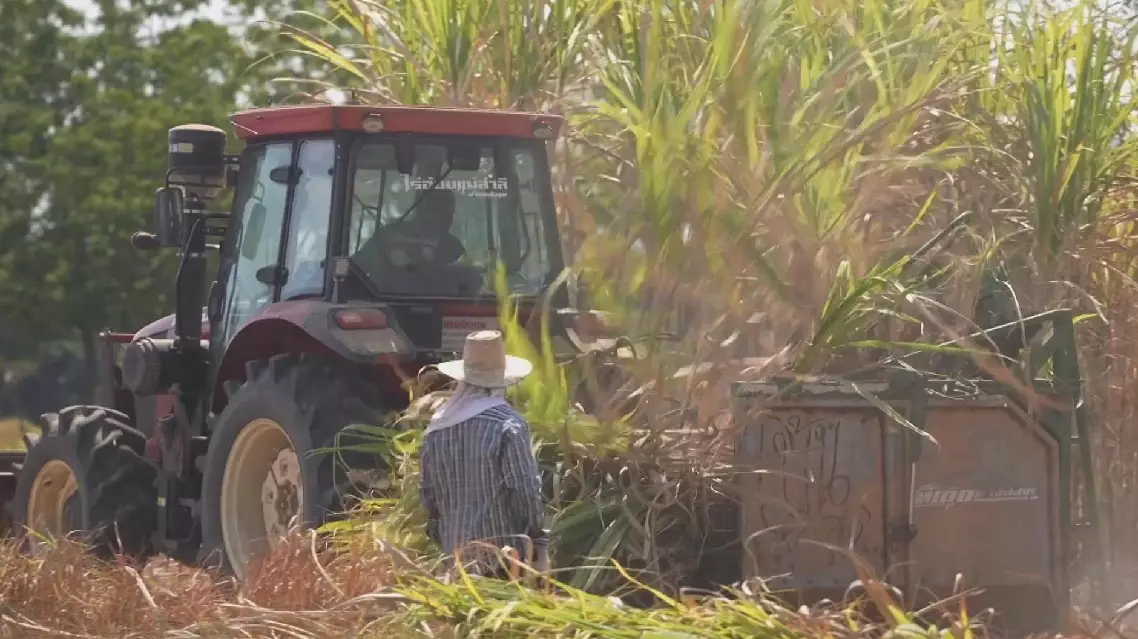
Chinese agri-machinery helps Thai farmers navigate climate challenges, labor shortages