HOUSTON--(BUSINESS WIRE)--Feb 24, 2026--
Starlab Space LLC, the commercial space station developer expanding access to low Earth orbit research, today announced a reservation agreement with LambdaVision, a biotechnology company developing a protein-based artificial retina designed to restore vision for patients with retinal degenerative diseases. The reservation agreement supports LambdaVision’s transition from research to long-term, scalable biomedical production in space and ensures its continued access to microgravity as the International Space Station approaches retirement.
This press release features multimedia. View the full release here: https://www.businesswire.com/news/home/20260224814115/en/
LambdaVision’s layer-by-layer assembly process is improved in the low Earth orbit environment, where reduced gravity improves homogeneity, stability and performance of thin films like the protein-based artificial retina. The company has successfully validated its microgravity manufacturing method and plans to improve the quality and functionality of its protein-based artificial retina, while paving the way for novel innovations in other fields.
“Our agreement with Starlab is a critical step in ensuring continued access to low Earth orbit as we advance toward commercial manufacturing,” said Nicole Wagner, Ph.D., CEO of LambdaVision. “We are positioning our protein-based artificial retina and our layer-by-layer technology more broadly for long-term growth beyond the ISS. This approach not only supports our mission to help restore vision on Earth but also opens the door to new research and commercial opportunities by demonstrating that therapies can be produced in low Earth orbit at a commercial scale.”
While LambdaVision’s first application is restoring vision, its layer-by-layer protein manufacturing platform has broader potential. By producing highly uniform, stable protein films in microgravity, the company is advancing a new approach to precision biological manufacturing that could enable improved materials for sensitive biosensors, optical systems, drug delivery applications and tissue engineering.
“LambdaVision has demonstrated the maturity of the science, engineering, and in-space manufacturing processes required to produce retinal implants in microgravity,” said Luis Zea, Ph.D., chief scientist at Starlab. “Their reservation with Starlab enables the transition from demonstration to scalable, sustainable manufacturing, unlocking exponential growth while delivering meaningful benefits to patients on Earth. We are proud to work with LambdaVision to harness the unique advantages of microgravity to do good in the world.”
The announcement builds on Starlab’s growing capabilities in biopharmaceutical and life sciences research in orbit. Microgravity offers conditions that cannot be replicated on Earth, allowing for reduced sedimentation and improved material uniformity, which support higher consistency in protein-based structures and directly impact therapeutic quality, reproducibility and regulatory readiness.
Starlab’s market-driven business model is designed to reduce cost, complexity and risk for researchers and commercial partners. Its single-launch, no-assembly-required architecture enables full certification and operational readiness within weeks from launch, minimizing delays and maximizing efficiency for payload customers. Through its joint venture partners, customers can conduct research aboard the International Space Station today, ensuring a seamless transition to Starlab as its next-generation capabilities come online.
About Starlab
Starlab Space is a U.S.-led, global joint venture among Voyager Technologies (NYSE: VOYG), Airbus, Mitsubishi Corporation, MDA Space, Palantir Technologies, and Space Applications Services, with strategic partners including Hilton, Journey, Northrop Grumman, and The Ohio State University. Starlab is developing a next-generation, AI-enabled commercial space station, aiming to ensure continued human presence in low-Earth orbit and a seamless transition of microgravity science and research alongside the retirement of the International Space Station. Starlab's advanced, user-driven design and robust capabilities make it a premier platform for scientific discovery and technological advancement in space. For more information, visit starlab-space.com.
About LambdaVision
LambdaVision is leveraging space to develop a protein-based artificial retina to restore meaningful vision for the millions of patients blinded by retinal degenerative diseases, including retinitis pigmentosa (RP) and age-related macular degeneration (AMD). The patent-protected artificial retina technology developed by LambdaVision uses photoactive proteins to naturally mimic the light-absorbing properties of human photoreceptor cells and activate neuroreceptors still present in degenerated retinas of blind patients. LambdaVision’s artificial retina is one of the first technologies being evaluated on the International Space Station that has potential for clinical use, and the established microgravity manufacturing processes, quality control methods, and laboratory techniques provide a foundation for future clinical research in space. To learn more, visit lambdavision.com.
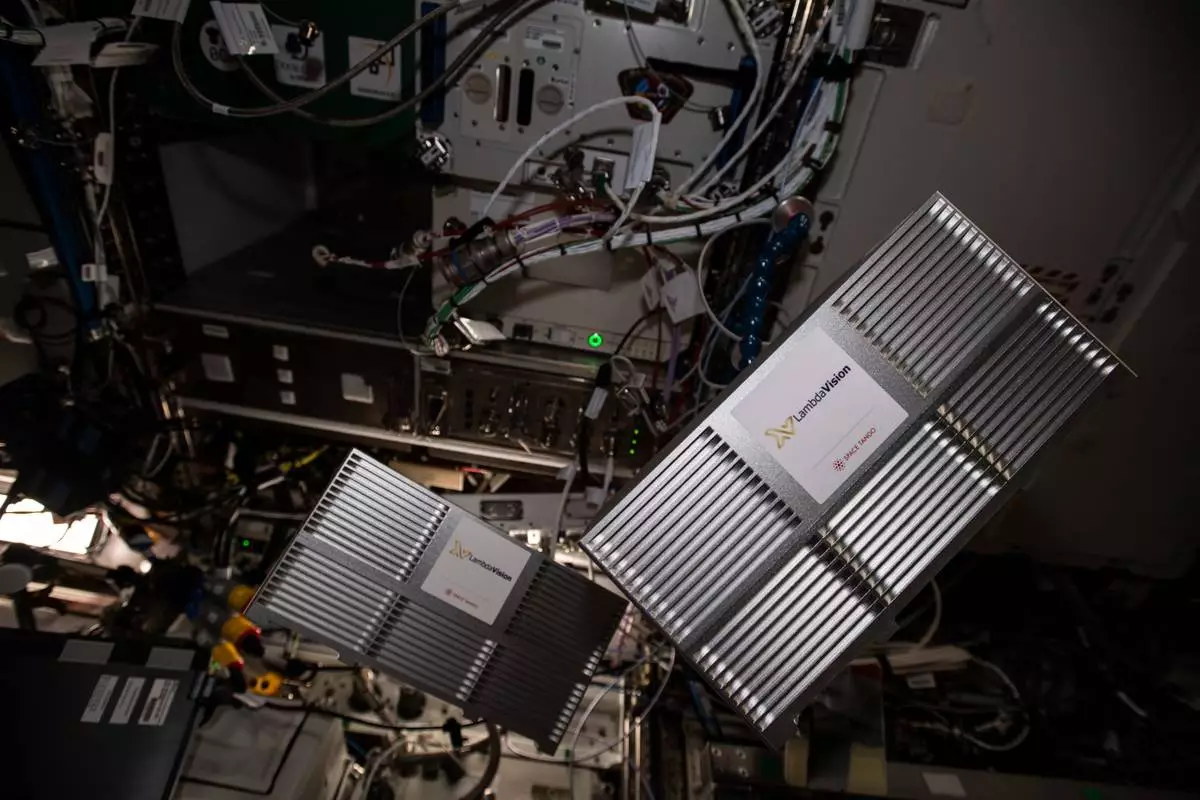
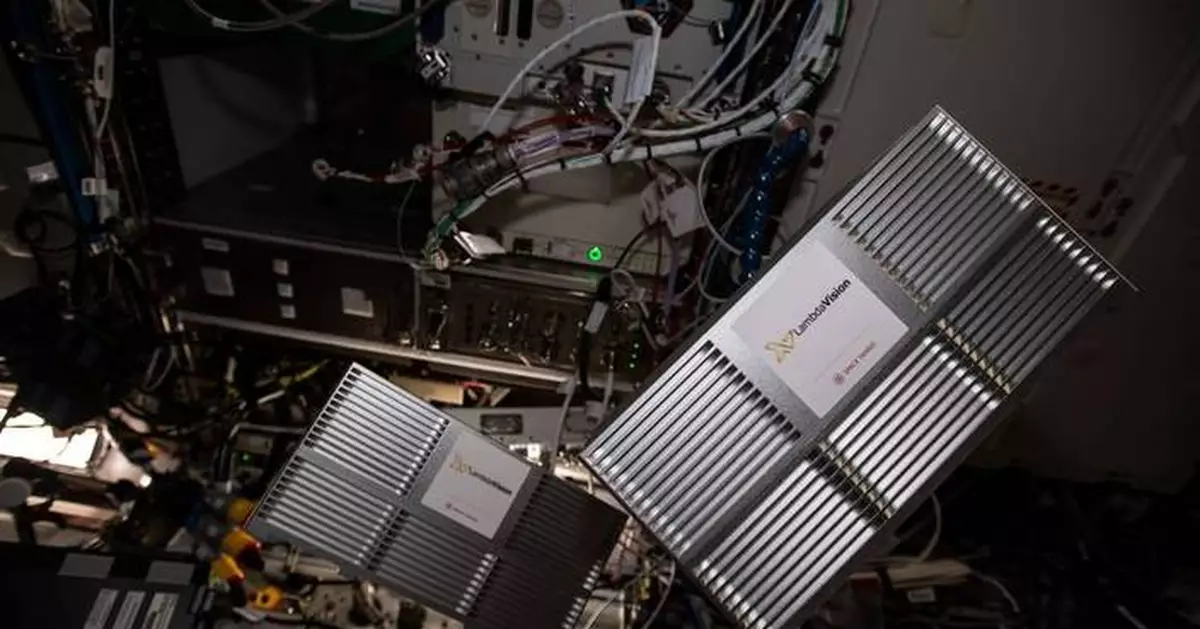
Space Tango and LambdaVision CubeLabs on the International Space Station, containing optimized and automated hardware for layer-by-layer deposition development of LambdaVision’s artificial retina in microgravity. LambdaVision will extend its research and production activities to Starlab as they advance toward space-based commercial manufacturing of protein-based artificial retinas.