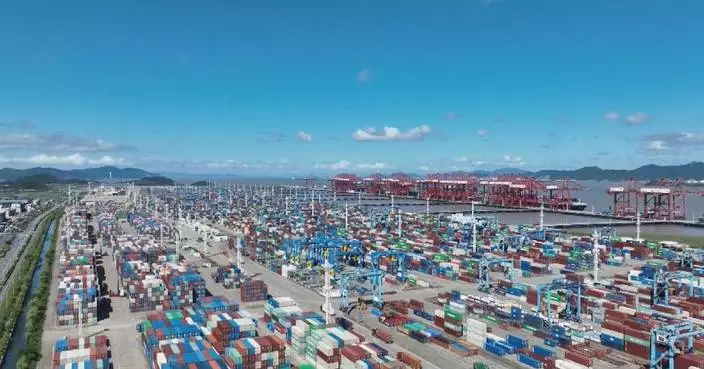
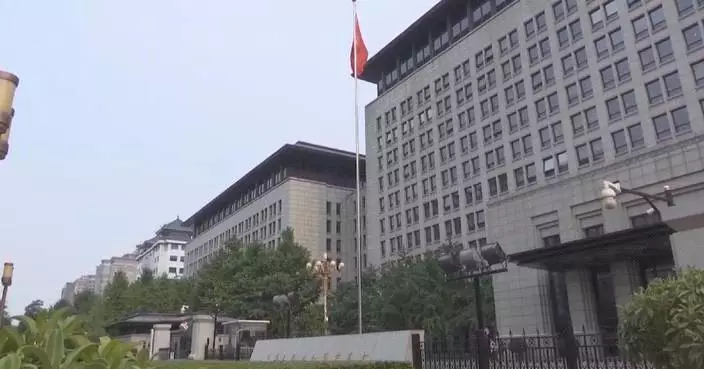
China is no longer merely the world's factory but a leading engine of innovation, a German business leader said in an interview with the China Global Television Network released in recent days.
Michael Schumann, chairman of the Board of Directors of the German Federal Association for Economic Development and Foreign Trade, said China has witnessed tremendous changes over the past few years and has risen to be a thriving market for sales, one that many industries and companies cannot afford to ignore.
He said the core of China's growth has undergone a fundamental transformation.
"Overall, the goals set by China can generally be achieved, and the quality of growth is undergoing change and transformation. We have witnessed this transformation process in China in recent years and the growth, once mainly driven by real estate, infrastructure construction and other factors, is now undergoing a qualitative shift. This change has been achieved through new technologies, high science and technology, and measures aimed at boosting domestic demand and consumption, which are not easy but have been taken seriously. I believe that when examining the true foundation of China's economic growth, these are the key points to focus on. We have witnessed truly remarkable changes and accomplishments in China," he said.
Schumann said that China has become a "training ground" for Western companies and that the Chinese market is extremely innovative and competitive.
"If you want to establish a foothold in China, you must possess incredible speed and capacity for innovation, and you cannot simply cling to the so-called advantages. This often helps enhance the competitiveness of our companies as well. Moreover, I believe that in many high-tech fields, collaborative innovation is becoming a very important trend," he said.
"For example, we see this in the automotive industry: the innovative strengths of Germany's hidden champions and the innovative strengths of young Chinese companies -- many of which are no more than 10 or 20 years old -- have achieved remarkable innovation capabilities and scale development in just a few years. This can complement collaborative innovation and have a positive impact," said Schumann.
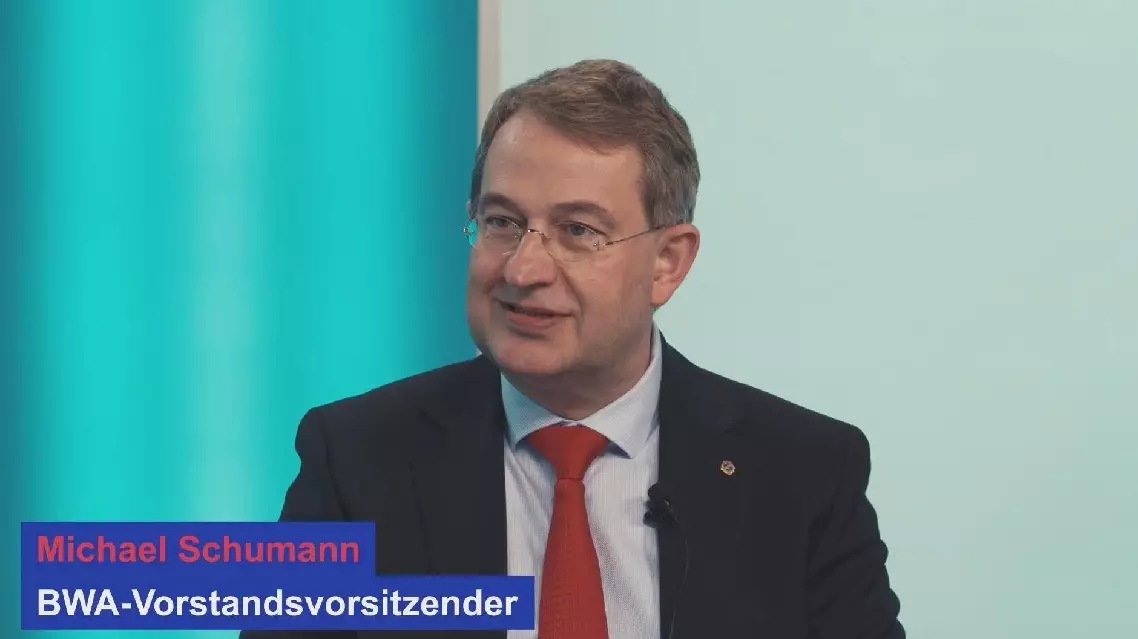
China emerges as global innovation engine: German business leader
The stocks in Hong Kong edged down on Tuesday, while Japanese shares closed higher, said Timothy Pope, a market analyst for China Global Television Network (CGTN).
While Chinese mainland stocks closed higher on Tuesday, the first trading day after the nine-day Spring Festival, or Chinese New Year, holiday, Hong Kong's stock market ended lower with the benchmark Hang Seng Index down 1.82 percent to close at 26,590.32 points.
On Monday, Hong Kong's stock market ended higher with the benchmark Hang Seng Index up 2.53 percent to close at 27,081.91 points. The analyst attributed the increase largely to the U.S. Supreme Court's tariff ruling, which said on Feb 20 that the U.S. President Donald Trump's sweeping tariffs under a law meant for use in national emergencies are illegal.
"Hong Kong's market didn't have quite as long a holiday as we enjoyed the Chinese mainland and had its tariff ruling bump yesterday, when Hang Seng added almost 2.5 percent. Today though things slipped back. We saw the index down 1.8 percent, mirroring a pull-back on Wall Street overnight," said Pope.
The analyst pointed out that one of the most closely watched events on the bourse is a takeover by Panamanian authorities of two Panama Canal ports operated by Hong Kong-based conglomerate CK Hutchison.
"One of the major movers was investment holding company CK Hutchison, which had all those port contracts along the Panama Canal, until they were ruled to be in violation of Panama's constitution by Panamanian courts. Two rival port contractors -- Maersk and MSC have taken over operations at the moment and CK Hutchison's subsidiary staff have been removed from those ports today under the threat of prosecution if they remain. This story is still far from over. CKH told the Hong Kong Stock Exchange today that the court-ordered takeover is unlawful and that the company is considering legal action both within the Panama and internationally as well. The ruling was made at the end of January, as it said, but was only fully officially published on Monday. The Hong Kong government has also weighed in on this, issuing a statement, saying that Panama should respect the spirit of business deals and commit to making the country a fair business environment. CKH shares were down 2.7 percent today," said Pope.
As for Japan, the 225-issue Nikkei Stock Average ended up 495.39 points, or 0.87 percent, from Friday at 57,321.09. The broader Topix index finished 7.50 points, or 0.20 percent, higher at 3,815.98.
The analyst attributed the increases largely to optimism on huge investment opportunities generated from Nvidia's reported plan to invest in OpenAI.
"Over in Tokyo, the Nikkei 225 rose after a long weekend in Japan, adding 0.9 percent. A lot of that was on boosted tech investment hopes. The major fuel for those gains are reports of a potential investment by Nvidia into OpenAI. Reuters has reported that the chip maker and the AI developer are close to agreeing terms for a 30-billion U.S. dollar deal. This would almost certainly mean more data centers on which to train AI models and more chips to be made, all of which need Japanese tech. Some of the biggest companies on the Nikkei are tech infrastructure providers like chip testing equipment makers and fiber optic cable manufacturers. One of the latter -- Furukawa Electric, rose 15 percent today," said Pope.
The analyst noted that shares of Japanese arms makers dipped.
"Elsewhere on the Japanese markets we saw defense-linked stocks fall. That came after the Chinese government published an export control list that is aimed at slowing what it called Japan's re-militarization," said Pope.
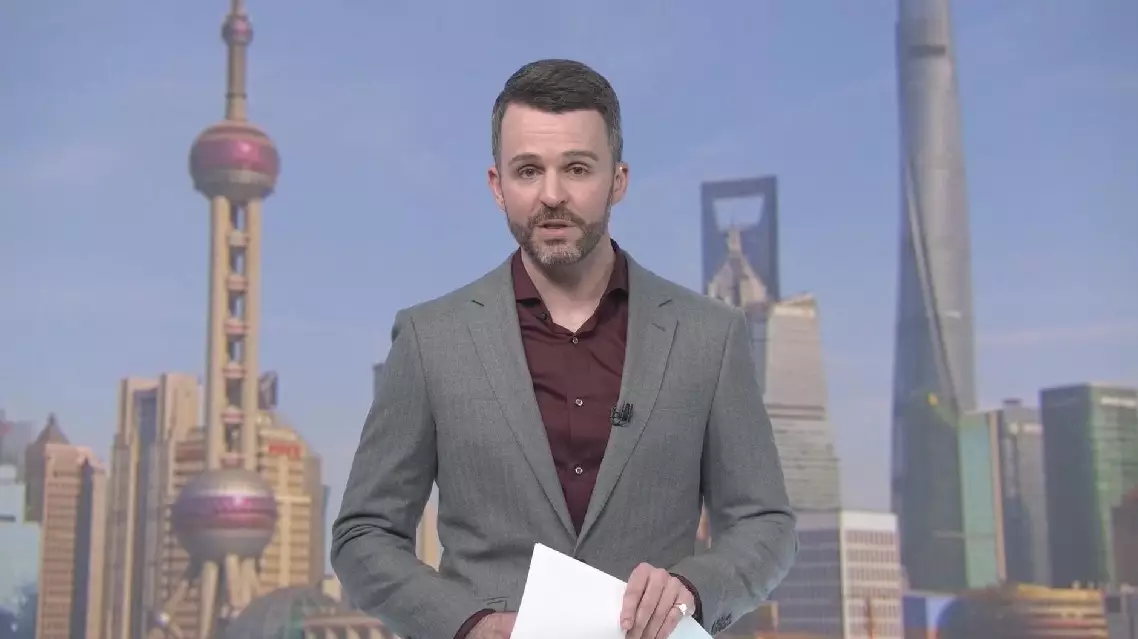
Hong Kong stocks slip, Japanese shares end higher on Monday