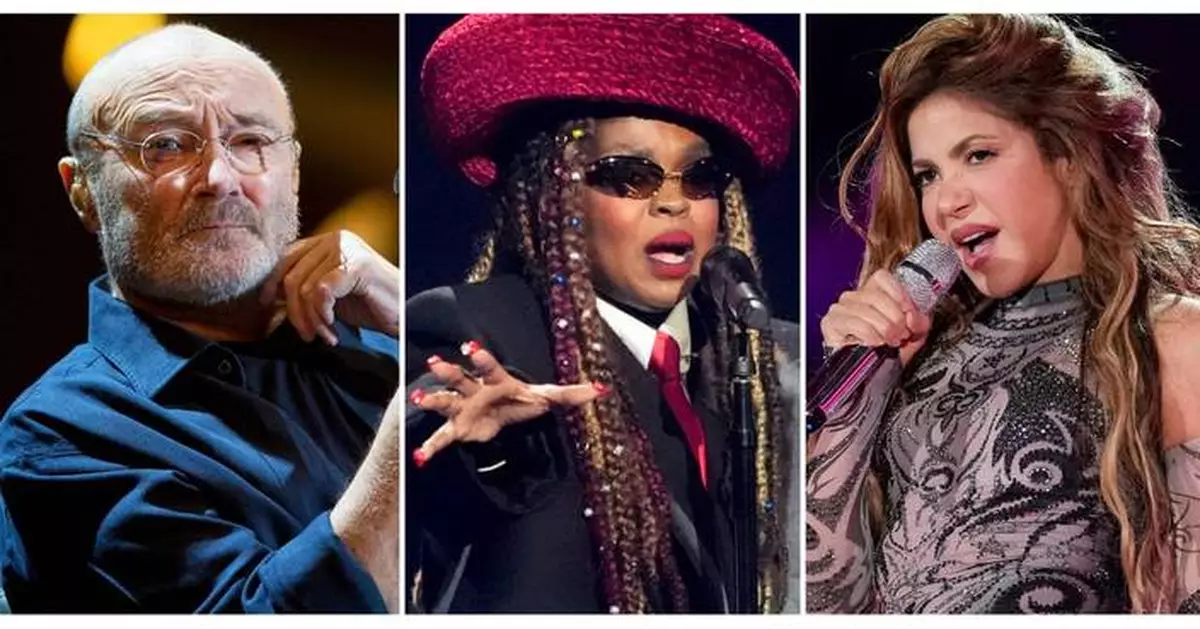
NEW YORK (AP) — Phil Collins, Mariah Carey, Lauryn Hill, INXS, Iron Maiden, Luther Vandross and Shakira are some the 2026 nominees for induction into the Rock & Roll Hall of Fame, a wide net that includes rap, metal, R&B, hip-hop, Britpop, blues rock and pop.
The hall revealed the list of 17 performer nominees Wednesday, a list that also includes Melissa Etheridge, Jeff Buckley, Pink, New Edition, Sade and the Wu-Tang Clan.
Click to Gallery
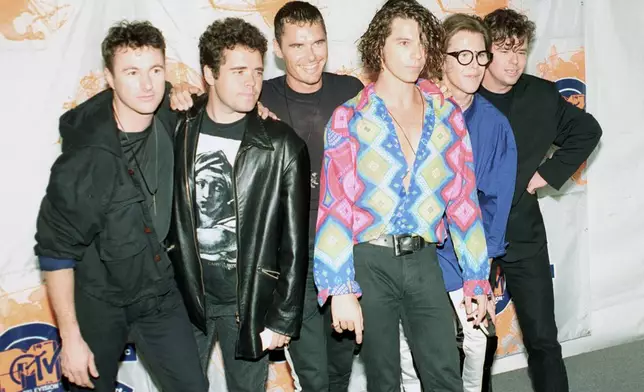
FILE - Members of the Australian rock group INXS, from left, Garry Gary Beers, Andrew Farriss, Jon Farriss, Michael Hutchence, Kirk Pengilly and Tim Farriss appear at the 7th annual American MTV Video Music Awards in Universal City, Calif., on Sept. 6, 1990. (AP Photo/Kevork Djansezian, File)
FILE - Members of the Australian rock group INXS, from left, Garry Gary Beers, Andrew Farriss, Jon Farriss, Michael Hutchence, Kirk Pengilly and Tim Farriss appear at the 7th annual American MTV Video Music Awards in Universal City, Calif., on Sept. 6, 1990. (AP Photo/Kevork Djansezian, File)
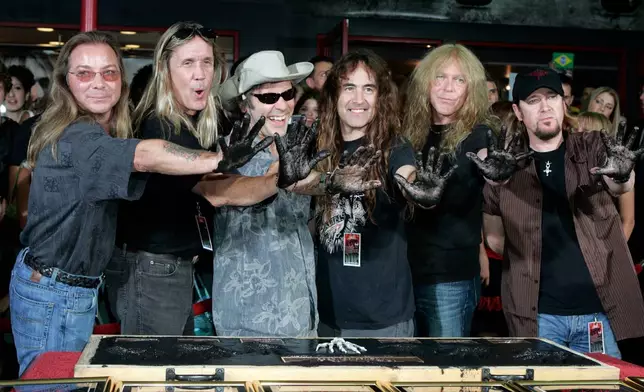
Members of the British heavy metal band Iron Maiden, from left, Dave Murray, Nicko McBrian, Bruce Dickinson, Steve Harris, Janick Gers and Adrian Smith hold up their hands after being inducted into Hollywood's Rockwalk in Los Angeles on Aug. 19, 2005. (AP Photo/Jae C. Hong, File)
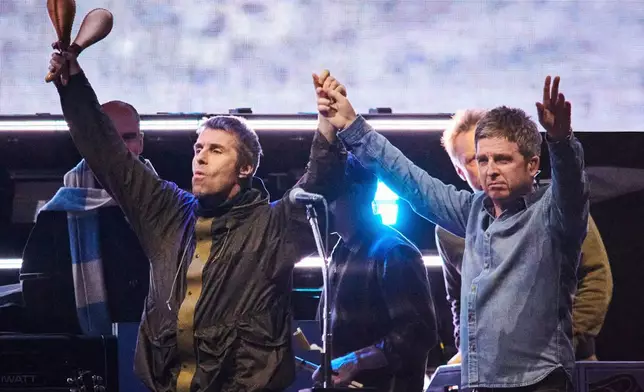
FILE - Liam Gallagher, left, and Noel Gallagher of Oasis appear during their reunion tour in Toronto on Aug. 24, 2025. (Sammy Kogan/The Canadian Press via AP, File)
FILE - British singer Sade Adu performs during her "Soldiers of Love" concert in Sao Paulo, Brazil, on Oct. 20, 2011. (AP Photo/Andre Penner, File)
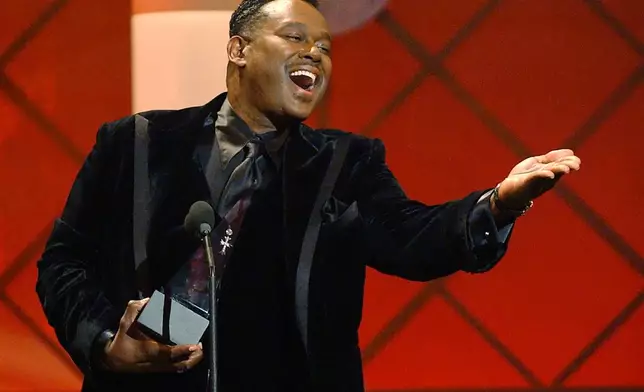
FILE - Luther Vandross accepts the award for favorite soul or R&B male artist at the 29th American Music Awards in Los Angeles on Jan. 9, 2002. (AP Photo/Kevork Djansezian, File)
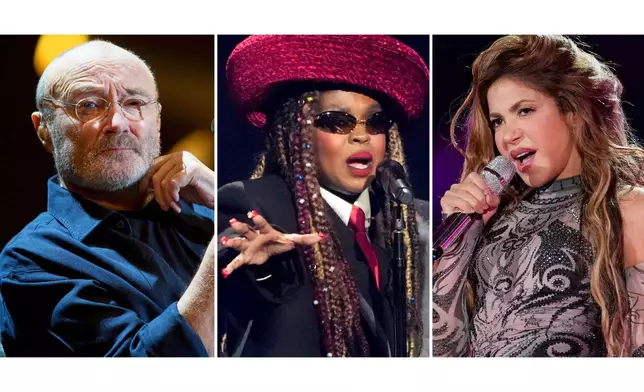
Phil Collins performs at Palacio de los Deportes in Mexico City on March 9, 2018, left, Lauryn Hill performs during the draw for the 2026 soccer World Cup in Washington on Dec. 5, 2025, center, and Shakira performs during the Global Citizen Festival in New York on Sept. 27, 2025. (AP Photo)
Billy Idol, Joy Division/New Order return to the nominations after missing induction last year. The list this time also repeats two sets of musical brothers who have had public feuds and recent reunions — The Black Crowes and Oasis.
Collins, who already is in the Hall as a member of Genesis and had such solo hits as “In the Air Tonight” and “One More Night,” has earned eight Grammys, including album of the year in 1985 for “No Jacket Required.” Hill's “The Miseducation of Lauryn Hill” made history as the first hip-hop album to win the Grammy for album of the year in 1999.
Carey, nominated in 2024 and 2025, has had 19 No. 1 hits on the Billboard Hot 100, while soul-jazz vocalist Sade, also nominated in 2024, had such soft rock hits as “Smooth Operator” and “The Sweetest Taboo.” The Wu-Tang Clan have been hailed as rap innovators since their game-changing 1993 debut album “Enter the Wu-Tang.”
INXS ruled the late 1980s charts with hits like “Need You Tonight,” “Devil Inside” and “New Sensation.” Two-time Grammy winner Etheridge is best known for her songs “Come to My Window” and “I’m the Only One.” Iron Maiden helped power the new wave of British heavy metal with iconic albums like “The Number of the Beast.”
New Edition had the hits “Cool It Now” and “Candy Girl,” while Shakira has been lauded for her ability to bridge Latin music with rock and pop. Pink has had four No. 1 songs and three No. 1 albums, including “The Truth About Love.”
Ten of the 17 nominees are on the ballot for the first time: Buckley, Collins, Etheridge, Hill, INXS, New Edition, Pink, Shakira, Vandross and Wu-Tang Clan.
Vandross, who sold more than 25 million albums and had the hits “Here and Now” and “Any Love,” died in 2005. Buckley, whose 1994 debut album “Grace” is widely acclaimed, died in 1997.
“This diverse list of talented nominees recognizes the ever-evolving faces and sounds of Rock & Roll and its continued impact on youth culture,” John Sykes, chairman of the Rock & Roll Hall of Fame Foundation, said in a statement.
The 2026 inductees will be revealed in April, along with inductees entering the hall under three special committee categories: Musical influence, musical excellence and the Ahmet Ertegun Non-Performer Award.
Artists must have released their first commercial recording at least 25 years before they’re eligible for induction. Nominees will be voted on by more than 1,200 artists, historians and music industry professionals.
Last year, Cyndi Lauper, Outkast, Bad Company, Chubby Checker, Soundgarden, Joe Cocker, Salt-N-Pepa, The White Stripes, Carol Kaye, Nicky Hopkins, Lenny Waronker, Thom Bell and Warren Zevon all were inducted.
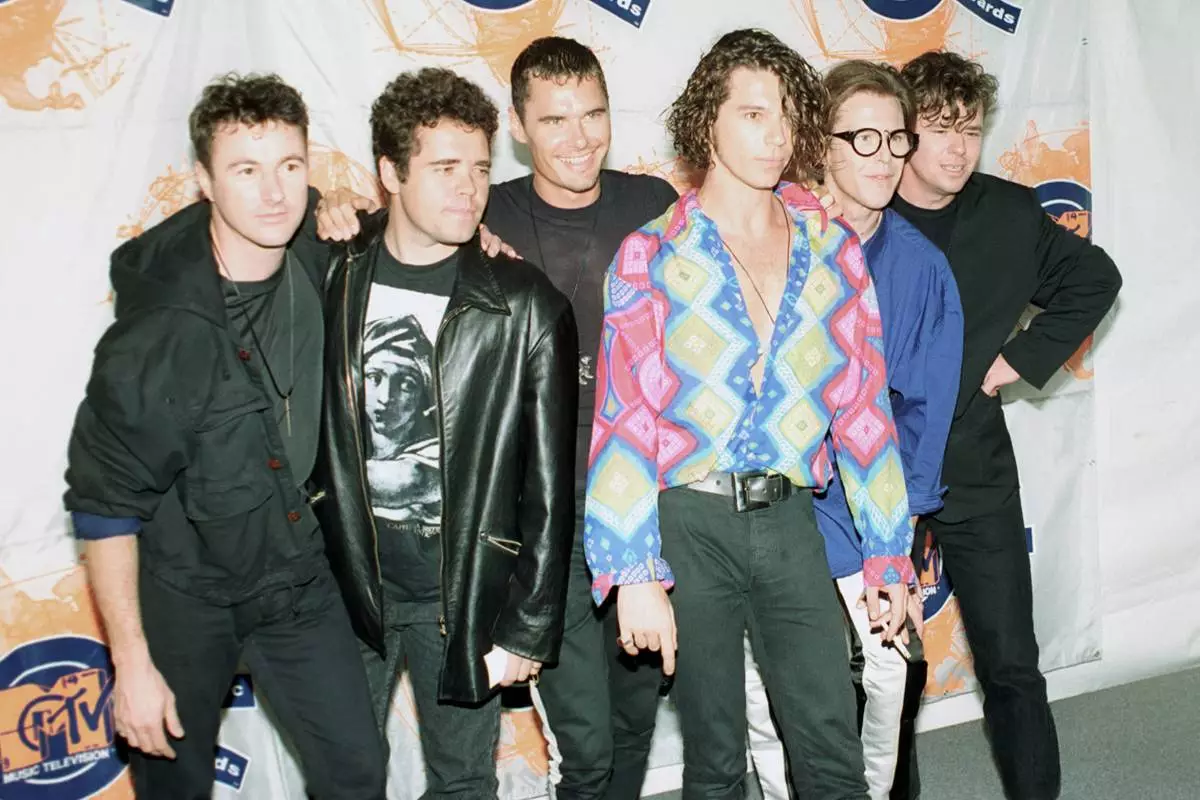
FILE - Members of the Australian rock group INXS, from left, Garry Gary Beers, Andrew Farriss, Jon Farriss, Michael Hutchence, Kirk Pengilly and Tim Farriss appear at the 7th annual American MTV Video Music Awards in Universal City, Calif., on Sept. 6, 1990. (AP Photo/Kevork Djansezian, File)
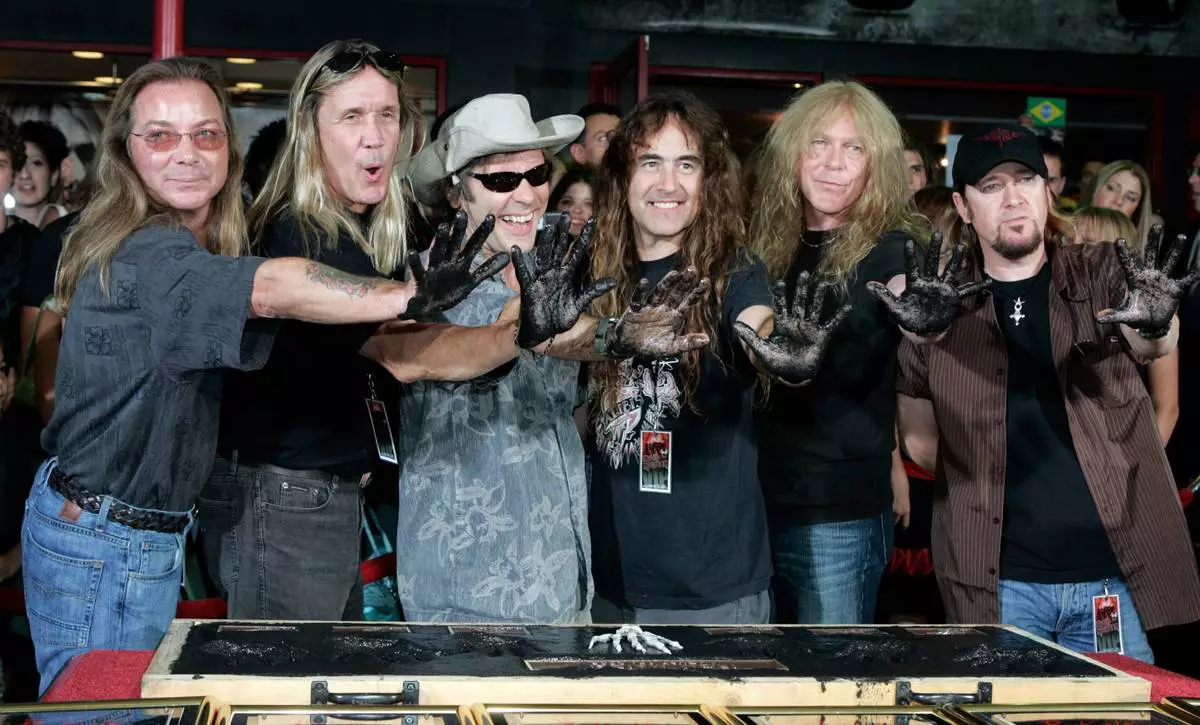
Members of the British heavy metal band Iron Maiden, from left, Dave Murray, Nicko McBrian, Bruce Dickinson, Steve Harris, Janick Gers and Adrian Smith hold up their hands after being inducted into Hollywood's Rockwalk in Los Angeles on Aug. 19, 2005. (AP Photo/Jae C. Hong, File)
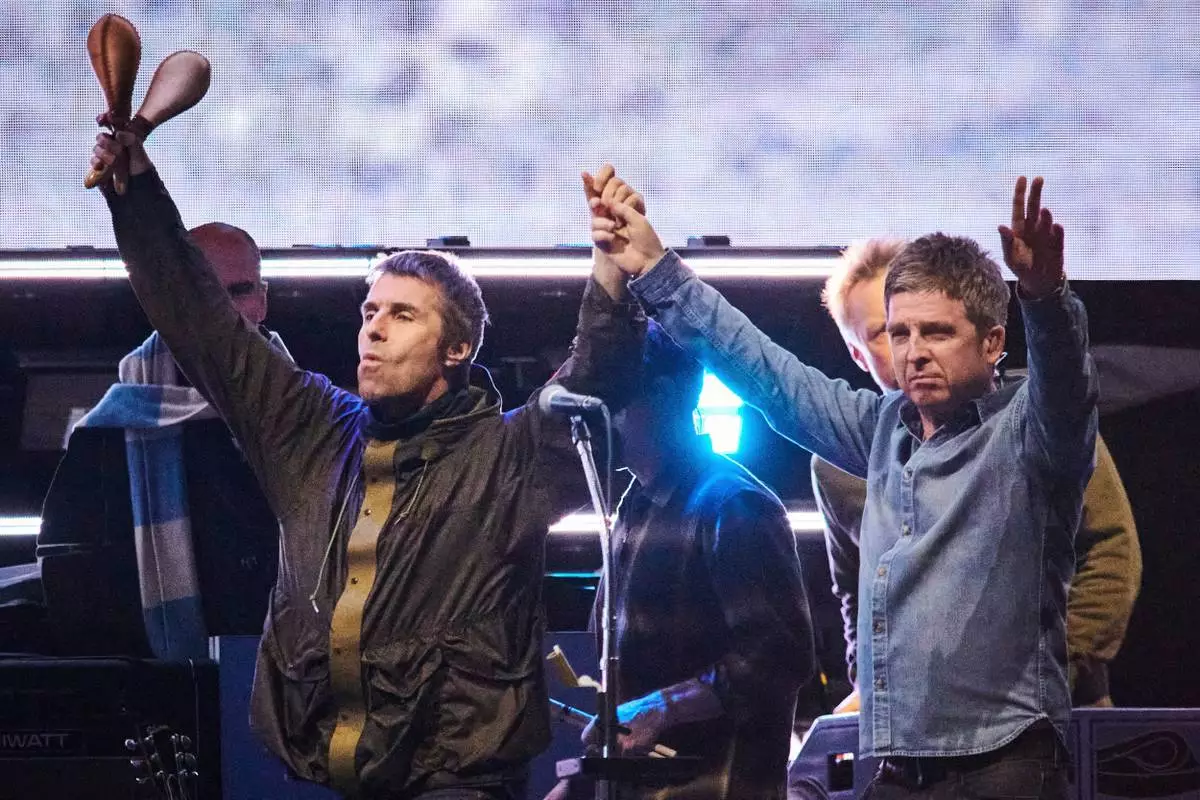
FILE - Liam Gallagher, left, and Noel Gallagher of Oasis appear during their reunion tour in Toronto on Aug. 24, 2025. (Sammy Kogan/The Canadian Press via AP, File)

FILE - British singer Sade Adu performs during her "Soldiers of Love" concert in Sao Paulo, Brazil, on Oct. 20, 2011. (AP Photo/Andre Penner, File)
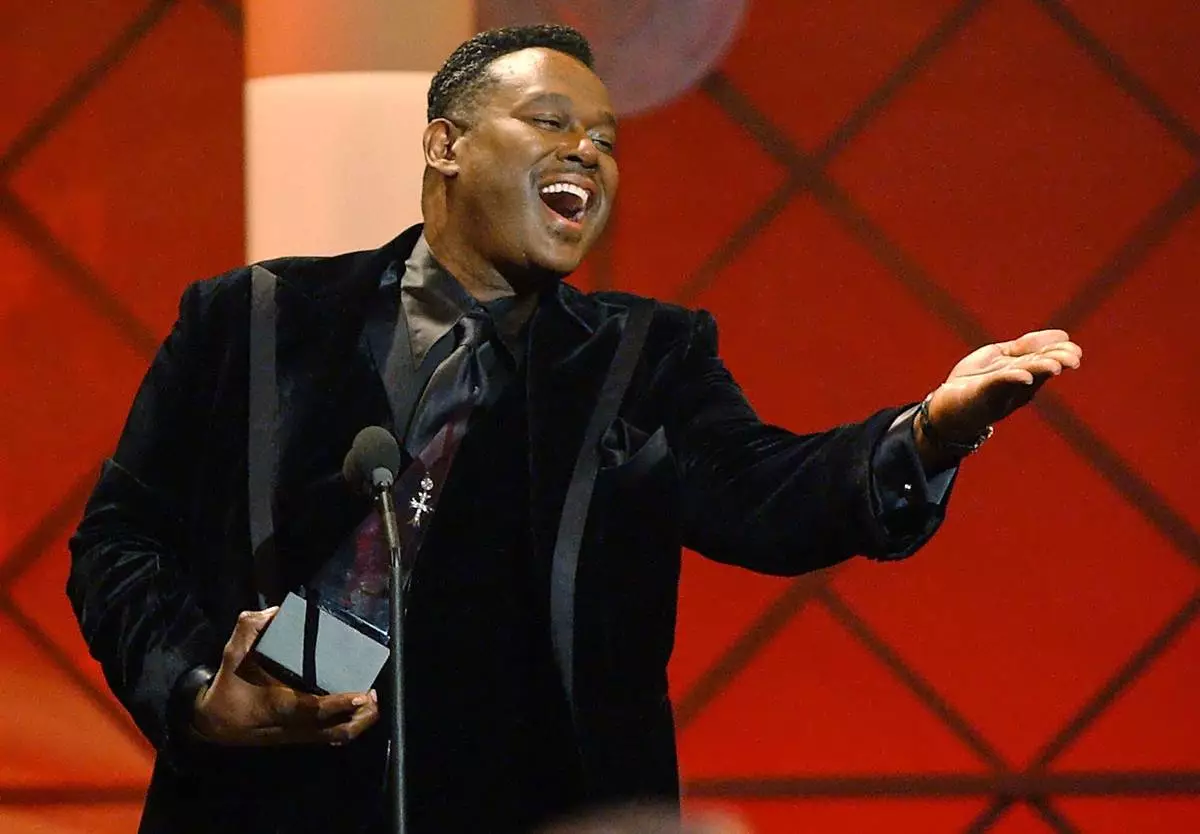
FILE - Luther Vandross accepts the award for favorite soul or R&B male artist at the 29th American Music Awards in Los Angeles on Jan. 9, 2002. (AP Photo/Kevork Djansezian, File)
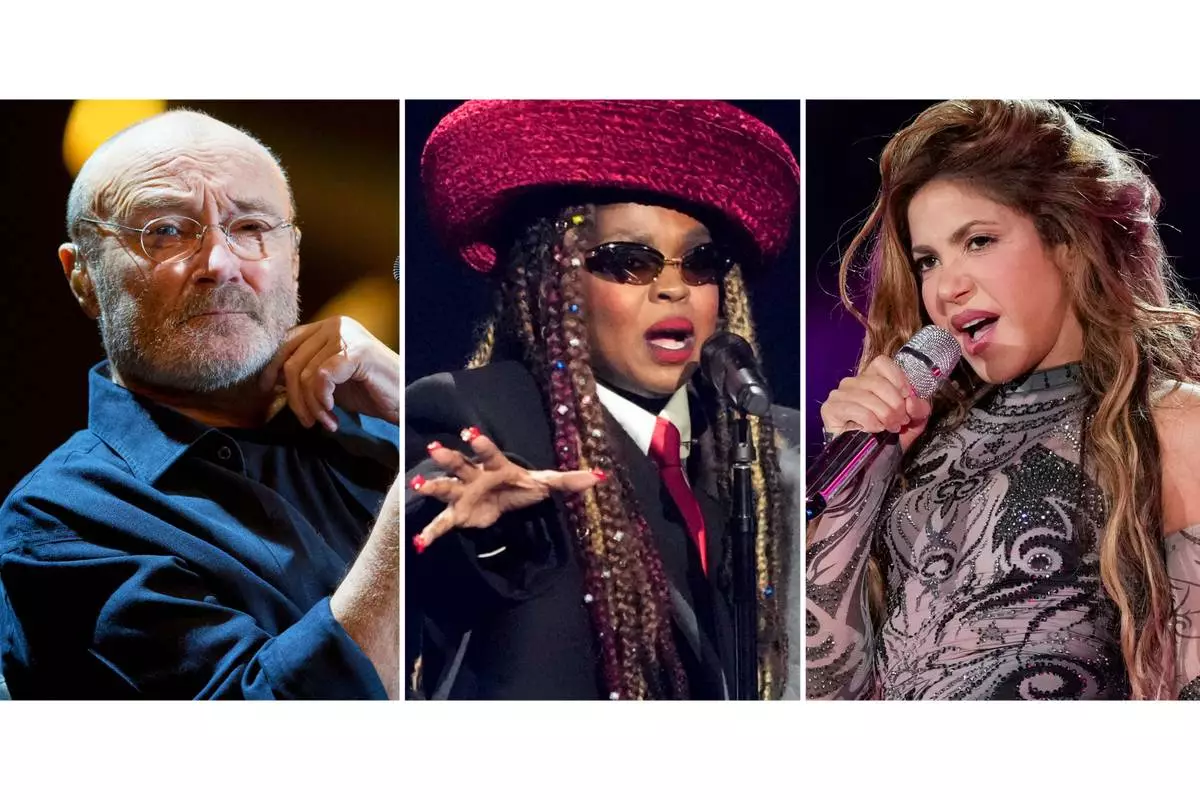
Phil Collins performs at Palacio de los Deportes in Mexico City on March 9, 2018, left, Lauryn Hill performs during the draw for the 2026 soccer World Cup in Washington on Dec. 5, 2025, center, and Shakira performs during the Global Citizen Festival in New York on Sept. 27, 2025. (AP Photo)
BUDAPEST, Hungary (AP) — Facing tough odds in an upcoming election, Hungary's pro-Russian prime minister is trying to convince voters that the greatest threat to the country is not economic stagnation — the focus of his top opponent — but neighboring Ukraine.
Viktor Orbán is running an aggressive media campaign replete with disinformation whose central message is that Hungarians should refuse to align with the rest of Europe in supporting Ukraine against Russia's invasion. That path, he argues, risks bankrupting the country and getting its youth killed on the front lines.
Billboards erected across the country show AI-generated images of Ukrainian President Volodymyr Zelenskyy flanked by European officials, holding out his hand as if demanding money. It's a not-so-subtle reference to the European Union's efforts to help Ukraine financially and bolster its defenses as the war enters its fifth year.
“Our message to Brussels: We won’t pay!” the publicly funded billboards read.
If there had been any doubt, it became clear on Monday why the outcome of Hungary’s upcoming election will reverberate beyond its borders. Hungary blocked a new package of EU sanctions on Russia in response to interruptions in Russian oil supplies that pass through Ukraine, and vowed to veto any further pro-Ukraine policies until oil flows resume.
On Wednesday, Orbán went further and deployed military and police forces around power plants and other facilities, claiming without providing evidence that Ukraine was plotting to attack the country’s energy system.
Orbán is widely seen as the Kremlin's strongest ally in the EU. While almost all of the bloc's other 26 nations have distanced themselves from Russia since it launched the war on Feb. 24, 2022, Hungary has deepened cooperation.
The prime minister has cast his relationship with Russian President Vladimir Putin as pragmatic, stemming from Hungary's access to reliable supplies of Russian oil and gas. But Orbán's anti-LGBTQ+ policies, crackdowns on the media and nongovernmental organizations, and his labeling of critics as “foreign agents” have led to accusations that he's reading from Putin's authoritarian playbook.
Orbán, who retook office in 2010, faces the strongest challenge to his power in an election set for April 12. The EU's longest-serving leader and his right-wing Fidesz party are trailing in most independent polls to an upstart center-right challenger, Péter Magyar.
A 44-year-old lawyer and former Fidesz insider who broke with the party in 2024, Magyar has focused his campaign on stemming the rising costs of living, improving social services and reining in corruption. He also promises to restore Hungary's Western orientation and bolster democratic institutions which have eroded during Orbán's 16 years in power.
His rise was aided by political scandals that have damaged the credibility of Orbán's party; a presidential pardon given to an accomplice in a child sexual abuse case led to a public outcry, prompting the president and justice minister to resign.
Losing ground to Magyar and his Tisza party, Orbán and Fidesz have sought to change the conversation. They have blanketed the country with taxpayer-funded billboards, as well as advertisements on radio, television and social media. A petition mailed to every Hungarian of voting age claimed the EU's plans to help Ukraine financially would bring economic ruin.
Other ads, paid for by a shadowy pro-government organization with Fidesz ties, depict Magyar as a puppet of Zelenskyy and the EU who would sell out the country to foreign interests and draw Hungary into the war.
Hungary’s public media, along with many private news outlets loyal to Orbán’s government, faithfully mimic the claims. They say Ukraine wants to prolong the bloody conflict that has killed tens of thousands of its citizens — and is conspiring with the EU to do it.
Orbán has recently claimed that the EU — not Russia — poses the greatest threat to Hungary. He says rising defense spending across Europe — driven by Russia’s war and pressure from the U.S. to increase NATO contributions — is evidence that the EU is preparing for conflict with Moscow and plans to forcibly conscript Hungarians to fight.
In an AI-generated video Fidesz released on social media last week, a little girl asks her forlorn mother in Hungarian: “Mommy, when is daddy coming home?”
In the next frame, the fictional father — bound, blindfolded and kneeling on a muddy battlefield — is approached by a soldier, and shot in the head. “We won't allow others to decide on the fates of our families,” a narrator says. “Let's not take a risk. Fidesz is the safe choice.”
Although some EU countries have proposed sending troops to Ukraine to monitor any future ceasefire, they are not intended to engage in combat, and participation would be voluntary, said András Rácz, a Russia expert at the German Council on Foreign Relations.
Rácz notes that, despite the false premise behind many of Orbán’s claims, Fidesz has won two previous elections after raising fears that its political opponent would drag the country into the war.
“They are trying to max this out. They have nothing else,” Rácz said. “Populists often try to define an enemy, often an imaginary one, and then offer protection to the society from that enemy. Ukraine has been ideal from this perspective.”
For years, Orbán has sought to stymie EU efforts to provide financial and military support to Ukraine, and he has vigorously opposed sanctions targeting Russian oil and officials.
Tensions with Ukraine grew recently after Russian oil shipments to Hungary were interrupted; Ukraine blamed the disruption on a Russian drone strike in late January that damaged a pipeline. Orbán called it blackmail.
Last week, his government retaliated by halting diesel shipments to Ukraine and threatening to veto a 90-billion-euro ($106-billion) EU loan destined for Kyiv. On Monday, it blocked the 20th round of EU sanctions against Russia.
The anti-Ukraine campaign has resonated with many Hungarians loyal to Fidesz. Despite Tisza's advantage in the polls, its victory is far from assured.
Still, many Hungarians are dubious of Orban's anti-Ukraine messaging. On Sunday, hundreds of Hungarians and Ukrainians, many of them refugees, gathered in central Budapest to commemorate the four-year anniversary of Russia's invasion. Marching toward a demonstration outside the Russian embassy, participants held Ukrainian and Hungarian flags, and chanted, “Stop Putin, stop the war!”
Budapest’s liberal mayor, Gergely Karácsony, told The Associated Press that Orbán’s messaging and policies are “a betrayal not only of Ukraine, but of Hungary’s national interest.”
“I hope that this will go into history as a failed policy, but that history will also remember that there were some who stood up for what is right,” he said.
One of the marchers was Ester Zhivatovska, a 19-year-old veterinary medicine student who came from the Ukrainian port city of Odesa to study in Budapest. She said the billboards depicting her country's president are laughable.
“The main message of these billboards is that Ukraine will steal Hungarian money," she said. "But come on, you’re using these AI images from the Hungarian budget to do what? To win elections.”
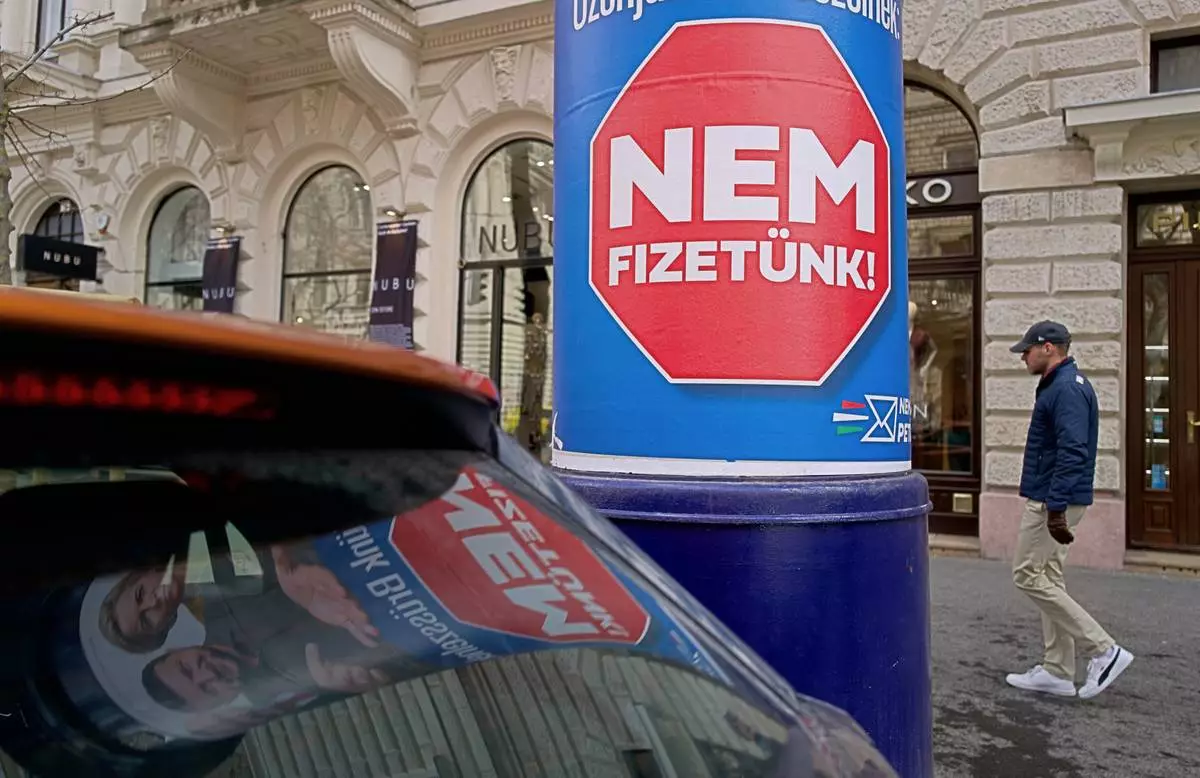
A man passes a billboard that shows an AI-generated image of Ukrainian President Volodymyr Zelenskyy flanked by European officials and reads: "We Don't Pay," in Budapest, Hungary, Monday Feb. 23, 2026. (AP Photo/Bela Szandelszky)
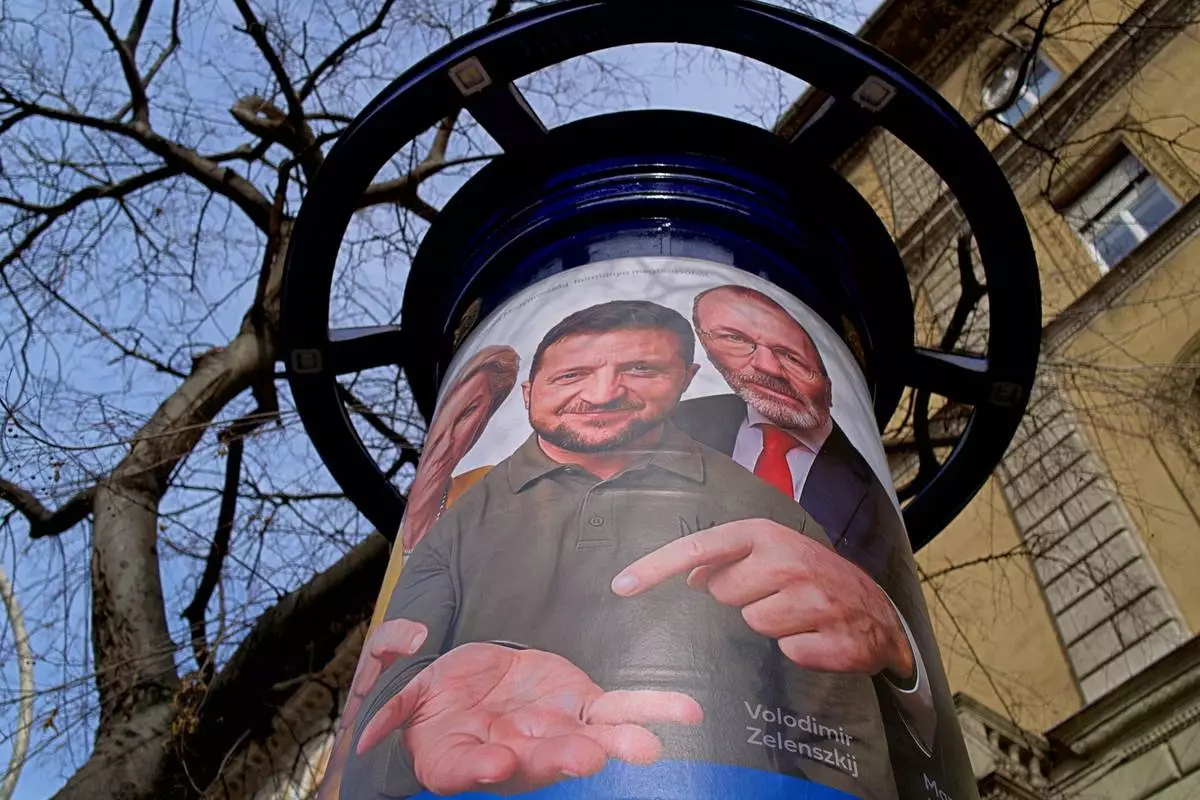
A billboard shows an AI-generated image of Ukrainian President Volodymyr Zelenskyy, center, flanked by European officials, in Budapest, Hungary, Monday, Feb. 23, 2026. (AP Photo/Bela Szandelszky)
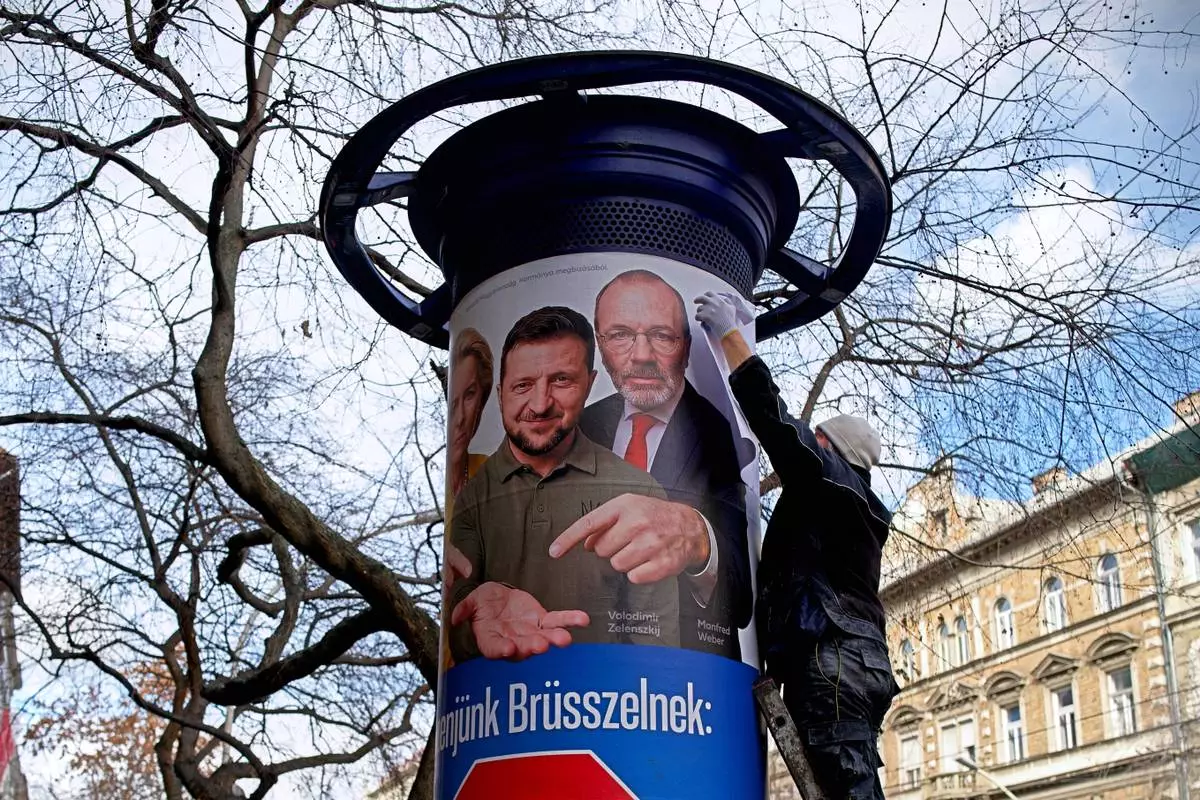
A man fixes a partially damaged billboard showing an AI-generated image of Ukrainian President Volodymyr Zelenskyy, center, flanked by European officials, in Budapest, Hungary, Monday, Feb. 23, 2026. (AP Photo/Bela Szandelszky)
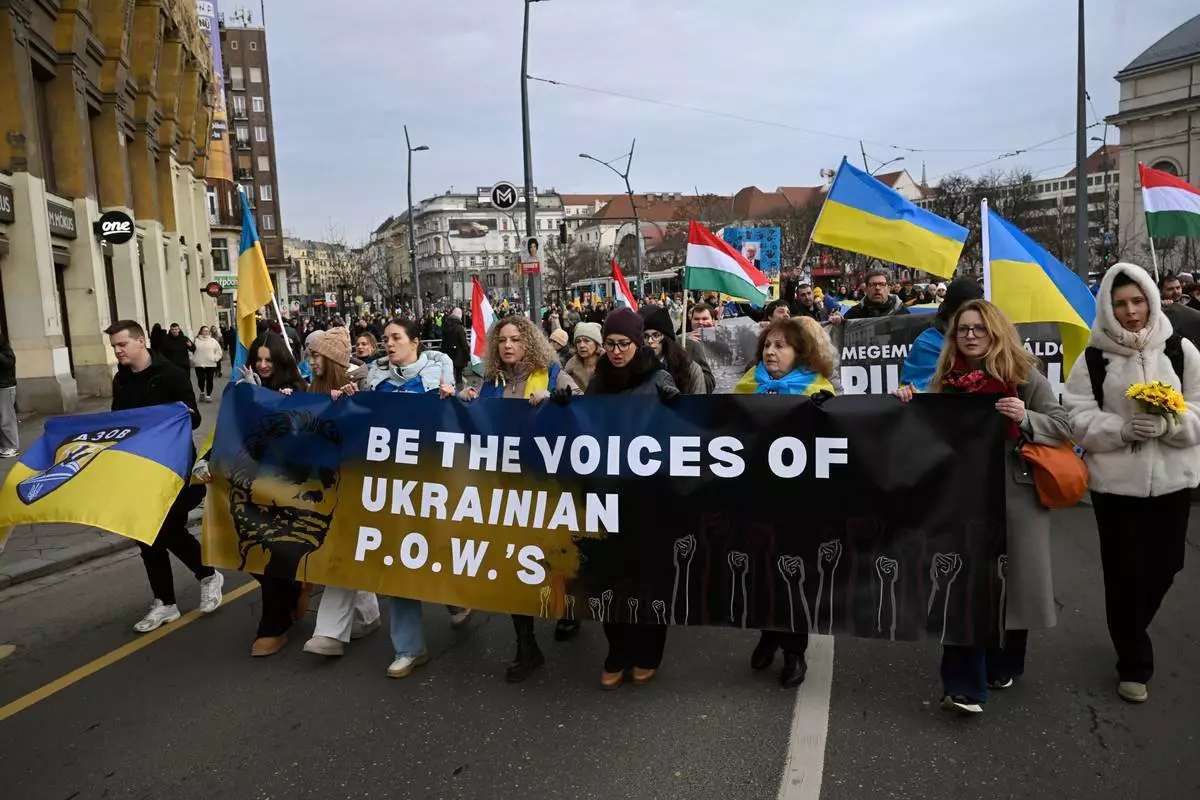
People walk with Ukrainian flags to the Russian Embassy during a solidarity march in support of Ukraine in Budapest, Sunday, Feb. 22, 2026, two days ahead of the fourth anniversary of Russia's full-scale invasion of Ukraine. (Noemi Bruzak/MTI via AP)
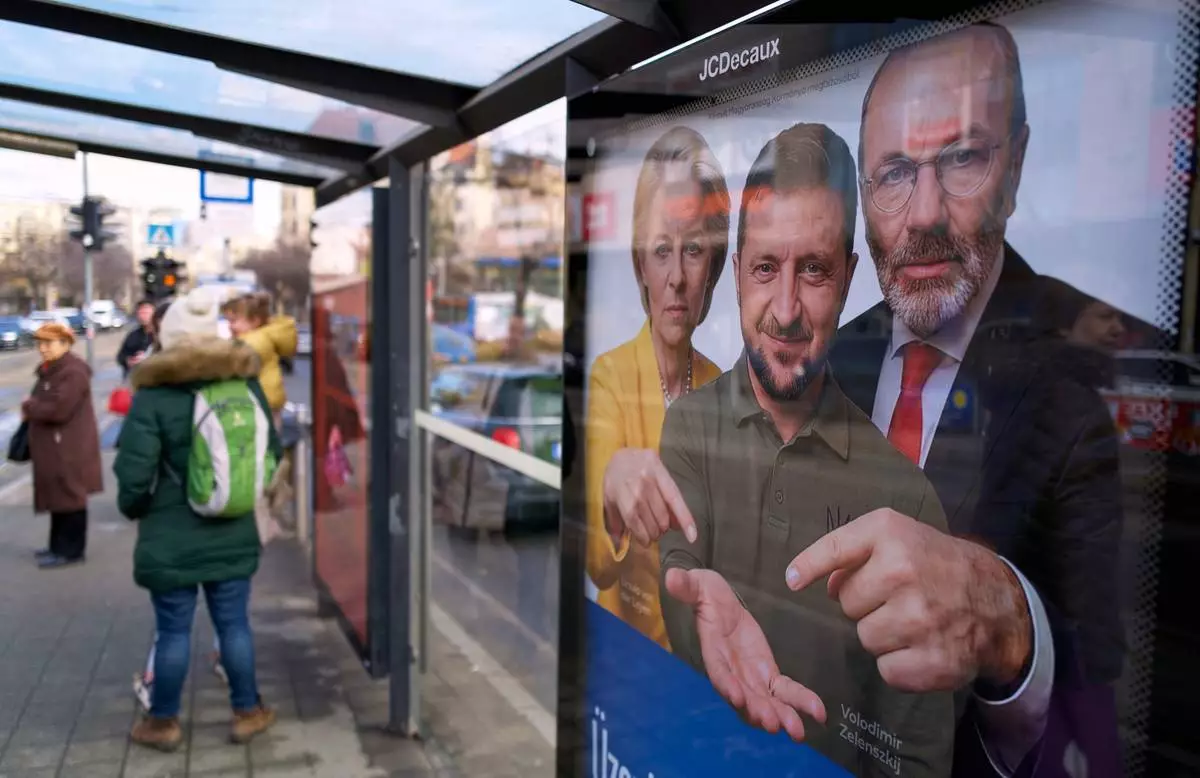
A billboard showing an AI-generated image of Ukrainian President Volodymyr Zelenskyy, center, flanked by European officials is displayed at a bus stop in Budapest, Hungary, Monday, Feb. 23, 2026. (AP Photo/Bela Szandelszky)