|
SEOUL, South Korea, Feb. 25, 2026 /PRNewswire/ -- SurplusGLOBAL has rolled out a set of upgrades to SemiMarket (www.SemiMarket.com), its online marketplace for legacy semiconductor equipment and parts, aimed at making inventory discovery more actionable and sourcing workflows more practical for engineers and procurement teams operating in the secondary supply chain.
A central update is the expansion of how SemiMarket publishes and organizes Harvest-completed parts. The platform has opened Special Event sections that group harvested inventories by their "parent" tool, enabling buyers to navigate end-of-life components in the same equipment-centric structure fabs use for maintenance planning and spares management. By surfacing harvested parts in a tool-based format within the marketplace, SurplusGLOBAL says SemiMarket is becoming a more direct channel for sustaining older tool fleets as OEM availability thins or ends.
SemiMarket is also adding functionality for high-volume sourcing and internal review. A new bulk download feature lets users request an item list by selecting a top-level category and clicking "Download list" from the front-end interface. Once approved by the operations team, the file becomes available for download. SurplusGLOBAL positions the tool as a practical bridge between marketplace browsing and the internal processes procurement groups use to compare options, circulate listings, and document sourcing decisions at scale.
The changes address a growing pain point across mature-node fabs: when a single discontinued spare can sideline a tool, downtime can extend while teams source across brokers, refurbishers, and regional networks. The legacy spares supply chain remains fragmented, and even organizations with donor-tool pools often face challenges extracting, verifying, and redeploying parts efficiently at scale. SurplusGLOBAL says the trend is increasingly reaching 300mm tools manufactured before 2010, intensifying demand for more structured, searchable legacy parts supply.
To respond, the company says it is expanding its Harvest program—disassembling used equipment and remarketing parts—supported by in-house verification and data standardization. SurplusGLOBAL said it has harvested about 60 tools to date and plans to harvest roughly 200 to 300 tools this year, backed by teams spanning Harvest operations, parts verification, AI, SemiMarket, database engineering, and sales.
The company also said it is applying AI and OCR-driven workflows to accelerate classification, imaging, standardization, and listing creation, while building tool–part relationships, parts BOM coverage, and personalized recommendations.
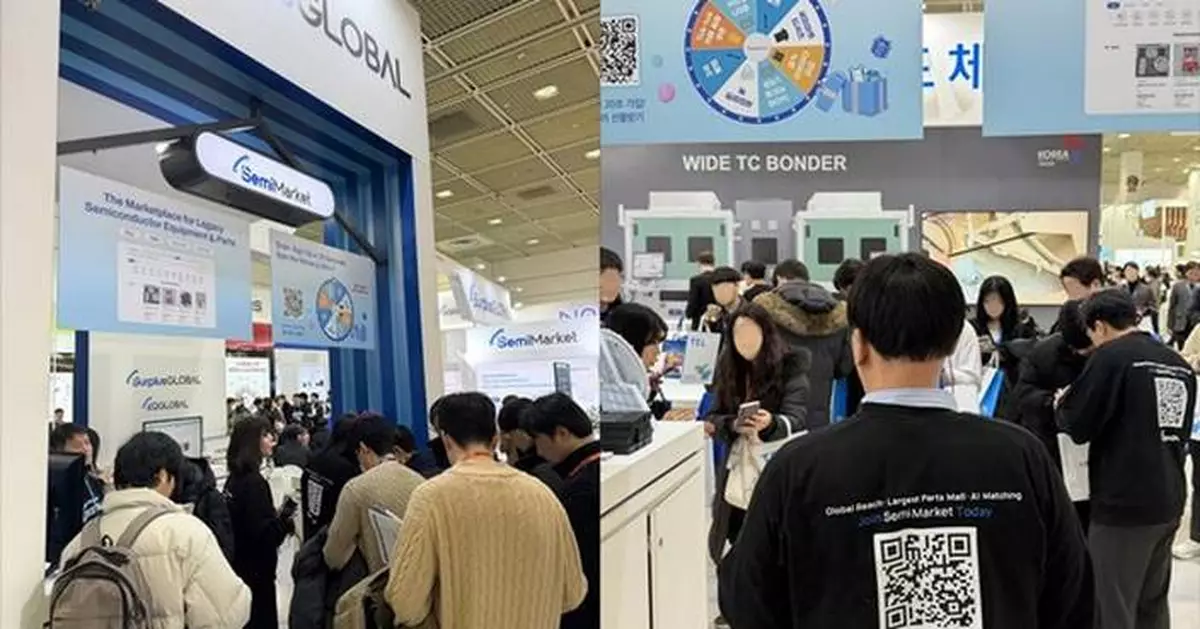
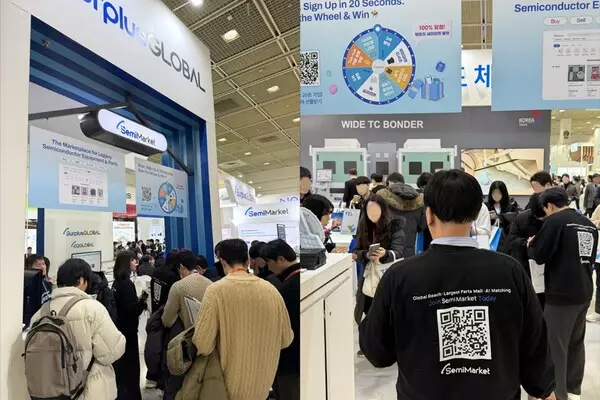
The upgrades follow a recent rise in platform engagement tied to industry events. During SEMICON KOREA 2026, held Feb. 11–13 at COEX in Seoul, SurplusGLOBAL said about 3,000 industry visitors stopped by its booth and more than 800 signed up for SemiMarket on-site. The company said many of the new members included process and maintenance engineers, as well as employees from global equipment makers—roles closely connected to day-to-day tool operation and purchasing decisions.
Bruce Kim, SurplusGLOBAL's CEO, said the updates reflect "growing demand for faster, clearer decision-making and more actionable inventory discovery in the mature-node ecosystem, where uptime pressures and supply variability often push teams beyond OEM channels." He added that the company is expanding Harvest-led supply and improving how SemiMarket organizes that inventory so buyers can move from discovery to decision more quickly.
SurplusGLOBAL also pointed to a near-term offline expansion intended to complement online sourcing. The company said a 39,670m2(12,000-pyeong) SemiMarket Offline Parts Mall is scheduled to be completed in July, enabling customers to view large-scale inventory in person and access services such as parts verification and repair, strengthening global support for legacy tool sustainment.
SEOUL, South Korea, Feb. 25, 2026 /PRNewswire/ -- SurplusGLOBAL has rolled out a set of upgrades to SemiMarket (www.SemiMarket.com), its online marketplace for legacy semiconductor equipment and parts, aimed at making inventory discovery more actionable and sourcing workflows more practical for engineers and procurement teams operating in the secondary supply chain.
A central update is the expansion of how SemiMarket publishes and organizes Harvest-completed parts. The platform has opened Special Event sections that group harvested inventories by their "parent" tool, enabling buyers to navigate end-of-life components in the same equipment-centric structure fabs use for maintenance planning and spares management. By surfacing harvested parts in a tool-based format within the marketplace, SurplusGLOBAL says SemiMarket is becoming a more direct channel for sustaining older tool fleets as OEM availability thins or ends.
SemiMarket is also adding functionality for high-volume sourcing and internal review. A new bulk download feature lets users request an item list by selecting a top-level category and clicking "Download list" from the front-end interface. Once approved by the operations team, the file becomes available for download. SurplusGLOBAL positions the tool as a practical bridge between marketplace browsing and the internal processes procurement groups use to compare options, circulate listings, and document sourcing decisions at scale.
The changes address a growing pain point across mature-node fabs: when a single discontinued spare can sideline a tool, downtime can extend while teams source across brokers, refurbishers, and regional networks. The legacy spares supply chain remains fragmented, and even organizations with donor-tool pools often face challenges extracting, verifying, and redeploying parts efficiently at scale. SurplusGLOBAL says the trend is increasingly reaching 300mm tools manufactured before 2010, intensifying demand for more structured, searchable legacy parts supply.
To respond, the company says it is expanding its Harvest program—disassembling used equipment and remarketing parts—supported by in-house verification and data standardization. SurplusGLOBAL said it has harvested about 60 tools to date and plans to harvest roughly 200 to 300 tools this year, backed by teams spanning Harvest operations, parts verification, AI, SemiMarket, database engineering, and sales.
The company also said it is applying AI and OCR-driven workflows to accelerate classification, imaging, standardization, and listing creation, while building tool–part relationships, parts BOM coverage, and personalized recommendations.
The upgrades follow a recent rise in platform engagement tied to industry events. During SEMICON KOREA 2026, held Feb. 11–13 at COEX in Seoul, SurplusGLOBAL said about 3,000 industry visitors stopped by its booth and more than 800 signed up for SemiMarket on-site. The company said many of the new members included process and maintenance engineers, as well as employees from global equipment makers—roles closely connected to day-to-day tool operation and purchasing decisions.
Bruce Kim, SurplusGLOBAL's CEO, said the updates reflect "growing demand for faster, clearer decision-making and more actionable inventory discovery in the mature-node ecosystem, where uptime pressures and supply variability often push teams beyond OEM channels." He added that the company is expanding Harvest-led supply and improving how SemiMarket organizes that inventory so buyers can move from discovery to decision more quickly.
SurplusGLOBAL also pointed to a near-term offline expansion intended to complement online sourcing. The company said a 39,670m2(12,000-pyeong) SemiMarket Offline Parts Mall is scheduled to be completed in July, enabling customers to view large-scale inventory in person and access services such as parts verification and repair, strengthening global support for legacy tool sustainment.
** The press release content is from PR Newswire. Bastille Post is not involved in its creation. **
SurplusGLOBAL Builds on SEMICON KOREA 2026 Success, Upgrades SemiMarket for Harvest Parts Discovery and Bulk Sourcing
|
A study published in Science reveals that a healthy gut microbiota can enhance the efficacy of immunotherapy used to treat cancer, while antibiotics may impair its effect by reducing intestinal microbiota diversity.
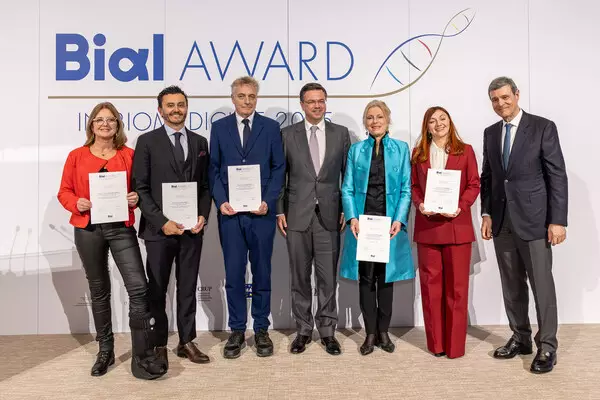
PORTO, Portugal, Feb. 25, 2026 /PRNewswire/ -- An international consortium of 48 researchers from institutions in France, Sweden, and the United States has won the 2025 edition of the Bial Award in Biomedicine, a €350,000 prize promoted by the Bial Foundation to recognise a published work of exceptional quality and scientific relevance in the field of biomedicine.
The winning study, Gut microbiome influences efficacy of PD‑1–based immunotherapy against epithelial tumors, is led by research duo Laurence Zitvogel (Gustave Roussy and Paris-Saclay University) and Guido Kroemer (Gustave Roussy and Paris Cité University), internationally renowned French academics.
The awarded research documents one of the most significant recent advances in the treatment of several types of cancer, as it establishes that the gut microbiome - the collection of bacteria residing in the human intestine - plays a decisive role in the effectiveness of immunotherapy.
Immunotherapy has revolutionised oncology by enabling the immune system to recognise tumour cells once again and attack them, saving many patients who previously had no effective therapeutic alternatives. However, over half of patients develop resistance to these therapies, leading to disease recurrence for reasons that are until now poorly understood. The distinguished study demonstrates that the gut microbiome plays a central role in this resistance and that its modulation can significantly improve treatment response and patient survival.
The authors show that the use of antibiotics can negatively impact the effectiveness of immunotherapy by reducing gut microbiota diversity. Analysis of cancer patients revealed that greater bacterial diversity is associated with better clinical outcomes. The study also identified specific gut bacterial species consistently associated with more favourable treatment responses.
The study was published in Science in 2018 and has already more than 5,800 scientific citations.
The 2025 edition of the Award received 58 nominations from 18 countries, covering areas such as cancer, infectious diseases, and neurodegenerative disorders. Previous editions distinguished research, later receiving prestigious international scientific prizes. Notably, two of the scientists who received the Bial Award in 2021, Katalin Karikó and Drew Weissman, were awarded the 2023 Nobel Prize in Physiology or Medicine for their discoveries that enabled the development of effective mRNA-based vaccines to prevent COVID ‑ 19.
A study published in Science reveals that a healthy gut microbiota can enhance the efficacy of immunotherapy used to treat cancer, while antibiotics may impair its effect by reducing intestinal microbiota diversity.
PORTO, Portugal, Feb. 25, 2026 /PRNewswire/ -- An international consortium of 48 researchers from institutions in France, Sweden, and the United States has won the 2025 edition of the Bial Award in Biomedicine, a €350,000 prize promoted by the Bial Foundation to recognise a published work of exceptional quality and scientific relevance in the field of biomedicine.
The winning study, Gut microbiome influences efficacy of PD‑1–based immunotherapy against epithelial tumors, is led by research duo Laurence Zitvogel (Gustave Roussy and Paris-Saclay University) and Guido Kroemer (Gustave Roussy and Paris Cité University), internationally renowned French academics.
The awarded research documents one of the most significant recent advances in the treatment of several types of cancer, as it establishes that the gut microbiome - the collection of bacteria residing in the human intestine - plays a decisive role in the effectiveness of immunotherapy.
Immunotherapy has revolutionised oncology by enabling the immune system to recognise tumour cells once again and attack them, saving many patients who previously had no effective therapeutic alternatives. However, over half of patients develop resistance to these therapies, leading to disease recurrence for reasons that are until now poorly understood. The distinguished study demonstrates that the gut microbiome plays a central role in this resistance and that its modulation can significantly improve treatment response and patient survival.
The authors show that the use of antibiotics can negatively impact the effectiveness of immunotherapy by reducing gut microbiota diversity. Analysis of cancer patients revealed that greater bacterial diversity is associated with better clinical outcomes. The study also identified specific gut bacterial species consistently associated with more favourable treatment responses.
The study was published in Science in 2018 and has already more than 5,800 scientific citations.
The 2025 edition of the Award received 58 nominations from 18 countries, covering areas such as cancer, infectious diseases, and neurodegenerative disorders. Previous editions distinguished research, later receiving prestigious international scientific prizes. Notably, two of the scientists who received the Bial Award in 2021, Katalin Karikó and Drew Weissman, were awarded the 2023 Nobel Prize in Physiology or Medicine for their discoveries that enabled the development of effective mRNA-based vaccines to prevent COVID ‑ 19.
** The press release content is from PR Newswire. Bastille Post is not involved in its creation. **
Discovery linking gut bacteria to cancer treatment wins the Bial Award in Biomedicine and earns €350,000 prize