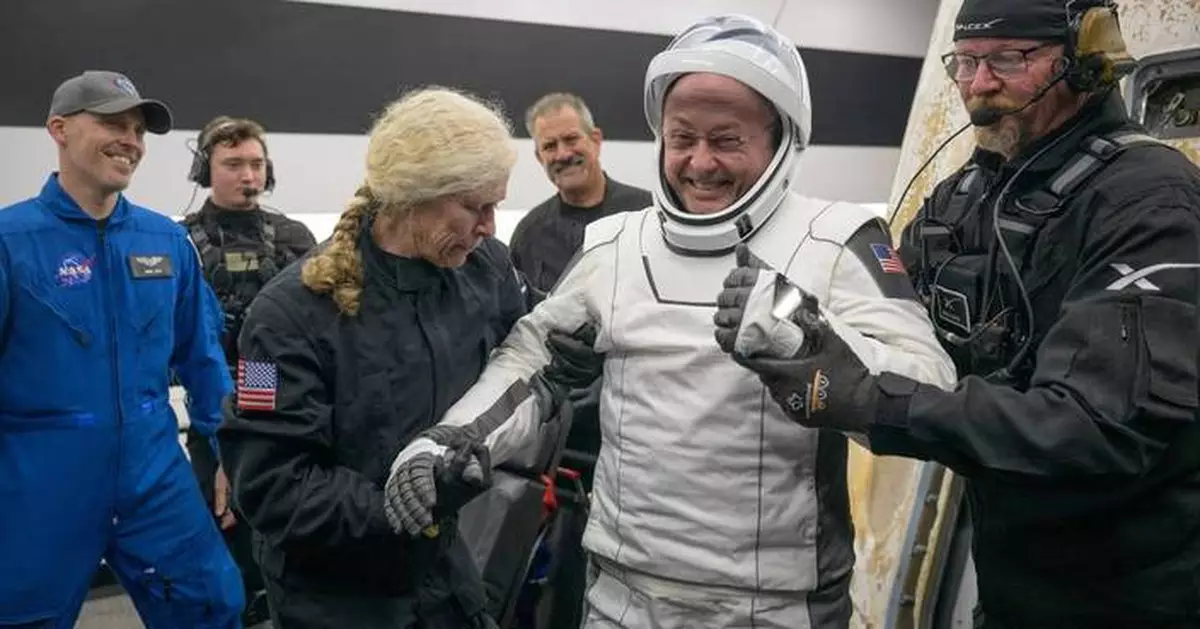
NASA’s Mike Fincke identified himself Wednesday as the astronaut whose medical condition prompted the space agency’s first medical evacuation.
In a written statement, the 58-year-old spaceflight veteran revealed he was the ailing crew member last month aboard the International Space Station. He did not say what was wrong with him but explained that his condition quickly stabilized thanks to his crewmates and flight surgeons on the ground.
Fincke said he’s doing well now.
“Spaceflight is an incredible privilege, and sometimes it reminds us just how human we are,” he said in the statement.
Fincke launched with three others on a SpaceX flight last summer. Their mission came to an early end on Jan. 15, a week after he experienced what he called a “medical event that required immediate attention" by his fellow astronauts. The health concern also forced the cancellation of a planned spacewalk by Fincke and another NASA astronaut.
Following their splashdown in the Pacific, all four astronauts were taken to a San Diego hospital. They flew home to Houston the next day.
With the sick astronaut's identity still a secret, Fincke said at a news conference a week after returning that the space station's ultrasound machine came in handy during the medical crisis.
He elaborated Wednesday, stressing that his situation was not an emergency but that everyone wanted “to take advantage of advanced medical imaging not available on the space station.”
Fincke, a retired Air Force colonel who became an astronaut in 1996, has logged 549 days in space over four missions.
The Associated Press Health and Science Department receives support from the Howard Hughes Medical Institute’s Department of Science Education and the Robert Wood Johnson Foundation. The AP is solely responsible for all content.
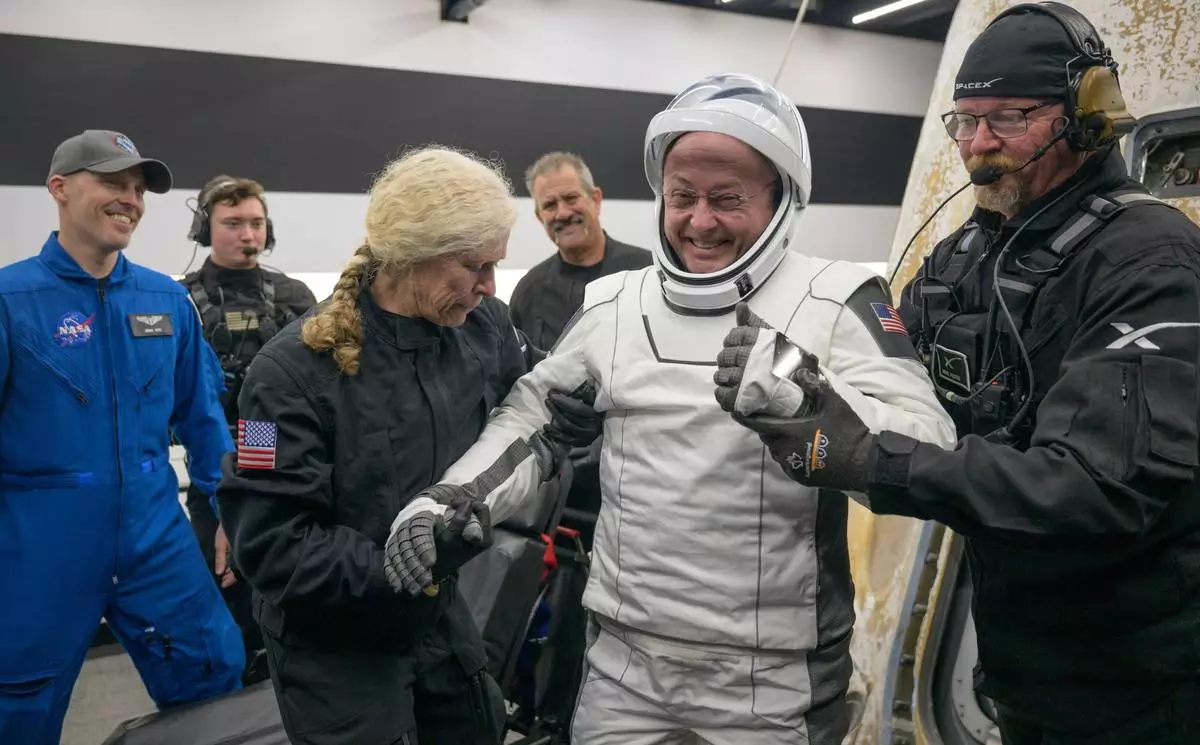
FILE - In his image provided by NASA, NASA astronaut Mike Fincke is helped out of the SpaceX Crew-11 capsule after they re-entered the Earth in a middle-of-the-night splashdown near San Diego, Calif., Thursday, Jan. 15, 2026. (Bill Ingalls/NASA via AP, File)
SEOUL, South Korea (AP) — North Korea said Tuesday its latest missile tests involved a new weapons system of “great significance,” with photos indicating it launched a missile previously described as hypersonic.
North Korean leader Kim Jong Un said the weapon’s development would strengthen the country’s war readiness and give its enemies an “incurable headache,” the North’s official Korean Central News Agency said. He did not describe what the weapon was.
Kim observed Sunday’s tests with his teenage daughter, widely seen as a potential successor.
South Korea’s military detected North Korea firing two short-range missiles three hours apart from the eastern coastal Wonsan area Sunday. South Korea’s Joint Chiefs of Staff said the missiles flew about 450 and 600 kilometers (280 miles and 370 miles) toward the sea, while Japan’s military said they landed in waters outside the country’s exclusive economic zone.
The launches extended a recent run in military displays, including live-fire exercises and the commissioning of a new warship, as Kim continues to flaunt his growing nuclear program despite U.S. calls to revive diplomacy.
Following years of intensified testing, Kim now has an extensive arsenal of nuclear-capable missiles, including long-range weapons potentially capable of reaching the U.S. mainland and shorter-range systems designed to overwhelm missile defenses in South Korea and Japan.
Among the weapons North Korea has tested in recent years are various missile systems fitted with purported hypersonic weapons, which are designed to travel at more than five times the speed of sound. Their speed and maneuverability are intended to help them evade regional missile defenses, but some experts have questioned whether they have consistently reached the speeds claimed by the North during tests.
KCNA’s photos of Sunday’s tests showed what appeared to be two missiles tipped with conical, finned vehicles being fired from launcher trucks. Kim is seen looking at a monitoring screen that identifies the missile as a Hwasong-11Ma, a system North Korea has previously described as hypersonic.
Graphics on the screen showed a missile trajectory overlaid on a map, along with figures for a speed of 2,146 meters (1.3 miles) per second, an altitude of 35.8 kilometers (22 miles) and a range of 908.2 kilometers (564 miles). The reported distance exceeded the flight range announced by South Korea’s military. Jang Do-young, a spokesperson for South Korea’s Joint Chiefs of Staff, said the military was assessing the details from the North Korean report and cautioned that the North’s claims about missile capabilities “cannot be 100% trusted.”
The launches were the latest in a series of weapons demonstrations by North Korea even after U.S. President Donald Trump scaled back a joint military exercise with South Korea last month in an apparent effort to revive diplomacy with Kim, who has called such drills invasion rehearsals. Kim’s sister and senior official, Kim Yo Jong, dismissed Trump’s overture, saying that shortening the drill would not change its “provocative, aggressive nature.”
North Korea has a long history of ratcheting up pressure on South Korea when it doesn’t get what it wants from the United States, and Kim Jong Un has recently taken a particularly hostile stance toward Seoul, suspending virtually all inter-Korean cooperation and dialogue and declaring the South a permanent enemy.
In a written response to questions by The Associated Press, liberal South Korean President Lee Jae Myung, who favors engagement with the North, expressed hope Tuesday that a resumption of Trump-Kim diplomacy would help reopen dialogue between the two Koreas. He called for a practical, step-by-step approach to North Korea’s denuclearization, with incentives offered as Pyongyang makes progress toward eliminating its nuclear weapons.
Emboldened by his advancing nuclear arsenal and deepening ties with Russia and China, experts say Kim likely sees himself as having greater leverage in any renewed diplomacy with Trump. His government has said Washington must first drop its “hostile policy” — a term Pyongyang mainly uses to describe U.S.-led sanctions and joint U.S.-South Korea military drills — and abandon demands for North Korea’s denuclearization as a precondition for talks.
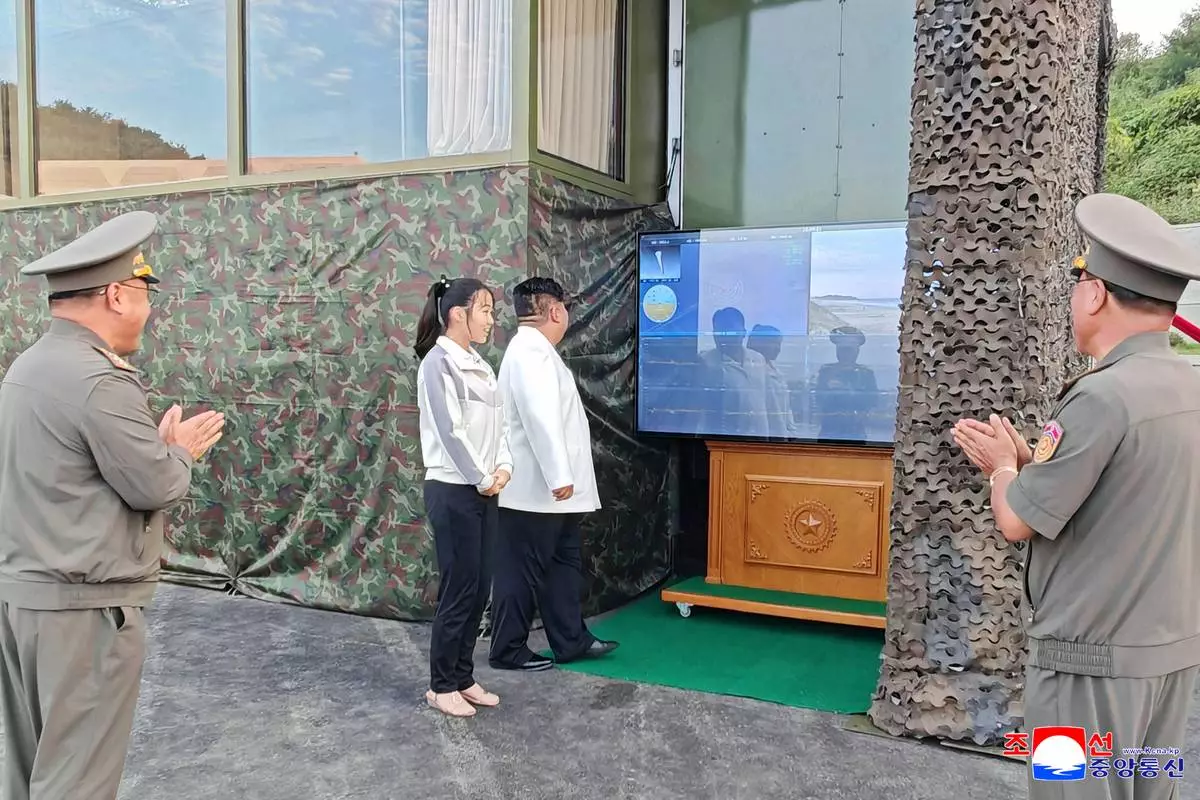
In this photo provided Tuesday, Sept. 22, 2026, by the North Korean government, its leader Kim Jong Un, center right, watches missile tests in an undisclosed location, North Korea Sunday, Sept. 20, 2026. Independent journalists were not given access to cover the event depicted in this image distributed by the North Korean government. The content of this image is as provided and cannot be independently verified. Korean language watermark on image as provided by source reads: "KCNA" which is the abbreviation for Korean Central News Agency. (Korean Central News Agency/Korea News Service via AP)
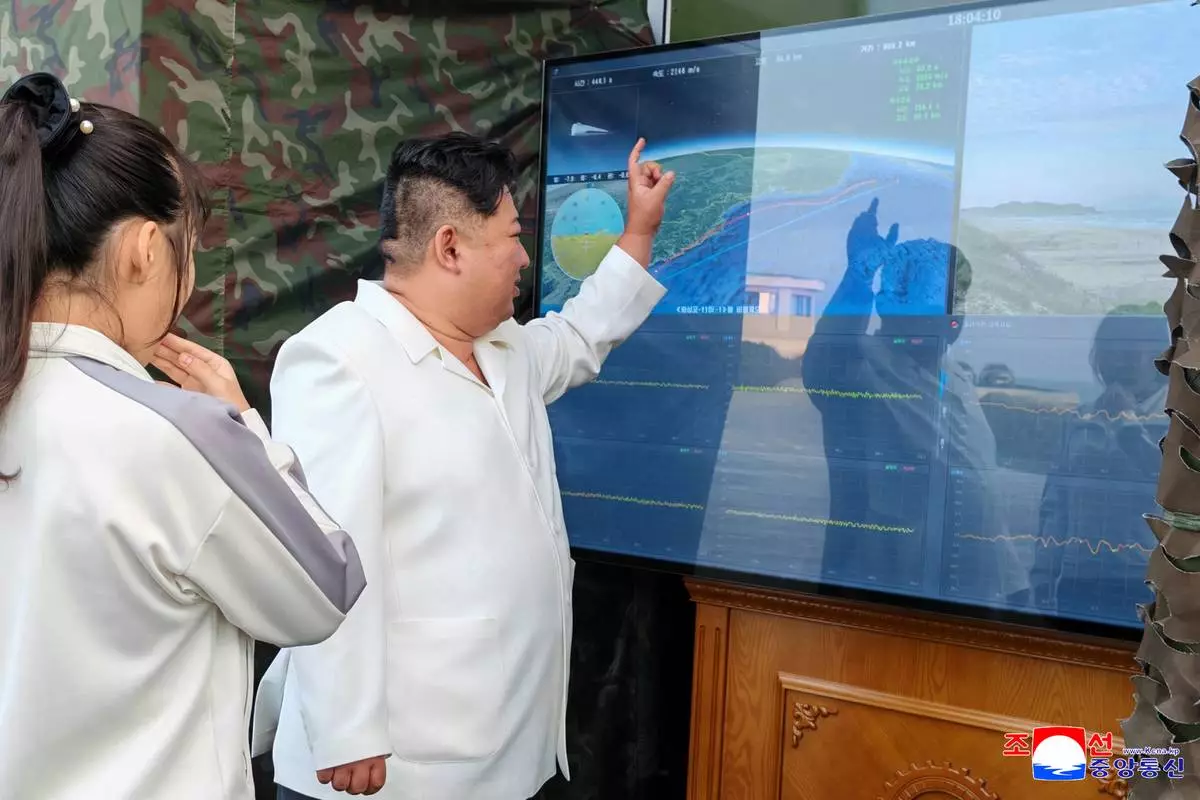
In this photo provided Tuesday, Sept. 22, 2026, by the North Korean government, its leader Kim Jong Un, center right, watches missile tests in an undisclosed location, North Korea Sunday, Sept. 20, 2026. Independent journalists were not given access to cover the event depicted in this image distributed by the North Korean government. The content of this image is as provided and cannot be independently verified. Korean language watermark on image as provided by source reads: "KCNA" which is the abbreviation for Korean Central News Agency. (Korean Central News Agency/Korea News Service via AP)
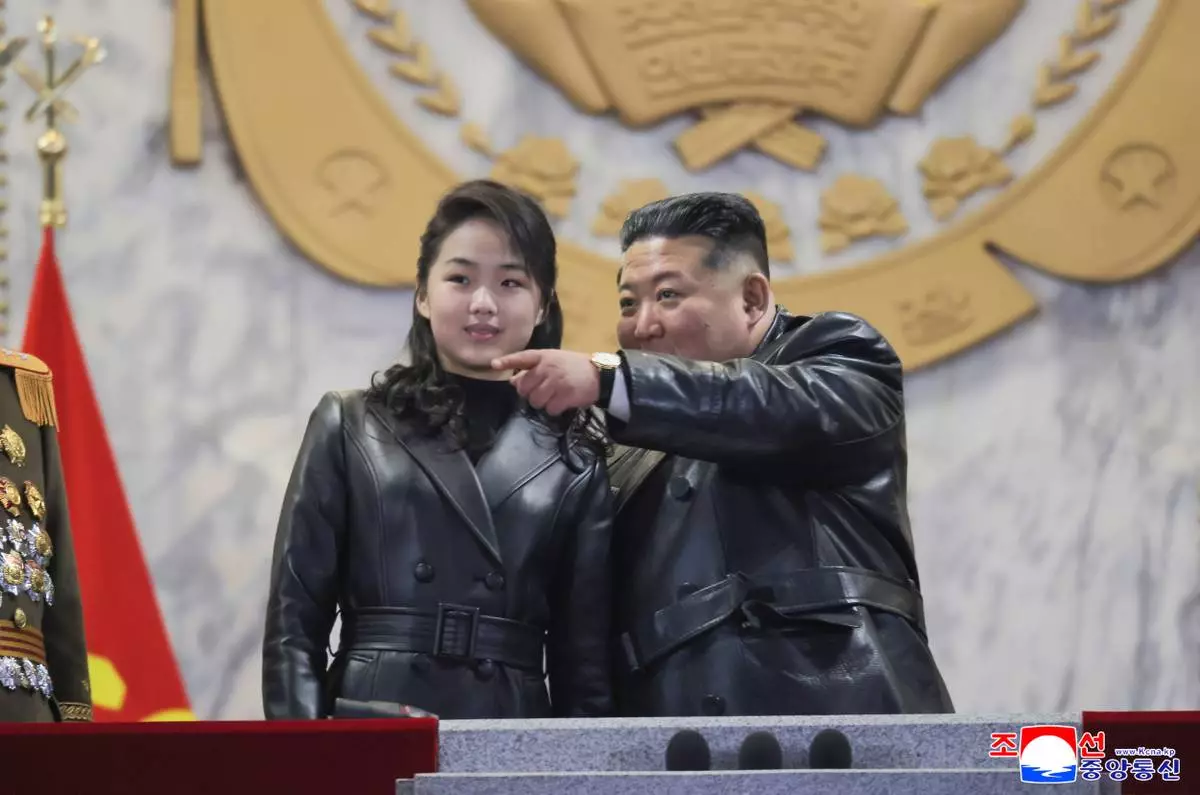
FILE - In this photo provided by the North Korean government, its leader Kim Jong Un attends a parade with his daughter in Pyongyang, North Korea, on Feb. 25, 2026 as the North wrapped up the Workers' Party congress. Independent journalists were not given access to cover the event depicted in this image distributed by the North Korean government. The content of this image is as provided and cannot be independently verified. Korean language watermark on image as provided by source reads: "KCNA" which is the abbreviation for Korean Central News Agency. (Korean Central News Agency/Korea News Service via AP, File)
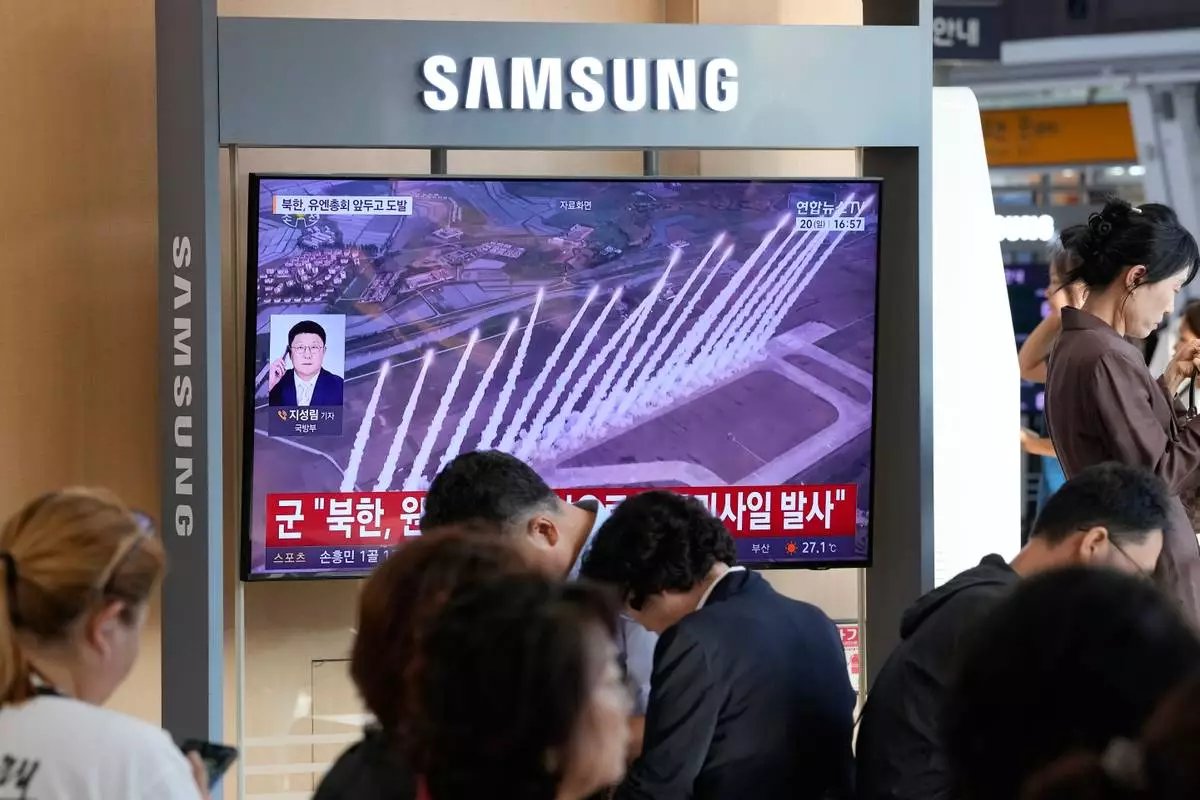
A TV screen shows a file image of a North Korean missile launch during a news program at Seoul Railway Station in Seoul, South Korea, Sunday, Sept. 20, 2026. (AP Photo/Ahn Young-joon)