The International Monetary Fund (IMF) has urged the United States to work constructively with its trading partners to address concerns over unfair trade practices and to agree on a coordinated reduction in trade restrictions that have negative cross-border effects, according to a statement released by the IMF on Wednesday.
According to the statement entitled "United States of America: Staff Concluding Statement of the 2026 Article IV Mission," where trade and investment measures (including tariffs and export controls) are put in place for national security reasons, such policies should be applied narrowly, so as to minimize their negative effects at both home and abroad.
Click to Gallery
IMF urges US to work constructively with partners, reduce trade restrictions
IMF urges US to work constructively with partners, reduce trade restrictions
IMF urges US to work constructively with partners, reduce trade restrictions
IMF urges US to work constructively with partners, reduce trade restrictions
In this regard, higher tariffs create costs by distorting the allocation of productive resources, disrupting global supply chains, and undermining the benefits of global trade, says the statement.
The Article IV consultation is a routine assessment conducted by the IMF on the economic performance and macroeconomic policies of its member countries.
This year's version focuses on an assessment of the shift in U.S. economic policy in 2025, including the impact of these policies on the U.S., on its trading partners, and on the global economy.
Beginning in early 2025, the U.S. government implemented a significant increase in tariffs, disrupting the global trade order and causing barriers in the U.S. export market.
IMF urges US to work constructively with partners, reduce trade restrictions
IMF urges US to work constructively with partners, reduce trade restrictions
IMF urges US to work constructively with partners, reduce trade restrictions
IMF urges US to work constructively with partners, reduce trade restrictions
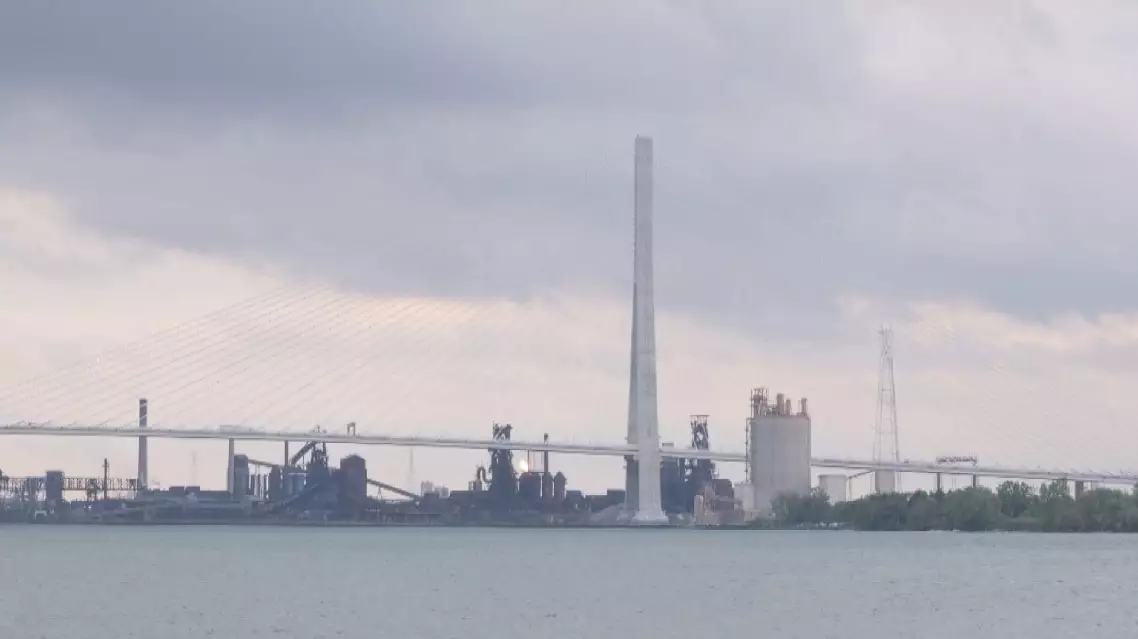
The Gordie Howe International Bridge has transformed from a symbol of U.S.-Canada friendship into a stark reminder of fractured trust due to the escalating tariff disputes between the two countries.
Connecting Detroit, Michigan with Windsor, Ontario, the gateway handles nearly one-third of total trade between the two countries, serving as a critical artery for the auto sector and manufacturing networks on both sides of the border.
The bridge, named after Canadian hockey legend Gordie Howe, provides a vital highway-to-highway connection between Ontario's Highway 401 and Michigan's Interstate 75, and was expected to improve cross-border trade, travel and supply chain efficiency between the two countries. According to the Canada Border Services Agency, it brought the total number of Canadian land ports of entry to 118.
Construction began in 2018, with Canada fully financing the project at 6.4 billion Canadian dollars (about 4.6 billion U.S. dollars). Michigan is nominally entitled to half the ownership, while not contributing to construction costs, an arrangement once touted as a model of cross-border cooperation.
But as the project neared completion, the U.S. side complained the bridge did not use enough American materials and argued that Canada was taking advantage of the United States. The opening of the bridge was repeatedly tied to tariff talks and other trade issues, with the U.S. pressing for a share of future revenues, resulting in the delay of the launch and turning an infrastructure milestone into a bargaining chip.
An agreement was only reached after Canada agreed to divert a portion of the bridge's toll profits into U.S. local regional development funds for the next 15 years.
"From logistic point of view, Canadians had made the commitment all along to make the logistics with a flow of good between the two countries to be as fast, as seamless as possible. That's why Canada built the Gordie Howe Bridge and paid for it, even though Donald Trump has delayed the opening of the bridge," said Emile Nabbout, president of Unifor Local 195, a worker's union in Windsor-Essex.
Local officials on the Canadian side said a joint U.S.-Canada launch ceremony had been planned for July, but Canada ultimately canceled its invitation to the United States amid tariff threats. Celebrations were held only in Canada.
Community leaders in Windsor have expressed frustration as ties sour.
"A number of lies have been said by the U.S. president about our country, which created a huge hurdle in opening the Gordie Howe International Bridge, which created a situation where we weren't able to do a binational ribbon cutting because there was no cooperation between the White House and the Canadian government. And that's really unfortunate," said Stephen Hargreaves, coordinator at the Sandwich Town Business Improvement Association in Windsor.
The Gordie Howe Bridge, meant to bridge divides and enhance communication, has instead bred resentment among local residents. Many Canadian tourists have cancelled plans to cross the border for travel and leisure.
"We've seen people who have come from Toronto, from London, Ontario, from other parts of Canada and come down to Sandwich Town, and they've cycled across the Gordie Howe Bridge behind me and they've cycled across it, not gone through customs, turned around and come back and gone right back through Canadian customs," Hargreaves said.
To a great number of Canadians, the recent maneuvers by the U.S., from reopening signed bilateral infrastructure agreements for renegotiation to imposing steep tariffs, represent an erosion of the trust and contractual spirit that once defined this traditional partnership.
"The scars are not going to heal immediately. We are, as Canadians, especially those who live like we do so close to the American shoreline -- these scars don't go away immediately," said Hargreaves.
Trade tensions between the United States and Canada began to escalate on Sept 8 as U.S. President Donald Trump announced new import bans and tariff adjustments on Canadian products.
Trump signed five proclamations under Section 338 of the Tariff Act of 1930, banning imports of certain Canadian alcoholic beverages, dairy and other products previously subject to 50-percent tariffs. The import bans will take effect on Sept 29.
The measures also revise the scope of tariffs announced on July 20, removing products including rock salt and cement while adding others such as all-terrain vehicles and additional dairy products. The changes took effect on Sept 15.
Canada-funded bridge becomes U.S. bargaining chip in trade dispute