Airbus on Wednesday delivered the first aircraft assembled at its new Final Assembly Line (FAL) for A320 family aircraft in the northern Chinese port city of Tianjin, the second of its kind in both China and Asia.
The delivery represents a major milestone in Airbus' industrial footprint expansion in China and across its global industrial system, the company said.
China Eastern Airlines took delivery of the A320neo aircraft. Currently operating the largest Airbus fleet in the Chinese mainland, the airline in 1985 took delivery of an A310, China's first Airbus aircraft.
Last October, the second Final Assembly Line for A320 family aircraft in Tianjin officially commenced production, with both assembly lines running simultaneously. The Tianjin Port has upgraded its unloading capacity and logistics efficiency to receive major components shipped from Europe via sea freight for assembly.
"For oversized and out-of-gauge components such as Airbus fuselages and wings, we developed customized handling plans utilizing specialized lifting frames, slings, and rotatable lifting gear. We also assigned dedicated personnel to closely monitor the quay crane operations, ensuring the Airbus final assembly line maintains a steady production pace and solidifying the maritime logistics support needed to ramp up capacity for the Airbus Tianjin Final Assembly project," said Yu Cheng, deputy manager of the Operations Department of Tianjin Port Pacific International Container Terminal Co., Ltd.
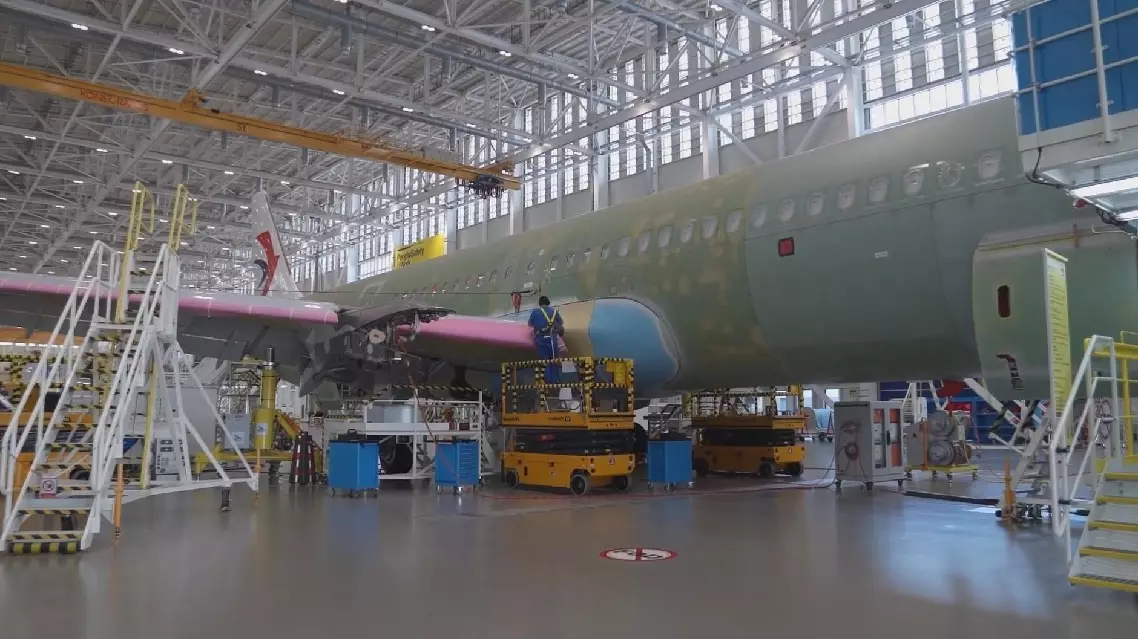
Airbus delivers first aircraft from its new assembly line in China
Former Japanese Prime Minister Yukio Hatoyama on Tuesday urged the country's incumbent Takaichi administration to withdraw its erroneous remarks regarding China's Taiwan, and adhere to the one-China policy.
Hatoyama made the remarks during the ongoing 13th Beijing Xiangshan Forum, which runs from Tuesday to Thursday in the Chinese capital. He said Takaichi should either retract her remarks or, by some other means, communicate in "an absolutely unambiguous manner" that Japan continues to firmly respect the one-China policy. "The Taiwan issue is an extremely sensitive issue in China-Japan relations. I believe it is important for Japan to continue respecting the agreements embodied in the 1972 Japan China Joint Communique. That is one-China policy. I can understand why China was concerned by Prime Minister Takaichi's remarks last year. In diplomacy, even a change in wording can sometimes be interpreted as a change in policy. Prime Minister Takaichi should either retract these remarks, or by some other means, communicate in an absolutely unambiguous manner that Japan continues to respect the one-China policy," said Hatoyama.
At a Diet meeting in November last year, Takaichi said the Chinese mainland's "use of force on Taiwan" could constitute a "survival-threatening situation" for Japan. She refused to retract her remark, which implies the possibility of armed intervention in the Taiwan Strait.
Takaichi's provocative statements have sparked widespread outrage and condemnation across China, while China has repeatedly urged Japan to retract those remarks.
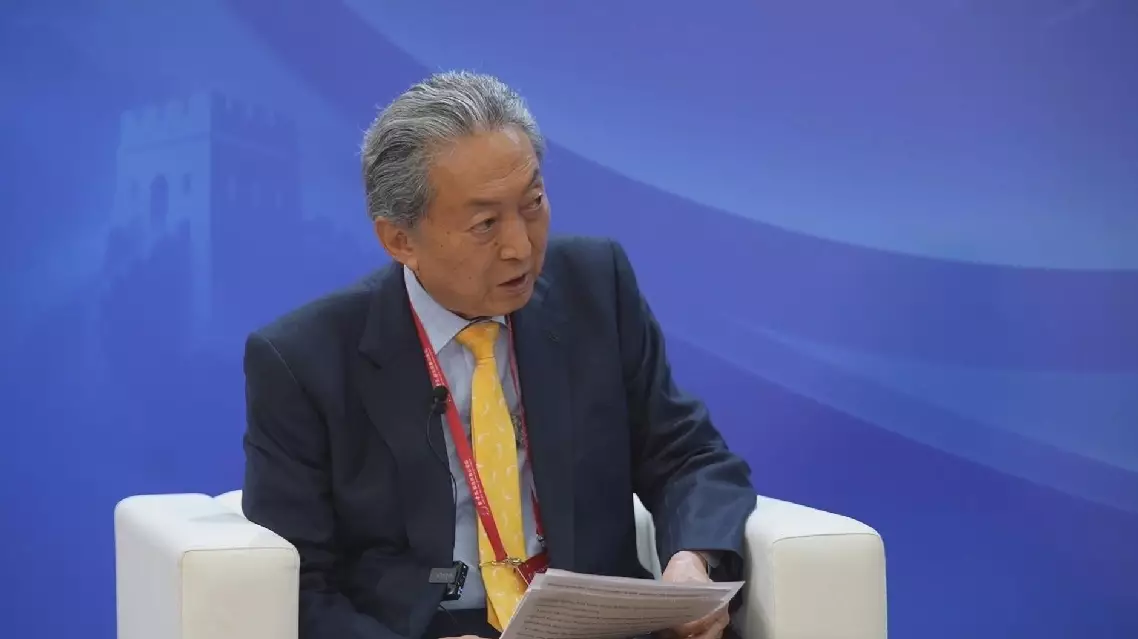
Former Japanese PM Hatoyama urges Takaichi to retract Taiwan-related remarks