ARLINGTON, Va.--(BUSINESS WIRE)--Feb 26, 2026--
AeroVironment, Inc. (“AV”) (NASDAQ: AVAV), a global leader in autonomous systems and precision strike solutions, today announced receipt of a $186 million delivery order from the U.S. Army for Switchblade ® 600 Block 2 and Switchblade ® 300 Block 20 explosively formed penetrator (EFP) loitering munition systems.
This press release features multimedia. View the full release here: https://www.businesswire.com/news/home/20260226483479/en/
The order was issued under the Army’s existing five-year, $990 million Indefinite Delivery, Indefinite Quantity (IDIQ) contract for Lethal Unmanned Systems (LUS), which was awarded in August 2024. This delivery order marks the U.S. Army’s first procurement of AV’s next-generation Switchblade product line, underlining a significant step forward in fielding advanced, precision loitering munitions across infantry and maneuver formations. It is the Army’s first Switchblade order containing EFP payload, delivering enhanced lethality against armored threats.
“This delivery order reflects the Army’s confidence in the next evolution of the Switchblade family and its relevance to modern, contested battlefields,” said Brian Young, Senior Vice President of Loitering Munitions at AV. “Switchblade 600 Block 2 and Switchblade 300 Block 20 build on years of combat experience while delivering meaningful upgrades in autonomy, resilience, and lethality tailored to today’s operational demands.”
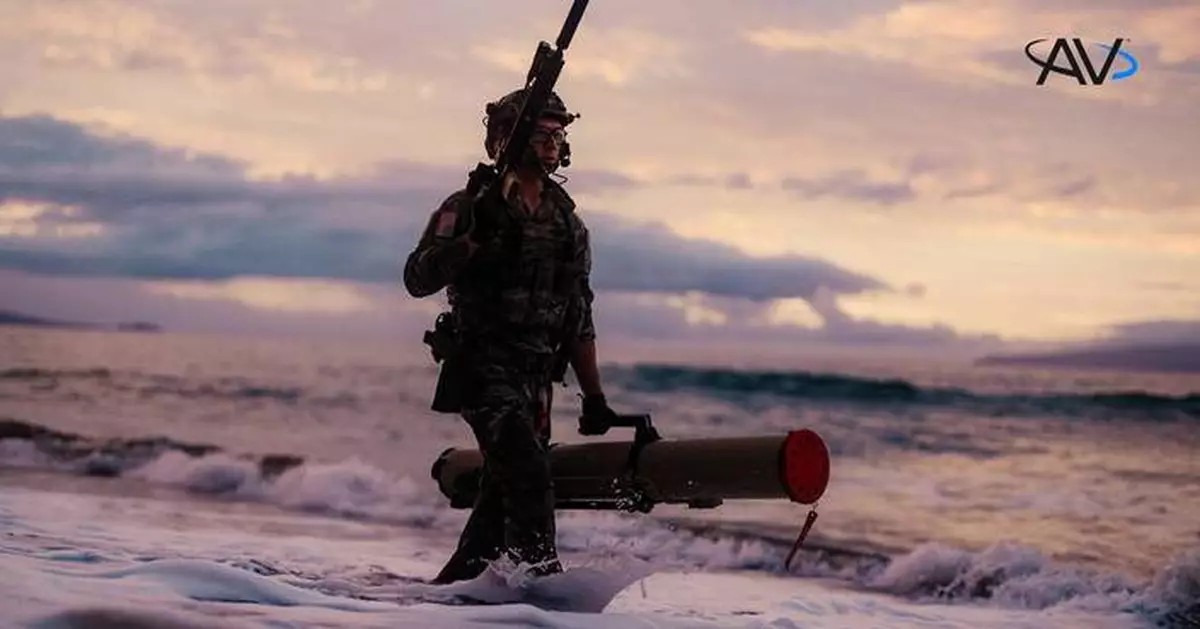
Switchblade 600 Block 2 is AV’s most advanced long-range loitering munition to date, designed for multi-domain operations and ruggedized for maritime and highly contested environments. Developed in collaboration with United States Special Operations Command (SOCOM), the system features upgraded avionics and advanced Automatic Target Recognition (ATR), enabling faster detection, identification, and engagement of threats. Integrated resilient communications, including Silvus MANET radios, support distributed operations and extended handoff ranges, while improved navigation and mission resilience allow effective employment in GPS-challenged environments. These upgrades provide commanders with increased reach, flexibility, and confidence against armored and high-value targets.
Switchblade 300 Block 20 introduces a new modular payload capability to the combat-proven, backpackable loitering munition. For the first time, the Army has procured the system with an Explosively Formed Penetrator (EFP) payload, delivering enhanced lethality against armored threats while retaining the speed, portability, and ease of use that have made Switchblade 300 a trusted solution at the small-unit level. The Block 20 configuration also includes sensor improvements, enhanced user interfaces, and extended range options, allowing rapid, precision effects beyond line of sight.
Together, the Switchblade 600 Block 2 and Switchblade 300 Block 20 provide the Army with a scalable family of precision loitering munitions—from lightweight, single-operator systems to long-endurance, multi-domain capabilities—designed to operate seamlessly across echelons and mission sets.
“This delivery order further advances the Army’s Lethal Unmanned Systems Directed Requirement and reinforces AV’s role as the leading provider of combat-proven loitering munition systems,” said Young. “As we continue to invest in expanding Switchblade manufacturing capacity and accelerating delivery timelines, we are continuing to meet the growing demand for these products from U.S. and allied forces.”
About AV
AeroVironment, Inc. (“AV”) (NASDAQ: AVAV) is a defense technology leader delivering integrated capabilities across air, land, sea, space, and cyber. The Company develops and deploys autonomous systems, loitering munitions, counter-UAS technologies, space-based platforms, directed energy systems, and cyber and electronic warfare capabilities—built to meet the mission needs of today’s warfighter and tomorrow’s conflicts. At the core of these technologies lies AV_Halo™, a modular, mission-ready suite of AI-powered software tools that empowers warfighters and enables full-battlefield dominance: detect, decide, deliver. With a national manufacturing footprint and a deep innovation pipeline, AV delivers proven systems and future-defining capabilities at speed, scale, and operational relevance. For more information, visit www.avinc.com.
Safe Harbor Statement
Certain statements in this press release may constitute “forward-looking statements” as defined in the Private Securities Litigation Reform Act of 1995. These statements are based on current expectations, forecasts, and assumptions that involve risks and uncertainties, which could cause actual results to differ materially. Factors that may cause such differences include, but are not limited to, our ability to perform under existing contracts and obtain new ones; regulatory changes; competitor activities; market growth; product development challenges; and general economic conditions. For a more detailed discussion of these risks, please refer to AeroVironment’s filings with the Securities and Exchange Commission. We undertake no obligation to update forward-looking statements as a result of new information or future events.
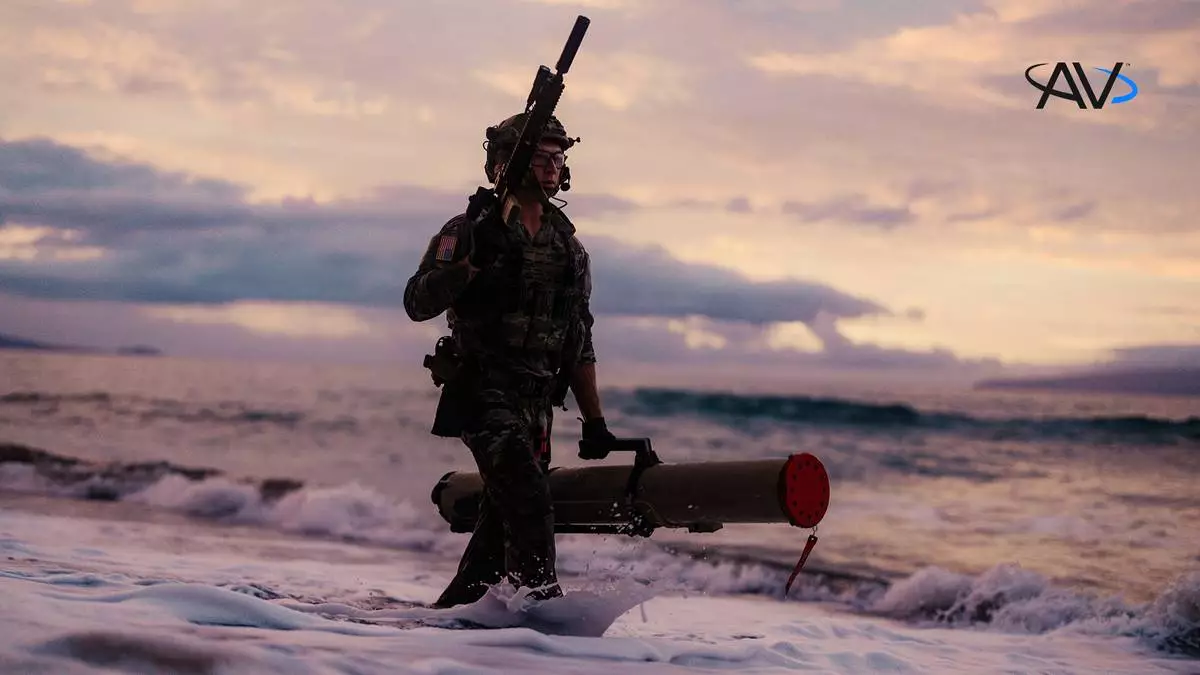
Switchblade 600 Block 2 advances long-range loitering strike with extended endurance, enhanced optics, and improved anti-armor performance, delivering precision effects against high-value threats when and where operators need it most.
Communicating on group chats has quickly become a way of life, but what are the rules?
We used to use email, the phone or talk in person. Now we use platforms like iMessage, WhatsApp or Slack to coordinate a night out with friends, a kid’s birthday party, a work project or even to discuss sensitive military information — as U.S. Defense Secretary Pete Hegseth did by sharing details of airstrikes in a Signal chat.
But while group chats have exploded in popularity because of their informality, that also creates its own challenges: Discussions can veer off topic, repetitive or basic questions can irritate group members, and that viral meme you think is funny could also offend.
The principles of digital etiquette remain the same as other kinds of etiquette, but they are also “context specific and many of the rules are implicit rather than explicit,” said Rupert Wesson, a director at Debrett’s, the British etiquette guide, who outlined key tips for The Associated Press.
Etiquette is always based on the idea of care and consideration for others, Wesson said. So it helps to think about how the recipients might be affected by your message.
That means, for example, not wasting other members' time by asking questions that could be easily answered by doing a Google search, or scrolling up or searching through the previous posts.
The Trent Windsurfing Club near Nottingham, England, which communicates with members using both WhatsApp and email, spells out other considerations in a 15-point list on its website.
“Don’t get angry if someone doesn’t respond to your messages in a group. No one is obliged to do so. Better send him/her a direct message,” the club says.
Also, “Before sending a video, picture, meme or any content, analyze if such material will be in the interest of the majority of the members of the group.”
And avoid sending videos or files that are very large, because “nobody likes to saturate the memory of their smartphone or waste their data/internet plan on nonsense,” its guidance says. The club did not respond to a request for comment.
Always consider the chat group's purpose. For those created with a specific and practical function in mind, just stick to the task and don't post any more than you need to, Wesson said.
On the other hand, “some groups are there for frivolity and here, more is more,” he added.
It should be obvious, but don't post personal stuff in a company or business-related chat, and refrain from posting work-related material in a group with friends or family.
It doesn't hurt to lurk first before weighing in, partly because on some chat platforms new members can't see what was posted before they joined.
“It is always best to err on the side of caution until you are very clear on the purpose and culture of the group,” Wesson said.
Do you need to respond to every message? There's often someone who feels the need to type out a reply to every post, even if it's just to say “thanks.” But doing so in a big group might be somewhat akin to an email reply-all storm.
Wesson advises considering how many people are in the chat.
“If there are three of you in the group, a response, if only an emoji, is almost expected,” Wesson said. “In group of 50 or more it is practically a criminal offense.”
This is an especially important point when it comes to work communications, with many white collar workers now using chat platforms like Slack and Microsoft Teams rather than email to communicate.
These platforms feel less formal than email but don't forget to follow the same guidelines as you do with other company communications.
“Assume anything messaged can be forwarded and be especially cautious of work chats (however informal they appear),” Wesson said. “As countless people have discovered at employment tribunals, any diversion into anything indecorous can be career limiting.”
Chat messages should be short and sweet.
One reason is that your words could come across differently depending on the person reading the message, so stick to using short sentences to avoid being misinterpreted.
If it's about work, and you want to discuss something in more length and detail, consider an in-person meeting, a phone call, or email instead.
“No one wants to read a 7-inch-long unformatted message when an organized attachment would have worked better,” the American etiquette experts at The Emily Post Institute, advised in a blog post on business communications.
It’s not a college essay, so the rules around grammar, punctuation or even emoji don't need to be too strict.
“You should not feel too constricted and nor should you judge others for playing fast and loose with the King’s English,” Wesson said. “Just let brevity and clarity be your guide.”
Speaking of emoji, they're fun and can convey your meaning as well as the most thoughtful turn of phrase, Wesson said. But don't abuse them because they can be a “minefield.”
There’s a world of difference between, for example, the crying emoji and the crying with laughter emoji, he said. It’s best to play it safe and avoid emoji when, for example, sending condolences, Wesson said.
If you're getting annoyed by the number of message notifications from a big chat group, or you feel uncomfortable because of some of the comments, just put it on mute. And don't be afraid to leave the group if you don't need to be in it.
Before leaving, consider letting the chat administrator know.
“The group administrator has a responsibility to ensure the chat serves its purpose and that things don’t get too out of hand,” Wesson says.
What should admins do if certain people are causing problems?
“If things are going awry, deleting a member is an option but perhaps a little drastic. A quiet DM or a brief muting should always be considered first,” Wesson says.
If you do leave the chat, should you say farewell?
Again, it depends on the context. If it's for a one-off event with a lot of people you don't know, there's probably no need.
But if, say, you're part of a remote work project, it would be a good idea to notify everyone.
“When leaving make it clear that you are removing yourself immediately so the chat does not fill up with people wishing you farewell,” Wesson said.
Is there a tech topic that you think needs explaining? Write to us at onetechtip@ap.org with your suggestions for future editions of One Tech Tip.

FILE - A person uses their personal phone in Barcelona, Spain, Monday, June 17, 2024. (AP Photo/Emilio Morenatti, File)