NEW HYDE PARK, N.Y.--(BUSINESS WIRE)--Feb 26, 2026--
Pancreatic cancer is notoriously difficult to identify, with more than 80 percent of patients diagnosed at an advanced stage, severely limiting treatment options. However, iNav, Northwell Health’s in-house artificial intelligence (AI) clinical tool, has shown the ability to cut the time from biopsy to diagnosis in half and accelerate treatment timelines for patients, according to a study published in The Oncologist.
This press release features multimedia. View the full release here: https://www.businesswire.com/news/home/20260226122063/en/
iNav, a machine learning-based natural language processing (NLP) model analyzes more than 10,000 magnetic resonance imaging (MRI) and computed tomography (CT) scan reports weekly across Northwell’s 28-hospital, expansive network. The system is designed to spot the markers of pancreatic cancer earlier, enabling doctors and care coordinators to quickly flag high-risk individuals, leading to earlier assessment and care connections.
The study, led by Daniel King, MD, PhD, assistant professor in the Institute of Cancer Research at Northwell’s Feinstein Institutes for Medical Research and gastrointestinal medical oncologist, assessed iNav’s efficacy by comparing two groups of patients – those whose scans were analyzed by iNav and those analyzed through traditional diagnostics. The research, involving a total of 71 patients, revealed a promising trend of accelerating critical timelines for the iNav-assisted group. Specifically, the time from an imaging scan showing a potential issue to a biopsy was cut in half, decreasing from 12 days to just six. Similarly, the wait for an appointment with an oncologist dropped from 27 days to 17, and the time until treatment began shortened from 56 days to 35.
“This preliminary research suggests iNav holds tremendous potential as a clinical tool that can, in real-time, identify pancreatic cancer much earlier than traditional methods, offering patients a greater likelihood of successful outcomes and facilitating more equitable, precision medicine,” said Dr. King. “Importantly, iNav fits within Northwell’s multidisciplinary approach to treating pancreatic cancer. From surgeons to medical oncologists, gastroenterologists and social workers – it is important to provide a holistic and expedited path to coordinated clinical care.”
Results from the study show that iNav’s benefits, especially in improved consistency and equity, were observed across racial and ethnic minority groups, underscoring its potential to mitigate health disparities. Additionally, the iNav-assisted approach led to increased participation in research studies.
“What we see with iNav is more than a diagnostic tool; it’s the integration of AI into clinical infrastructure that shows research-backed promise to improve a patient’s journey,” said Kevin J. Tracey, MD, president and CEO of the Feinstein Institutes and Karches Family Distinguished Chair in Medical Research. “This represents the future of cancer care, dedicated to saving lives and closing health and equity gaps.”
iNav, invented by Dr. King, Sandeep Nadella, MD, and Tiffany Zavadsky, CRNP, iNav has gained significant recognition. The tool won Northwell’s internal 2023 “Shark Tank”-like employee Innovation Challenge, securing $500,000 in seed investment. In 2024, Dr. King was awarded the ASCO Foundation Conquer Cancer Career Development Award that supported this research. Also in 2024, iNav was named to TIME’s Best Inventions list, which recognizes 200 groundbreaking inventions that are changing “how we live, work, play, and think about what’s possible.”
About the Feinstein Institutes
The Feinstein Institutes for Medical Researchis the home of the research institutes of Northwell Health, the largest health care provider and private employer in New York State. Encompassing 50+ research labs, 3,000 clinical research studies and 5,000 researchers and staff, the Feinstein Institutes raises the standard of medical innovation through its six institutes of behavioral science, bioelectronic medicine, cancer, health system science, molecular medicine, and translational research. We are the global scientific leader in bioelectronic medicine – an innovative field of science that has the potential to revolutionize medicine. The Feinstein Institutes publishes two open-access, international peer-reviewed journalsMolecular MedicineandBioelectronic Medicine. Through theElmezzi Graduate School of Molecular Medicine, we offer an accelerated PhD program. For more information about how we produce knowledge to cure disease, visithttp://feinstein.northwell.eduand follow us onLinkedIn.
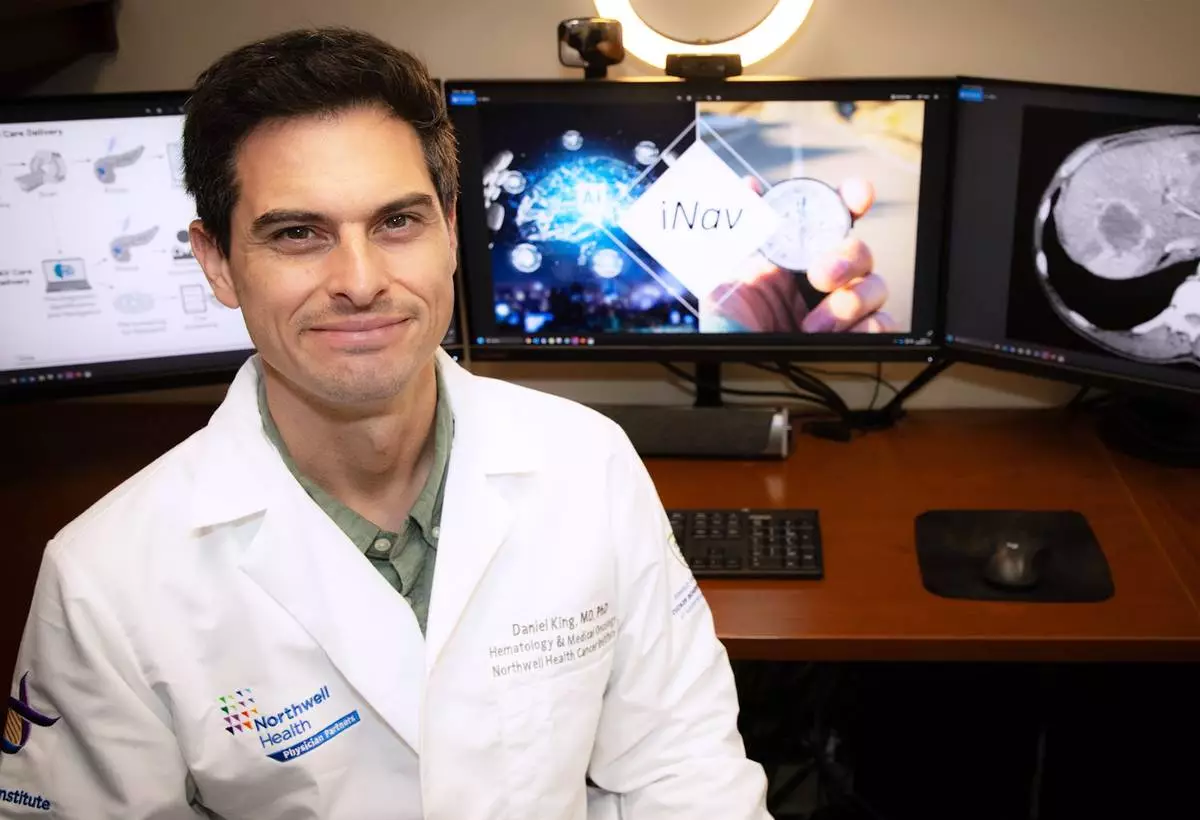
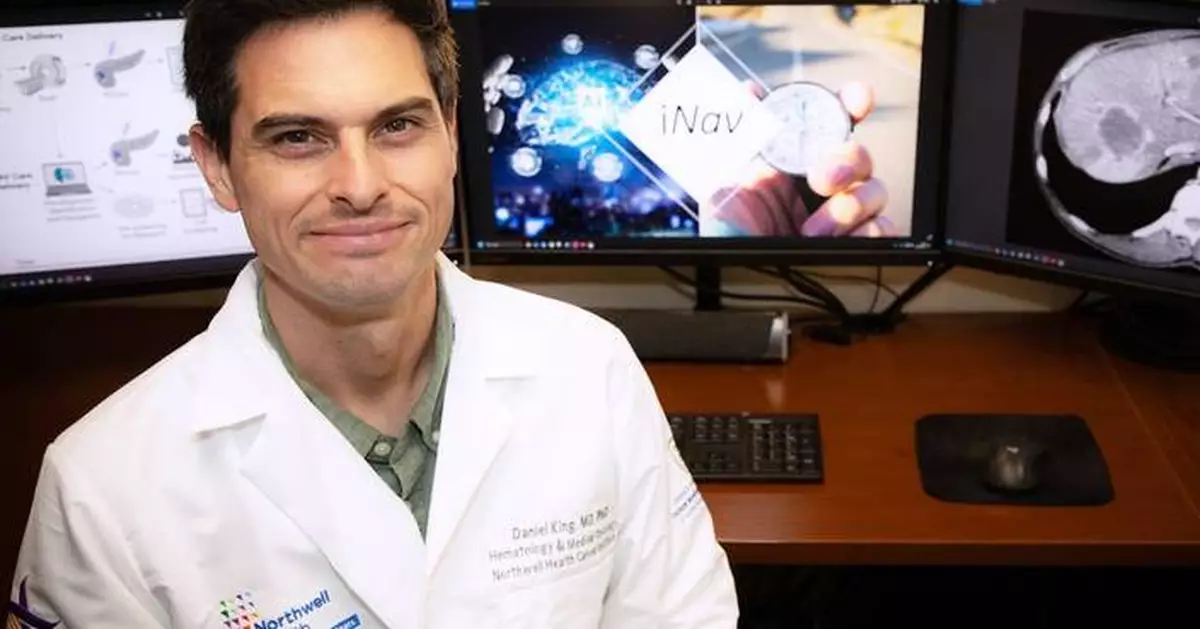
Northwell’s Dr. Dan King co-developed the iNav tool.
JERUSALEM (AP) — President Donald Trump has announced an extension of the ceasefire in the Iran war, giving mediators additional time to arrange a new round of face-to-face talks between the U.S. and Iran.
Trump said he made the move, just hours before the current ceasefire was to expire, at Pakistan's request as he waits for a “unified proposal” from Iran.
The announcement averted a resumption of fighting for the time being. But gaps between the sides remain wide, a planned trip to Pakistan by Vice President JD Vance to lead the American negotiating team remains on hold and a U.S. blockade of Iran remains in place.
Here’s what to know about where the ceasefire stands, the possible talks in Pakistan and other issues surrounding the war:
Two regional officials told The Associated Press on Tuesday that the United States and Iran had signaled they will hold a new round of talks. Pakistan-led mediators received confirmation that top negotiators, Vance and Iran’s parliament speaker Mohammad Bagher Qalibaf, were expected to lead their teams.
But late Tuesday, Iran's Foreign Ministry spokesman said there was no “final decision” on whether to attend. The spokesman, Esmail Baghaei, told state TV that the lack of a decision was because of “contradictory messages" and “unacceptable actions” from the Americans, in particular the U.S. naval blockade of Iran.
Vance, meanwhile, called off a trip to Pakistan, as Pakistani leaders raced to try to salvage the talks. With a 0000 GMT deadline looming, Trump announced that the ceasefire would be extended indefinitely.
Trump said he had taken the step at Pakistan's request, and blamed what he described as Iran's “seriously fractured” leadership for indecision. He said Pakistan had asked him to wait until Iran's leaders “can come up with a unified proposal.” Still, he said the U.S. blockade would continue.
Even if Pakistan can arrange a meeting, serious challenges remain on the future of the Strait of Hormuz, Iran's nuclear program and the blockade. Iran targeted ships in the strait over the weekend. The U.S. also attacked and boarded one Iranian vessel that tried to outrun the American naval blockade in the strait — signaling that the situation remains volatile.
The U.S. and Israel launched the war on Feb. 28, opening a six-week war that has sent oil prices rising and shaken the global economy.
The current truce between Iran, Israel and the United States began April 8 after multiple deadlines posed by Trump that threatened Iran’s very “civilization” at one point. Last Friday, a ceasefire between Israel and the Iran-backed Hezbollah militant group in Lebanon also took effect. Both ceasefires have broadly held.
An earlier round of negotiations between Iran and the U.S. was held in Pakistan from April 11 into the early morning the following day. Vance took part in the highest-level talks between America and Iran since the 1979 Islamic Revolution, which ended without an agreement.
Since this weekend, authorities in Islamabad have made preparations similar to those that accompanied the first talks, suggesting another round loomed.
The Strait of Hormuz, the narrow mouth of the Persian Gulf through which 20% of all natural gas and oil passes, remains effectively closed over Iranian attacks in the waterway. That included some attacks Saturday. There's also a fear that Iran mined a portion of the strait used by transiting ships during peacetime. Since the war, Iran reportedly has been charging as much as $2 million a vessel to allow them to pass. Opening the strait remains a key focus of negotiations and Tehran's strongest leverage against Washington, particularly as countries around the world have begun rationing energy and warning of shortages of jet fuel.
The United States, meanwhile, has begun blocking ships from Iranian ports. The U.S. Navy attacked an Iranian container ship that tried to run through the U.S. blockade this weekend, with Marines rappelling onto it from helicopters. Iran has condemned the incident as “piracy” and a violation of international law.
All of Iran’s highly enriched uranium remains in the country, likely entombed at enrichment sites bombed by the U.S. during a 12-day war last June. Iran hasn’t enriched since then but maintains it has the right to do so for peaceful purposes and denies seeking nuclear weapons. Trump, along with Israel, has called for Iran to completely dismantle its nuclear program and give up its stockpile. Iran rejected that in its 10-point proposal for ending the war.
__ AP reporters Jon Gambrell in Dubai, United Arab Emirates, Aamer Madhani in Washington, Samy Magdy in Cairo and Munir Ahmed in Islamabad contributed reporting.
An army soldier, left, walks as police officer drives motorcycle on an empty road ahead of second round of negotiations between the U.S. and Iran, in Islamabad, Pakistan, Monday, April 20, 2026. (AP Photo/Anjum Naveed)
A soldier stands guard on a bridge ahead of second round of negotiations between the U.S. and Iran, in Islamabad, Pakistan, Monday, April 20, 2026. (AP Photo/M.A. Sheikh)
Workers walk past billboards near the Serena Hotel ahead of the second round of negotiations between the U.S. and Iran, in Islamabad, Pakistan, Monday, April 20, 2026. (AP Photo/Anjum Naveed)