California Democratic Rep. Doris Matsui advanced to the November ballot on Friday after facing a reelection challenge from a younger Democrat.
Matsui, 81, has been in Congress since she replaced her late husband, former Rep. Bob Matsui, in the Sacramento-based seat in 2005.
In a statement referencing the upcoming runoff, Matsui vowed to “earn the trust of voters for another term in Congress.”
She faced a primary challenge from fellow Democrat Mai Vang, a member of the Sacramento City Council, and is one of several older Democrats challenged by younger insurgents this year. The second slot on the general election ballot has not yet been determined, but Vang issued a statement saying she was optimistic with the direction in which the count was moving.
“This is what people power looks like,” Vang said.
Two other House Democrats facing younger challengers, Reps. Brad Sherman in Los Angeles and Mike Thompson in Northern California, advanced to the general election as well.
But California's House primaries were most significant for being the first test of whether Democrats are able to add five potential pickups after they persuaded voters to let them redraw the electoral map last year.
The redistricting was sold as a countermeasure to Republican efforts to gain seats by reworking maps in states they control, including Texas.
Heading into Tuesday’s election, Democrats worried that California’s primary format, which sends the top two vote-getters to the general election regardless of party, could lead to them getting locked out of a seat they drew to their advantage in the San Diego’s suburbs.
That did not happen, as San Diego City Councilwoman Marni von Wilpert advanced to face Republican Jim Desmond, a San Diego County supervisor.
Democrats are at risk of being shut out of another district they expected to pick up, in Sacramento’s suburbs — though the danger of that dimmed Friday as Democratic former state Sen. Richard Pan moved into the top two for the first time. Tens of thousands of more ballots remain to be tallied, and it is too soon to know who will make it to November.
Another redrawn district, which straddles Orange and Riverside counties in Southern California, favors Republicans. GOP Rep. Ken Calvert has advanced to the November election in the 40th District but does not yet know who his opponent will be. He had a bruising primary fight with fellow Republican Rep. Young Kim, whom Democrats drew into a new district that includes areas Calvert previously represented.
In San Francisco a wealthy progressive challenger was unable to crack the top two slots to fill retiring Rep. Nancy Pelosi’s seat. Instead state Sen. Scott Wiener and San Francisco Supervisor Connie Chan will face off to replace the former House speaker.
And in the Central Valley, Republican Rep. David Valadao, widely considered one of the most vulnerable House Republicans, is waiting to see if he will face centrist Democrat and Assemblywoman Jasmeet Bains or progressive political science professor and school board member Randy Villegas in November.
Several races cannot be called yet because of California's typical drawn-out election count, in which mail ballots that tend to come from more Democratic areas are counted later, eroding conservatives' traditional leads in votes reported on election night.
Trump has previously seized on the count to baselessly alleged fraud and did so again Thursday, adding that his Justice Department would investigate the state over it. A federal prosecutor toured Los Angeles' main vote-counting facility on Friday.

Voters cast their ballots for the California primary election on Tuesday, June 2, 2026, in Sacramento, Calif.. (AP Photo/Rich Pedroncelli)
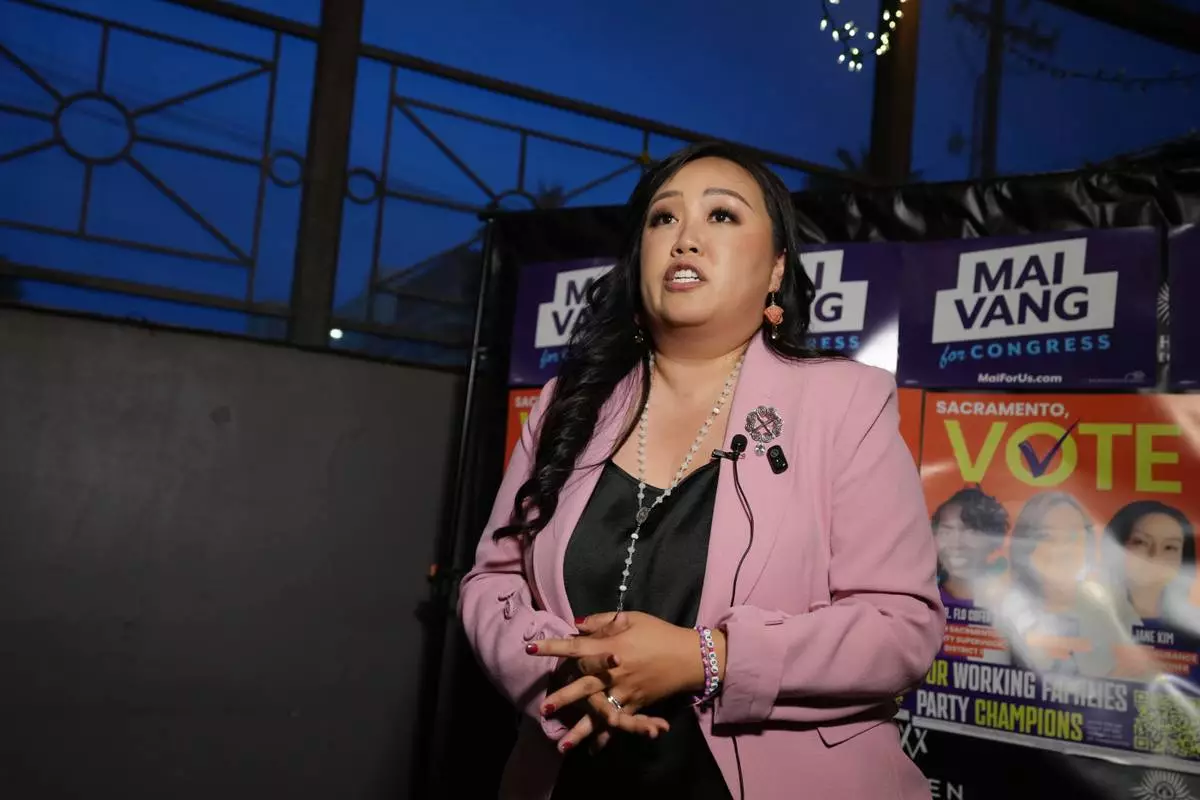
Sacramento council member Mai Vang, who is running for Congress, speaks at her election night party in Sacramento, Calif., Tuesday,, June 2, 2026.(AP Photo/Rich Pedroncelli)

Rep. Doris Matsui, D-Calif., speaks during an election night event Tuesday, June 2, 2026, in Sacramento, Calif. (AP Photo/Rich Pedroncelli)
JUNEAU, Alaska (AP) — Two corporations bid on a handful of leases during the latest oil and gas lease sale in Alaska's Arctic National Wildlife Refuge on Friday, a showing critics described as tepid but one that further opens the door to possible development in the pristine region.
The Alaska Industrial Development and Export Authority, a state corporation that already has leases in the refuge's coastal plain, had the winning bid on three tracts and Hex Energy LLC on two, the U.S. Bureau of Land Management announced. The tracts cover about 72,000 acres. Nearly 690,000 acres had been offered. Winning bids totaled $3.7 million.
The federal agency's state director, Kevin Pendergast, said a “new era of active leasing and exploration is just beginning to unfold.”
While there is no active drilling underway, the Alaska Industrial Development and Export Authority’s board last month authorized additional spending for efforts including a seismic survey program aimed at locating oil formations, as well as lease purchases in this latest sale. A message seeking comment from Hex Energy was not immediately returned.
Opponents of drilling in the refuge's coastal plain have pointed to a lack of industry interest in the prior two sales held there and ongoing changes in Alaska’s arctic region due to climate change as proof the region should be off-limits to drilling. There is pending litigation over the leasing program, dating to President Donald Trump’s first term.
The Gwich'in consider the coastal plain sacred because the caribou herd they rely upon calve there. The Gwich'in people's reliance on the coastal plain “will be irreversibly damaged if it is disturbed,” Karlas Norman, first chief of the Venetie Village Council, said in a statement. "Even though we saw minimal bids, we will not rest until this sacred place is permanently protected for our children and for generations yet to come.”
But supporters of development see the coastal plain, which is roughly the size of Delaware, as a potential untapped resource that could boost U.S. oil production and generate new revenue and jobs. Voice of the Arctic Iñupiat, an advocacy group whose members include leaders from Alaska Native communities on the North Slope, hailed the sale a success.
A statement from the group said the sale represented "the culmination of decades of advocacy by North Slope Iñupiat leaders, in particular leaders from Kaktovik, for their right to self-determination on their homelands, including responsible exploration and development.” Kaktovik is the only community within the refuge.
“The Trump-Vance administration is doing the right thing by advancing policies, including those that permitted the sale, supported by our community," Kaktovik Mayor Nathan Gordon Jr. said in the statement.
The Trump administration has taken a keen interest in Alaska, and his tax and spending bill passed by Congress last year included provisions mandating lease sales in three regions of the state. In addition to the refuge's coastal plain, leases have also been offered in the National Petroleum Reserve-Alaska and in Cook Inlet, an aging basin that has provided natural gas for Alaska's most populous region for decades.
There were no takers in the Cook Inlet auction in March. But there were hundreds of bids, including from major oil companies, for what was the first sale since 2019 in the National Petroleum Reserve-Alaska — despite pending litigation challenging the leasing program. The Trump administration has moved to open more lands to drilling in the reserve and rolled back protections there. The petroleum reserve is where ConocoPhillips Alaska is developing the large Willow oil project.
On Alaska's vast, petroleum-rich North Slope, the major oil fields of Prudhoe Bay and Kuparuk lie between the National Petroleum Reserve-Alaska and the Arctic National Wildlife Refuge.
Bill Groffy, principal deputy director of the Bureau of Land Management, in an interview said Alaska has “some major resources.”
“The ability to go and utilize those resources is something the president wants us to look at, and the secretary wants us to looks at,” he said, referring to U.S. Interior Secretary Doug Burgum.
The arctic refuge's coastal plain could contain 4.25 billion to 11.8 billion barrels of recoverable oil, according to U.S. Geological Survey estimates, but there is limited information about the amount and quality of oil.
The coastal plain, bordering the Beaufort Sea in northeast Alaska, features rolling hills and tundra and provides habitat for wildlife including musk oxen and migratory birds.

FILE - Snow covers the mountains of the Brooks Range in the Arctic National Wildlife Refuge, Oct. 14, 2024, near Kaktovik, Alaska. (AP Photo/Lindsey Wasson, File)
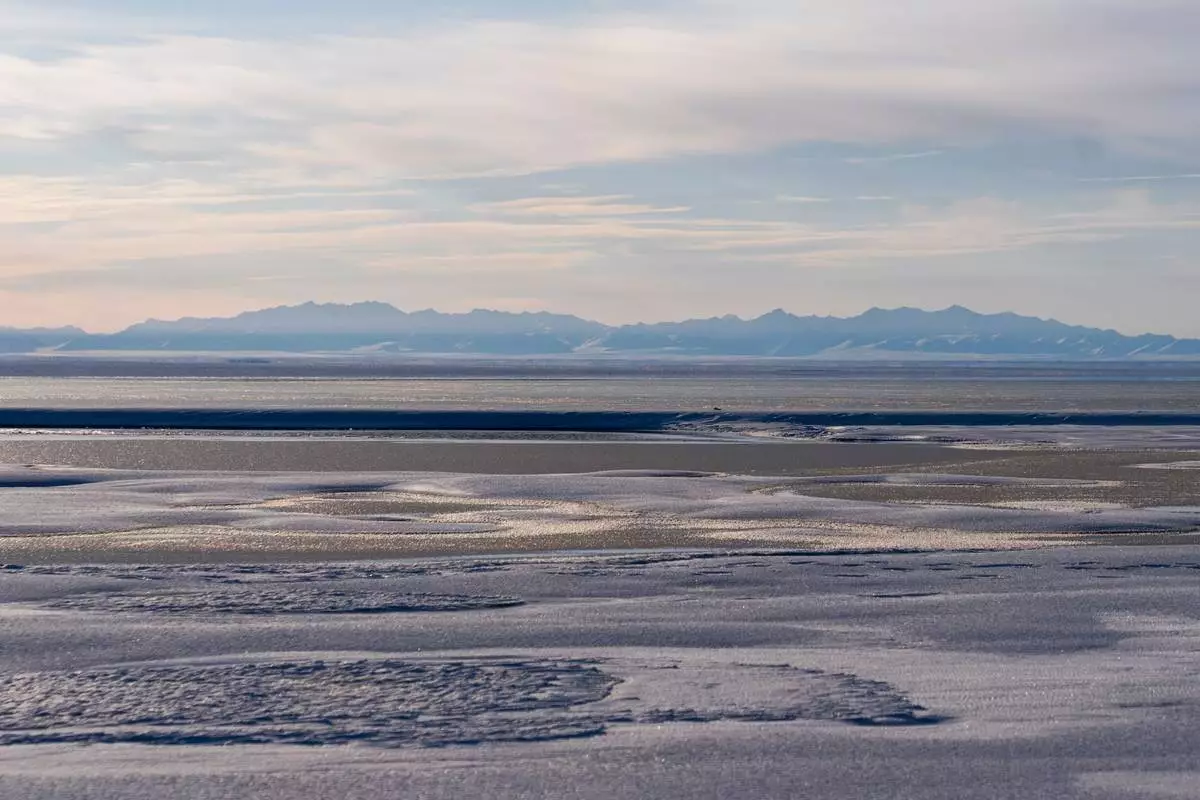
FILE - The Kaktovik Lagoon and the Brooks Range mountains of the Arctic National Wildlife Refuge are seen in Kaktovik, Alaska, Oct. 15, 2024. (AP Photo/Lindsey Wasson, File)