Hong Kong will build on solid economic momentum to nurture sci-tech innovation and reinforce fiscal discipline as new drivers of growth, said Paul Chan, financial secretary of the Hong Kong Special Administrative Region (HKSAR), while delivering the 2026-27 budget speech on Wednesday.
Hong Kong's operating account has returned to a surplus in the 2025-26 financial year as tax revenue increased on the back of a booming economy and capital market, said Chan.
Overall, Hong Kong's public finances have markedly improved, said Chan, crediting the reinforced fiscal consolidation program for replenishing Hong Kong's coffers.
Noting that this year marks the beginning of China's 15th Five-Year Plan period (2026-2030), Chan said Hong Kong will integrate into and serve the overall national development by fostering new quality productive forces and helping enterprises explore new markets.
Hong Kong's headline growth in 2026 is forecast between 2.5 percent and 3.5 percent, while the underlying inflation rate and the headline inflation rate are projected to be 1.7 percent and 1.8 percent, respectively, according to Chan.
From 2027 to 2030, Hong Kong's economy is estimated to grow on average by 3 percent per year in real terms, with the underlying inflation rate averaging 2 percent per year.
The latest budget renewed pledges to propel sci-tech innovation, with a focus on artificial intelligence (AI). Hong Kong will promote industrial use of AI so that all of its residents will ultimately adopt and be conversant with the technology, said Chan.
To that end, Chan said he will establish and chair the Committee on AI+ and Industry Development Strategy to formulate strategies and create favorable conditions for AI to empower the transformation and development of industries.
To promote AI+ development and transformation of R and D outcomes, the Hong Kong Artificial Intelligence Research and Development Institute Company Limited will come into operation in the second half of this year, according to Chan.
The data facility cluster at Sandy Ridge, which can provide a gross floor area of 250,000 square meters, will boost Hong Kong's overall computing power. The tender result of the site will be announced shortly, said Chan.
To turbocharge new industrialization, the budget has set aside resources for establishing in the HKSAR the first national manufacturing innovation center outside the mainland.
The HKSAR government will promote the full integration of technological innovation and industrial innovation through key infrastructure, including the Hong Kong Park of the Hetao Shenzhen-Hong Kong Science and Technology Innovation Cooperation Zone and San Tin Technopole, said Chan.
On finance, Hong Kong will advance Renminbi internationalization and continuously reform the securities market, noted Chan. The HKSAR government will legislate this year to enhance tax regimes for family offices and funds, as well as establish licensing regimes for digital asset dealing and custodian service providers.
To aid Wang Fuk Court residents whose apartment units were charred in the deadly fire that broke out last November, the budget has earmarked 4 billion Hong Kong dollars (about 512 million U.S. dollars) to support the long-term housing arrangements plan unveiled by the HKSAR government earlier this month.
According to the budget, the operating account will register a surplus throughout the period from 2026-27 to 2030-2031. The capital account, on the other hand, will record deficits on an annual basis, mainly due to high capital works expenditure.
The HKSAR government will increase bond issuance to fund infrastructure projects, which are deemed an investment in Hong Kong's future. During the period, fiscal reserves are expected to gradually increase to over 700 billion Hong Kong dollars.
"The government is able to have a projected surplus in the operating account, which deals with the day to day expenses that government has. However, if we look at the total amount, which would include long term investment through bond issuance on infrastructure, then Hong Kong is pretty much in a new era of fiscal deficit for the long term growth and investment. So it is really a test for the Hong Kong government on how to mobilize the resources for a better long term outcome," said Gary Ng, a senior economist for Asia Pacific at Natixis.
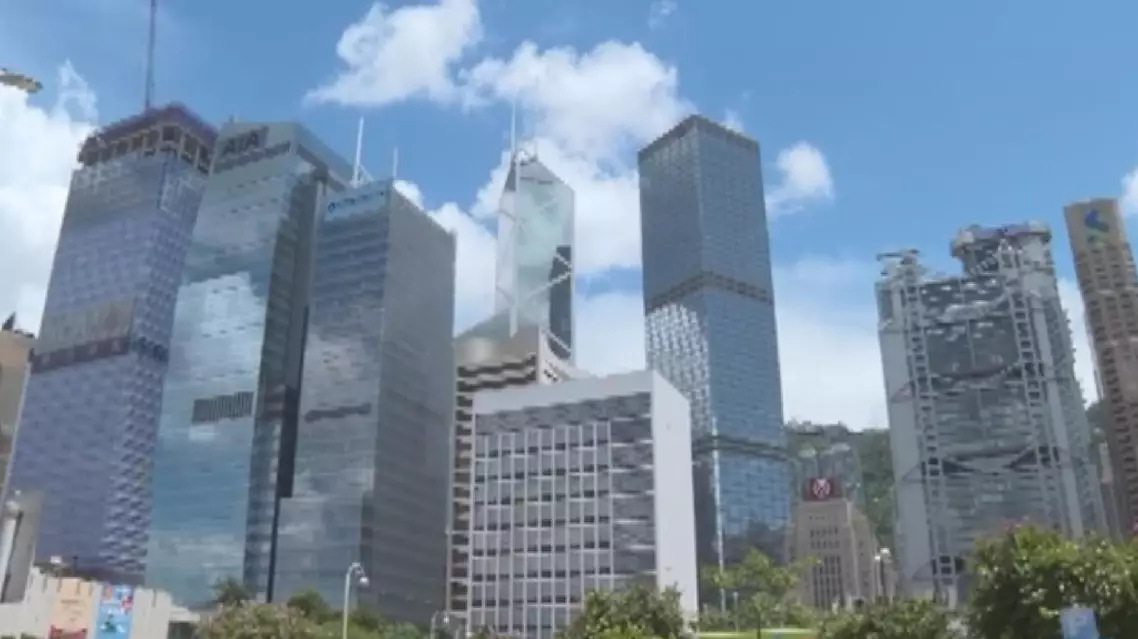
Hong Kong's new budget targets innovation, fiscal discipline to spur growth: official
Hong Kong's new budget targets innovation, fiscal discipline to spur growth: official