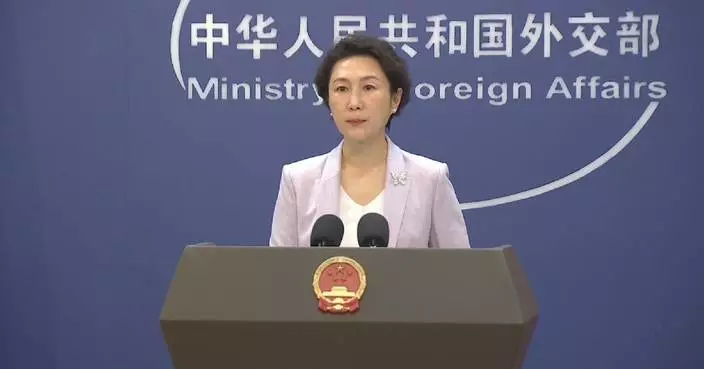
China will continue to redouble efforts on reducing PM2.5 concentration, vigorously promoting structural optimization and adjustment, and implementing refined pollution control measures to drive comprehensive improvements in air quality, said an official of the Ministry of Ecology and Environment in Beijing on Friday.
At a press conference, Li Tianwei, director of the ministry's Department of Atmospheric Environment, said multiple factors pose challenges to improving air quality.
"The Beijing-Tianjin-Hebei region and its surrounding areas, as well as the Fenwei Plain, experience one to two episodes of severe pollution lasting over seven days each autumn and winter. Just three days of severe pollution can raise a city's annual average PM2.5 concentration by approximately one microgram. Meteorological conditions play a crucial role in the dispersion and cumulative transport of air pollutants. Particularly against the backdrop of global warming, extreme weather events may become a new normal, leaving significant uncertainty about the sustained improvement of air quality," he said.
The official said that China's PM2.5 levels still lag considerably behind world-leading levels.
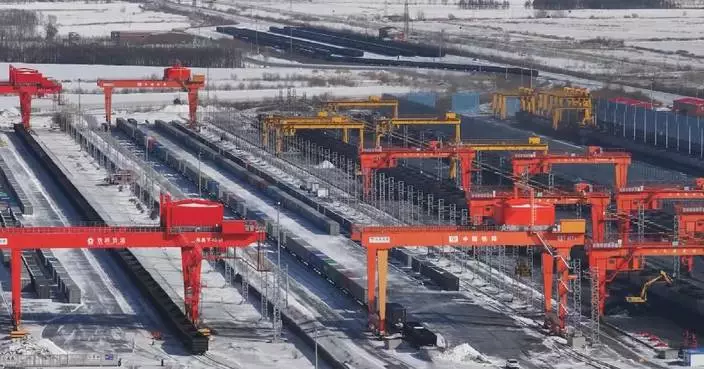
Achieving deep emission reductions currently faces challenges, with limited potential for further reductions through large-scale projects, according to Li. The energy structure dominated by fossil fuels, the industrial structure centered on heavy chemicals, and the transportation structure reliant on highways remain difficult to alter in the short term, he said.
Issues such as improper operation and inefficiency of treatment facilities persist, while technical capabilities and equipment levels at some grassroots ecological and environmental departments lag behind. Sustained improvement in air quality remains a long and arduous journey, said Li.
The official said during the 15th Five-Year Plan period (2026-2030), the Ministry of Ecology and Environment will promote the implementation of an action plan to improve air quality.
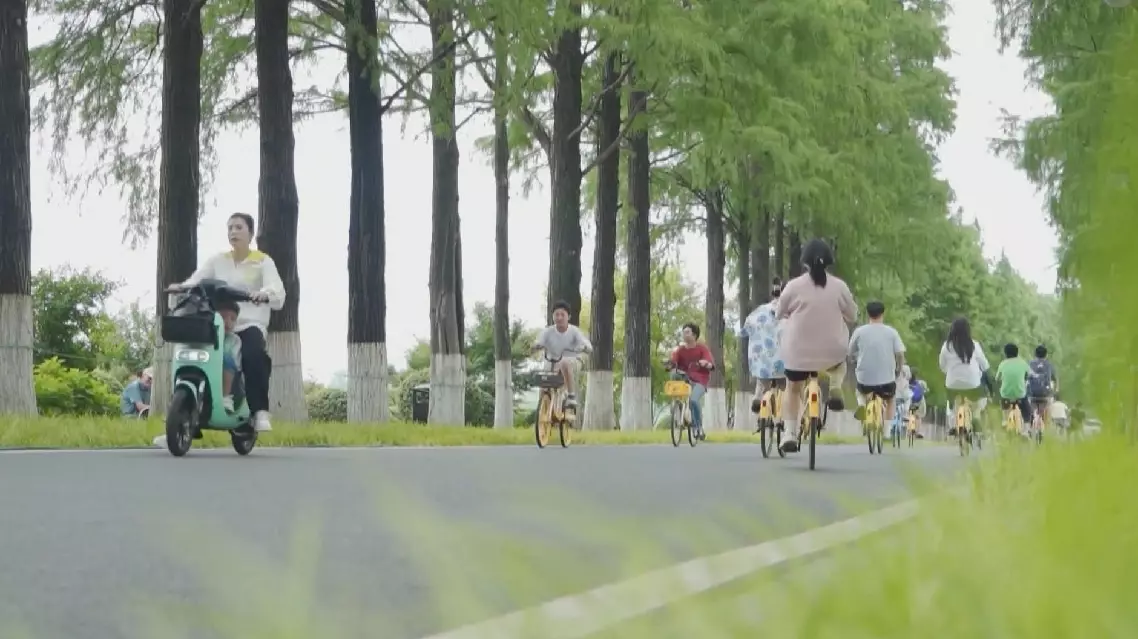
This will involve innovating differentiated management policies in finance, pricing, taxation, and environmental protection; deepening structural transformation; accelerating the green and low-carbon transformation of traditional industries; vigorously developing non-fossil energy and clean, efficient coal utilization; and encouraging green transportation.
The ministry will plan and implement a series of key emission reduction projects and actions to drive a sustained decline in pollutant emissions.
"In terms of spatial layout, we will optimize three major zones. Focusing on key regions such as the Beijing-Tianjin-Hebei area and its surrounding areas, the Fenwei Plain, and the Yangtze River Delta, we will continuously deepen structural transformation and collaborative governance. We will promote the city clusters along the middle reaches of the Yangtze River, the Sichuan-Chongqing region, and the urban agglomeration on the northern slopes of the Tianshan Mountains to benchmark against the key regions and comprehensively enhance governance effectiveness. We will support pilot regions like the Guangdong-Hong Kong-Macao Greater Bay Area, the economic zone on the west coast of the Taiwan Strait, and Hainan Province in benchmarking against world-class standards to explore pathways for sustained improvement under low-concentration conditions," said Li.
China to redouble efforts on improving air quality: official