PANAMA CITY (AP) — Two ports run for years by a Hong Kong-based company at either end of the Panama Canal have thrust Panama into a geopolitical tug-of-war between the United States and China.
Even before taking office for his second term, U.S. President Donald Trump complained that China was running the Panama Canal, because of concerns over the Hong Kong-based parent of the company running the ports on either side.
The Panamanian government, which operates the canal, strongly denied any Chinese control over the waterway. But in late January, Panama’s Supreme Court ruled that the concession made to a local subsidiary of Hong Kong’s CK Hutchison was unconstitutional. Panama has maintained it is acting only in accordance with the law, but China has alleged that the court case is a reaction to “hegemonic” pressure.
This week, the Panamanian government occupied the two ports and designated two other companies to keep them running until the concession can be rebid. And on Thursday, investigators removed boxes of documents from Panama Ports Co.
China is not happy and threatened consequences for Panama. President José Raúl Mulino responded Thursday, telling China “be careful,” adding: “They need us more than we need them.”
Here is a look at the ports that have the attention of two of the world’s superpowers:
Although Panama is not a big importer or exporter of goods, its canal has made the country of 4 million residents a critical international logistics hub.
Massive cargo ships arrive daily from Asia, Europe and both coasts of the United States. Little of what they carry is for Panamanians, but they unload their containers in Balboa, Cristobal and other ports for onward shipping via smaller routes to their final destinations.
The Balboa Port on the Pacific Ocean side of the canal and the Cristobal Port at the Atlantic end handle around 39% of all of Panama’s container traffic. About 7,000 people work at the two ports.
The two ports have been operated by Panama Ports Company, a local subsidiary of Hong Kong’s CK Hutchison, since 1997.
Panama’s comptroller announced it was starting an audit of the Panama Ports Co. concession on Jan. 20, 2025 the day of Trump’s inauguration. Two weeks later, U.S. Secretary of State Marco Rubio arrived and made clear that a Chinese company operating the ports was unacceptable to Washington. He suggested that China could obstruct canal traffic if it wanted to.
On July 30, 2025, the comptroller said he was filing a complaint with the Supreme Court asking that the concession be found unconstitutional. The court announced its decision finding it was unconstitutional at the end of January 2026.
The audit by Panama’s comptroller alleged irregularities in the extension of the concession, including massive lost revenue to Panama’s government. After the country’s Supreme Court ruled the concession was unconstitutional, authorities said they had a transition plan that would avoid any unnecessary interruptions to port operations.
The ports are located at the entrances of the Panama Canal, but do not fall under the autonomous Panama Canal Authority that operates the waterway.
Since the canal, in addition to cargo ships, also accommodates U.S. warships, the United States sees national security implications. The American-built canal was turned over to the Panamanians in 1999.
Panama Ports Company started arbitration proceedings against Panama after the court’s decision. It said the Panamanian government had kept up a “campaign” against its concession for the past year causing serious harm to the company.
It argues that its rights as an investor have been compromised and is demanding unspecified compensation. Panama Economy Minister Felipe Chapman said the company is seeking $1.5 billion. The company’s concession to operate the two ports was just renewed in 2021 for 25 years.
After the court’s decision, Beijing’s office overseeing Hong Kong affairs criticized the ruling, saying it showed that Panamanian authorities were bowing down to “hegemonic powers.”
“Panama’s authorities should recognize the situation and correct their course,” it said. “If they persist in their own way and refuse to see reason, they will pay a heavy price both politically and economically!”
The government’s seizure of the ports this week set off another round of objections. Mulino said it was necessary to ensure their continuing operation and to determine their real value.
“The more than 7,000 jobs continue without changes,” he said.
On Friday, Panama Ports Co. confirmed that Panamanian authorities had seized documents.
“The state’s daily misinformation campaign is a mere distraction from the fact that its forced takeover of the ports of Balboa and Cristobal in Panama and occupation of the property of PPC has been a failure due to the illegal, nontransparent and poorly coordinated conduct of the state.”
Mulino has said that the court’s decision is final and must be respected.
The ports continue operating while the legal drama builds.
Chapman, the economy minister, said that arbitration could take years. Meanwhile, the government is preparing to begin the process for a new operator of the ports.
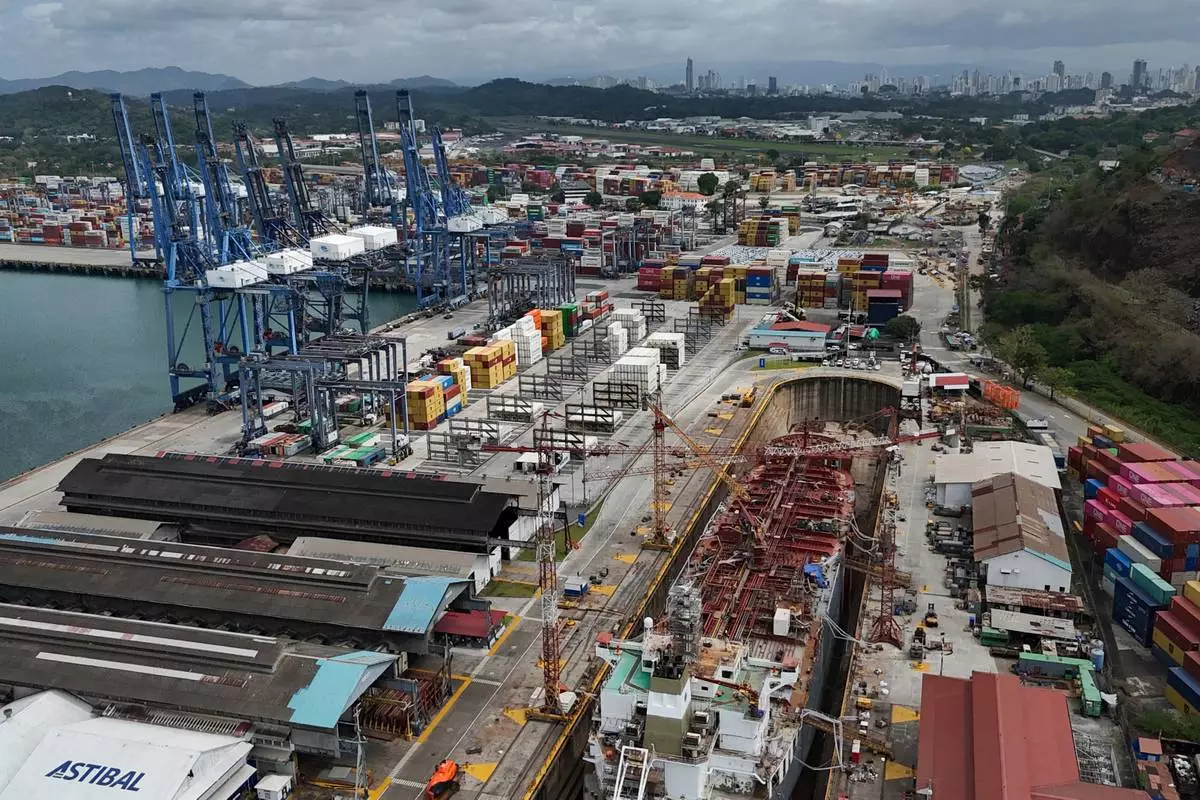
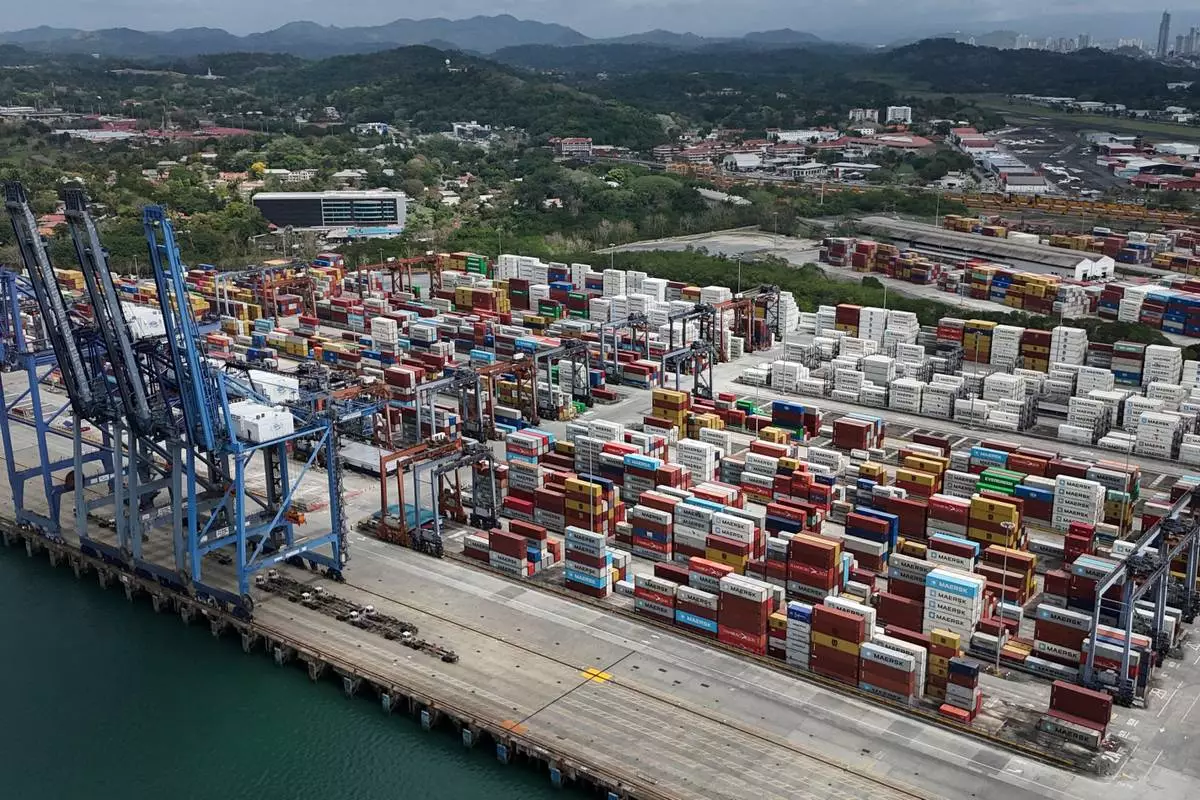
An aerial view of the Balboa terminal, run by CK Hutchison's Panama Ports Co., after Panama's government ordered the occupation of the port following a Supreme Court ruling that the concession was unconstitutional, in Panama City, Monday, Feb. 23, 2026. (AP Photo/Matias Delacroix)
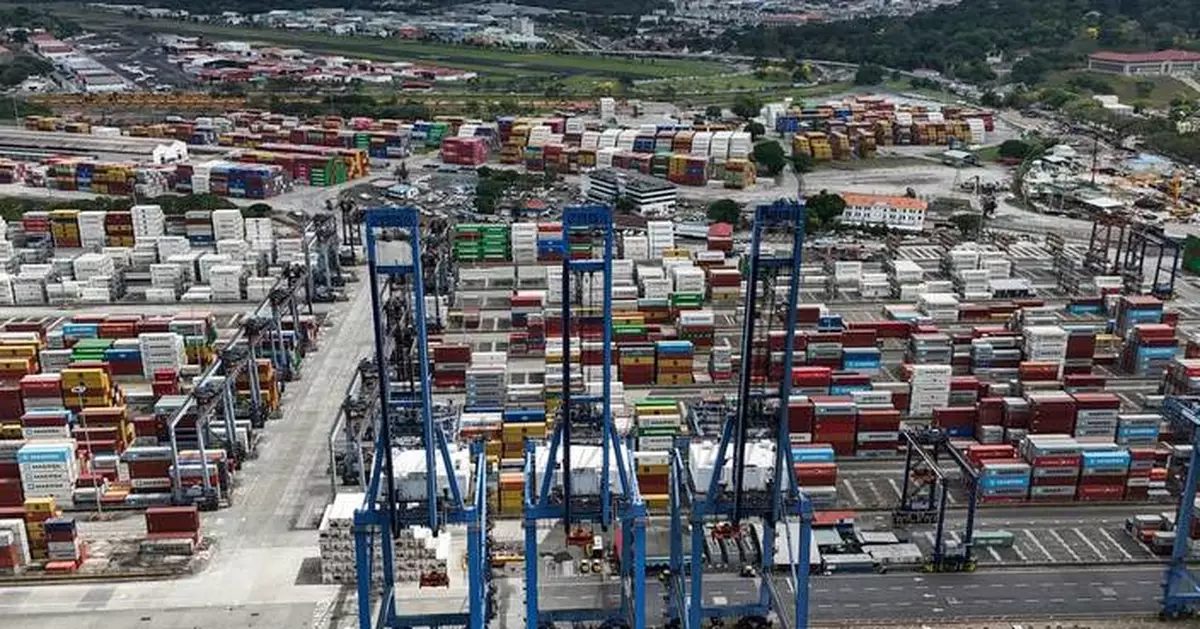
Containers sit at the Balboa terminal, run by CK Hutchison's Panama Ports Co., after Panama's government ordered the occupation of the port following a Supreme Court ruling that the concession was unconstitutional, in Panama City, Monday, Feb. 23, 2026. (AP Photo/Matias Delacroix)
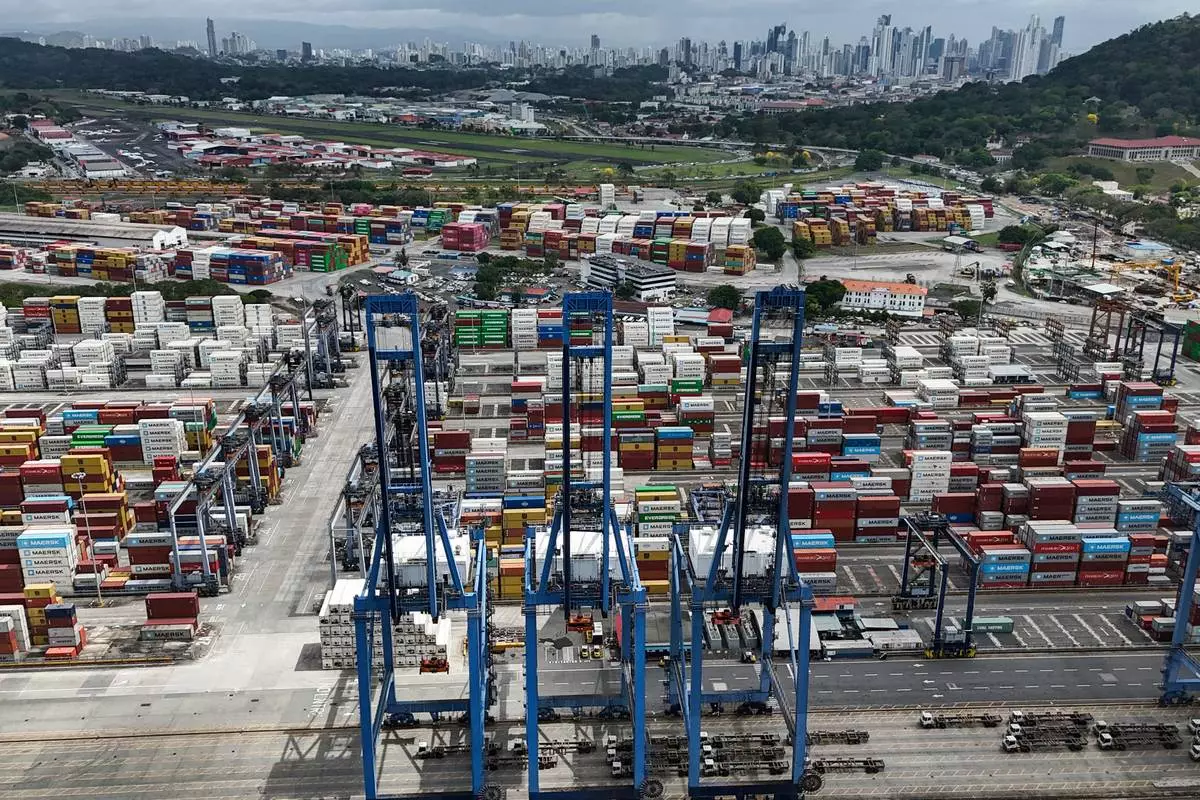
Containers sit at the Balboa terminal, run by CK Hutchison's Panama Ports Co., after Panama's government ordered the occupation of the port following a Supreme Court ruling that the concession was unconstitutional, in Panama City, Monday, Feb. 23, 2026. (AP Photo/Matias Delacroix)