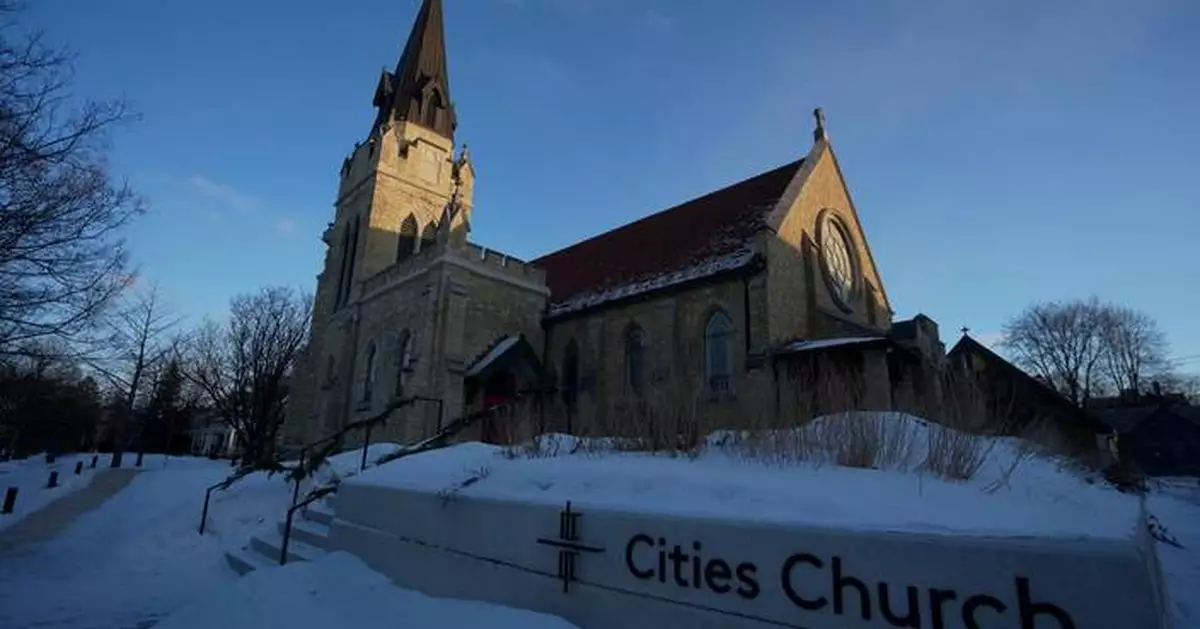
Attorney General Pam Bondi announced charges Friday against 30 more people who are accused of civil rights violations in a January protest inside a Minnesota church where a pastor works for Immigration and Customs Enforcement.
Bondi said on social media that 25 people were in custody and more arrests would follow. The new indictment comes a month after independent journalists Don Lemon and Georgia Fort and prominent local activist Nekima Levy Armstrong were charged for their alleged roles in the protest at Cities Church in St. Paul.
Bondi accused the group of attacking a house of worship.
"If you do so, you cannot hide from us — we will find you, arrest you, and prosecute you,” she wrote on social media.
In total, 39 people now face charges of conspiracy against religious freedom and interfering with the right of religious freedom.
A livestreamed video posted on Facebook shows people interrupting services at Cities Church on Jan. 18 by chanting “ICE out” and “Justice for Renee Good," a reference to the woman who was fatally shot by an ICE officer in Minneapolis on Jan. 7.
The new defendants will have an initial court appearance and a magistrate judge will set conditions for their likely release. Lemon and Fort said they were at the church as journalists covering news. Levy Armstrong was the subject of a doctored photo posted by the White House showing her crying during her arrest. The three have pleaded not guilty.
Protesters descended on Cities Church after learning that one of the church’s pastors also serves as an ICE official. The protest drew swift condemnation from Trump administration officials and conservative leaders for disrupting a Sunday service.
The indictment says the “agitators” entered the church in a “coordinated takeover-style attack” and engaged in acts of intimidation and obstruction.
“Young children were left to wonder, as one child put it, if their parents were going to die,” the indictment says.
A lawyer for the church praised the Justice Department for charging more people.
“The First Amendment does not give anyone — regardless of profession, prominence, or politics — license to storm a church and intimidate, threaten, and terrorize families and children worshipping inside,” Doug Wardlow said in a statement.
The revised indictment adds new allegations when compared to the original filed in January.
It says two people “conducted reconnaissance” outside the church a day before the protest and recorded their visit on video, with one saying, “My thoughts are to be able to close up this whole alleyway right here.”
The court filing quotes one protester as chanting in the church, “This ain't God's house. This is the house of the devil.”
Levy Armstrong defended the protest shortly after it occurred. She said critics needed to “check their hearts” if they were more concerned about a disruption than the “atrocities that we are experiencing in our community."
The protest came at a tense time in Minnesota, where the Trump administration sent thousands of federal officers for Operation Metro Surge after a series of public fraud cases where the majority of defendants had Somali roots. Officers frequently deployed tear gas for crowd control in neighborhood clashes with residents, often detaining them along with immigrants.
Good, 37, was shot in Minneapolis. In another fatal shooting a week after the church protest, a federal officer killed 37-year-old nurse Alex Pretti.
Nationwide demonstrations erupted in response, followed by a change in Operation Metro Surge’s leadership and the eventual wind-down of the immigration enforcement operation. Roughly 400 ICE officers and Homeland Security agents were expected to remain in Minneapolis by early March, down from roughly 3,000 at the peak, according to a court filing.
Since then, the Twin Cities have grappled with the impact to communities and the local economy. Minneapolis said it suffered an impact of $203 million due to the operation, with tens of thousands of residents in need of urgent relief assistance.
Separately, a woman who was at the church service has filed a lawsuit against some people who were charged, alleging emotional trauma and an inability to exercise her religion that day.
Associated Press writer Ed White in Detroit contributed to this report.
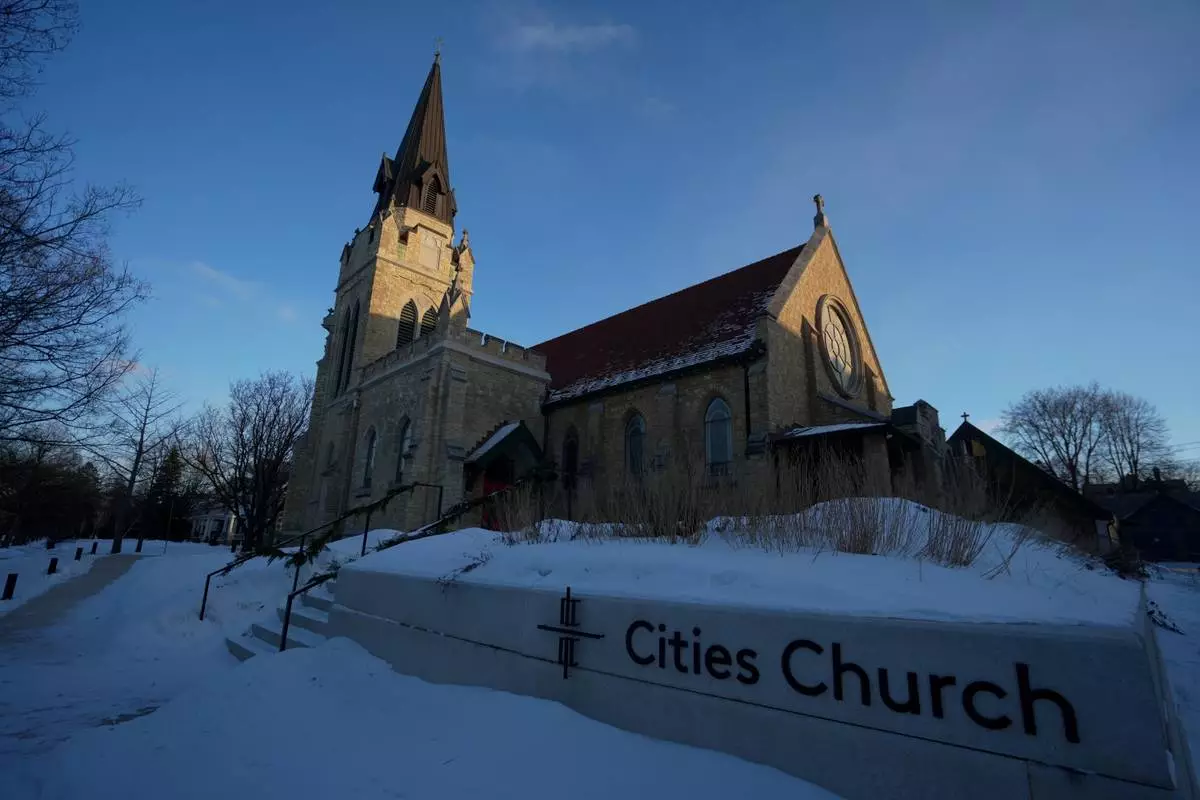
FILE - Cities Church is seen in St. Paul, Minn. where activists shut down a service claiming the pastor was also working as an ICE agent, Monday, Jan. 19, 2026 in St. Paul, Minn. (AP Photo/Angelina Katsanis, File)
NEW YORK (AP) — U.S. stocks sank Friday as Wall Street kept punishing companies that could become losers in the artificial-intelligence revolution. A surprisingly discouraging update on inflation also hurt the market, while oil prices climbed with worries about tensions between the United States and Iran.
The S&P 500 fell 0.4% and staggered to the finish of just its second losing month in the last 10. The Dow Jones Industrial Average dropped 521 points, or 1.1%, the Nasdaq composite sank 0.9%.
The losses came as investors returned to knocking down software companies and other businesses they suspect could get supplanted by AI-powered competitors.
Block, the company behind Cash App, Square and other businesses, gave a potential signal of what AI could do after Chair Jack Dorsey said it’s cutting its workforce by nearly half. That’s even though he said 2025 was a strong year for the company, which is sending more cash to shareholders through stock buybacks.
“Intelligence tools have changed what it means to build and run a company,” Dorsey said in a letter to investors while announcing Block’s latest profit results. “We’re already seeing it internally. A significantly smaller team, using the tools we’re building, can do more and do it better.”
The co-founder of Twitter also said, “I don’t think we’re early to this realization. I think most companies are late. Within the next year, I believe the majority of companies will reach the same conclusion and make similar structural changes.”
Block is cutting more than 4,000 jobs from its workforce of over 10,000. Its stock jumped 16.8% after making the announcement, while announcing its latest quarterly results.
Capable AI tools that can replace humans could perhaps replace entire companies, or at least eat away at their profit margins. Fears about AI disruption have caused sudden and swift sell-offs for stocks seen as potentially under threat, and they’ve rolled through industries as different as trucking logistics and legal services.
Salesforce, whose platform helps customers manage their relationships with clients, fell 2.3%. It gave back much of its 4% gain from the day before after reporting a better profit than analysts expected.
The pain has also hit private-equity companies that have bought or lent money to software companies, which need to withstand the AI threat to keep repaying those loans. Apollo Global Management dropped 8.6% for the one of the sharpest losses in the S&P 500. Blue Owl Capital, which has been a target for investors because of the loans to it's made to the software industry, fell 6%.
Even the companies currently seeing their revenue and profit soar because of AI-related demand are under pressure. Nvidia fell 4.2% and was the heaviest weight on the U.S. stock market. A day earlier, it dropped to its worst loss since last spring even though it reported a better profit than analysts expected and forecast more in revenue for the current quarter.
Rival chip companies also fell. Worries are hurting such companies not only about whether their stock prices rose too high in recent years but also whether the huge spending driving their growth can continue. Can big spenders like Amazon and Alphabet make back all their billions of dollars in AI investments through higher productivity and profits in the future?
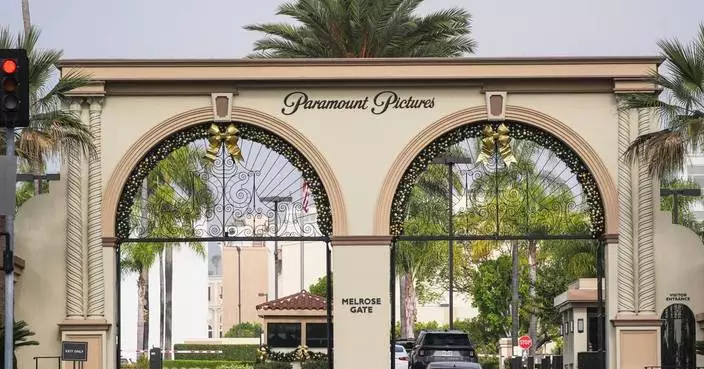
On the winning side of Wall Street was Netflix, which climbed 13.8% after walking away from its bid to buy Warner Bros. Discovery’s studio and streaming business. That put Skydance-owned Paramount in a position to take over its Hollywood rival.
Paramount Skydance shares jumped 20.8%, while Warner Bros. Discovery fell 2.2%.
All told, the S&P 500 fell 29.98 points to 6,878.88. The Dow Jones Industrial Average dropped 521.28 to 48,977.92, and the Nasdaq composite sank 210.17 to 22,668.21.
Some of the strongest action in financial markets was for oil, where the price for a barrel of benchmark U.S. crude rose 2.8% to settle at $67.02. It’s the latest swing in a market unsettled by tensions between the United States and Iran over Iran’s nuclear program.
The U.S. military has already gathered a massive fleet of aircraft and warships in the Middle East, and a conflict could disrupt the global flow of oil and drive prices higher.
Brent crude, the international standard, rose 2.4% to $72.48 per barrel.
Also hurting the broad market was a report showing that inflation at the U.S. wholesale level was at 2.9% last month, much higher than the 1.6% that economists expected.
That could pressure the Federal Reserve to hold off longer on its cuts to interest rates. Lower rates would give the economy and prices for investments a boost, but they risk worsening inflation at the same time.
In the bond market, the yield on the 10-year Treasury sank to 3.96%. It briefly swiveled higher following the inflation report, but it’s down from its 4.02% level late Thursday. Treasury yields often fall when nervousness is high and investors are moving into investments that are considered safer.
ln stock markets abroad, indexes were mixed in Europe and Asia. South Korea’s Kospi fell 1% from its latest record, and Hong Kong’s Hang Seng rose 0.9% for two of the world’s larger moves.
AP Business Writers Matt Ott and Elaine Kurtenbach contributed.
Earlier versions of the story incorrectly referred to Apollo Global Management as Blue Apollo Global Management.
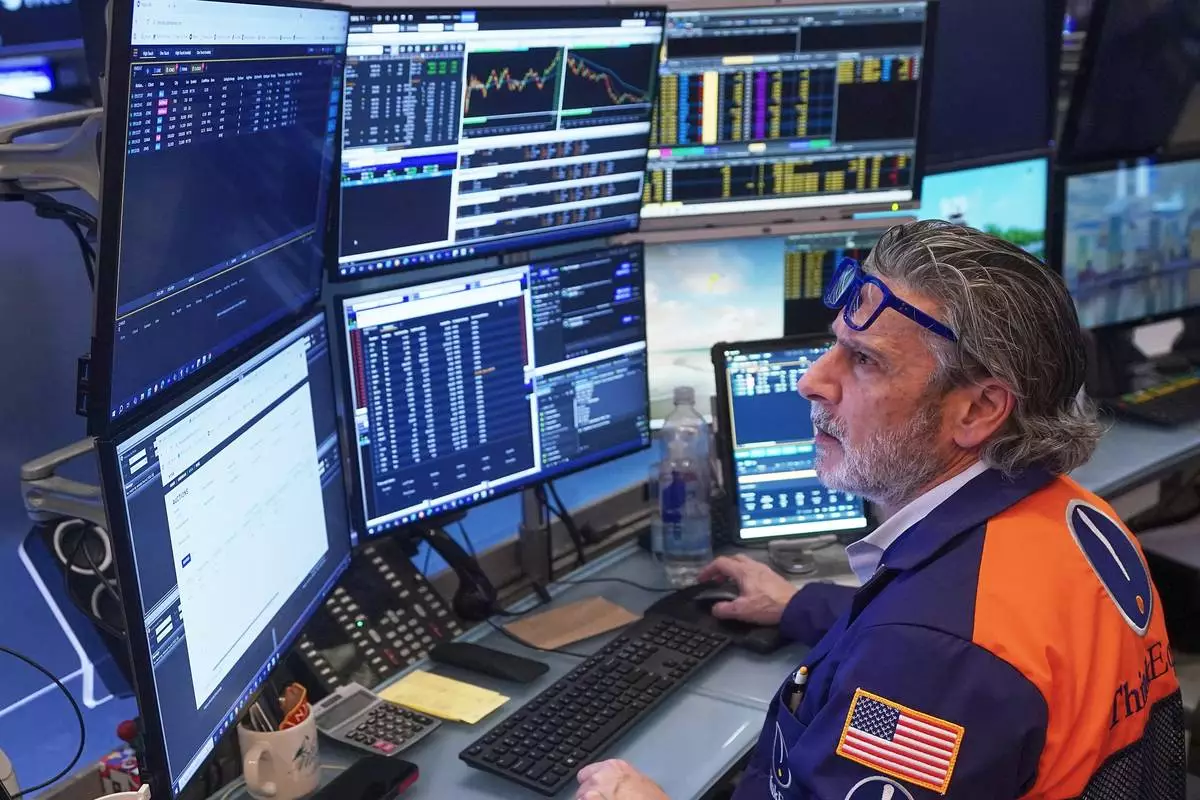
Trader John Romolo works on the floor of the New York Stock Exchange, Friday, Feb. 20, 2026. (AP Photo/Richard Drew)
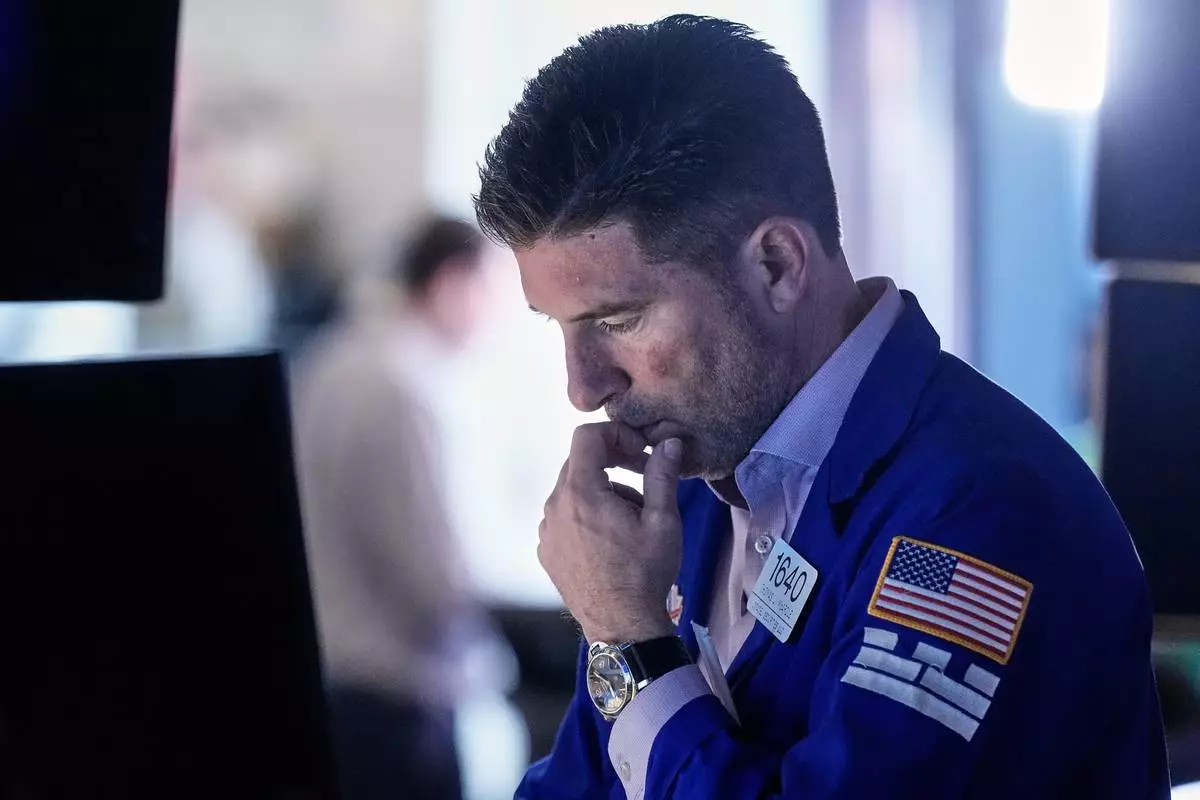
Specialist Thomas McArdle works at his post on the floor of the New York Stock Exchange, Friday, Feb. 20, 2026. (AP Photo/Richard Drew)
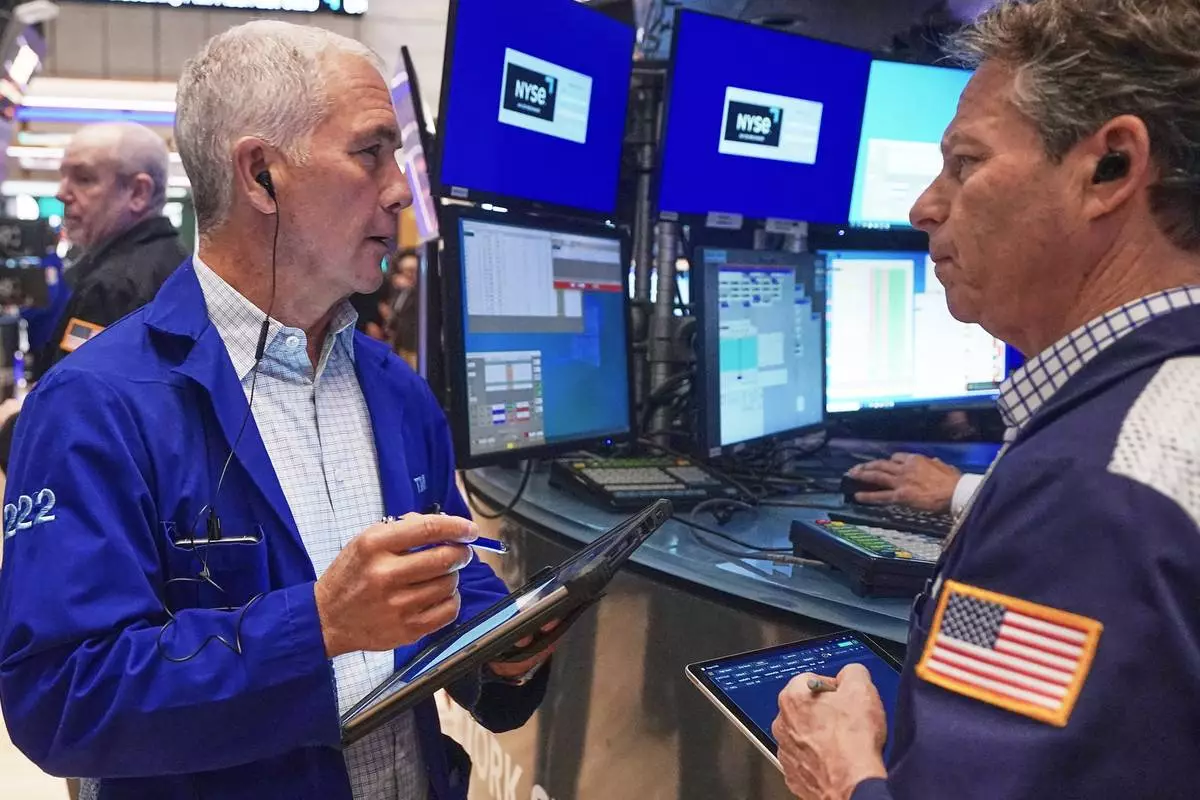
Trader Timothy Nick, left, and Robert Charmak work on the floor of the New York Stock Exchange, Friday, Feb. 20, 2026. (AP Photo/Richard Drew)
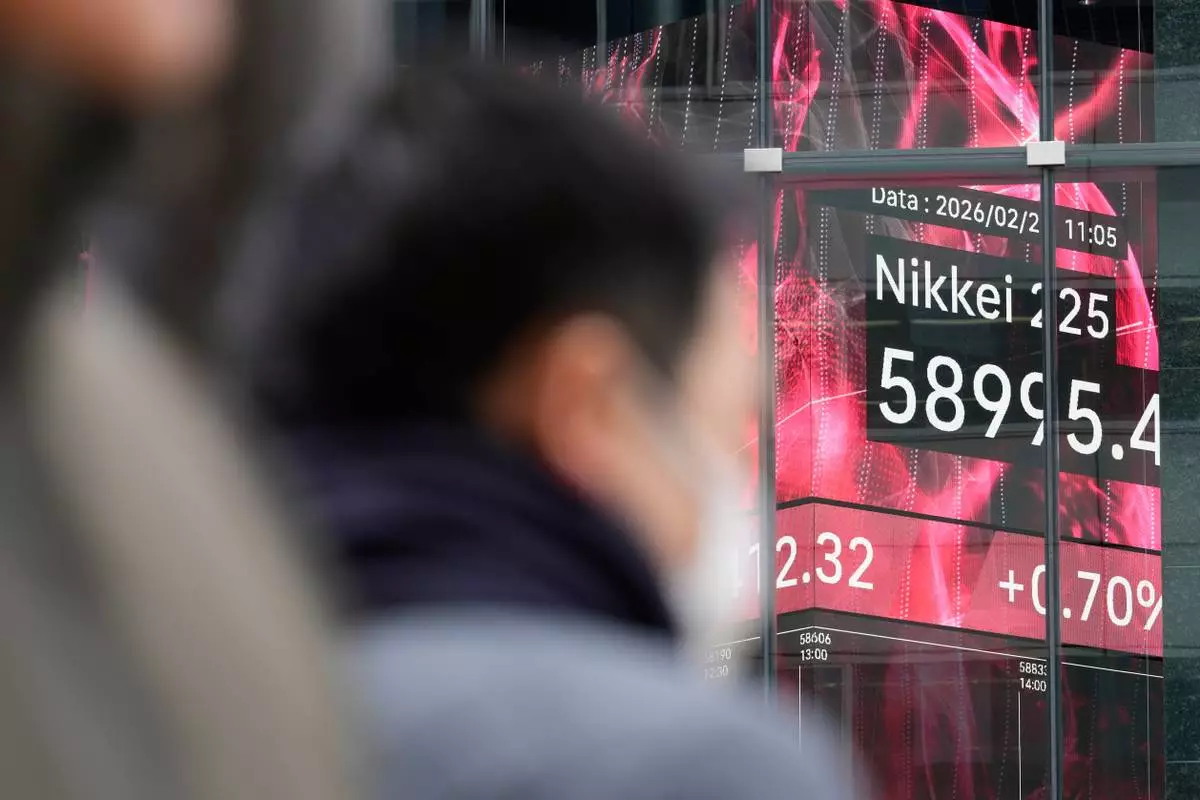
People walk near an electronic stock board showing Japan's Nikkei index at a securities firm Thursday, Feb. 26, 2026, in Tokyo. (AP Photo/Eugene Hoshiko)
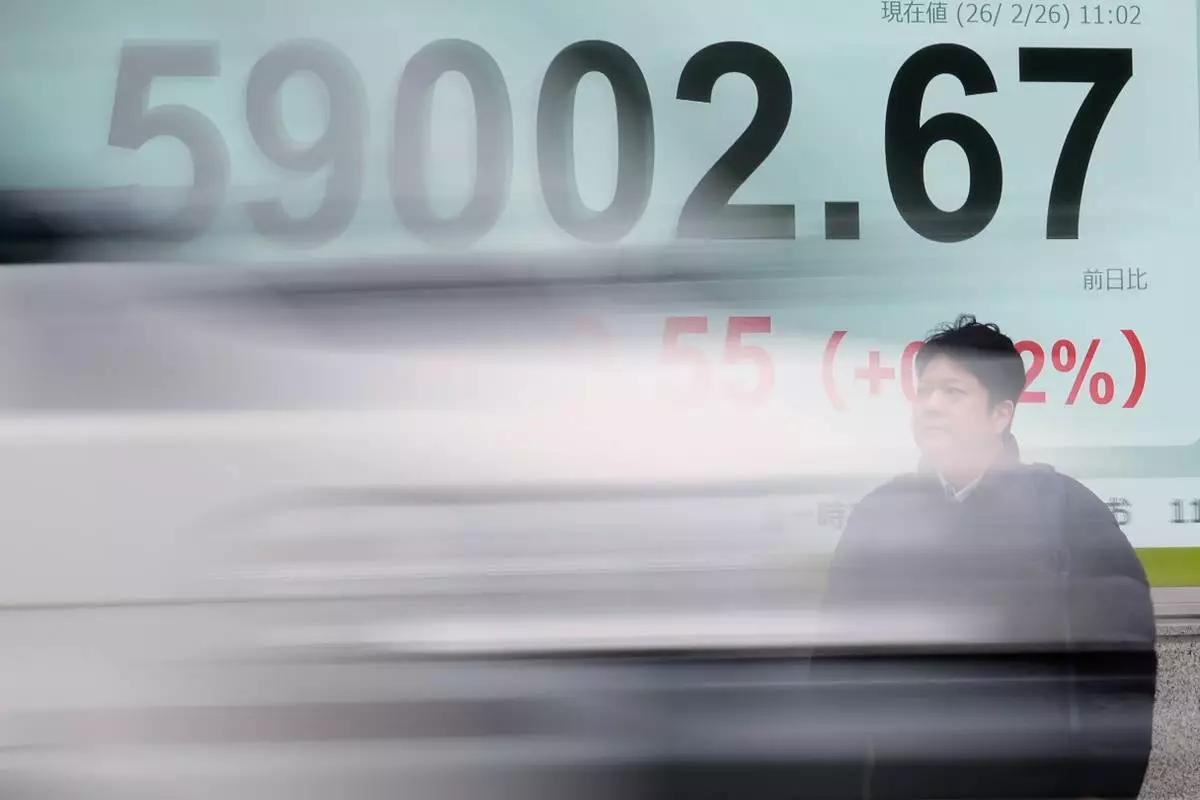
A person stands as a vehicle passes by in front of an electronic stock board showing Japan's Nikkei index at a securities firm Thursday, Feb. 26, 2026, in Tokyo. (AP Photo/Eugene Hoshiko)
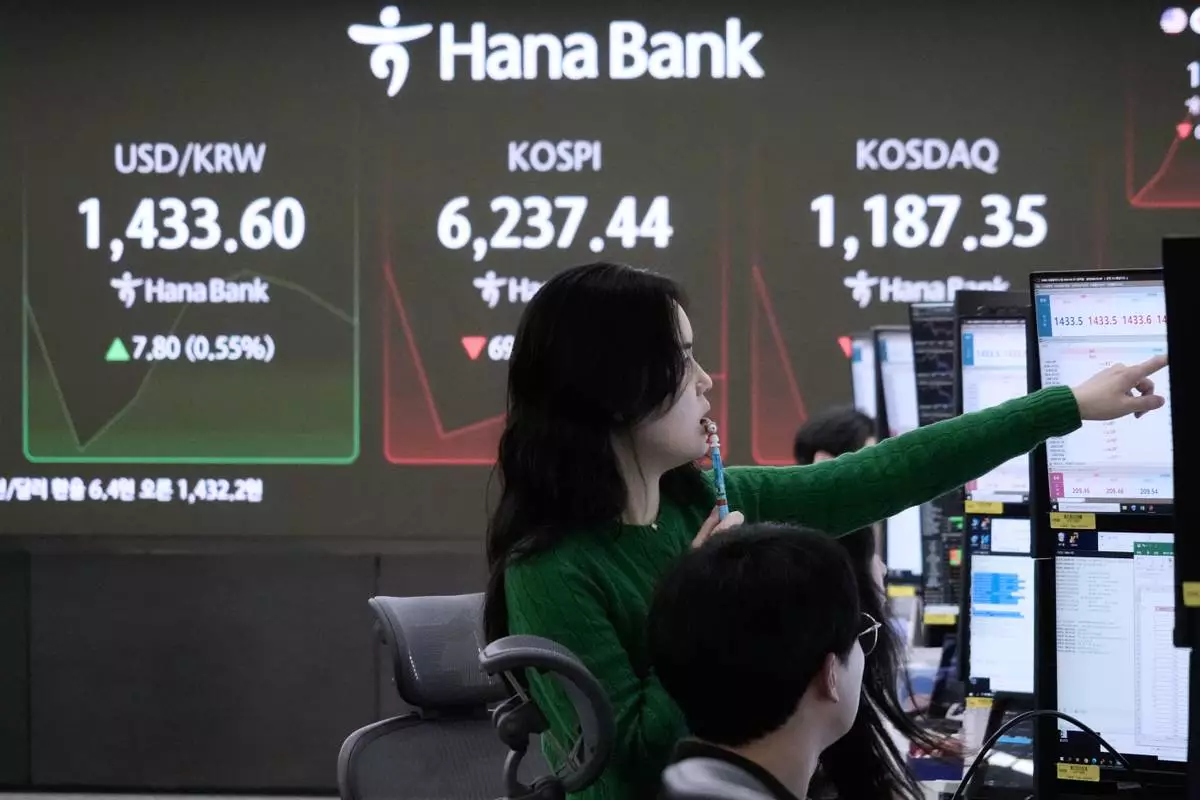
A currency trader watches a monitor near a screen showing the Korea Composite Stock Price Index (KOSPI), top center, and the foreign exchange rate between U.S. dollar and South Korean won, top left, at the foreign exchange dealing room of the Hana Bank headquarters, in Seoul, South Korea, Friday, Feb. 27, 2026. (AP Photo/Ahn Young-joon)
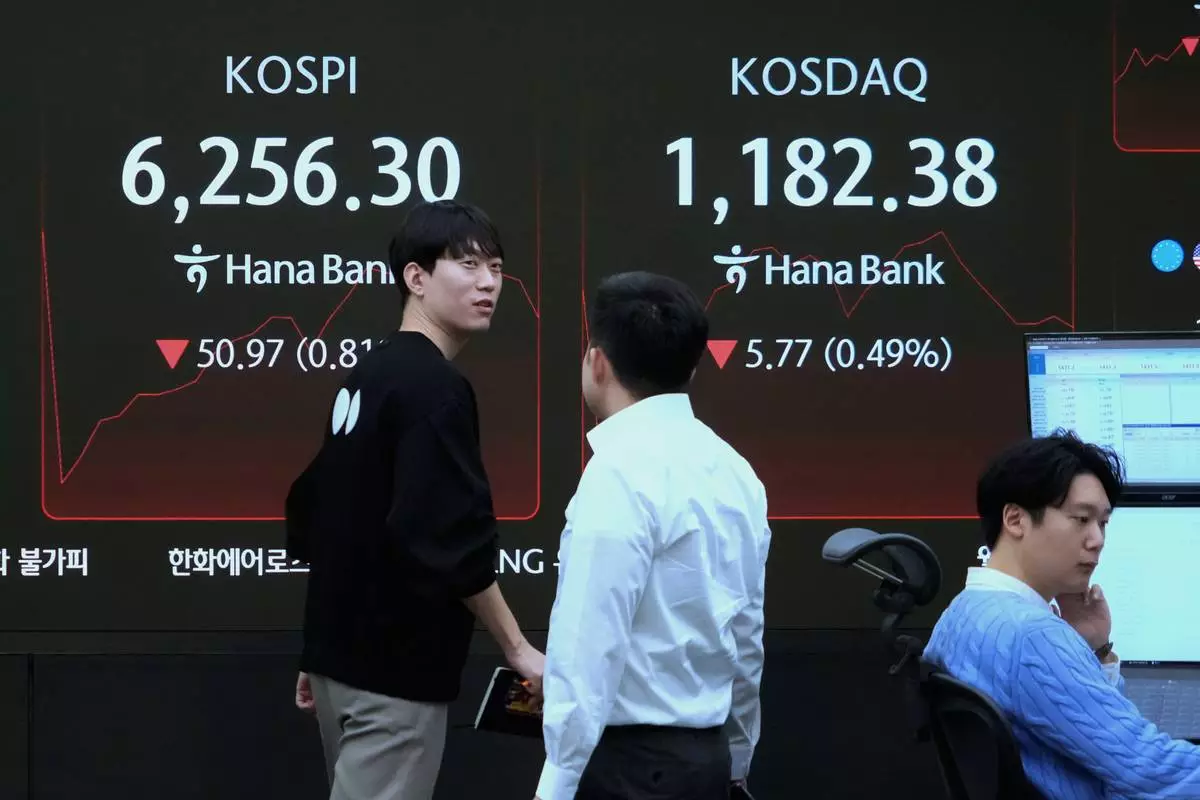
A currency trader passes by a screen showing the Korea Composite Stock Price Index (KOSPI), left, at the foreign exchange dealing room of the Hana Bank headquarters in Seoul, South Korea, Friday, Feb. 27, 2026. (AP Photo/Ahn Young-joon)
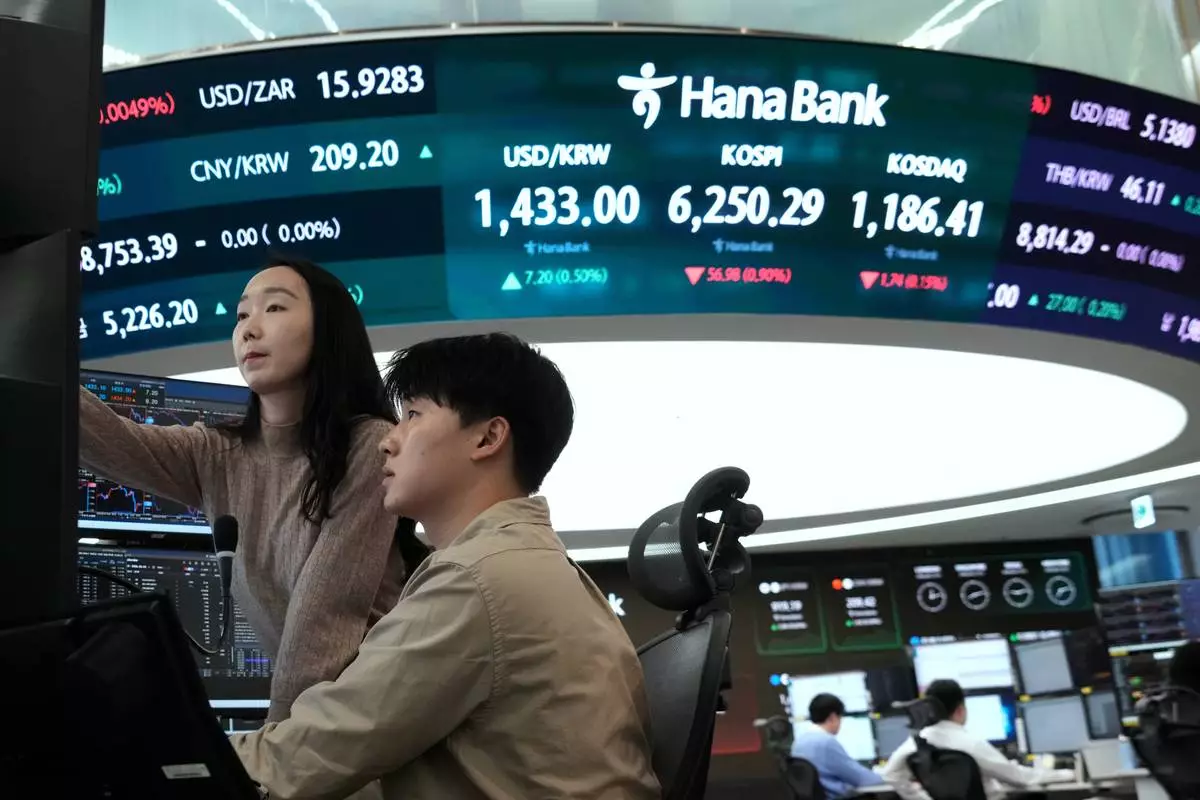
Currency traders watch monitors near a screen showing the Korea Composite Stock Price Index (KOSPI), top center, and the foreign exchange rate between U.S. dollar and South Korean won, top center left, at the foreign exchange dealing room of the Hana Bank headquarters, in Seoul, South Korea, Friday, Feb. 27, 2026. (AP Photo/Ahn Young-joon)