Skip to Content Facebook Feature Image

Civil Rights agency decides against transgender Army worker who asked to use women's bathroom

News

Civil Rights agency decides against transgender Army worker who asked to use women's bathroom
News

News

Civil Rights agency decides against transgender Army worker who asked to use women's bathroom

2026-02-28 05:13 Last Updated At:05:20

NEW YORK (AP) — A U.S. civil rights agency has determined that the federal government can bar transgender employees from using bathrooms aligned with their gender identity, dismissing an appeal from a transgender woman who worked for the U.S. Army.

The Equal Employment Opportunity Commission decided Thursday against a civilian IT specialist who worked for the Army at Fort Riley, Kansas. The EEOC repeatedly declared her to be man even though the worker informed her managers that she identified as a woman in the summer of 2025 when she asked to use bathrooms and locker rooms aligned with her gender identity. Her request was declined and she filed a complaint with the Army, which was dismissed.

The employee, who was not identified, appealed to the EEOC, which decided against her, citing President Donald Trump's executive order saying the federal government would only recognize two immutable sexes, male and female.

The EEOC's sole Democratic commissioner, Kalpana Kotagal, dissented in the 2-1 decision, which she and LGBTQ rights advocates criticized as denying the existence of transgender people. The opinion drew praise from conservative advocates who have accused the EEOC of overstepping its authority on gender identity issues during previous administrations.

The opinion retreated from the EEOC's landmark finding a decade ago that another transgender Army employee had been discriminated against because her employer refused to use her preferred pronouns or allow her to use bathrooms based on her gender identity. In its new finding, the EEOC found that the Army's decision did not violate Title VII of the 1964 Civil Rights Act, which prohibits discrimination on the basis of sex, race, religion and national identity.

EEOC Chair Andrea Lucas has aggressively moved to implement Trump's orders concerning gender identity, dropping lawsuits on behalf of transgender and nonbinary workers who were fired or harassed, and amending harassment guidelines to exclude language stating that deliberately misgendering workers or barring them from bathrooms aligned with their gender identity could constitute harassment.

“Today’s opinion is consistent with the plain meaning of ‘sex’ as understood by Congress at the time Title VII was enacted, as well as longstanding civil rights principles: that similarly situated employees must be treated equally,” Lucas said in a statement. “Biology is not bigotry.”

The EEOC's argued that interpreting Title VII as allowing “trans-identifying” employees into bathrooms of their gender identity would be tantamount to doing away with single-sex facilities.

“All bathrooms would be mixed-sex by law, and every employee would be required to perform bodily and other private functions in the presence of the opposite-sex,” the EEOC wrote.

In a statement explaining her dissent, Kotagal said "the decision rests on the false premise that transgender workers are not worthy of the agency’s protection from discrimination and harassment and that protecting them threatens the rights of other workers. Worse, it suggests that transgender people do not exist.”

Several transgender and gender nonconforming federal employees have filed formal discrimination complaints over the Trump administration's policies, which have included stripping government websites of “gender ideology” and reinstituting a ban on transgender service members in the military.

In a quasi-judicial function, the EEOC handles appeals by federal employees whose complaints have been dismissed by their agency's civil rights offices.

Thursday's decision applies to all federal agencies but not to private employers, and it does not set a precedent that U.S. courts must follow. In the case of private sector workers, the EEOC investigates complaints and can decide whether to file lawsuits on their behalf, but does not issue decisions.

Dan Lennington, deputy counsel at the conservative Wisconsin Institute for Law & Liberty, said private employers should still take note because the decision indicates that EEOC is unlikely to act against them for prohibiting transgender people from accessing bathrooms of the gender identity.

“We are very optimistic and believe that the EEOC is headed in the right direction,” said Lennington, whose group is representing a worker who filed a charge before the EEOC alleging religious discrimination after he was fired for asking not to use pronouns preferred by transgender colleagues.

The Army employee can file a request with the EEOC for reconsideration within 30 days, or she can file a new case in federal district court with 90 days, according to the EEOC.

In her statement, Kotagal argued that a landmark 2020 Supreme Court ruling, Bostock V. Clayton Country, reinforced that Title VII protects transgender workers from discrimination, and she criticizes the EEOC for “rushing” its decision while a federal district court is addressing similar issues in a class action case filed federal employees.

But in its decision, the EEOC argued that Bostock only established that employers cannot fire transgender employees or refuse to hire them based on their gender identity, making no decision on the issue of bathrooms or locker rooms or on the definition of sex.

Echoing a stance long held by Lucas, the EEOC argued that allowing transgender workers into bathrooms and locker rooms of their choice would be dangerous to women, violating their expectations for privacy in such spaces. That reasoning rested on the EEOC's repeated argument that the U.S. Army employee is not a woman and in fact was demanding “special treatment” by asking to be allowed into a bathroom of “the opposite sex.”

The EEOC cited Trump’s executive order and various dictionary entries in an extensive explanation of its insistence that “the complainant’s sex is male, from the moment of his conception and continuing even after he began to identify as transgender.”

Social conservatives have applauded that view but the American Medical Association and other mainstream medical groups have said extensive scientific research suggests sex and gender are better understood as a spectrum than as an either-or definition. Some biologists have criticized Trump's executive order as scientifically unsound because among other problems, it sidesteps variations that include intersex people, who have physical traits that don’t fit typical definitions for male or female categories. In a footnote, the EEOC said intersex individuals present “rare and unique circumstances” that “can be evaluated on a case-by-case basis.”

“For too long, federal agencies have stretched civil rights statutes beyond their plain meaning. By grounding its reasoning in statutory text and ordinary meaning, the EEOC has reinforced that ‘sex’ under Title VII refers to an individual’s immutable biological classification as male or female at birth," said Parlato, senior legal counsel of the conservative Independent Women’s Law Center.

The Congressional Equality Caucus and several civil rights advocacy groups, including the Human Rights Campaign and the National Women's Law Center, said the EEOC's decision leaves transgender workers vulnerable to hostile work environments with little recourse for relief.

“Andrea Lucas has spent her time leading EEOC undermining enforcement of minority workers’ rights — she’s exactly who the Commission was designed to fight back against,” said Rep. Mark Takano, chair of the Congressional Equality Caucus.

The Defense Department referred questions to the Department of Justice and the Army, which did not immediately reply to requests for comment.

AP Business Writer Claire Savage contributed to this report from Chicago.

The Associated Press’ women in the workforce and state government coverage receives financial support from Pivotal Ventures. AP is solely responsible for all content. Find AP’s standards for working with philanthropies, a list of supporters and funded coverage areas at AP.org.
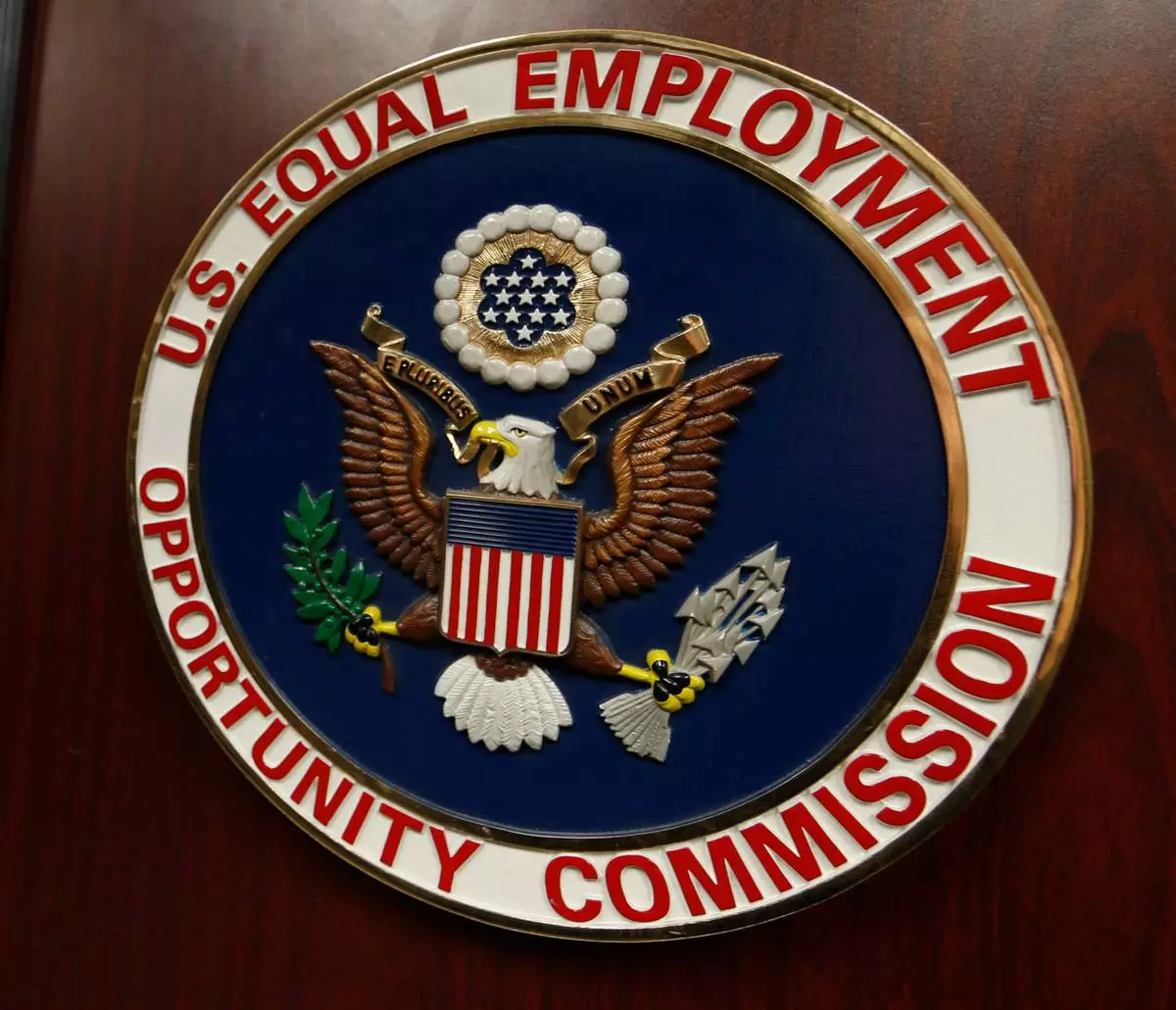
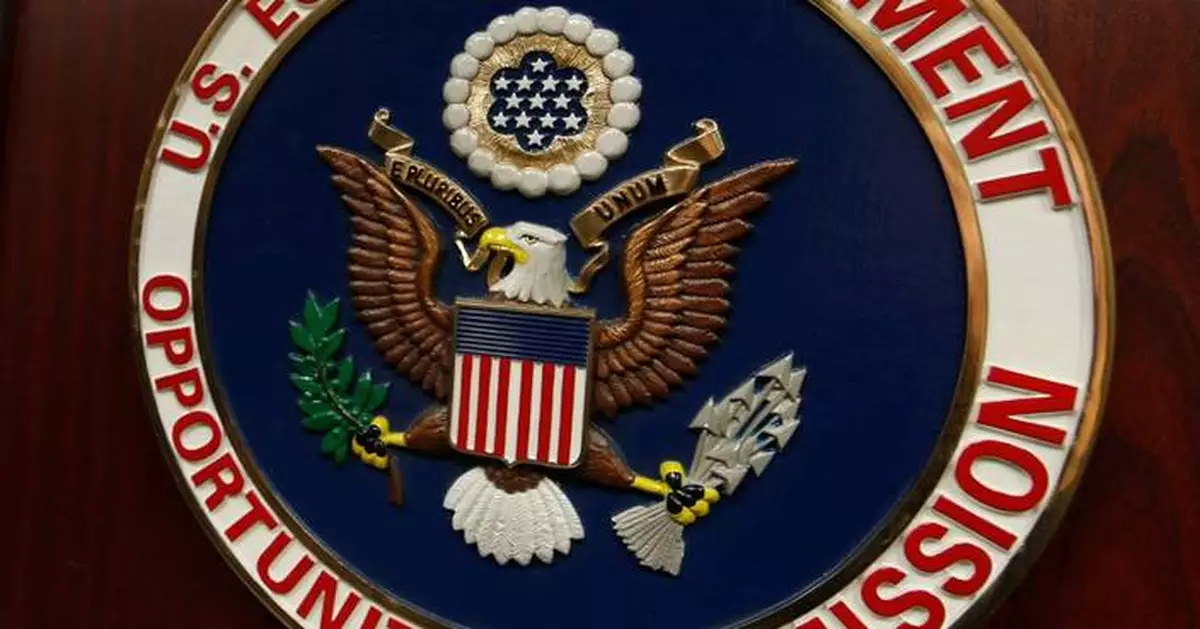
FILE - The emblem of the U.S. Equal Employment Opportunity Commission (EEOC) is displayed on a podium in Vail, Colo., Feb. 16, 2016. (AP Photo/David Zalubowski, File)
FILE - The emblem of the U.S. Equal Employment Opportunity Commission (EEOC) is displayed on a podium in Vail, Colo., Feb. 16, 2016. (AP Photo/David Zalubowski, File)
WASHINGTON (AP) — President Donald Trump just can’t seem to choose among friends in the Texas Senate Republican primary.

So when he travels to the state on Friday for his first post- State of the Union trip, where he plans to promote his energy and economic policies, Trump will have all three candidates in the competitive race join him — just days before his party casts ballots in the primary race.

Sen. John Cornyn is battling for his fifth term and is being challenged by state Attorney General Ken Paxton and Rep. Wesley Hunt in a primary fight that has become viciously personal. And all three men, missing the coveted endorsement from Trump, have been trying to highlight their ties to him as they ramp up their campaigning ahead of Tuesday’s vote. Cornyn got a head start on Friday, when he flew on Air Force One for the Texas trip and posted multiple photos of his ride on social media.

Trump landed in Corpus Christi shortly before 3 p.m. local time and was greeted by Gov. Greg Abbott, Energy Secretary Chris Wright, and officials at the nearby Port of Corpus Christi. Ahead of Trump’s visit, Energy Secretary Chris Wright authorized a 12% expansion in liquefied natural gas exports at Cheniere Energy’s Corpus Christi terminal — making it the second largest LNG export project in the U.S.

For his part, Trump will be seeking to ride the message of his State of the Union address from Tuesday, where he declared a return to economic prosperity and a more secure America — two centerpiece arguments for Republicans as they campaign to keep their congressional majorities this fall.

Trump’s hesitation to endorse in the Texas Senate primary speaks to the tricky dynamics of the race.

Cornyn is unpopular with a segment of Texas’ GOP base, in part for his early dismissiveness of Trump’s 2024 comeback campaign and for his role in authoring tougher restrictions on guns after the 2022 school shooting in Uvalde, Texas. But Senate GOP leadership and allied groups see Cornyn as the stronger general election candidate, in light of a series of troubles that have shadowed Paxton.

Paxtonbeat impeachment on fraud charges in 2023, and has faced allegations of marital infidelity by his wife, state Sen. Angela Paxton.

Senate Majority Leader John Thune and South Carolina Sen. Tim Scott, chairman of the National Republican Senatorial Committee, have urged Trump to endorse Cornyn. They and allied campaign groups argue that the seat would cost the party hundreds of millions more to defend with Paxton as the candidate.

“It is a strong possibility we cannot hold Texas if John Cornyn is not our nominee,” Scott told Fox News on Wednesday.

Hunt, a second-term Houston-area representative, was a late entry to the race, but claims a kinship with Trump, having endorsed him early in the 2024 race. Hunt campaigned regularly for Trump and earned a prime-time speaking slot at the Republican National Convention in Milwaukee.

If no candidate reaches 50% in Tuesday’s primary, the top two finishers will advance to a May 26 runoff.

Cornyn’s campaign and a half-dozen allied groups have poured more than $63 million into the race since last fall, chiefly trying to slow Paxton but recently attacking Hunt in an effort to keep him from making it to the runoff.

Earlier this month, Trump feinted toward weighing in on the race when he said he was taking “a serious look” at endorsing in the Texas primary. He has since reaffirmed his neutrality.

Still, you wouldn’t know it from watching TV in Texas. Cornyn has been airing ads since last year touting his support for Trump's agenda, even though his relationship with the president has been cool at times. Paxton and Hunt both have ads airing now featuring them standing with Trump.

“I like all three of them, actually. Those are the toughest races. They’ve all supported me. They’re all good. You’re supposed to pick one, so we’ll see what happens. But I support all three,” Trump said earlier this month.

The GOP battle comes as Democrats have a contested primary of their own in Texas between state Rep. James Talarico, a self-described policy wonk who regularly quotes the Bible, and progressive favorite U.S. Rep. Jasmine Crockett.

Trump hasn’t been shy about wading into other contested Republican primaries in the state. Parts of Corpus Christi fall within Texas’ 34th congressional district, where former Rep. Mayra Flores is fighting to reclaim her seat against the Trump-endorsed Eric Flores. (The two are not related.) The winner of the primary will face off against Democratic Rep. Vicente Gonzalez, long a target of the GOP, whose district was redrawn to make it easier for a Republican to win.

Eric Flores will be at the Trump event at the Port of Corpus Christi, which technically is located in a neighboring district.

Elsewhere in the state, the president has also endorsed Rep. Tony Gonzales, who is fighting calls from his own party to resign from Congress after reports of an alleged affair with a former staffer who later died after she set herself on fire. Gonzales is refusing to step down and has said that there will be “opportunities for all of the details and facts to come out” and that the stories about the situation do not represent “all the facts.”

Gonzales is facing a primary challenge from Brandon Herrera, a gun manufacturer and gun rights influencer, whom Gonzales defeated by fewer than 400 votes in their 2024 runoff. The White House did not return a request for comment on Thursday on whether Trump stands by his endorsement of Gonzales.

Beaumont reported from Des Moines, Iowa. Associated Press writer Jonathan J. Cooper in Phoenix contributed to this report.

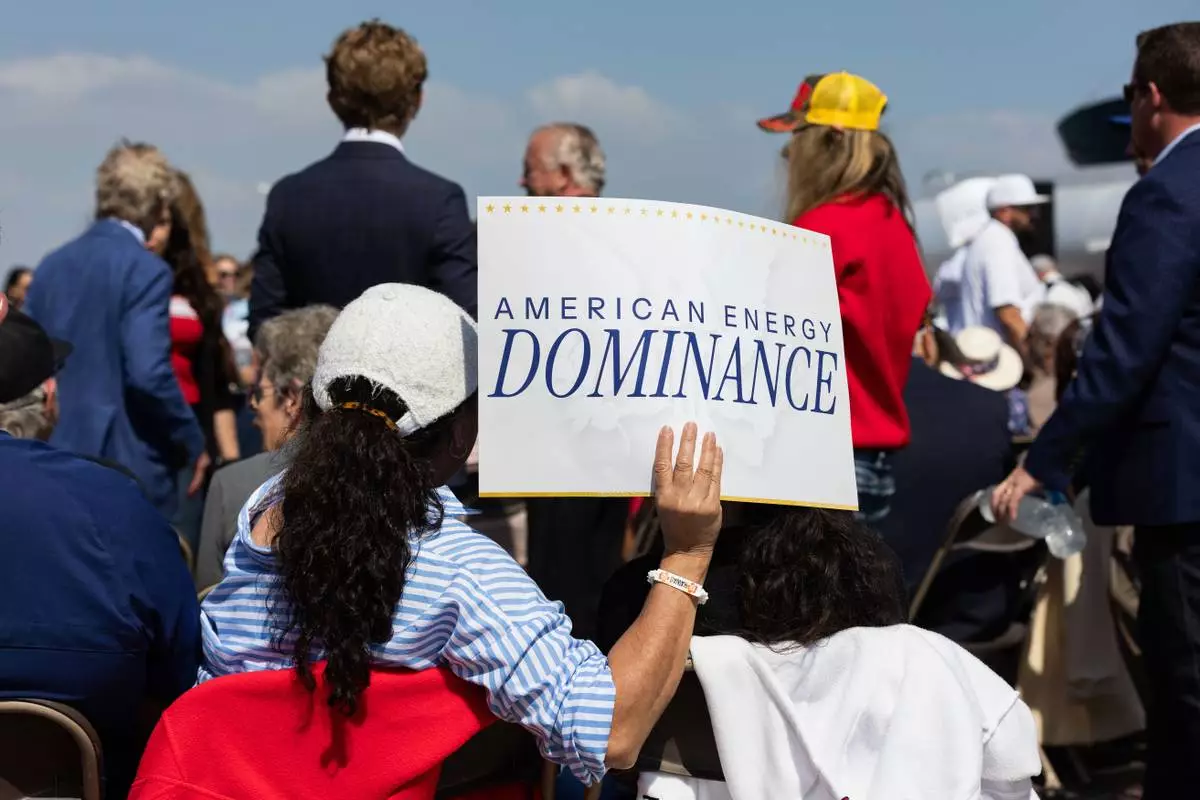
A person waits for President Donald Trump to speak at the Port of Corpus Christi in Corpus Christi, Texas, Friday, Feb. 27, 2026. (AP Photo/Michael Gonzalez)

A person waits for President Donald Trump to speak at the Port of Corpus Christi in Corpus Christi, Texas, Friday, Feb. 27, 2026. (AP Photo/Michael Gonzalez)

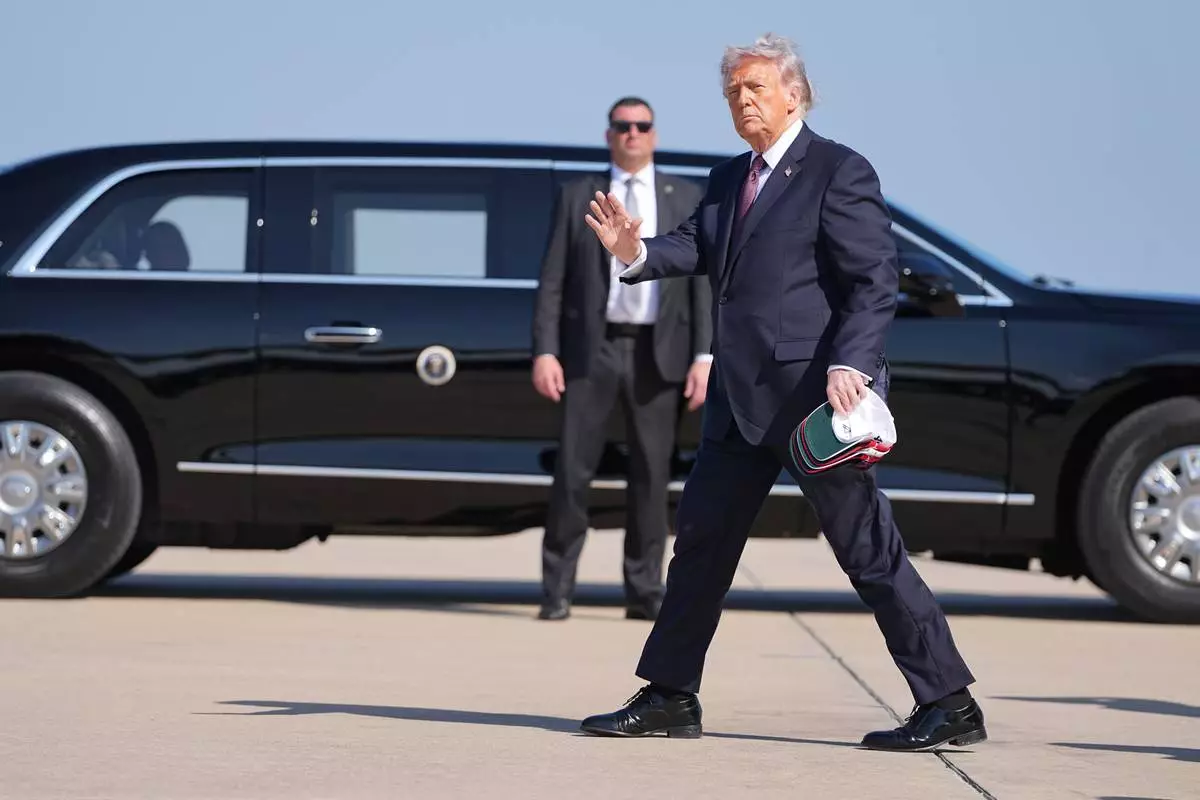
President Donald Trump waves after arriving on Air Force One at Corpus Christi International Airport, in Corpus Christi, Texas, Friday, Feb. 27, 2026. (AP Photo/Matt Rourke)

President Donald Trump waves after arriving on Air Force One at Corpus Christi International Airport, in Corpus Christi, Texas, Friday, Feb. 27, 2026. (AP Photo/Matt Rourke)

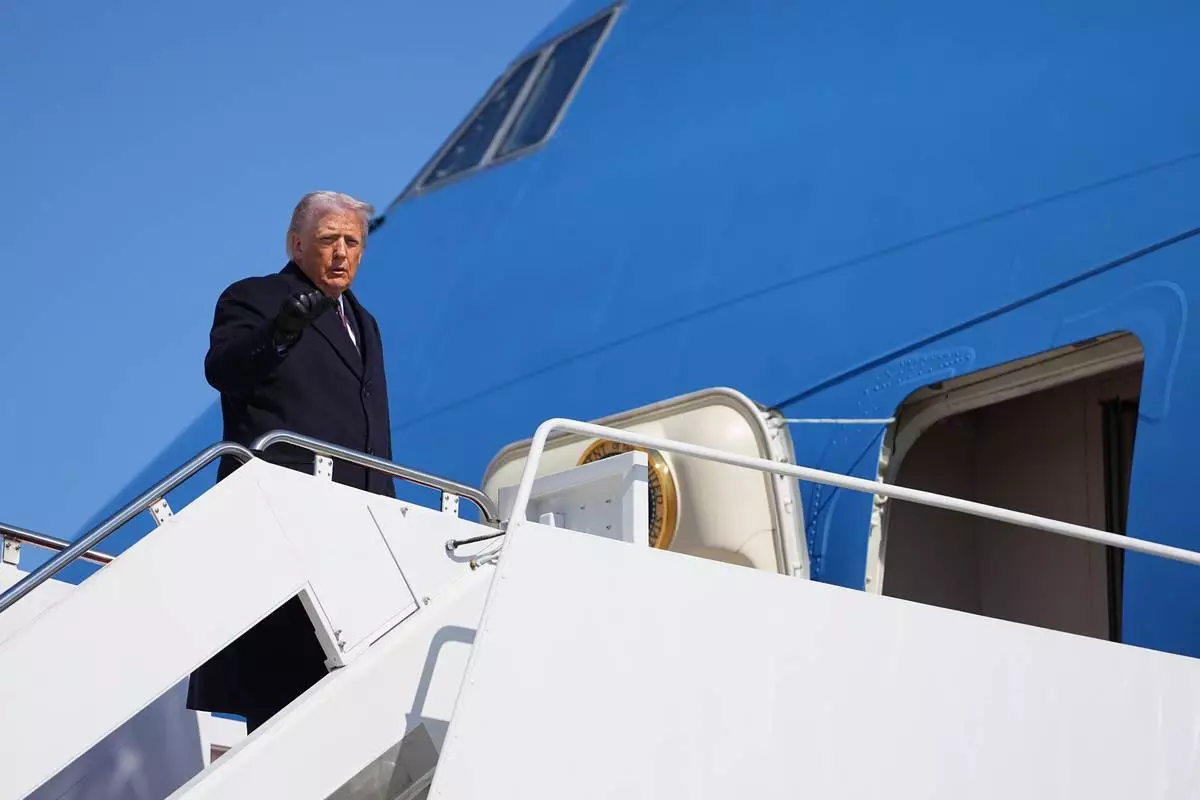
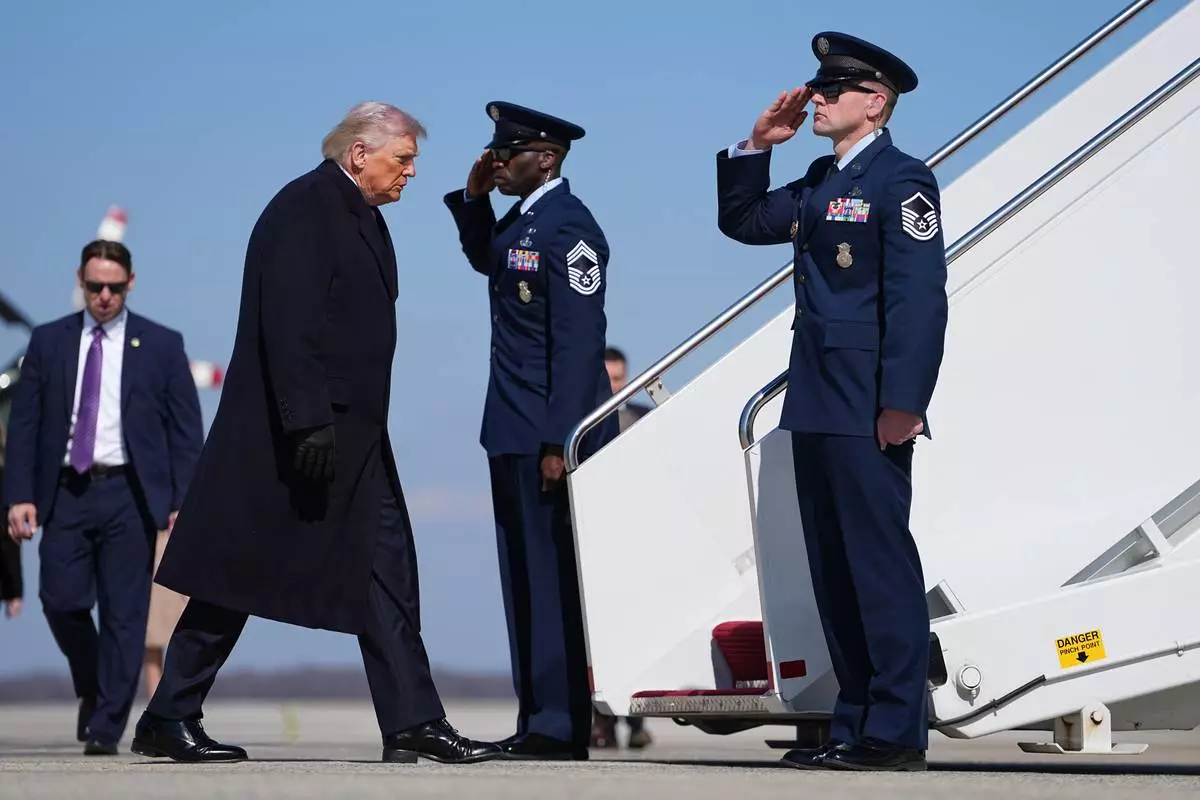
President Donald Trump boards Air Force One at Joint Base Andrews, Md., Friday, Feb. 27, 2026, en route Corpus Christi, Texas. (AP Photo/Matt Rourke)

President Donald Trump boards Air Force One at Joint Base Andrews, Md., Friday, Feb. 27, 2026, en route Corpus Christi, Texas. (AP Photo/Matt Rourke)

President Donald Trump boards Air Force One at Joint Base Andrews, Md., Friday, Feb. 27, 2026, en route Corpus Christi, Texas. (AP Photo/Matt Rourke)

President Donald Trump boards Air Force One at Joint Base Andrews, Md., Friday, Feb. 27, 2026, en route Corpus Christi, Texas. (AP Photo/Matt Rourke)

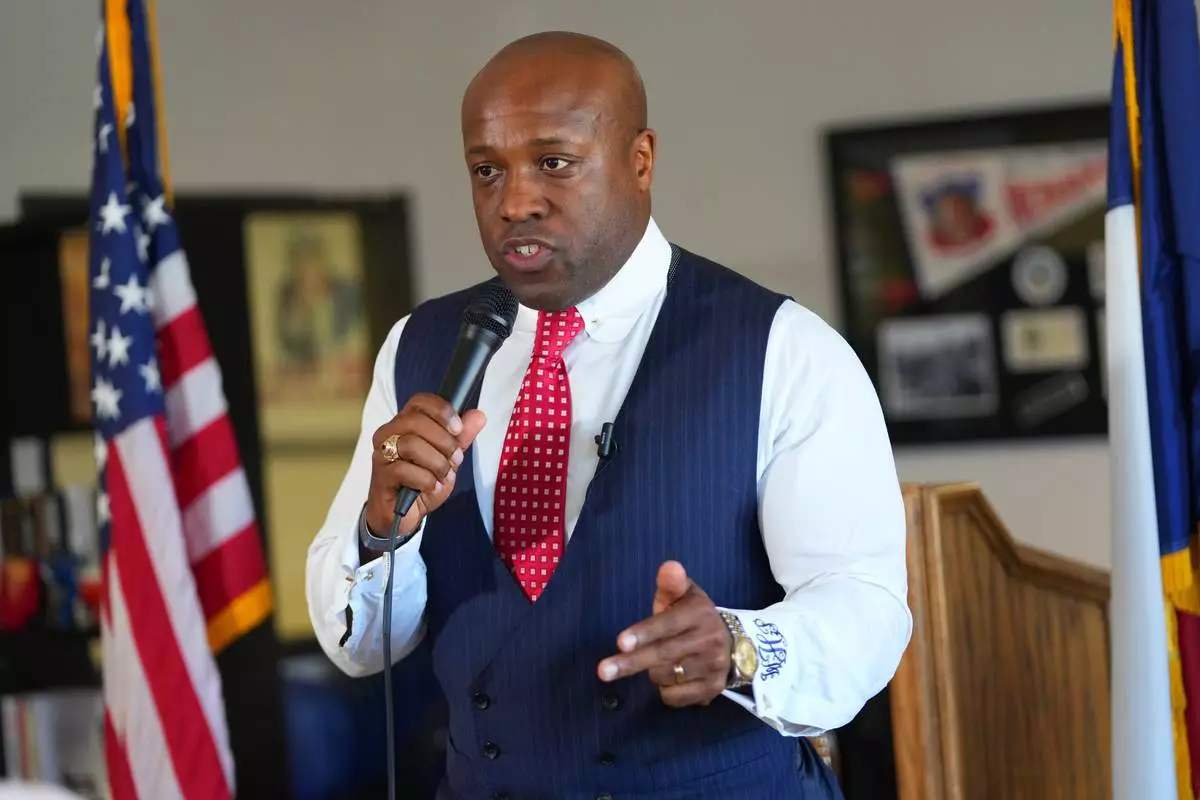
U.S. Rep. Wesley Hunt, R-Texas, speaks at a campaign event, Monday, Feb. 16, 2026, in Dallas. (AP Photo/Julio Cortez)

U.S. Rep. Wesley Hunt, R-Texas, speaks at a campaign event, Monday, Feb. 16, 2026, in Dallas. (AP Photo/Julio Cortez)

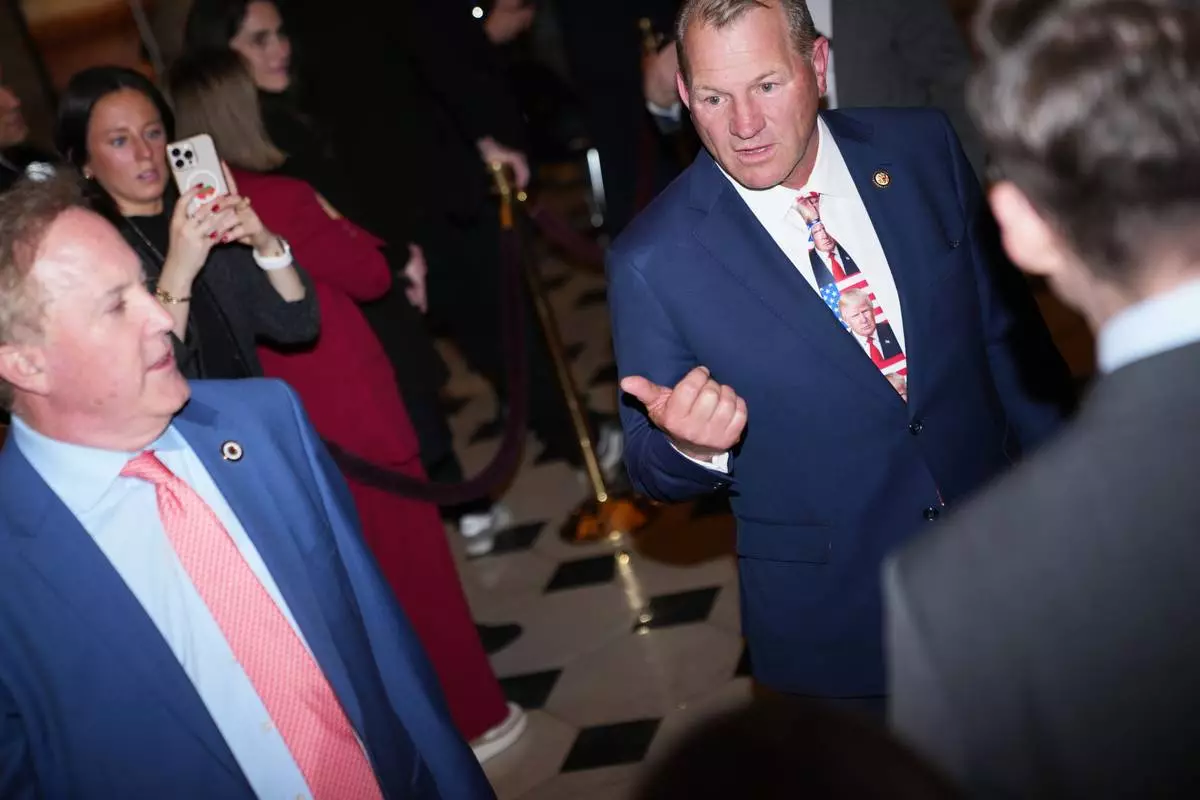
Texas Attorney General Ken Paxton and Rep. Troy Nehls, R-Texas, arrive before President Donald Trump delivers the State of the Union address to a joint session of Congress in the House chamber at the U.S. Capitol in Washington, Tuesday, Feb. 24, 2026. (AP Photo/Allison Robbert)

Texas Attorney General Ken Paxton and Rep. Troy Nehls, R-Texas, arrive before President Donald Trump delivers the State of the Union address to a joint session of Congress in the House chamber at the U.S. Capitol in Washington, Tuesday, Feb. 24, 2026. (AP Photo/Allison Robbert)

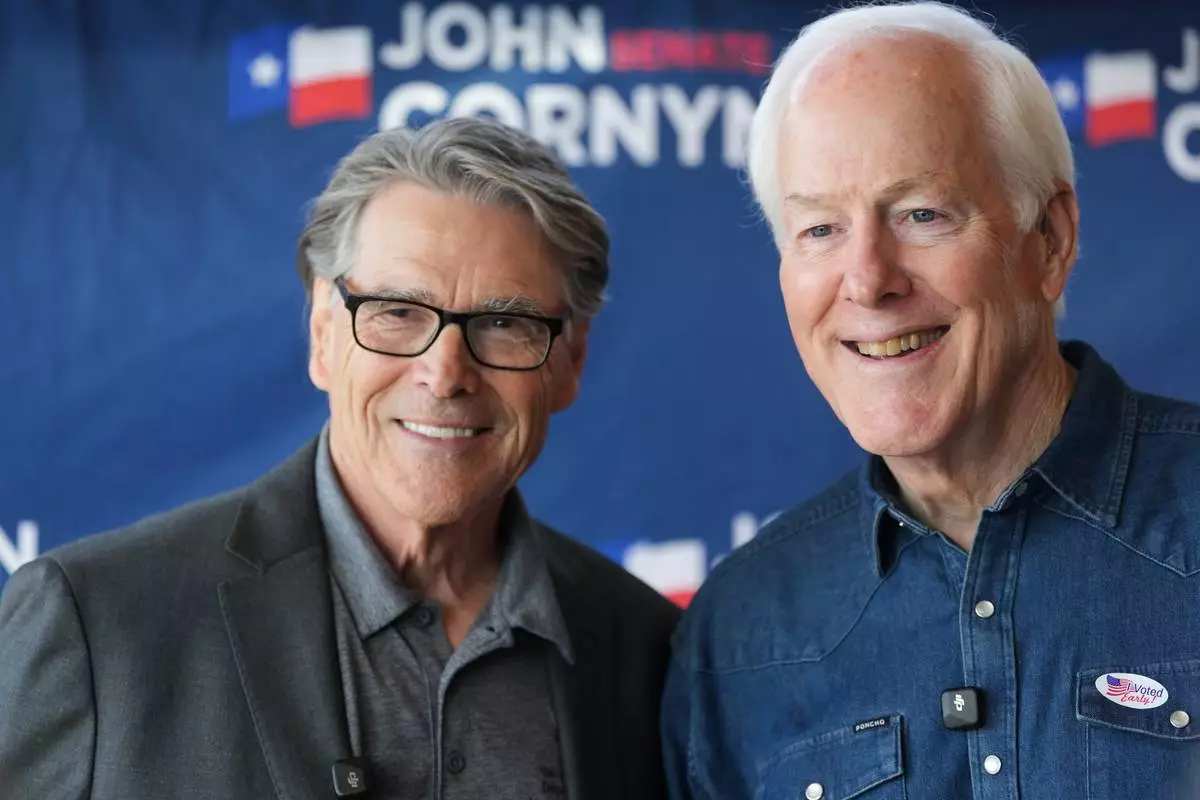
Sen. John Cornyn, R-Texas, right, is joined by former Texas Gov. Rick Perry, left, during a campaign stop in Austin, Texas, Tuesday, Feb. 17, 2026. (AP Photo/Eric Gay)

Sen. John Cornyn, R-Texas, right, is joined by former Texas Gov. Rick Perry, left, during a campaign stop in Austin, Texas, Tuesday, Feb. 17, 2026. (AP Photo/Eric Gay)

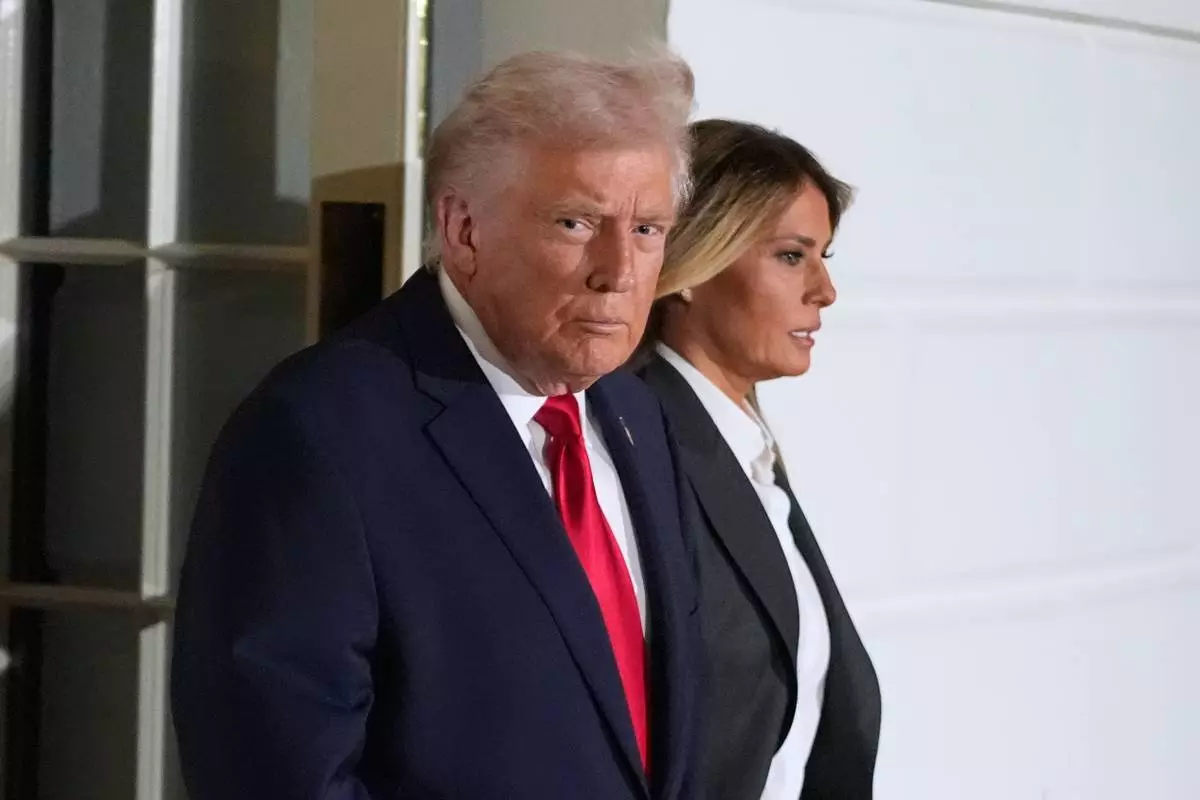
President Donald Trump and first lady Melania Trump, walk out of the White House, Tuesday, Feb. 24, 2026, to travel to the U.S. Capitol where he will deliver the State of the Union address to a joint session of Congress in the House chamber, in Washington. (AP Photo/Manuel Balce Ceneta)

President Donald Trump and first lady Melania Trump, walk out of the White House, Tuesday, Feb. 24, 2026, to travel to the U.S. Capitol where he will deliver the State of the Union address to a joint session of Congress in the House chamber, in Washington. (AP Photo/Manuel Balce Ceneta)

Recommended Articles