Skip to Content Facebook Feature Image

ICE agents said to have posed as police, a tactic some fear could erode trust in real cops

News

ICE agents said to have posed as police, a tactic some fear could erode trust in real cops
News

News

ICE agents said to have posed as police, a tactic some fear could erode trust in real cops

2026-02-28 09:21 Last Updated At:09:30

NEW YORK (AP) — The 911 call came in at 6:32 a.m. on Thursday: Two “suspicious” men wearing dark clothing were lingering inside a Columbia University residential building.

But when New York Police Department officers were dispatched to the scene, they came across U.S. Immigrations and Customs Enforcement agents in the midst of an unusually elaborate operation.

According to a statement later released by Columbia, the agents had gained access to the building by posing as police in search of a 5-year-old — going so far as to present a flyer of the “missing child” to a campus safety officer.

The ruse allowed them to make their way to the apartment of Ellie Aghayeva, an international student from Azerbaijan who immigration officials claim overstayed her visa. The NYPD officers arrived after the men had entered her apartment, a department spokesperson said. They confirmed the men were federal agents, then quickly left the building.

The arrest has prompted widespread censure and calls for investigation by Democrats, as well as a surprising intervention by President Donald Trump. The Republican informed New York City Mayor Zohran Mamdani that Aghayeva was being released shortly after meeting with the Democratic mayor Thursday.

As new details emerge, the operation has also threatened to open a rift between the city’s police department and ICE, whose agents have increasingly donned the disguises of utility workers, delivery drivers and other uniformed professionals to carry out Trump's sweeping deportation campaign.

While such tactics are not illegal, former police officers said the apparent misrepresentation at Columbia represented a startling escalation, one that could gravely undermine public trust during the next emergency.

“If the police are actually looking for a child in danger, people are now going to be more hesitant to help,” said Michael Alcazar, a retired hostage negotiator with the NYPD. “Almost immediately, this sort of ICE subterfuge is going to make the job of police officers more difficult.”

A spokesperson for the Department of Homeland Security, Tricia McLaughlin, has disputed portions of the university’s narrative, claiming the federal agents “verbally identified themselves and visibly wore badges around their necks” and were allowed into the building by a property manager.

McLaughlin did not respond to repeated questions about whether the agents had used the guise of a missing child to enter the apartment.

Claire Shipman, the university's acting president, said on Thursday that security cameras had “captured the agents in the hallway showing pictures of the alleged missing child,” adding that the situation was “utterly unacceptable.”

Columbia has so far declined to release that footage.

The NYPD also declined to share body camera footage of their response. A department spokesperson said the officers had followed the law by not interfering in an active federal investigation.

Aghayeva's arrest has prompted protests at Columbia, along with fear and confusion.

Her friends said that she was in her final semester on an international student visa, studying neuroscience and politics. In an emergency petition filed Thursday, her attorneys wrote she was not given a reason for the arrest.

A spokesperson for DHS said Aghayeva’s visa had been terminated in 2016 for failing to attend classes. She remains in removal proceedings despite her release, the spokesperson said.

Jeffrey Fagan, a law professor at Columbia who studies policing, said research has shown that deceptive tactics by police are especially likely to hurt law enforcement legitimacy when they resulted in an arrest “perceived to be unjustified.”

“Anybody looking at this is going to immediately think it's unjustified,” he said. “So that will erode trust in a relevant community the next time officers need cooperation.”

Peter Moskos, a professor of criminal justice at John Jay University and former Baltimore City police officer, agreed. He noted that sanctuary policies were originally meant to enhance public safety by building trust between immigrant communities and police.

“The idea is that you would trust the cops and call the cops when you need them and know you wouldn’t be deported,” he said. “But ICE seems to be doing everything they can to break down trust.”
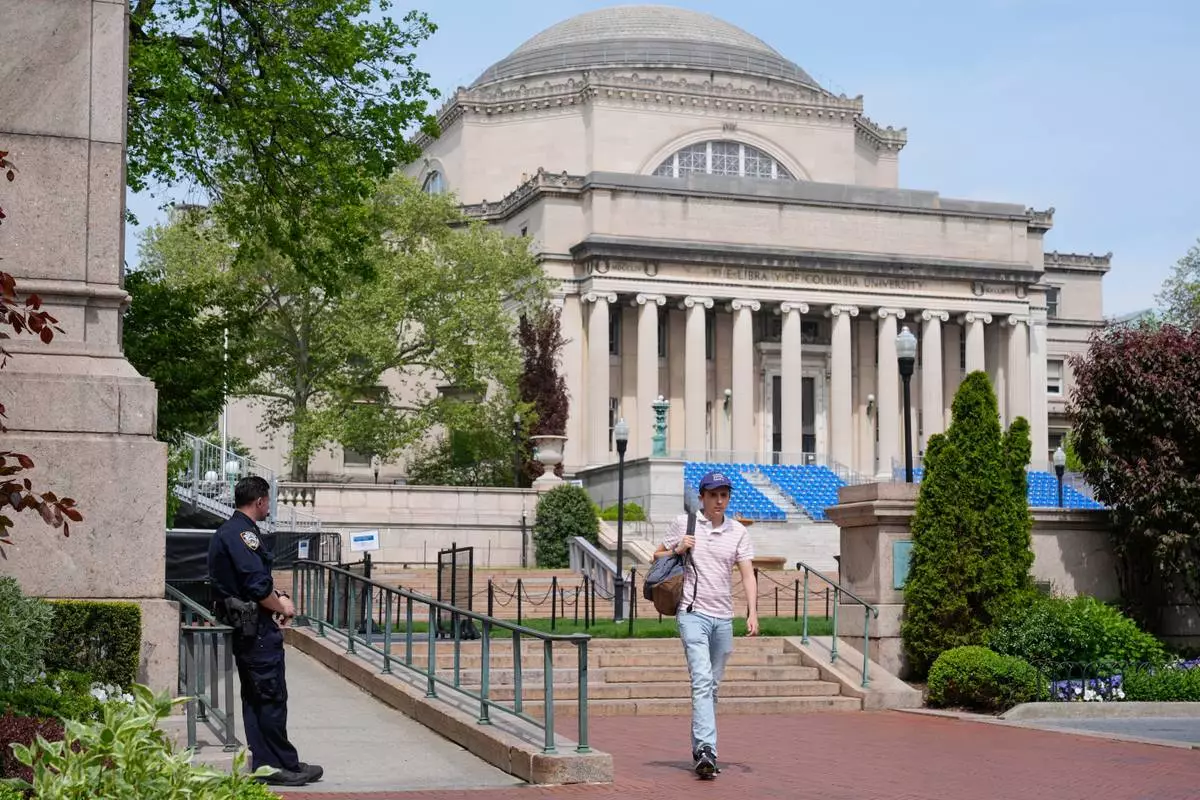
FILE - A New York City police officer keeps watch on the campus of Columbia University in New York, May 6, 2024. (AP Photo/Seth Wenig, File)
FILE - A New York City police officer keeps watch on the campus of Columbia University in New York, May 6, 2024. (AP Photo/Seth Wenig, File)
WASHINGTON (AP) — Gun rights and cannabis legalization are usually on opposite ends of the political spectrum, but both movements have brought about seismic shifts in the United States in recent decades.

Now those forces are lining up for a rare overlap in a case coming before the Supreme Court on Monday, and it is not the only unusual alliance.

The Republican Trump administration will be defending a firearm restriction, with backing from gun-control groups typically more aligned with Democrats.

On the other side is a pairing of the National Rifle Association and the American Civil Liberties Union.

At stake is a federal law that bars people who regularly use marijuana from legally owning guns. It is an issue that has divided lower courts since a landmark 2022 Supreme Court decision expanded gun rights.

Cecillia Wang, legal director at the ACLU, said the law violates the Second Amendment and is unconstitutionally vague about what it means to be a drug user.

“We’re deeply concerned with the potential of this statute to basically give federal prosecutors a blank check,” she said. “Millions of Americans use marijuana and there is no way for them to know based on words of this statute whether they could be charged or convicted of this crime because they own a firearm.”

Cannabis is legal for medicinal use in most states and for recreational use in about half the country.

But the law also applies more widely against all illegal substances, meaning the case could allow broader legal gun use by other drug users. The group Everytown for Gun Safety said the law meets the Supreme Court's requirement that gun laws must have a strong grounding in the nation’s history and tradition.

“Restricting firearm use by illegal drug users is ‘as old as legislative recognition of the drug problem itself,’” attorneys wrote.

Cannabis remains illegal on a federal level, though President Donald Trump has signed an order to fast-track its reclassification as a less dangerous drug.

His Justice Department is also asking the justices to revive a criminal case against Ali Danial Hemani, a Texas man who was charged with a felony because he had a gun in his house and acknowledged smoking marijuana every other day. FBI agents also found a small amount of cocaine when they searched his home as part of a broader investigation, but the gun charge was the only one filed against him.

The conservative-leaning 5th U.S. Circuit Court of Appeals rejected the case, finding that only people who are intoxicated while armed can be charged with a crime.

The administration has argued in favor of gun rights in other cases, but government lawyers say this law is a justifiable restriction. “Habitual illegal drug users with firearms present unique dangers to society — especially because they pose a grave risk of armed, hostile encounters with police officers while impaired,” they wrote in court documents. The law fits within the nation’s history of restrictions on people who were frequently drunk, they argued.

While the conservative-majority Supreme Court has expanded gun rights, it also has upheld a federal law disarming people who are subject to domestic violence restraining orders. The Department of Justice argues that drug users are similarly risky. The law it is asking the court to uphold was also used in the case of Hunter Biden, who was convicted of buying a gun when he was addicted to cocaine.

But the NRA and other gun-rights groups, typically aligned with the GOP, are arrayed against the administration in Hemani's case.

“Americans have traditionally chosen which substances are acceptable for responsible recreational use, and the fundamental right to keep and bear arms was never denied to people who occasionally partook in such drugs — unless they were carrying arms while actively intoxicated,” lawyers for the Second Amendment Foundation wrote in court documents.

The cannabis group NORML agrees, saying one of the fastest-growing groups of users are baby boomers trying products such as marijuana gummies to relieve arthritis and sleep problems.

“It’s laughable to think that by outlawing cannabis users possessing firearms you’ll minimize the problem with gun violence,” said Joe A. Bondy, chair of the board of directors for NORML, one of the country's oldest and largest groups advocating for the legalization of marijuana.

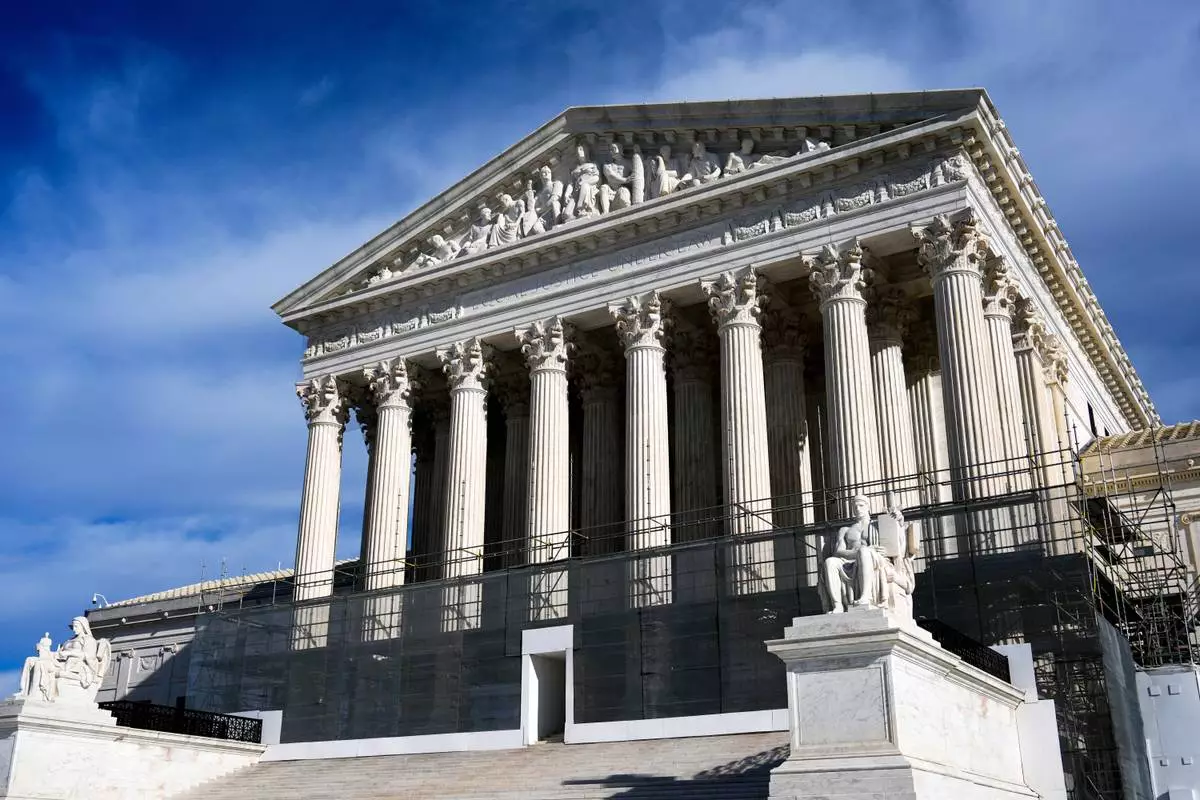
FILE - The Supreme Court is seen, Jan. 13, 2026, in Washington. (AP Photo/Julia Demaree Nikhinson, File)

FILE - The Supreme Court is seen, Jan. 13, 2026, in Washington. (AP Photo/Julia Demaree Nikhinson, File)

Recommended Articles