TYMPAKI, Greece (AP) — An Israeli-built Heron 2 drone whirs off the tarmac on a new surveillance mission.
The aircraft's sensors scan for boats along the 350-kilometer (220-mile) stretch of sea between Libya and the Greek island of Crete and can detect activity hidden below deck.
Click to Gallery
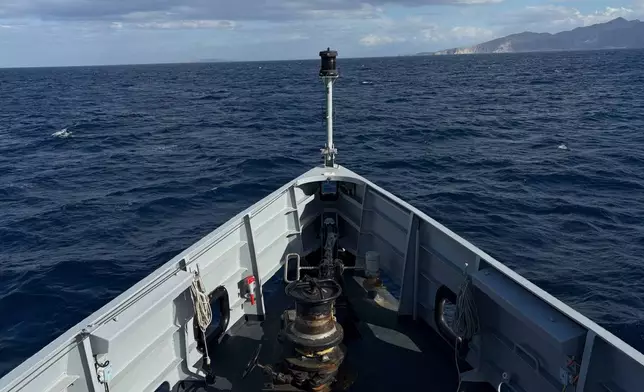
A Frontex Italian Guardia Di Finanza OPV Osum patrols the Aegean Sea near Heraklion, Crete Island, Greece, Monday, Feb. 16, 2026. (AP Photo/Lefteris Pitarakis)
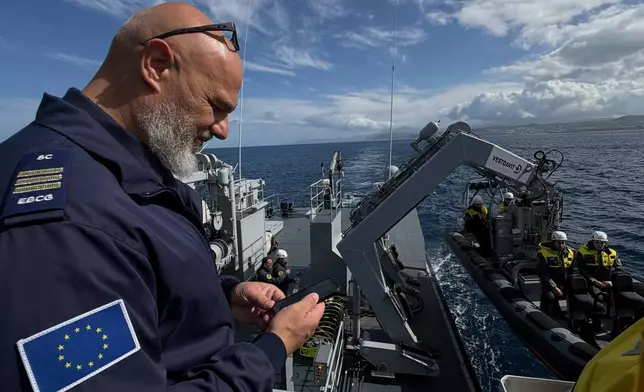
Frontex Contingent Commander Georgios Pyliaros takes pictures of Frontex officers from the Guardia di Finanza OPV Osum as they prepare in their speedboat to be lowered into the sea during a patrol in the Aegean Sea near Heraklion, Crete, Greece, Monday, Feb. 16, 2026. (AP Photo/Lefteris Pitarakis)
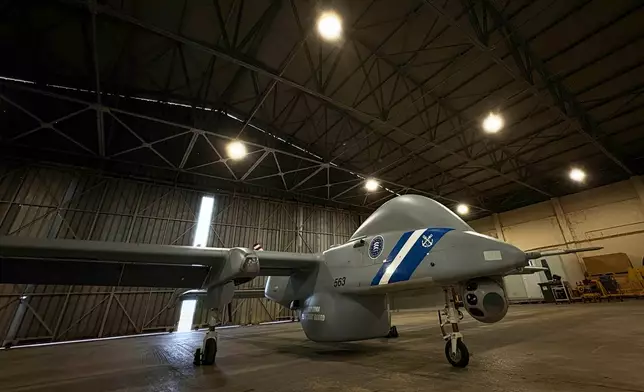
A Frontex HERON2 UAV drone is parked at Tympaki airport on Crete island, Greece, Tuesday, Feb. 17, 2026. (AP Photo/Lefteris Pitarakis)
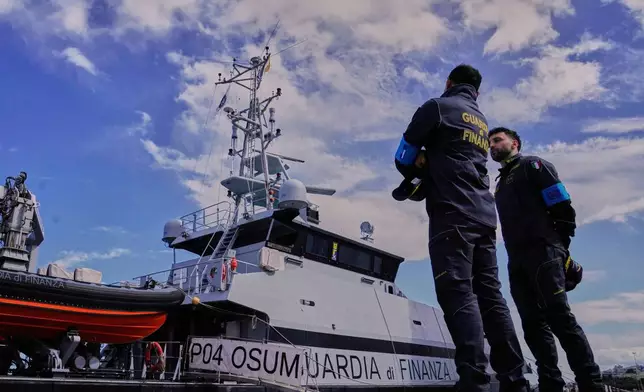
Frontex officers from the Italian Guardia Di Finanza OPV Osum prepare to go on patrol in Heraklion, at the port on Crete Island, Greece, Monday, Feb. 16, 2026. (AP Photo/Lefteris Pitarakis)
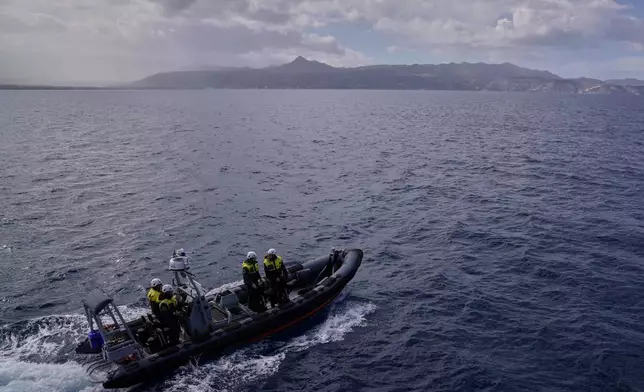
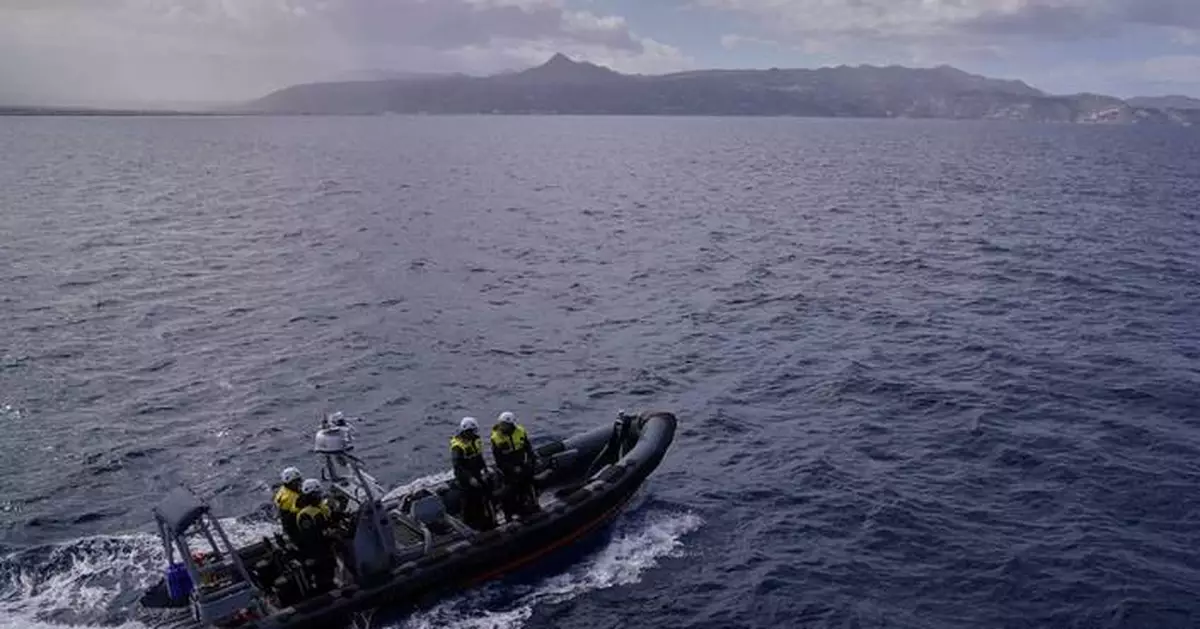
Frontex officers from the Italian Guardia Di Finanza OPV Osum patrol by speedboat on the Aegean Sea near Heraklion, Crete Island, Greece, Monday, Feb. 16, 2026. (AP Photo/Lefteris Pitarakis)
Crete, Greece’s largest island, saw a threefold increase in irregular migration last year, becoming the country’s busiest point of entry with about 20,000 arrivals, even as overall irregular migration to Europe fell by 26% in 2025 compared with the previous year, according to data from Frontex, the European Union's border agency.
One of Europe’s deadliest migration corridors, where unclaimed bodies often wash up on shore, the passage to Crete is fueled by wars and instability across Africa and is growing busier even as pressure eases on other Mediterranean routes.
As the EU readies tougher measures to combat illegal migration, Frontex says it will focus resources on Crete in an attempt to end the surge in arrivals.
Eastern Libya has become a key launch point for smugglers, undercutting years of EU efforts to curb departures and making Crete a new pressure point.
Many boats leaving Libya are overcrowded and barely seaworthy, attempting a long, exposed journey across the Libyan Sea, leading to tragedies such as a sunken fishing trawler that killed at least 700 in 2023.
Greek authorities recently rescued 20 migrants and recovered four bodies from a vessel in distress south of Crete. Dozens of others are believed missing.
Each rescue underscores the same brutal reality: The crossing is a gamble with lives.
The route to Crete is significantly longer and more perilous than the short trip from Turkey to nearby Greek islands. It requires larger vessels capable of navigating open sea for days and a different operational response from Frontex, including bigger patrol boats and expanded aerial surveillance.
Standing beside a drone at Tympaki airfield on Crete, Mariusz Kawczynski, a senior Frontex operations official, said the technology was indispensable.
“This asset is of critical importance,” he said. “There is no substitute in modern technology to have eyes for Europe of the threats that are coming to our borders.”
Georgios Pyliaros, head of Frontex operations in Greece and Cyprus, said the bad weather led to an expected seasonal lull in activity in January and February, but the agency expects increased crossings in the spring.
“If we take into consideration what happened in the last two or three years, we will have some increase in the following months, for sure,” Pyliaros said.
The surge in Crete last year hardened political positions in Athens. Greece temporarily suspended asylum claims from migrants arriving via the Libya route for three months, scrapped certain amnesty provisions and introduced mandatory imprisonment for asylum seekers whose claims are rejected.
The EU also is taking a tougher line, with new bloc-wide migration rules starting in June aimed at stricter border screening and faster deportations.
Frontex’s standing corps is set to reach 10,000 officers by the end of the year — double the number employed in 2021 — reflecting the policy shift and expectations of sustained pressure along key routes.
A war-tracking project at Sweden’s Uppsala University recorded 61 active conflicts globally in 2024 — the highest number since World War II — including expanding militant activity in western Africa, a major driver of displacement.
The International Organization for Migration, a United Nations agency, estimates at least 2,185 people died or went missing in the Mediterranean in 2025. The agency said 606 migrant deaths already had been recorded in the Mediterranean as of Feb. 24, warning that limited access to search-and-rescue information means the true toll is likely higher.
“The continued loss of life on migration routes is a global failure we cannot accept as normal,” IOM Director General Amy Pope said. “These deaths are not inevitable.”
Gatopoulos reported from Athens, Greece.
Follow AP migration coverage at: https://apnews.com/hub/migration
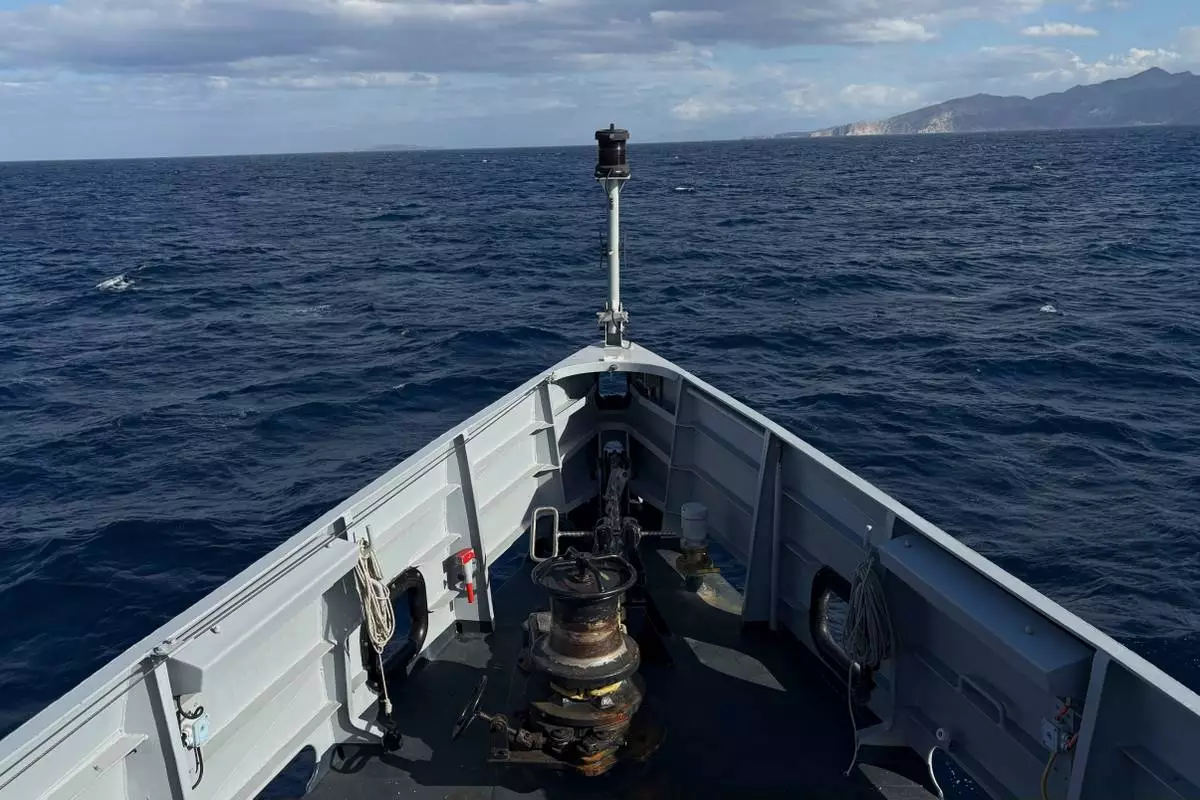
A Frontex Italian Guardia Di Finanza OPV Osum patrols the Aegean Sea near Heraklion, Crete Island, Greece, Monday, Feb. 16, 2026. (AP Photo/Lefteris Pitarakis)
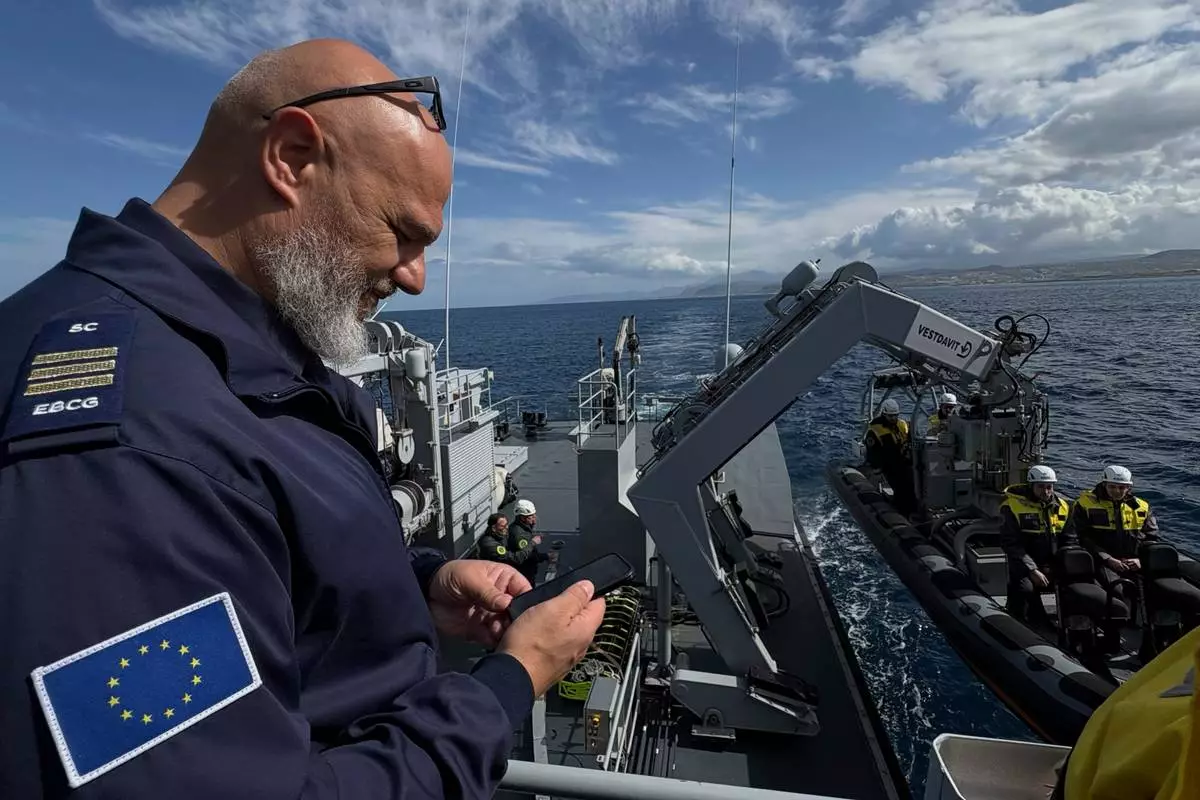
Frontex Contingent Commander Georgios Pyliaros takes pictures of Frontex officers from the Guardia di Finanza OPV Osum as they prepare in their speedboat to be lowered into the sea during a patrol in the Aegean Sea near Heraklion, Crete, Greece, Monday, Feb. 16, 2026. (AP Photo/Lefteris Pitarakis)
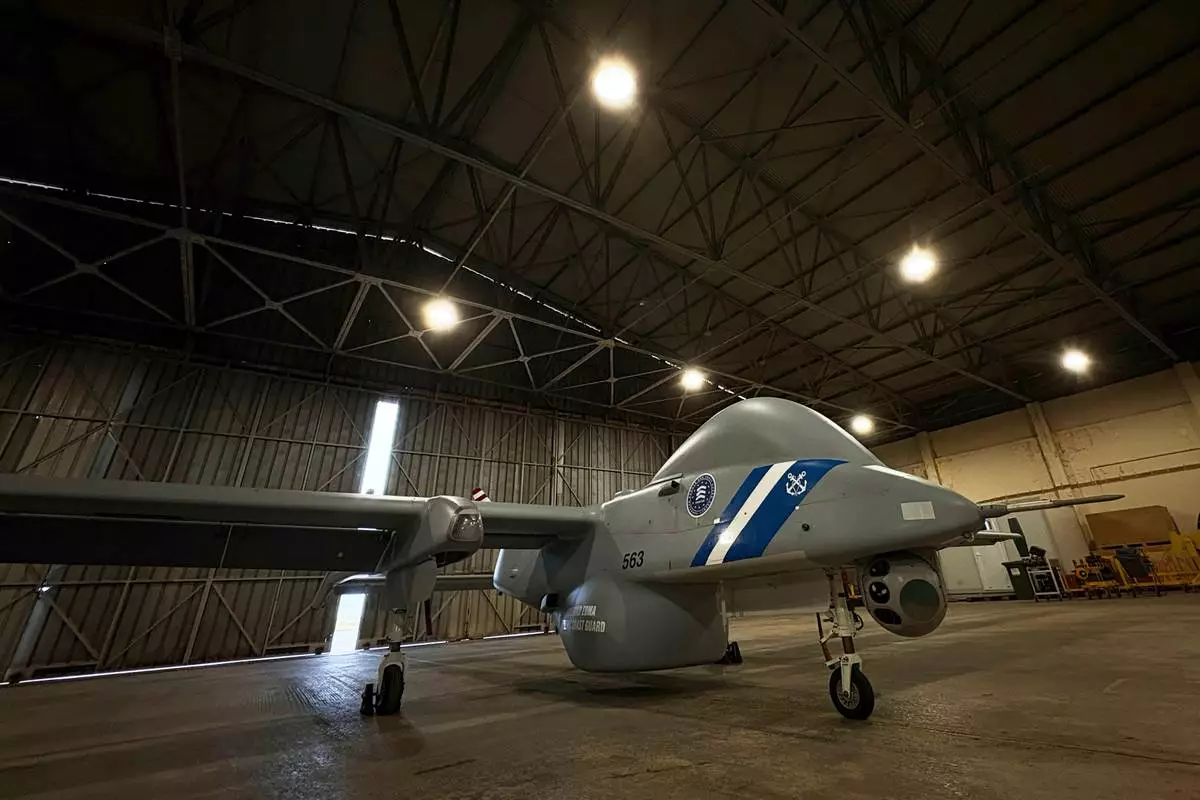
A Frontex HERON2 UAV drone is parked at Tympaki airport on Crete island, Greece, Tuesday, Feb. 17, 2026. (AP Photo/Lefteris Pitarakis)
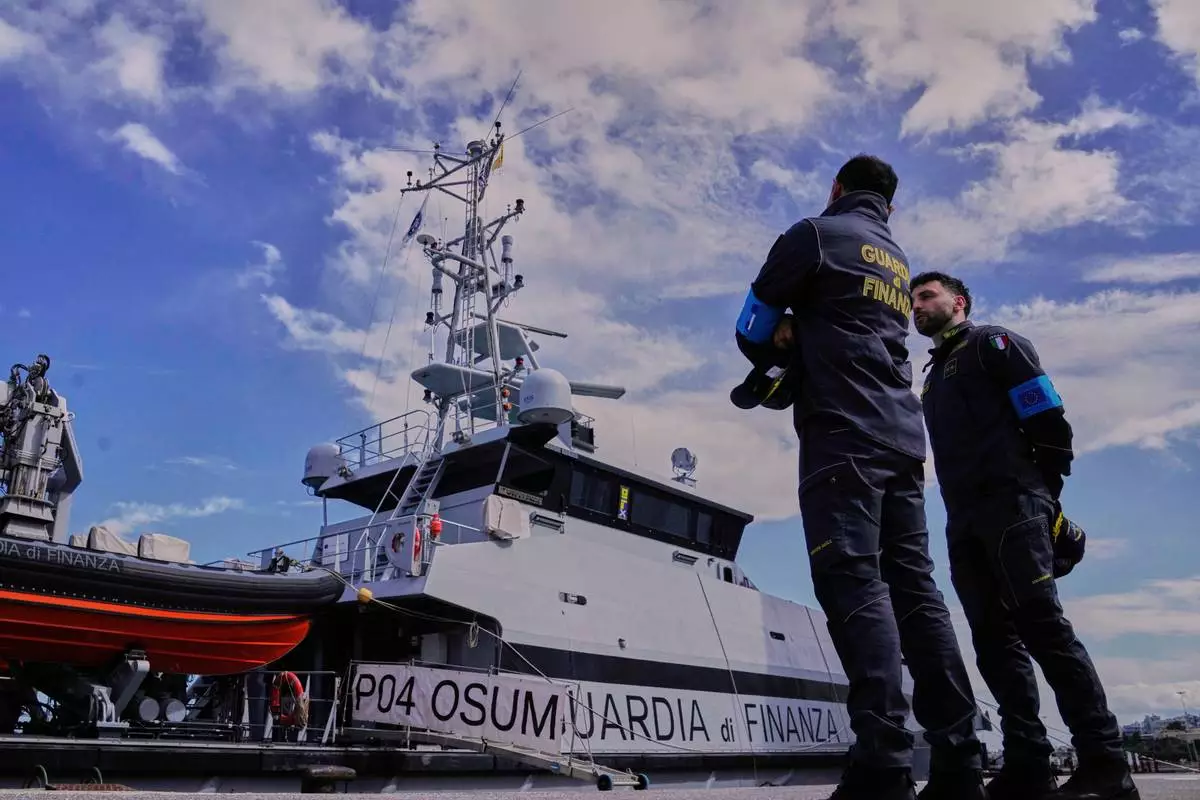
Frontex officers from the Italian Guardia Di Finanza OPV Osum prepare to go on patrol in Heraklion, at the port on Crete Island, Greece, Monday, Feb. 16, 2026. (AP Photo/Lefteris Pitarakis)
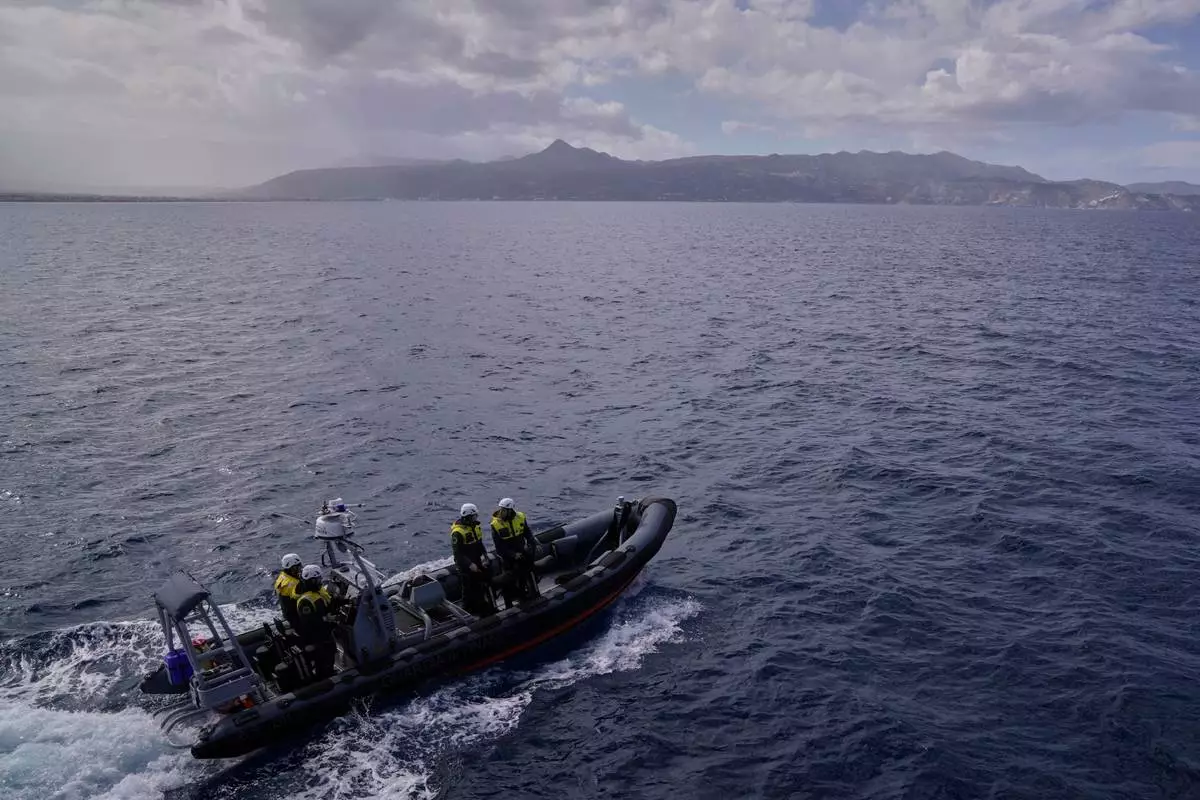
Frontex officers from the Italian Guardia Di Finanza OPV Osum patrol by speedboat on the Aegean Sea near Heraklion, Crete Island, Greece, Monday, Feb. 16, 2026. (AP Photo/Lefteris Pitarakis)