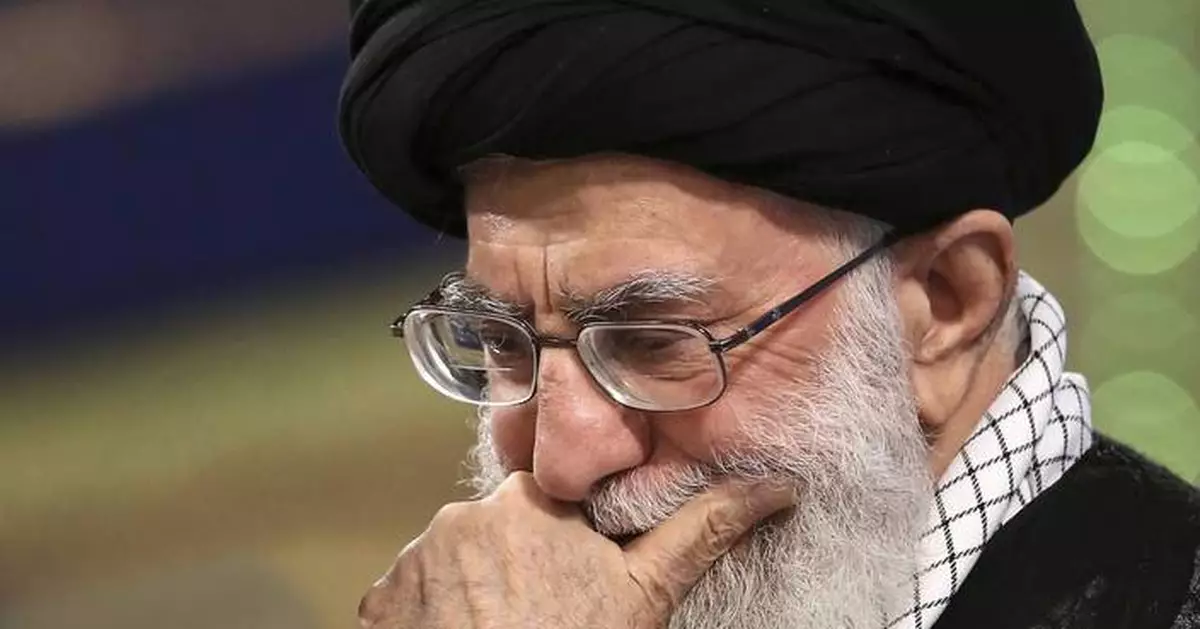
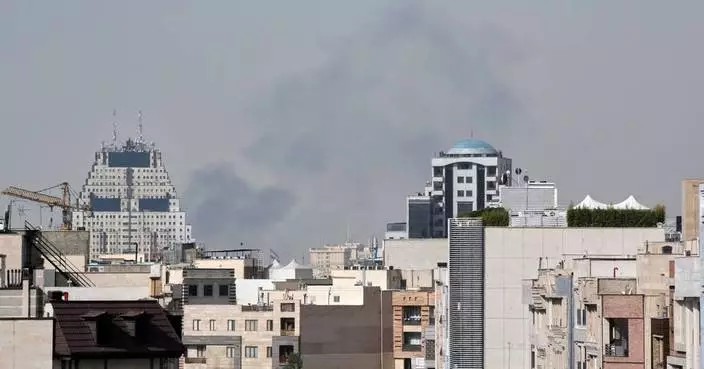
When targeted by nationwide protests early this year, Iran’s Supreme Leader Ayatollah Ali Khamenei unleashed the bloodiest crackdown of his nearly four decades in power. But now a U.S. or Israeli military strike may have ended his rule.
There was no immediate Iranian comment about him Saturday after President Donald Trump said Khamenei was killed in a major new attack by U.S. and Israeli forces. Trump also urged Iranians to topple the theocracy.
The 86-year-old Khamenei had tried to avert such strikes as the U.S. built up its military presence in the region to pressure Tehran over its nuclear program. He warned that if the U.S. struck, a regional war would ensue. At the same time, he allowed Iran to enter negotiations with the U.S. over its nuclear program.
Long before the supreme leader’s compound was among the first targets on Saturday, Khamenei was under growing pressure.
The suppression of the protests, with thousands of people killed amid chants of “Death to Khamenei,” was a sign of the threat that popular anger represented. Years of sanctions, economic mismanagement and corruption have gutted Iran’s economy.
Israeli and U.S. bombardment during last summer’s 12-day war had heavily damaged Iran’s nuclear program, missile systems and military capabilities. Iran's network of regional proxies, including Hamas in Gaza, Hezbollah in Lebanon and the Houthis in Yemen, has been weakened by Israeli and U.S. attacks since the war in Gaza began, along with Tehran’s influence across the Middle East.
Here’s what to know about Khamenei:
When he rose to power in 1989, Khamenei had to overcome deep doubts about his authority. A low-level cleric at the time, Khamenei lacked the religious credentials of his predecessor, Ayatollah Ruhollah Khomeini, the leader of the Islamic Revolution.
But Khamenei has ruled three times longer than the late Khomeini and has shaped Iran perhaps even more dramatically.
He entrenched the system of rule by the mullahs, or Shiite Muslim clerics. Under the Islamic Republic, clerics stand atop the hierarchy, drawing the lines to which the civilian government, the military and the intelligence and security establishment must submit.
In the eyes of hard-liners, Khamenei stands as the unquestionable authority — below only that of God.
At the same time, Khamenei built the paramilitary Revolutionary Guard into the dominant player in military and internal politics. It boasts Iran’s most elite military and oversees its ballistic missile program. Khamenei also gave the Guard a free hand to build a network of businesses and dominate the economy.
In return, the Guard became his loyal shock force.
The first major threat to Khamenei’s grip was the reform movement that swept into a parliamentary majority and the presidency soon after he became supreme leader. It advocated for giving greater power to elected officials, which Khamenei’s hard-line supporters feared would lead to dismantling the Islamic Republic system.
Khamenei rallied the clerical establishment, and unelected bodies run by mullahs shut down major reforms and barred reform candidates from elections.
Since then, waves of popular protests have been crushed.
Huge nationwide demonstrations erupted in 2009 over allegations of vote-rigging. Under the weight of sanctions, economic protests broke out in 2017 and 2019. More came in 2022 over the death of Mahsa Amini, who was detained by police for not wearing her mandatory headscarf properly.
Crackdowns against the protesters killed hundreds, and hundreds more were arrested amid reports of detainees tortured to death or raped in prison.
The latest demonstrations touched off in late December in Tehran’s traditional bazaar after the country's currency, the rial, currency plunged to a record low of 1.42 million to the U.S. dollar. Protests quickly spread across the country.
“Rioters must be put in their place,” Khamenei declared. When hundreds of thousands took to the streets Jan. 8 and 9, security forces fired on crowds, and veterans of past demonstrations said they were stunned by the firepower unleashed.
Activists said they documented more than 7,000 killed and were working to verify more. The government has acknowledged more than 3,000 dead, which is still higher than the toll from past crackdowns.
By agreeing to nuclear negotiations, Khamenei likely sought to buy time to avert U.S. strikes. But Iran opposed Washington's main demands that it halt all nuclear enrichment and surrender its uranium stocks.
Trump initially threatened strikes to stop Khamenei and Iran’s other leaders from killing peaceful protesters. He then wielded the threat to push Tehran to engage seriously in nuclear negotiations.
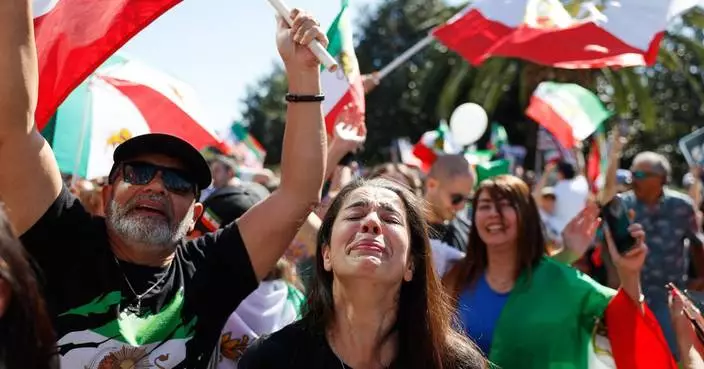
Some in Iran and the large Iranian diaspora expressed hope that the U.S. would use military force to bring down Khamenei. But there were also strong voices even among Khamenei opponents who were against foreign intervention to topple the theocracy.
Officially a panel of Shiite clerics is tasked with choosing one of their own to succeed Khamenei, and multiple names have been touted among including his son.
Danny Citrinowicz, an Iran expert at Israel’s Institute for National Security Studies, told The Associated Press this week that a key lesson Tehran drew from last year’s war was the need to ensure regime continuity in case of Khamenei’s death. He added that power could shift to a small committee of top officials until hostilities subside.
“It is possible that Khamenei has indicated a preferred successor behind closed doors,” Citrinowicz said. “However automatic implementation of a preselected successor will increase internal friction during war.”
But the Revolutionary Guard has grown to become Iran’s most powerful body. If the supreme leader is confirmed to be dead, that could prompt Guard commanders or its regular military to seize power more overtly. And that could set off a bloody conflict over control of the oil-rich country of 85 million people.
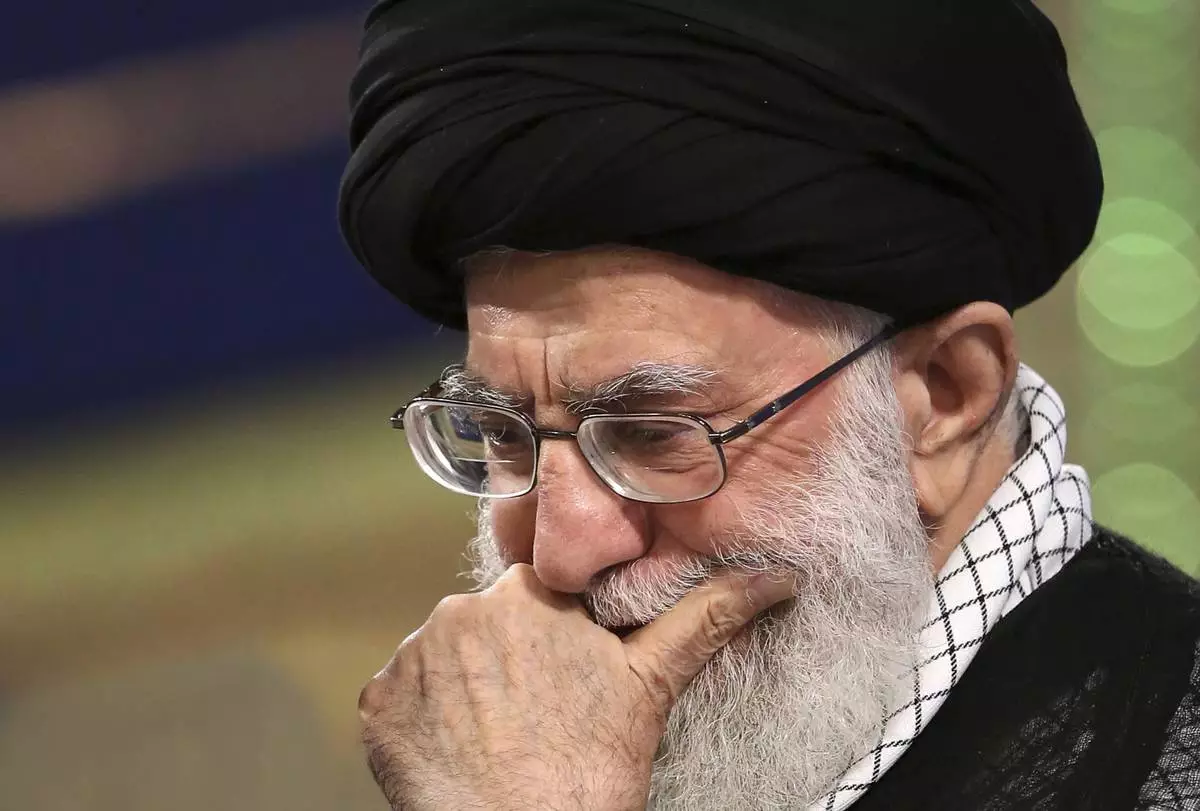
FILE - In this photo released by an official website of the office of the Iranian supreme leader, Supreme Leader Ayatollah Ali Khamenei listens to a speaker during a meeting with a group of university students in Tehran, Iran, May 28, 2018. (Office of the Iranian Supreme Leader via AP, File)
LONDON (AP) — America and Israel's attack on Iran disrupted flights across the Middle East and beyond Saturday as countries around the region closed their airspace and key airports that connect Europe, Africa and the West to Asia were directly hit by strikes.
Hundreds of thousands of travelers were either stranded or diverted to other airports after Israel, Qatar, Syria, Iran, Iraq, Kuwait and Bahrain closed their airspace. There also was no flight activity over the United Arab Emirates, flight tracking website FlightRadar24 said, after the government there announced a “temporary and partial closure” of its airspace.
That led to the closure of key hub airports in Dubai, Abu Dhabi and Doha, and the cancellation of more than 1,800 flights by major Middle Eastern airlines. The three major airlines that operate at those airports — Emirates, Qatar Airways and Etihad — typically have about 90,000 passengers per day crossing through those hubs and even more travelers headed to destinations in the Middle East, according to aviation analytics firm Cirium.
Two airports in the United Arab Emirates reported incidents as the government there condemned what it called a “blatant attack involving Iranian ballistic missiles” on Saturday.
Officials at Dubai International Airport — the largest in the United Arab Emirates and one of the busiest in the world — said four people were injured, while Zayed International Airport in Abu Dhabi said that one person was killed and seven others were injured in a drone strike. Strikes were also reported at Kuwait International Airport.
Though Iran did not publicly claim responsibility, the scope of retaliatory strikes that Gulf nations attributed to Iran extended beyond the American bases that it previously said it would target.
“For travelers, there’s no way to sugarcoat this,” said Henry Harteveldt, an airline industry analyst and president of Atmosphere Research Group. “You should prepare for delays or cancellations for the next few days as these attacks evolve and hopefully end.”
Airlines that are crossing the Middle East will have to reroute flights around the conflict with many flights headed south over Saudi Arabia. That will add hours to those flights and consume additional fuel, adding to the costs airlines will have to absorb. So ticket prices could quickly start to increase if the conflict lingers.
The added flights will also put pressure on air traffic controllers in Saudi Arabia who might have to slow traffic to make sure they can handle it safely. And the countries that closed their airspace will miss out on the overflight fees airlines pay for crossing overhead.
But Mike McCormick, who used to oversee air traffic control for the Federal Aviation Administration before he retired and is now a professor at Embry-Riddle Aeronautical University, said over the next few days these countries might be able to reopen parts of their airspace once American and Israeli officials share with the airlines where military flights are operating and how capable Iran remains at firing missiles.
“Those countries then will be able to go through and say, okay, we can reopen this portion of our space but we’ll keep this portion of our airspace closed,” McCormick said. “So I think what we’ll see in the next 24 to 36 hours how the use of airspace evolves as the kinetic activity gets more well defined and as the capability of Iran to actually shoot missiles and create additional risk is diminished due to the attacks.”
But it is unclear how long the disruption to flight operations could last. For comparison, the Israeli and U.S. attack on Iran in June 2025 lasted 12 days.
The situation was changing quickly and airlines urged passengers to check their flight status online before heading to the airport.
Some airlines issued waivers to affected travelers that will allow them to rebook their flight plans without paying extra fees or higher fares.
Jonathan Escott and his fiance had arrived at the airport in Newcastle, England, on Saturday only to find out that his direct flight to Dubai on Emirates airline was canceled, leaving everyone on the flight stuck there.
Escott left to go back to where he was staying with family, about an hour from the airport, but has no idea when he may be able to travel.
“No one knows,” Escott said. “No one really knows what’s going on with the conflict, really. Not Emirates, Emirates don’t have a clue. No one has a clue.”
At least 145 planes that were en route to cities like Tel Aviv and Dubai early Saturday were diverted to airports in cities like Athens, Istanbul or Rome, according to FlightAware. Others turned around and returned to where they took off from. One plane spent nearly 15 hours in the air after leaving Philadelphia and getting all the way to Spain before turning around and returning to where it started.
Numerous airlines canceled international flights to Dubai through the weekend, as India’s civil aviation agency designated much of the Middle East — including skies above Jordan, Saudi Arabia and Lebanon — as a high-security risk zone at all altitudes.
Air India canceled all flights to Mideast destinations. Turkish Airlines said flights to Lebanon, Syria, Iraq, Iran and Jordan were suspended until Monday and flights to Qatar, Kuwait, Bahrain, the United Arab Emirates and Oman were suspended.
The airline said additional cancellations may be announced, and many other airlines were suspending flights into the region through the weekend.
U.S.-based Delta Air Lines and United Airlines suspended flights to Tel Aviv at least through the weekend. Dutch airline KLM had already announced earlier in the week that it was suspending flights to and from Tel Aviv.
Airlines including Lufthansa, Air France, Transavia and Pegasus canceled all flights to Lebanon, while American Airlines suspended flights from Philadelphia to Doha.
Virgin Atlantic said it would avoid flying over Iraq, meaning flights to and from India, the Maldives and Riyadh could take slightly longer. The airline already was not flying over Iran and said all flights would carry appropriate fuel in case they need to reroute on short notice.
British Airways said flights to Tel Aviv and Bahrain will be suspended until next week, and flights to Amman, Jordan, were canceled Saturday.
“Travelers should anticipate that there will be a lot of disruptions,” Harteveldt said. “To be honest, if you haven’t left home, chances are you won’t be leaving home if you’re supposed to travel to or through these destinations for at least several days, if not longer. And if you are returning home, you will have to be very creative about how you get home.”
Levy reported from Harrisburg, Pennsylvania, and Funk reported from Omaha, Nebraska. Associated Press writers Adam Schreck in Bangkok and Sam Metz in Ramallah, West Bank contributed
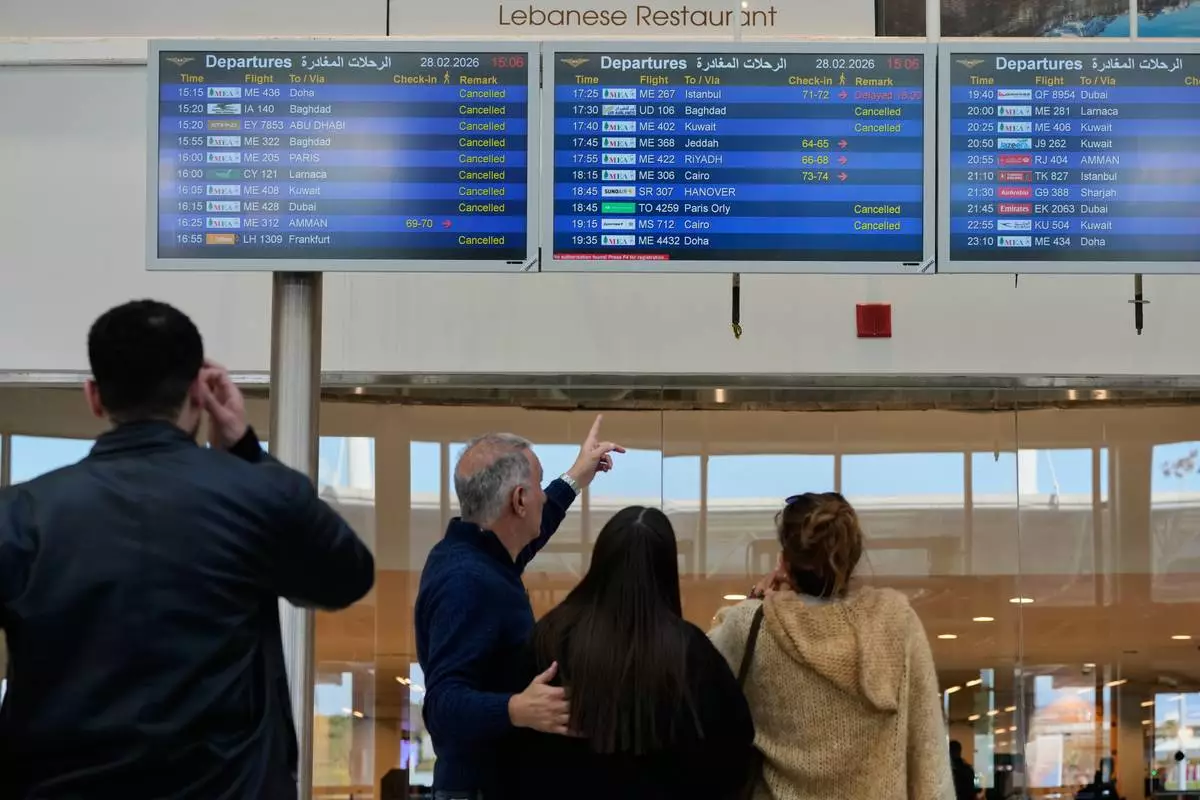
Travelers check departure times as many flights are cancelled at Beirut Rafik Hariri International Airport in Beirut, Lebanon, Saturday, Feb. 28, 2026, as many airlines canceled flights due to the conflict involving the United States, Israel and Iran. (AP Photo/Hassan Ammar)
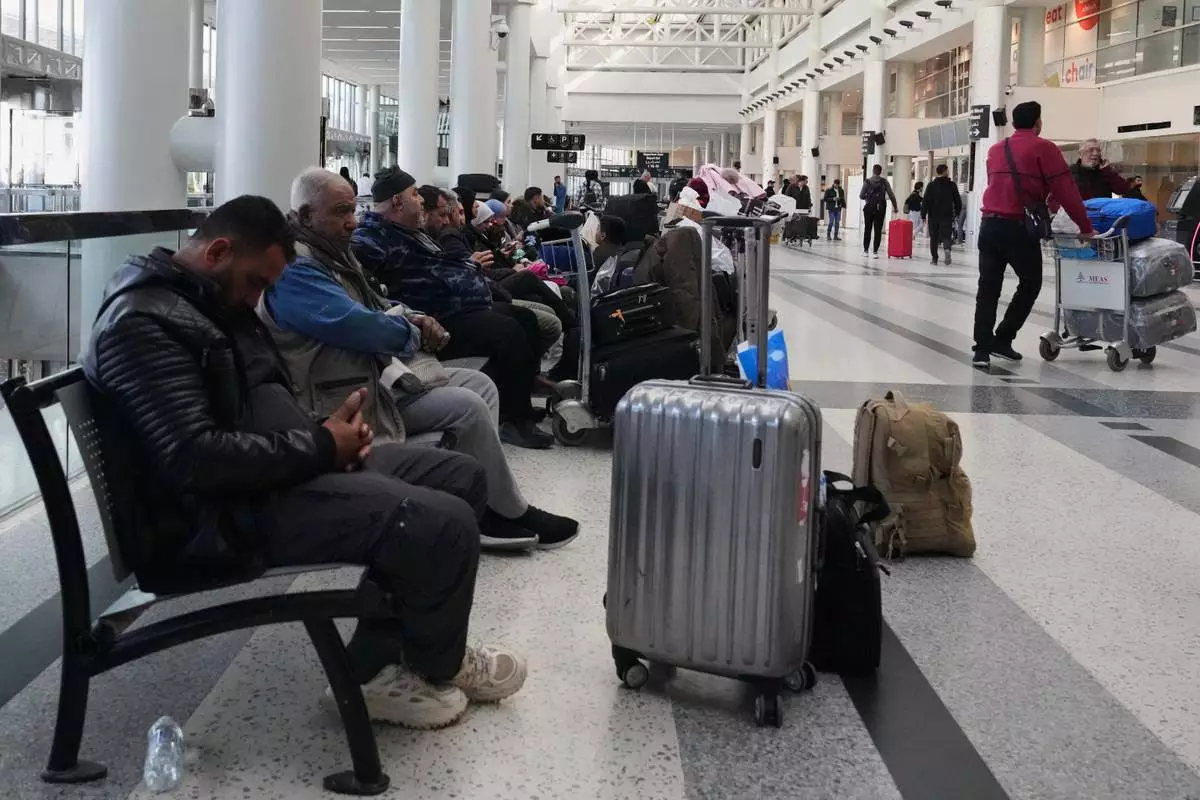
Passengers whose flights were cancelled, wait at the departure terminal of Rafik Hariri International Airport in Beirut, Lebanon, Saturday, Feb. 28, 2026, as many airlines canceled flights due to the conflict involving the United States, Israel and Iran. (AP Photo/Hassan Ammar)
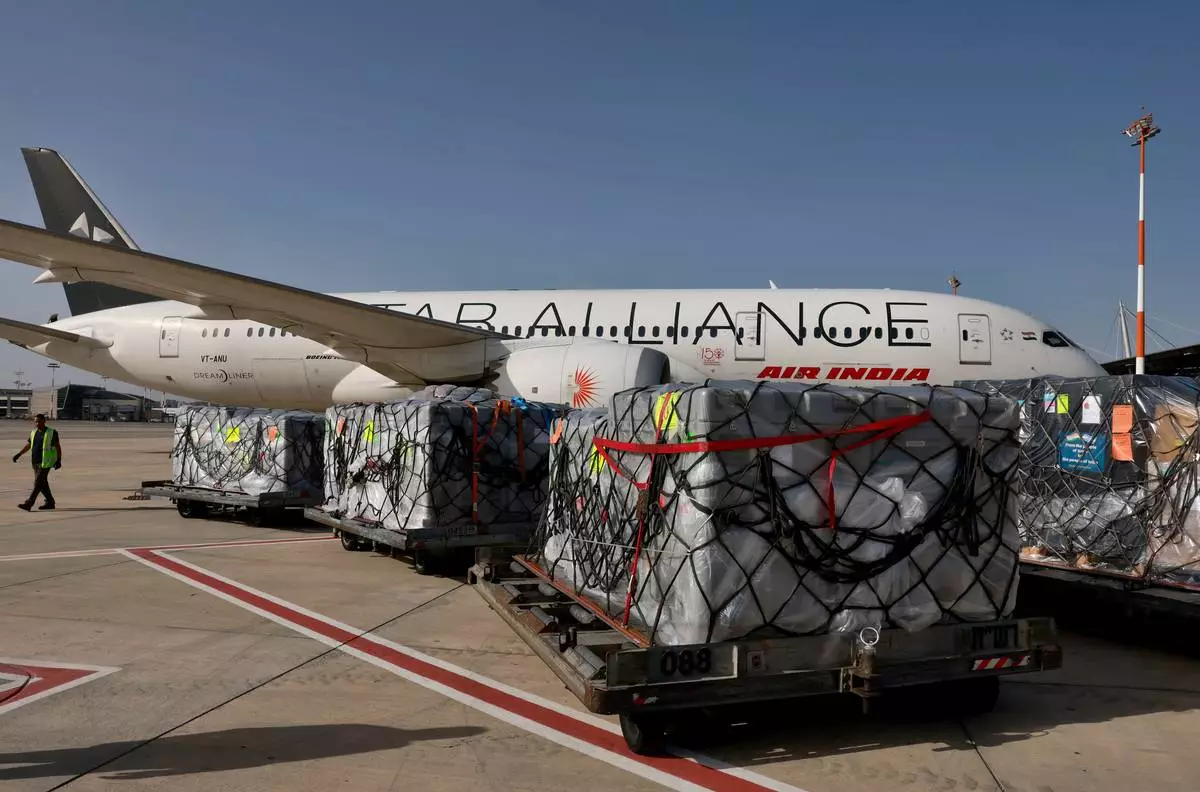
FILE -Workers load medical aid onto an Air India plane to be flown to India, at Ben Gurion Airport near Tel Aviv, Israel, May 4, 2021. (Menahem Kahana/Pool Photo via AP, File)