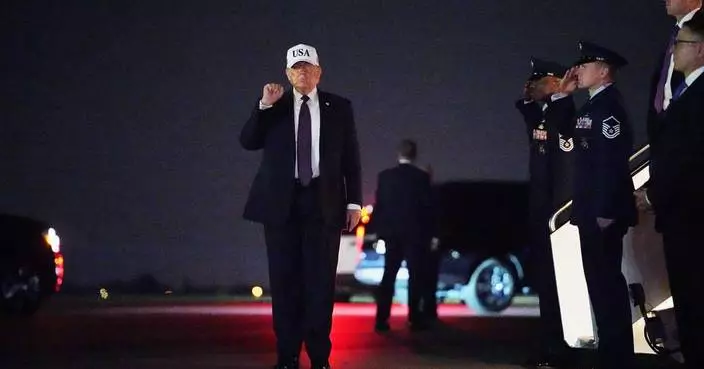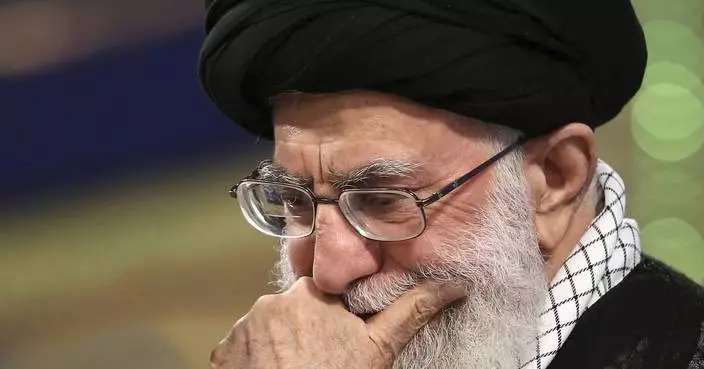
BEIRUT (AP) — Israel has killed multiple senior officials with Iran’s armed proxies like Hamas in Gaza and Hezbollah in Lebanon since the Hamas-led attack on Israel on Oct. 7, 2023. Now President Donald Trump says Iran’s Supreme Leader Ayatollah Ali Khamenei is dead after Israel and the U.S. launched attacks there Saturday.
Iran has not commented on Khamenei since that announcement.
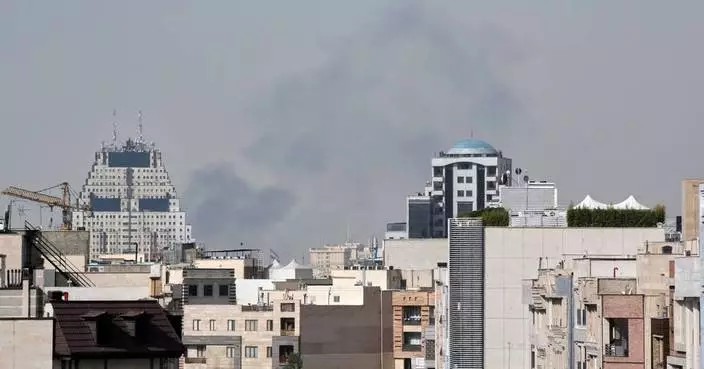
The compound of the 86-year-old Khamenei was among the first targets in the attack coordinated by the U.S. and Israel. Iran’s network of proxies in the region, along with its military assets and regional influence, have been weakened in the past two years, including by last year's 12-day war with Israel.
From Gaza to Lebanon to Iran, Israel has killed leaders with Hamas, Hezbollah and the Houthis in Yemen, along with Iranian military leaders. Here are some of them:
Khamenei had tried to avert attacks as the U.S. built up its military presence in the region in recent weeks to pressure Tehran over its nuclear program. He allowed Iran to enter negotiations with the U.S., but Saturday's attacks came two days after the latest talks.
Iranian officials on Saturday did not mention his status. Meanwhile, Israel said it killed the commander of Iran’s Revolutionary Guard and the defense minister.
Khamenei ascended to power in 1989, taking over from Ayatollah Ruhollah Khomeini, leader of the Islamic Revolution. Aside from the pressure on Iran's nuclear program and armed proxies, Khamenei faced severe economic troubles and discontent that led to nationwide protests weeks ago. He responded with the bloodiest crackdown of his rule.
The deputy political head of Hamas and a founder of the group’s military wing, Saleh Arouri was killed Jan. 2, 2024, in a drone strike in a southern suburb of Beirut. Accused of masterminding attacks against Israel in the West Bank, Arouri was in Israel’s sights for years, and Israeli Prime Minister Benjamin Netanyahu threatened to kill him even before Hamas carried out the Oct. 7 attack.
An Israeli airstrike on a compound on the outskirts of Khan Younis in southern Gaza killed the head of Hamas’ military wing, Mohammed Deif, on July 13, 2024. More than 90 other people, including displaced civilians in nearby tents, also died. Deif was believed to be one of the masterminds of the Oct. 7 attack and a founder of the Qassam Brigades, Hamas’ military wing. He led suicide bombing campaigns against Israeli civilians and built up a formidable arsenal of rockets used to strike into Israel. For years, he topped Israel’s most-wanted list.
An Israeli airstrike on a southern suburb of Beirut killed Hezbollah’s top military commander Fouad Shukur, on July 30, 2024. The secretive Shukur was in charge of Hezbollah’s forces in southern Lebanon and was a top official in its missile program. Shukur, who was a member of Hezbollah’s top military body, the Jihadi Council, was accused by the United States of planning and carrying out the truck bombing of a Marine Corps barracks in Beirut that killed 241 American service members. He was the first high-ranking Hezbollah leader to be killed.
On July 31, 2024, just hours after the strike that killed Shukur, Hamas’ top political leader, Ismail Haniyeh, was killed in a predawn strike in the Iranian capital of Tehran. Israel had pledged to kill the 62-year-old Haniyeh and other Hamas leaders over the Oct. 7 attack. The strike came just after Haniyeh attended the inauguration of Iran’s new president.
Israeli airstrikes on Beirut’s southern suburbs killed Hezbollah’s longtime leader and one of its founders, Hassan Nasrallah, on Sept. 27, 2024. An astute strategist, the 64-year-old Nasrallah reshaped Hezbollah into an archenemy of Israel, cementing alliances with Shiite religious leaders in Iran and Palestinian militant groups such as Hamas. Under his leadership, Hezbollah fought wars against Israel and sided with President Bashar Assad during the conflict in neighboring Syria.
The deputy head of Hezbollah’s Central Council, Nabil Kaouk, was killed in an Israeli airstrike south of Beirut a day after Nasrallah. He joined the militant group in its early days in the 1980s. Kaouk also served as Hezbollah’s military commander in south Lebanon from 1995 until 2010. He made several media appearances and gave speeches to supporters, including at funerals for Hezbollah militants. He was seen as a potential successor to Nasrallah.
Israeli airstrikes on a Beirut suburb killed Hezbollah’s new leader, Hashem Safieddine, on Oct. 3, 2024, days after he replaced his predecessor, Hassan Nasrallah. A familiar face in Lebanon and a leader with close ties to Iran, he was a member of the group’s decision-making Shura Council and its Jihad Council, which acts as its military command. He also headed its Executive Council, which runs schools and social programs. Safieddine was a maternal cousin of Nasrallah.
Yahya Sinwar, Hamas’ leader in the Gaza Strip, who masterminded the Oct. 7 attack on Israel, was killed by Israeli troops on Oct. 16, 2024. Israel had vowed to kill Sinwar since the attack on southern Israel that triggered the ongoing war, but his death finally came about in a chance encounter. Israeli soldiers killed him inside a building in the southern city of Rafah in the Gaza Strip, not knowing his identity until after his body was found.
Mohammed Sinwar, believed to be the head of Hamas’ armed wing, was killed by an Israeli strike on May 13, 2025, in the Gaza Strip. He was the younger brother of Yahya Sinwar.
A wave of Israeli strikes on different parts of Iran killed several top officials with Iran’s military and the main paramilitary force on June 13, 2025. Among the high-level military officials killed was Gen. Hossein Salami, the head of Iran’s Revolutionary Guard.
The prime minister of the Houthi rebel-controlled government, Ahmed al-Rahawi, died in Israeli airstrikes on Yemen’s capital of Sanaa on Aug. 28, 2025. He was the most senior Houthi official to be killed since an Israeli-U.S. campaign against the militant group started earlier this year.
Israel said one of its airstrikes in Gaza on Aug. 30, 2025, killed the longtime spokesperson for Hamas’ armed wing, whom it identified as Hudahaifa Kahlout. Israel had said that Kahlout, who was better known by his nom de guerre, Abu Obeida, was behind the release of videos showing hostages as well as footage of the Hamas-led attack that sparked the war.
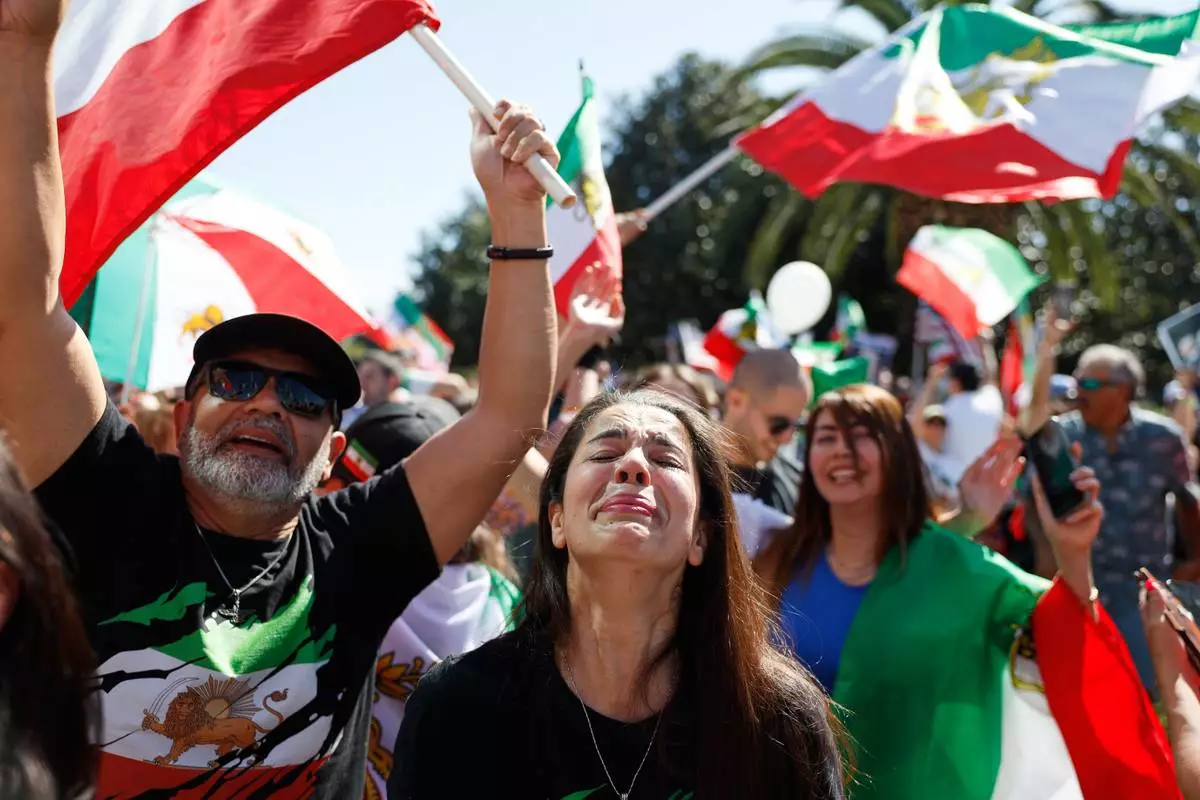
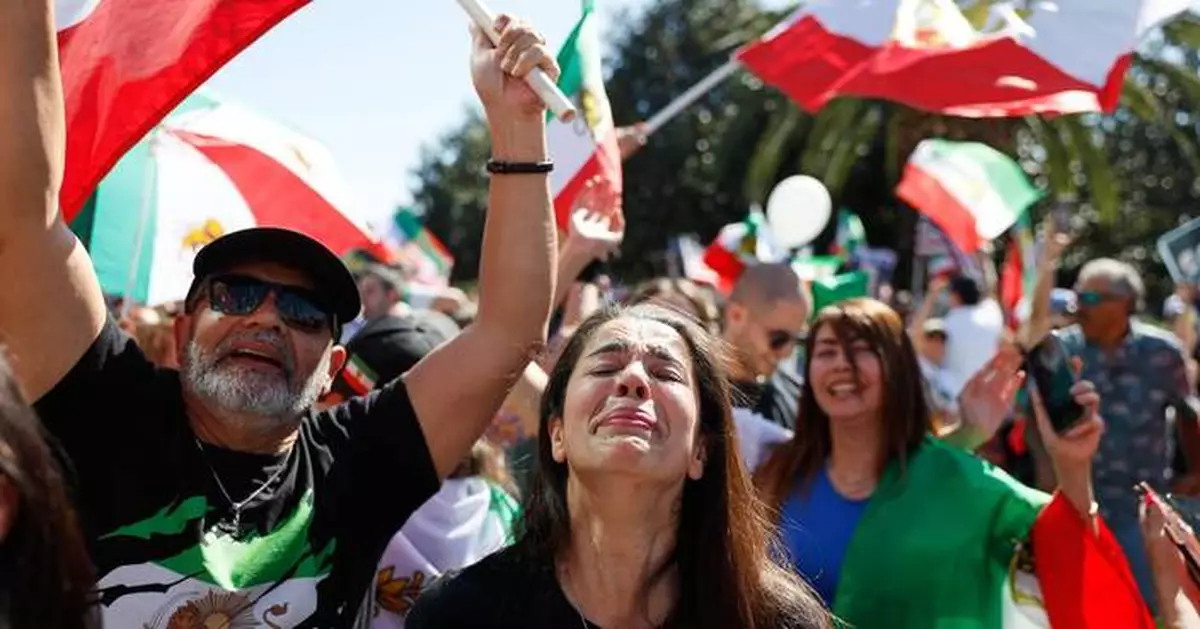
Demonstrators gather in reaction to the U.S. and Israeli strikes on Iran on Saturday, Feb. 28, 2026, in Los Angeles. (AP Photo/Caroline Brehman)