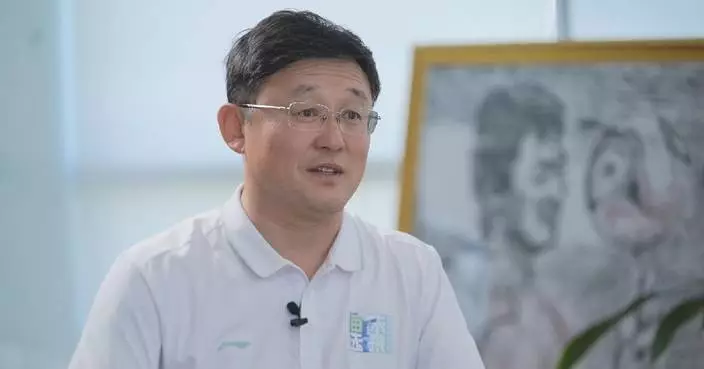
Feng Jianghua, an academician of the Chinese Academy of Engineering, is leveraging his role as a national political advisor to accelerate the integration of artificial intelligence into China's rail transit equipment, aiming to make high-speed trains smarter, safer and more efficient.
Feng is also the chief scientist at CRRC, the well-known corporation that developed the latest CR450 Fuxing high-speed train. He has long championed intelligent manufacturing. During this year's "two sessions" - the annual national policy-making and review meetings - he is expected to submit proposals calling on enterprises to take the lead in innovation and to strengthen self-reliance in core technologies.
Ahead of the meetings, Feng visited the rail transit industrial park in Zhuzhou, central China's Hunan Province, widely known as the cradle of China's electric locomotives. The park hosts the country's most comprehensive rail equipment supply chain.
On site, Feng spoke with young technicians inspecting welds on train carriages. His focus was on reducing error rates and refining AI models to perform better in real-world conditions.
"In the past, the line between universities and enterprises was very clearly drawn, universities focused on foundational and cutting-edge research, while enterprises handled engineering and application. But now, that boundary is becoming increasingly blurred. Companies are growing more capable of innovation and are well-positioned to take on the role of innovation leaders," Feng told them.
Over the past year, Feng has visited more than 10 provinces and 30 universities and institutes, mapping out where AI and manufacturing intersect and where they hit roadblocks. Through his academic studio, he has mentored young researchers, helping cultivate 17 provincial-level technical experts. A team led by researchers born after 1990 won an international gold award in AI and simulation.
His push for smarter systems has already yielded results. Feng helped CRRC launch "Zhuolun," a large AI model now applied across 13 business scenarios, boosting weld inspection efficiency by 20 times. He also facilitated a joint rail chip lab between CRRC and Huawei, with the first automotive-grade AI chip expected to enter mass production in 2026.
"Moving forward, I want to keep advocating for enterprises to take center stage in innovation. For companies to thrive in the future, self-reliance is essential. And true self-reliance means achieving independent control over cutting-edge technologies, not just having them, but refining them, and even faster than foreign countries. That's how we build lasting competitiveness," Feng said.
From rail to new energy and electric vehicles, Feng sees AI as the common thread powering the next generation of high-end manufacturing.
He will push his mission - turn cutting-edge research into lasting industrial strength - at the "two sessions” of China's top legislature, the NPC, and the top political advisory body, the National Committee of the Chinese People's Political Consultative Conference (CPPCC), which will open on March 5 and March 4 in Beijing this year, respectively.
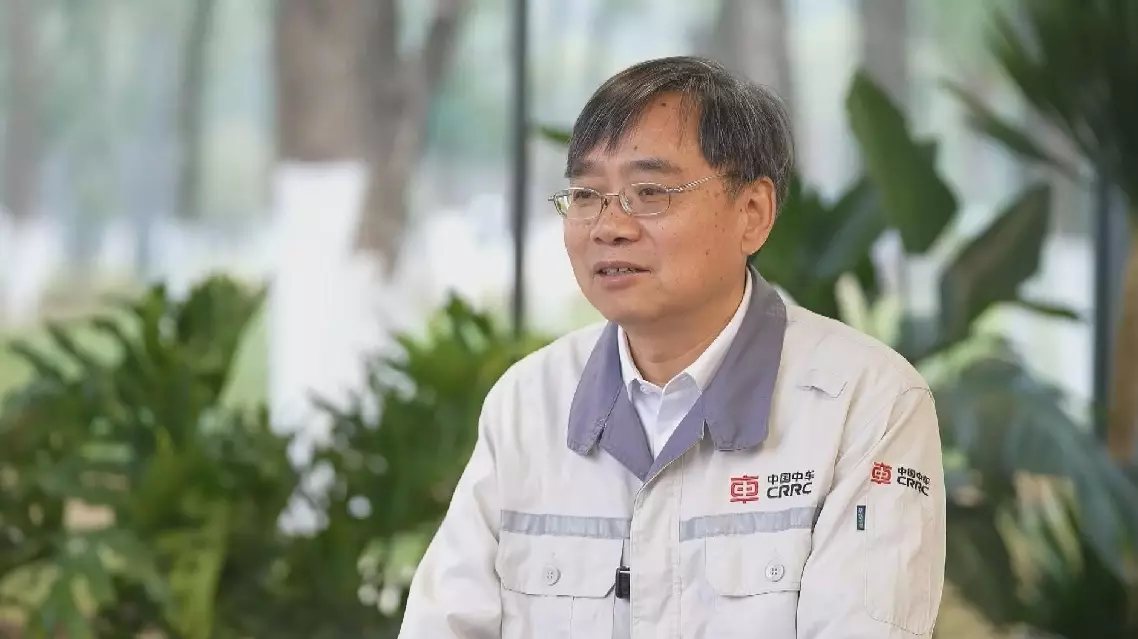
Top Chinese academician advocates AI integration for smarter rail transit