Skip to Content Facebook Feature Image

Measures adopted to ensure smooth return trips after Spring Festival holidays in China

China

China

China

Measures adopted to ensure smooth return trips after Spring Festival holidays in China

2026-03-01 17:40 Last Updated At:03-02 11:01

The traffic administration authorities across China have adopted a series of measures to ensure travelers' safe return to schools or workplaces at the end of the Spring Festival travel rush this year, which runs from Feb. 2 to March 13.

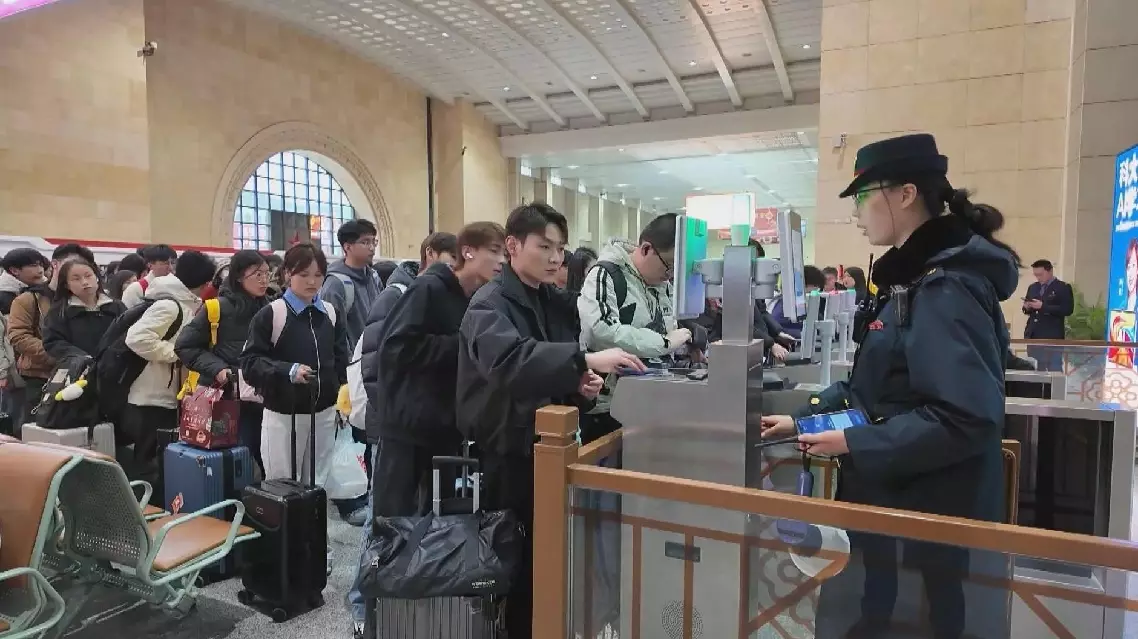
China State Railway Group said national railways are expected to handle 16.75 million passenger trips on Sunday, marking the ninth consecutive day in which daily passenger volumes exceeded 15 million.

In recent days, several areas in northeast China's Heilongjiang Province have witnessed a rush of migrant workers returning to their posts.

At Qiqihar Railway Station, operators have leveraged a combined rail-road transport model and coordinated in advance with local labor service departments to better track travel demand through ticket booking for migrant workers.

Dedicated security checks and station-entry lanes have also been set up, enabling migrant workers to enter the station at off-peak times and avoid the busiest passenger flows.

"We have reserved carriages and added trains specifically for migrant workers, doing everything we can to ensure they return to work safely, smoothly and comfortably. After the Spring Festival, a total of 12 batches - nearly 700 people - were organized to help them return to their posts," said Tian Yuan, manager of the labor transfer service station in Gannan County, Qiqihar.

In southern China, the China Railway Guangzhou Group has added 270 extra trains, focusing on high-demand routes.

Meanwhile, many regions are entering a peak period for students returning to school. The China Railway Xi'an Group said it has scheduled 121 additional trains on Sunday from Xi'an to major destinations, including Shanghai, Chongqing and Lanzhou, boosting overall transport capacity.

Rail authorities have also strengthened coordination with local transport agencies to enhance the capacity of taxi and bus services for connecting transportation. Stations have introduced dedicated student lanes at exits and improved transfer links between stations and universities to ensure smooth journeys for students.

"We precisely analyzed the travel characteristics of students, made early forecasts for peak flows, and striven to comprehensively ensure transportation and safety by increasing the deployment of provincial transport capacity, adding multiple-unit trains on popular inter-provincial routes, and expanding services toward high-demand directions," said Yue Lu, a staffer at Xi'an Railway Station.
Measures adopted to ensure smooth return trips after Spring Festival holidays in China

Measures adopted to ensure smooth return trips after Spring Festival holidays in China

People in Yemen are struggling for survival as the country continues to grapple with a deepening labor crisis after more than a decade of war, with many lamenting the lack of opportunities which are leaving the livelihoods of many hanging in the balance.

As the world marks International Workers' Day on Friday, the situation in Yemen seems all the more poignant as millions of people are finding it increasingly hard to find any work at all.

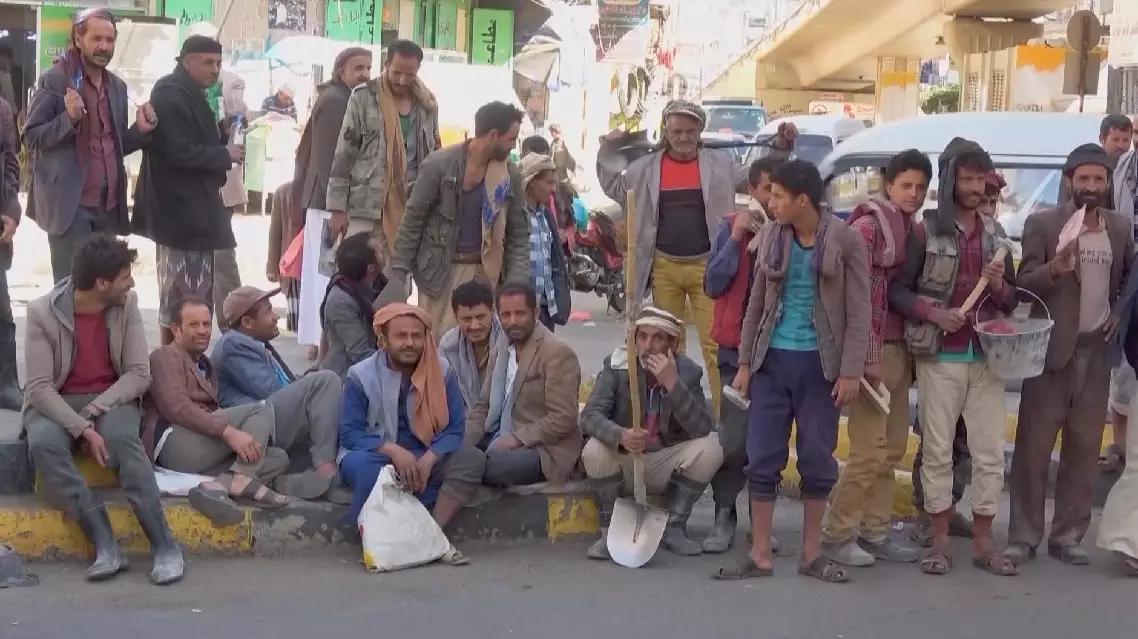
In the crowded streets of the capital Sana'a, workers gather on street corners, waiting for jobs that may never come. Ahmed Muawadah is one of the many who are sitting here, watching passing cars, desperately hoping that one will stop and offer work.

"Our suffering is that we sit here without work. Sometimes we spend a whole month without working, except for one day, or just one day every two weeks. Work is very limited, almost non-existent. I have nine children, and I only work one day a month. I cannot support them. Jobs have completely disappeared. If opportunities were opened for us, I and all the workers would work," said Muawadah.

This individual story reflects a broader reality affecting an estimated eight million workers across Yemen. Many of them are hoping to receive a daily wage, but the challenges are mounting in an increasingly strained labor market.

Activity in key sectors such as construction and services has dropped sharply, largely due to the suspension of several international initiatives, including those backed by the World Bank. As a result, income opportunities have narrowed for those who rely primarily on daily wages.

Meanwhile, the widening impact of the U.S.-Israeli war on Iran and the disruption caused along the key Strait of Hormuz -- a key shipping route for global trade -- has brought more misery in recent weeks.

"There has been a significant decline in business activity as a result of the war, the blockade, and the disruption of work. Foreign capital has also left the country, and large companies have moved out of Yemen and stopped their operations. This is one of the main reasons," said Abdul Karim Al, secretary general of the General Federation of Trade Unions in Sana'a.

Yemen residents struggling to survive as work dries up amid deepening labor crisis

Yemen residents struggling to survive as work dries up amid deepening labor crisis

Recommended Articles