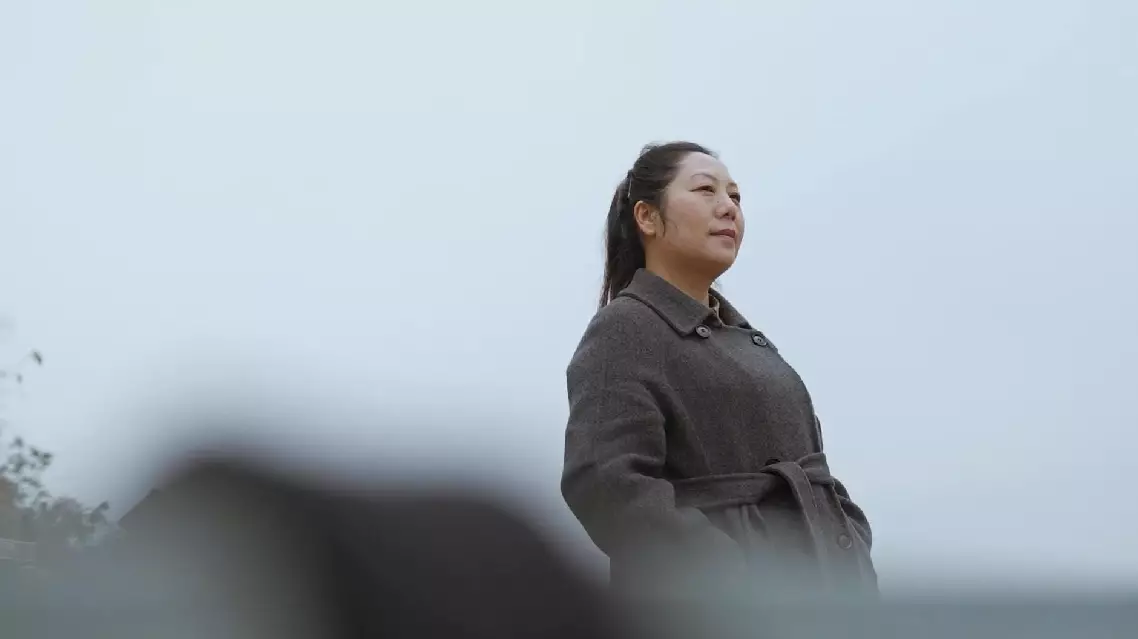
Ran Hui, a deputy to the National People's Congress (NPC), has devoted much energy to turning narrow mountain paths in Tianshanbao Village, her hometown in Youyang Tujia and Miao Autonomous County, southwest China's Chongqing Municipality, into paths to prosperity for the Tujia ethnic minority.
China's annual sessions of the NPC, China's top legislature, and the National Committee of the Chinese People's Political Consultative Conference (CPPCC), the country's top political advisory body, will open on March 5 and March 4 in Beijing this year, respectively. Together, these two annual meetings are known as the "two sessions".
As a deputy, Ran is set to share her insights on people-centered development with the NPC. In an exclusive interview with China Global Television Network (CGTN), she recalled how she came to take on a crucial leadership role in her town.
"I grew up in these mountains and studied hard to make my way out. But after achieving a little success, my heart kept pulling me back home. The roads were too narrow, the industries too weak. So, I made up my mind to come back and lead villagers here in changing this place for good," she said.
In 2014, as a woman from the local Tujia ethnic minority group, Ran returned to Tianshanbao Village and was elected village committee director. Realizing that poor transport was the root of their poverty, she made road construction her absolute top priority.
"The road we are driving on used to be only 4.5 meters wide, and 3.5 meters at its narrowest. We started widening it in 2024, upgrading the cement surface to asphalt, and completed the construction in 2025," she explained.
Over the past decade, Ran has carried her briefcase from door to door, holding countless meetings to ensure every project meets residents' needs. Now, she is once again making her familiar rounds, gathering feedback directly from the villagers, for the fourth annual session of the 14th NPC, which is scheduled for March in Beijing.
During their discussions, upgrading the village's basic transport infrastructure always remains the top concern.
"I think according to the village road plan, we should extend this main road all the way to Weijiacao and widen it into an asphalt road. I hope this can be realized soon," a villager said.
"Since she arrived, she has treated village affairs as her own. No matter how difficult, she speaks up and fights for the village's interests, and always gives us an answer," said Huang Kaiguo, another villager.
Taking those local voices to the national stage, Ran has submitted more than 30 proposals to upgrade transport and living conditions across the Wuling Mountains since becoming an NPC deputy in 2018. Better roads have opened a way for farm produce to reach wider markets, gradually drawing migrant workers back home to start their own businesses.
"We came back in 2023 after seeing the new roads and development. We knew nothing about farming at first, but Ran helped us find technical guidance and sales channels. Whenever we had problems, she was always there," He Qiuxia, a villager.
In just three years, He and her husband's high-altitude vegetable farm has blossomed, generating an annual gross profit of over 800,000 yuan (about 120,000 U.S. dollars). Through e-commerce and modern logistics, their tomatoes and greens now reach markets across the country, while creating jobs for more than 20 villagers.
"What kept me going through all the difficulties was the expectation in the villagers' eyes. They wanted someone to lead them to a better life. Our transport bottleneck has now become a springboard for industry. Seeing their lives improve makes every single effort worth it," said Ran.
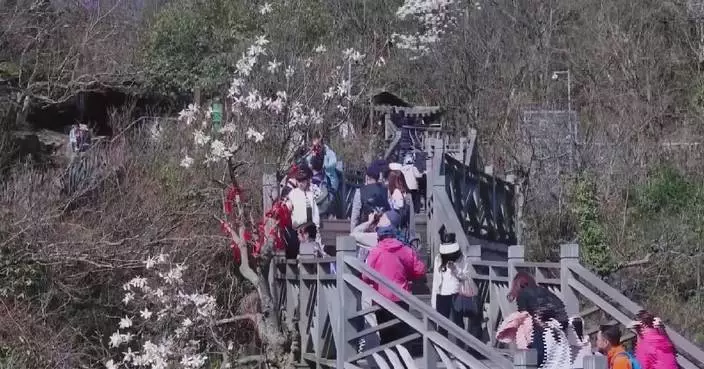
For Ran, the next chapter of rural revitalization will be preserving traditional Baogu lantern opera, a vibrant expression of Tujia ethnic heritage. She hopes the newly built roads will now bring visitors in, turning their rich local heritage into a fresh engine for growth.
NPC deputy paves way to rural prosperity for Tujia ethnic minority