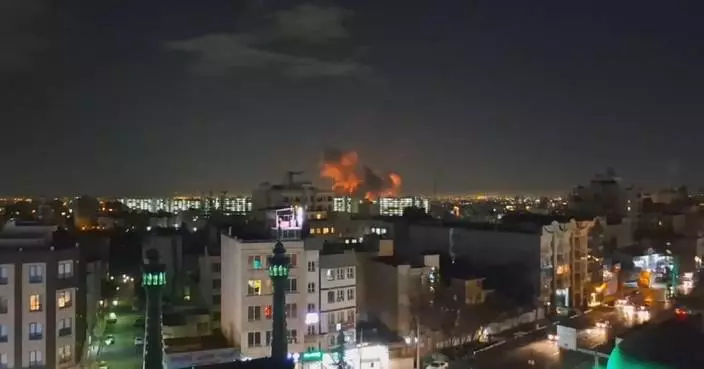
Oil prices surged as much as 13 percent on Sunday amid escalating tensions in the Middle East following U.S. and Israeli strikes on Iran.
The price of Brent crude, the international benchmark, jumped by over 12 percent to 82 U.S. dollars per barrel on Sunday.
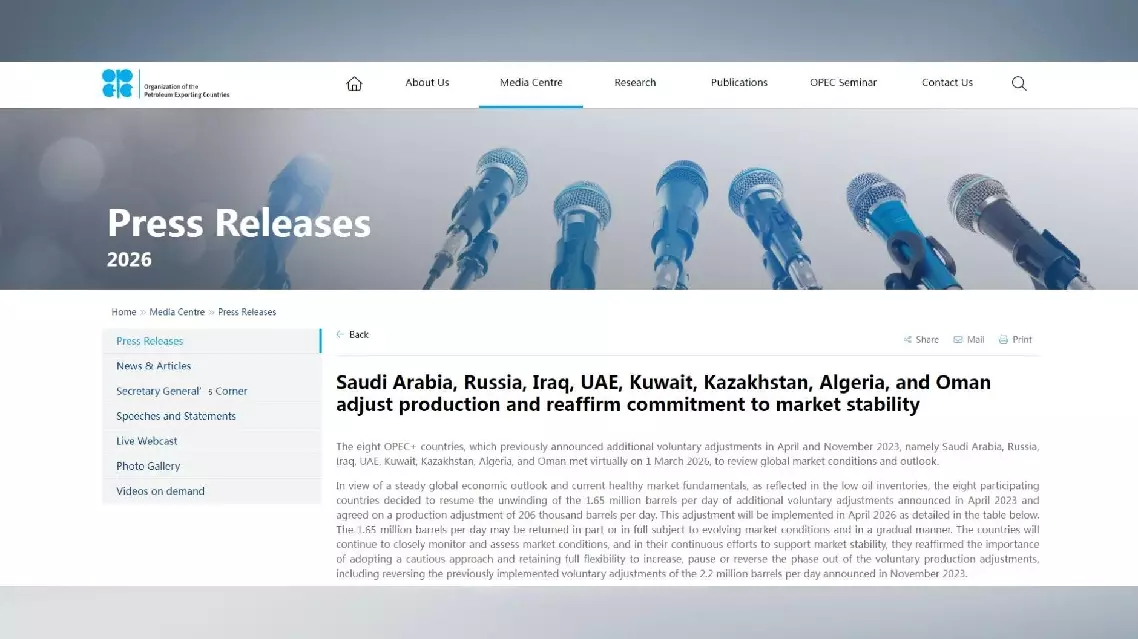
The tensions have brought oil and gas transport through the Strait of Hormuz to a virtual standstill. As the world's most crucial energy chokepoint, the strait handles roughly one-fifth of global crude oil and significant natural gas flows. According to market analysis, any long-term interruption would intensify risks to global energy security and further fuel price instability. The Organization of the Petroleum Exporting Countries (OPEC) and its allies, a group known as OPEC plus, on Sunday decided to ramp up oil output by 206,000 barrels per day (bpd) in April.
The announcement was made after a virtual meeting where member countries, including Saudi Arabia, Russia, Iraq, the United Arab Emirates, Kuwait, Kazakhstan, Algeria, and Oman, reviewed global market conditions and outlook, according to a press release on the OPEC website.
Two rounds of output cuts -- 1.65 million bpd in April 2023 and another 2.2 million bpd in November 2023 -- announced by the eight countries was extended multiple times.
In March 2025, OPEC plus decided to gradually increase crude oil output starting on April 1 of that year. A pause in output increases were later announced for January to March 2026 due to seasonal factors.
Oil prices surge amid Middle East tensions