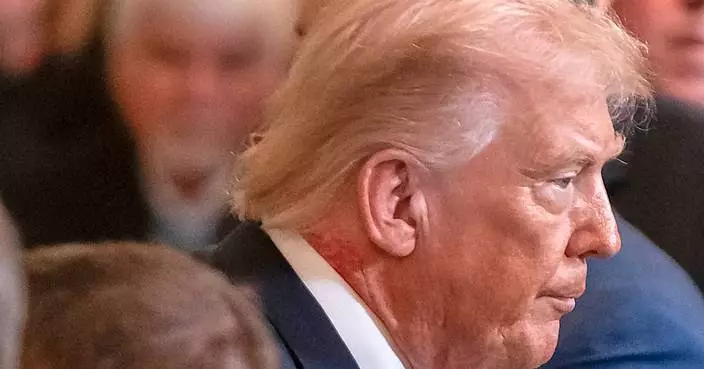
WASHINGTON (AP) — When President Donald Trump ordered strikes on Iran last summer, he and his administration repeatedly declared that the attacks had obliterated the Middle Eastern country's nuclear program and set back its ability to make a nuclear weapon for years.
In the immediate runup to Saturday’s strikes with Israel on Iran, however, Trump and members of his administration began issuing more urgent warnings about Iran’s nuclear ambitions. It was among the shifting — and often openly contradictory — messages sent on Iran.
After widespread protests erupted in Iran in January, for example, Trump repeatedly threatened military strikes — only to back off after he said he was assured Tehran had halted killing protesters and not carried out planned executions — except international observers say the death toll from a crackdown over the protests exceeded 7,000. At the same time, following years of scoffing at, and openly campaigning against, the idea that previous conservatives administrations had been advocates for “regime change” missions, Trump seemed to change his mind and warm to the idea.
In the aftermath of Saturday's attacks, the president and other officials have offered multiple reasons they said the latest strikes on Iran were necessary — some of which conflict with what they said over the past eight months.
—“THE NUCLEAR SITES IN IRAN ARE COMPLETELY DESTROYED!” — Trump in a June 24, 2025, post on Truth Social.
—“Based on everything we have seen — and I’ve seen it all — our bombing campaign obliterated Iran’s ability to create nuclear weapons." — Defense Secretary Pete Hegseth to CNN in a June 25, 2025, story
—“The precision strikes perfectly hit their targets and destroyed Iran’s nuclear facilities, resulting in the total obliteration of Iran’s ability to create a nuclear weapon.” — The White House in a June 25, 2025, press release.
—“That is a false story and it’s one that really shouldn’t be re-reported.” — Secretary of State Marco Rubio in a June 25, 2025, interview with Politico commenting on news reports that a U.S. intelligence report suggested Iran’s nuclear program had only been set back a few months.
—“They’ve been trying it for 25 years. The last thing they’re going to do is nuclear. We had to hit them, though. They were close to getting a nuclear bomb. Absolutely.” — Trump to Fox News on June 30, 2025.
—“All three nuclear sites in Iran were completely destroyed and/or OBLITERATED. It would take years to bring them back into service and, if Iran wanted to do so, they would be much better off starting anew, in three different locations, prior to those sites being obliterated, should they decide to do so.” — Trump in a July 19, 2025, post on Truth Social.
—“They’ve rejected every opportunity to renounce their nuclear ambitions, and we can’t take it anymore.” — Trump during his Feb. 24 State of the Union.
“They have to say ’we’re not going to have a nuclear weapon, and they just can’t quite get there,” Trump on Feb. 27, 2026, telling reporters while visiting Texas that he wasn’t happy with the negotiations with Iran.
—“It’s not politically correct to use the term, ‘Regime Change,’ but if the current Iranian Regime is unable to MAKE IRAN GREAT AGAIN, why wouldn’t there be a Regime change??? MIGA!!!” — Trump in a June 22, 2025 post on Truth Social, modifying his political campaign slogan to signify “Make Iran Great Again.”
—“Our view has been very clear that we don’t want to regime change. We do not want to protract this or build this out any more than it’s already been built out. We want to end their nuclear program, and then we want to talk to the Iranians about a long-term settlement here. We believe very strongly that there are two pathways. There’s a pathway where Iran continues to fund terrorism, continues to try to build a nuclear program, attacks American troops. That’s the bad pathway for Iran, and it will be met with overwhelming force." — Vice President JD Vance to NBC News on June 22, 2025.
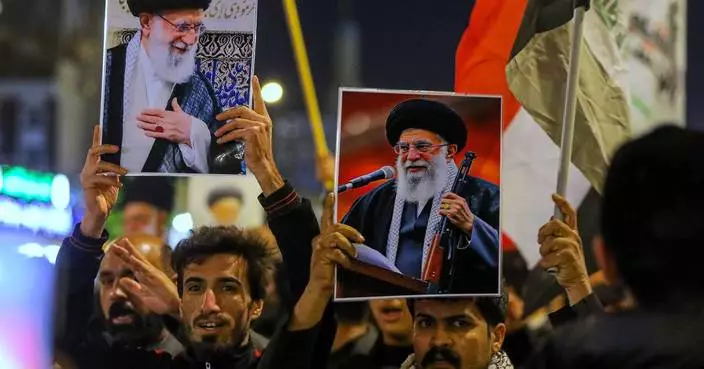
—“I SAVED HIM FROM A VERY UGLY AND IGNOMINIOUS DEATH, and he does not have to say, 'THANK YOU, PRESIDENT TRUMP!'" — Trump on June 27, 2025, on Truth Social, after saying that he knew exactly where Iran’s Supreme Leader Ayatollah Ali Khamenei was sheltered during the June strikes. Khamenei was killed in Saturday's strikes.
—“Seems like that would be the best thing that could happen. For 47 years, they’ve been talking and talking and talking. In the meantime, we’ve lost a lot of lives while they talk. Legs blown off, arms blown off, faces blown off.” — Trump to reporters on Feb. 13 when asked about regime change.
—“There might be, and there might not be.” — Trump on Friday to reporters when asked if using the military right now could mean regime change. He added: “It would be nice if we could do it without, but sometimes you have to do it with.”
—“He was unable to avoid our Intelligence and Highly Sophisticated Tracking Systems and, working closely with Israel, there was not a thing he, or the other leaders that have been killed along with him, could do. This is the single greatest chance for the Iranian people to take back their Country.” in a Feb. 28 Truth Social post that implied that taking out Khamenei and regime change was the goal of the latest strikes.
—“Our objective is to defend the American people by eliminating imminent threats from the Iranian regime, a vicious group of very hard, terrible people.” — Trump in a video message on Feb. 28.
—“I call upon all Iranian patriots who yearn for freedom to seize this moment—to be brave, be bold, be heroic, and take back your country." — Trump in a video statement on Sunday in which he also urged members of Iran’s paramilitary Revolutionary Guard and military police to lay down their arms.
—“This is not a so-called regime change war, but the regime sure did change." — Hegseth at a March 2 briefing with reporters at the Pentagon.
—“Iran possesses a very large number of ballistic missiles, particularly short range ballistic missiles, that threaten the United States and our bases in the region, and our partners in the region, and all of our bases in the U.A.E. and Qatar and Bahrain." — Secretary of State Marco Rubio to reporters on Feb. 25.
—“The regime already had missiles capable of hitting Europe and our bases — both local and overseas — and would soon have had missiles capable of reaching our beautiful America." — Trump during a Medal of Honor ceremony at the White House on March 2.
—Iran “was building powerful missiles and drones to create a conventional shield for their nuclear blackmail ambitions.” — Hegseth during the Monday Pentagon briefing.
—“If Iran shoots and violently kills peaceful protesters, which is their custom, the United States of America will come to their rescue. We are locked and loaded and ready to go.” — Trump on Truth Social Jan. 2.
—“Iran is looking at FREEDOM, perhaps like never before. The USA stands ready to help!!!” — Trump on Truth Social on Jan. 10.
—“Iranian Patriots, KEEP PROTESTING — TAKE OVER YOUR INSTITUTIONS!!! Save the names of the killers and abusers. They will pay a big price. I have cancelled all meetings with Iranian Officials until the senseless killing of protesters STOPS. HELP IS ON ITS WAY. MIGA!!!” — Trump on Truth Social on Jan. 13.
—“We’ve been told that the killing in Iran is stopping — it’s stopped, it’s stopping. And there’s no plan for executions, or an execution, or executions — so I’ve been told that on good authority.” — Trump on Jan. 14 at the White House.
—“You had yesterday scheduled over 800 hangings. They didn’t hang anyone. They canceled the hangings. That had a big impact." — Trump to reporters while leaving the White House on Jan. 16.
—“This was our last, best chance to strike — what we’re doing right now — and eliminate the intolerable threats posed by this sick and sinister regime. And they are indeed sick and sinister.” — Trump, striking an entirely different tone at the Medal of Honor ceremony Monday. He also said he’d come to the conclusion: “You can’t deal with these people. You got to do it the right way.’”
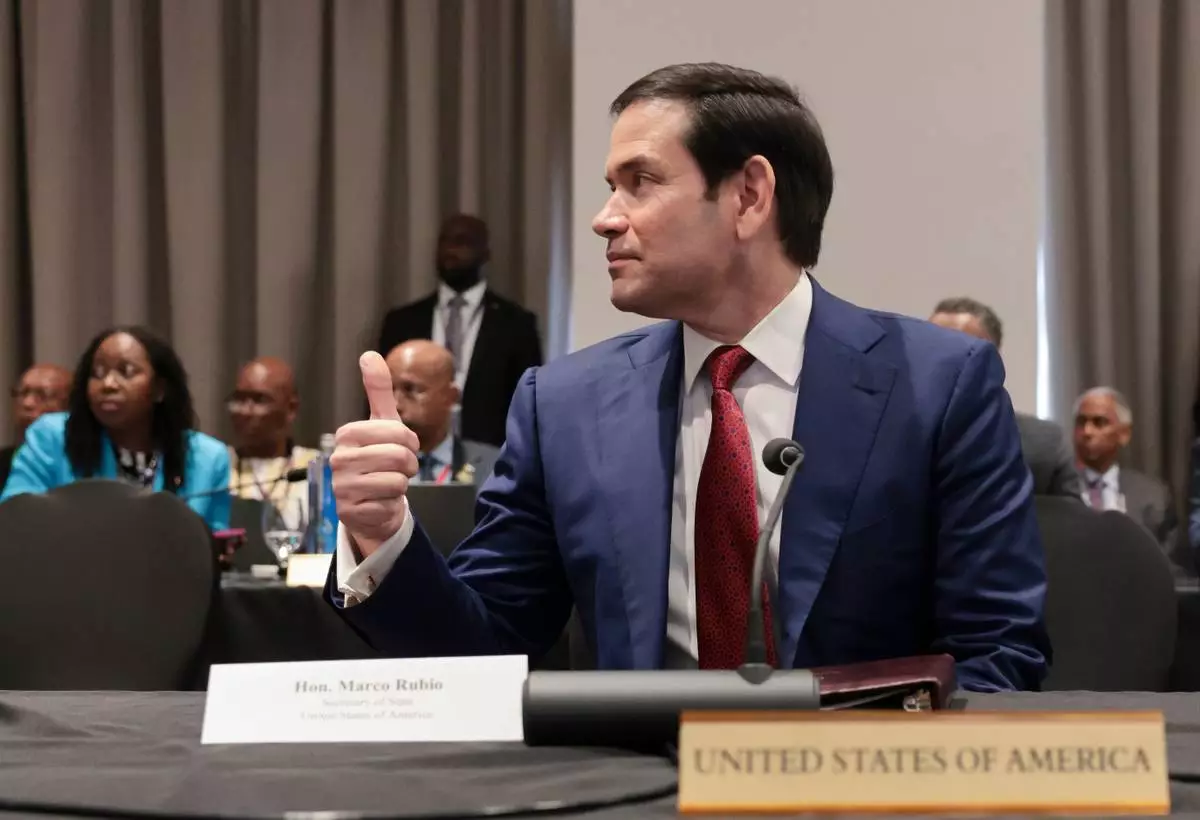
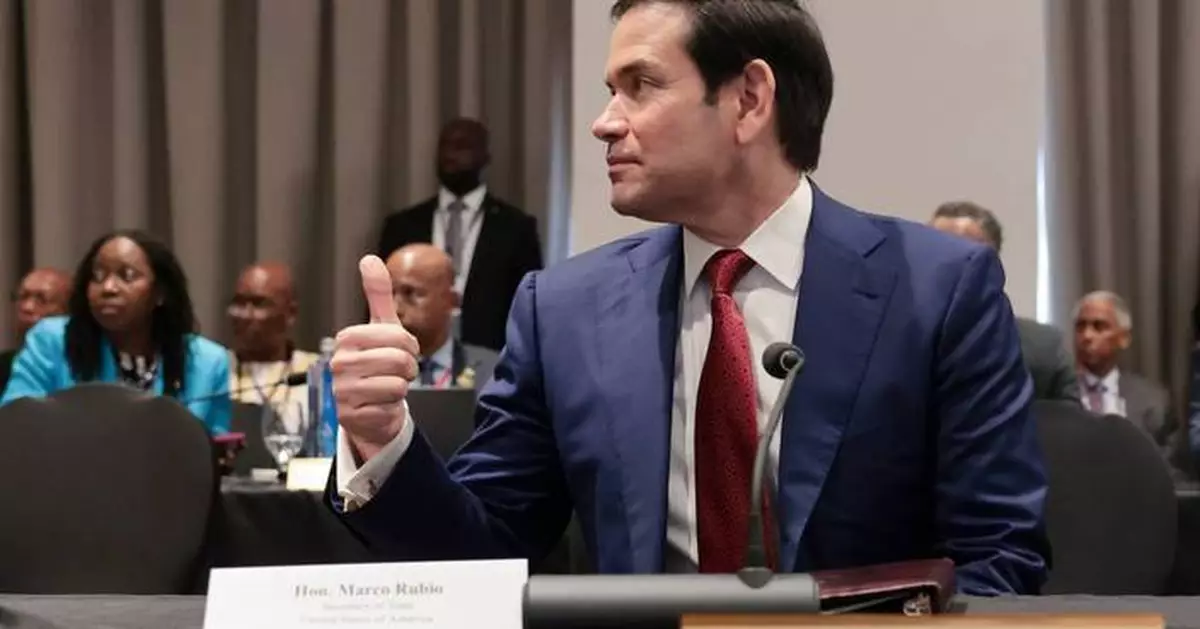
U.S. Secretary of State Marco Rubio gives a thumbs up during the Caribbean Community (CARICOM) plenary session in Basseterre, Saint Kitts and Nevis, Wednesday, Feb. 25, 2026. (Jonathan Ernst/Pool photo via AP)
As the war in the Middle East spirals further, U.S. President Donald Trump said on Monday that the U.S. has “the capability to go far longer ” than its projected four-to-five-week time frame for its military operations against Iran.
The U.S. and Israel have continued to pound Iran since killing its Supreme Leader Ayatollah Ali Khamenei on Saturday, while Tehran and its allies have hit back against Israel, neighboring Gulf states, and targets critical to the world’s production of oil and natural gas.
The intensity of the attacks and the lack of any apparent exit plan set the stage for a prolonged conflict with far-reaching consequences. Israel and the U.S. have given conflicting answers about what exactly the war’s objectives are or what the endgame might be.
At least 555 people have been killed in Iran so far by the U.S.-Israeli campaign, the Iranian Red Crescent Society said, and more than 130 cities across the country have come under attack. In Israel, 11 people have been killed, with 31 in Lebanon, according to authorities.
The U.S. military announced Monday that two previously unaccounted for service members were confirmed dead, bringing the total American casualties during the operations against Iran up to six.
Here is the latest:
Several voters from Houston casting ballots in a Texas primary election said they’re worried about what will come next in Iran.
“I think that this could go on for years to come if they don’t have a clear exit strategy,” said Charles Padmore, a 45-year-old independent contractor. “I don’t even think they have a strategy. I think they just went in blind.”
He posits that Trump acted “by the whims of Israel.”
Nineteen-year-old college student Sophia Morales and her mother, Dina Morales, don’t feel like they’re getting a clear explanation from Trump about why he attacked Iran.
“I feel like Iran was in a war with Israel, but then all of a sudden, we’re in war too,” said Sophia Morales. She especially wants an explanation following reports that a girls school was bombed. Added her mother: “I don’t think I’ve heard of any clearer plans of what’s next after the bombing, just like what’s next in Venezuela.”
If Iran was a legitimate threat to the United States, Trump should have “gone the right way” and convinced Congress to authorize military action, said Alex Diaz, 31, a high school teacher.
“I’m just like, ‘Are you trying to kill us? Are you trying to cause a World War III?’” Diaz said.
Two Trump supporters in Texas say they’re confident the president is doing the right thing in Iran and don’t see a conflict with his campaign promises to pursue peace.
“I just expected him to do what needs to be done to protect America,” said Connie Stamps of Waco. “He wants to protect America first, and that’s what he’s doing. And he cares about the whole world. So he’s the peace president.”
Stamps said she’s thankful to have a president “who is brave enough to do what he says he’s going to do.”
Mollie Leutwyler Smith, who also lives near Waco in McLennan County, said she didn’t have war with Iran in mind when she cast her ballot for Trump, but she appreciates that he’s taking decisive action. She prefers his approach to the deal former President Barack Obama brokered with the Iranians.
“Did I vote for that in particular? I won’t say I voted for that, but, yes, I think as the president, he can make decisions,” she said.
COGAT, the Israeli military body overseeing civilian affairs in Gaza, announced one crossing into the territory would reopen on Tuesday “for the gradual entry of humanitarian aid.”
At the start of the war with Iran, Israel had said it couldn’t safely operate the Gaza crossings under fire. However, the U.N.’s humanitarian office monitoring Gaza warned Monday that a total closure would stretch stocks of food, water and fuel, as well as further inflate the price of basic goods in the devastated Palestinian territory.
In its announcement late Monday, COGAT said it would work in coordination with the American Civil Military Coordination Center and under some security restrictions to reopen the Kerem Shalom Crossing.
Diplomatic staff at the U.S. Embassy in Jordan have left the embassy compound in Amman “due to a threat.”
The U.S. diplomatic mission did not disclose additional details, but the announcement comes not long after Iran-backed Iraqi militia Kataib Hezbollah threatened to attack American military bases in Jordan.
The announcement that embassy personnel had left the compound in Amman appeared to be a prelude to a potentially larger departure of diplomatic staff from Jordan.
Jordanian police meanwhile urged residents living near the embassy to stay indoors, close windows and take other “precautionary measures.”
Secretary of State Marco Rubio speaks to reporters before his scheduled House and Senate Intelligence Committees briefing about Iran on Capitol Hill in Washington, Monday, March 2, 2026. (AP Photo)
Pressed on how long the U.S. military would remain focused on Iran, Rubio said as long as it takes.
“The hardest hits are yet to come from the U.S. military. The next phase will be even more punishing on Iran than it is right now,” he told reporters at the U.S. Capitol.
“How long will it take? I don’t know how long it will take,” he said. “We have objectives. We will do this as long as it takes to achieve those objectives.”
“We would love for there to be an Iran that’s not governed by radical Shia clerics,” he said heading into a classified briefing on Capitol Hill. “That’s not the objective.”
The initial joint U.S.-Israeli strikes on Iran killed the country’s Supreme Leader Ali Ayatollah Khamenei, along with many other top leaders.
“The objectives of this operation are to destroy their ballistic missile capability and make sure they can’t rebuild it, and make sure that they can’t hide behind that to have a nuclear program,” he said. “That’s the objective of the mission.”
Rubio, Hegseth and others are briefing the congressional leaders and the top lawmakers on the national security committees in Congress about the Iran operation.
The U.S. military on Monday announced the deaths of two more American service members during the operations against Iran, bringing the total death toll to six people.
U.S. Central Command stated in a post on X that U.S. forces “recently recovered the remains of two previously unaccounted for service members from a facility that was struck during Iran’s initial attacks in the region.”
The post did not state where two service members were killed. Their identities are being withheld until 24 hours after their families are notified, the military said.
Iran’s foreign minister posted an aerial photo showing rows of freshly dug graves for more than 160 girls who he said were killed by an airstrike on an elementary school in the country’s south.
“Their bodies were torn to shreds,” Abbas Araghchi said in a post Monday on social media, adding, “This is how ‘rescue’ promised by Mr. Trump looks in reality.”
The photo shows mourners gathered among long, orderly rows of graves stretching across an open dirt lot. White chalk rectangles mark measured burial plots as yellow excavators dig into the earth.
Iranian state media has reported that the girls’ school was hit in an airstrike on Saturday, killing at least 165 people and wounding dozens more. The Israeli military said it was not aware of strikes in the area. The U.S. military said it was looking into the reports.
U.N. political chief Rosemary DiCarlo briefed the U.N. Security Council on Monday during a session chaired by First Lady Melania Trump on protecting children, education and technology in conflict.
Before making general statements about the impact of conflict on children worldwide, DiCarlo highlighted the immediate impact of the U.S.-Israel strikes and Iranian retaliation on the youngest citizens of regional countries.
“We have been reminded of this truth over the last two days. Schools in Israel, the United Arab Emirates, Qatar, Bahrain and Oman have closed and moved to remote learning owing to the ongoing military operations in the region,” she said.
DiCarlo added that the world body was aware of the reports about the deaths at a girl’s school in southern Iran, which Iran said killed dozens of children. Both U.S. and Israel have said they are looking into it.
Three young siblings killed in an Iranian missile strike in central Israel were buried Monday night at the Mount of Olives in Jerusalem.
Yaakov, 16, Avigail, 15, and Sarah Biton, 13, were among nine people killed Sunday when a missile hit a shelter in a synagogue in Beit Shemesh, the deadliest attack on Israelis since the war began. Rescuers searched the rubble late into the night.
Israel’s rescue services said 65 people were hospitalized, including two seriously wounded.
President Isaac Herzog visited one of the injured, Penina Cohen, at Hadassah Hospital on Monday. She told him she lost her husband, Yosef, and her mother-in-law, Bruria, in the strike. She and her young son were sitting beside them in the shelter when the missile hit.
“I was right beneath the hole that was torn open, and I have no explanation for how we were not more seriously hurt. We experienced a great miracle,” she said. “Today my son turns 13, and he was meant to celebrate his bar mitzvah. Instead, we are burying my husband and mother-in-law.”
Moments before U.S. First Lady Melania Trump led a U.N. Security Council session Monday on protecting children in armed conflict, Amir Saeid Iravani, Iranian ambassador to the U.N., blasted the subject of the meeting, saying that it was in contrast to the reported deadly strikes on a girl’s school in Iran on Saturday.
“It is deeply shameful and hypocritical,” Iravani told reporters, “that on the very first day of its presidency of the Security Council, the United States convenes a high-level meeting on protecting children, technology, and education in armed conflict under the agenda item ‘Maintenance of international peace and security,’ while at the same time launching missile strikes against Iranian cities and bombing schools and killing children.”
He added, “For the United States, ‘protecting children’ and ‘maintaining international peace and security’ clearly mean something very different from what the UN Charter provides.”
“Two days ago, the Iranian regime had 11 ships in the Gulf of Oman, today they have ZERO,” U.S. Central Command said in a post on X.
The statement follows President Donald Trump’s Truth Social post on Sunday that U.S. forces had “destroyed and sunk 9 Iranian Naval Ships.” The president said they would be “going after the rest” and had “largely destroyed their Naval Headquarters.”
The U.N.’s humanitarian office tracking Gaza said Monday that the Israeli closure of all crossings into Gaza was stretching stocks of food, inflating the prices of basic goods and halting municipal services like solid waste collection as humanitarian workers tried to ration fuel supply. It said that reduced water production in some parts of Gaza City had left people drinking as little as two liters of water a day.
COGAT, the Israeli military body overseeing civilian affairs in Gaza, closed crossings into the territory at the start of the unfolding war and froze the entrance and exit of humanitarian workers. It said the crossings cannot not be safely operated under fire and that they would reopen as soon as the security situation allows.
A tense calm has settled over the central Jerusalem after an afternoon and evening with no sirens announcing incoming missiles from Iran. The streets are still quite empty in West Jerusalem, where most Israelis live.
NATO Secretary General Mark Rutte said in an interview that the United States’ and Israel’s war against Iran is crucial for security in Europe. He said the allies could support the effort even without direct involvement in military operations, through logistics and access.
Rutte, a former prime minister of the Netherlands, said he unreservedly approves of Trump’s decision to attack Iran and kill its supreme leader. Rutte cited the threat of a nuclear-armed Iran.
“It would be a stranglehold on Israel. It could potentially mean Israel’s defeat,” Rutte told German public broadcaster ARD in its Brussels studio on Monday.
When asked about the possibility of NATO entering the war, Rutte said absolutely no one believed that NATO would be involved. “This is Iran, this is the Gulf, this is outside NATO territory,” he said.
NATO troops deployed for 20 years to Afghanistan, and its 2011 air campaign helped topple Libya’s late leader Moammar Gadhafi.
Iranian state-run IRNA news agency said the country’s military has shot down 20 “enemy drones” since the beginning of the U.S. and Israeli attacks on Saturday.
A prominent Iran-backed Iraqi militia has threatened to attack American military bases in neighboring Jordan.
Kataib Hezbollah has claimed attack on U.S. bases in northern Iraq in solidarity with Tehran.
Iran has been targeting American military assets in the Mideast in its ongoing war with Washington and Israel.
The Iraqi government for years has tried to keep a delicate balance maintaining strong ties with both Washington and Tehran.
The military said it has completed a wave of strikes targeting branches of al-Qard al-Hasan, saying the quasi-banking system is being used to fund the militant group’s military wing.
The strikes come amid a day of successive Israeli strikes in southern Lebanon and in its capital, following Hezbollah rocket fire on Israel.
Al-Qard al-Hasan is officially a non-profit charity institution operating outside the Lebanese financial system, and one of the tools by which Hezbollah entrenches its support among the country’s Shiite population.
Israel targeted the institution also in 2024 during its months-long conflict with Hezbollah.
Americans’ initial reactions to Trump ordering airstrikes against Iran over the weekend appear more negative than positive, according to a new snap poll from The Washington Post that was conducted via text message on Sunday.
About half of those polled opposed the strikes, while 39% were in support. Roughly 1 in 10 were unsure. Democrats and independents drove much of the disapproval, with nearly 9 in 10 Democrats and about 6 in 10 independents opposed to the military strikes.
Republicans were much more supportive, with 81% backing the military action. About 1 in 10 Republicans were opposed, and a similar share were unsure.
Respondents were about twice as likely to say the U.S. should stop the military strikes as that time, rather than continue them.
Spanish Prime Minister Pedro Sánchez called the U.S. attack an “unjustifiable” and “dangerous” military intervention.
Defense Minister Margarita Robles said “no assistance of any kind, absolutely none,” had been provided from the Rota and Morón bases in southern Spain, which are shared with the U.S. but remain under Spanish command.
“There is a deal with the U.S. over these bases, but our understanding of the deal is that operations have to comply with international legal frameworks and that there has to be international support for them,” Robles said.
The U.S. and Israel were acting “unilaterally without the support of an international resolution,” Robles said.
Flight map data from FlightRadar24 showed that several U.S. military aircraft had left the bases in southern Spain since the weekend attack, including nine tankers that departed Sunday from Morón for Germany.
Israel’s military said the hostile aircraft was intercepted and it is reviewing the incident. The army’s social media post did not blame the Lebanese militant group Hezbollah or any other party.
Iran-backed Hezbollah did not immediately issue a statement. The group had fired rockets late Sunday into northern Israel, sparking Israeli strikes throughout Lebanon that killed at least 31 people and displaced thousands.
Authorities in Abu Dhabi quickly responded to the drone attack on the Musaffah fuel terminal and got the fire under control. No injuries were reported and operations at the terminal were not affected, according to a statement by the Abu Dhabi Media Office posted on X.
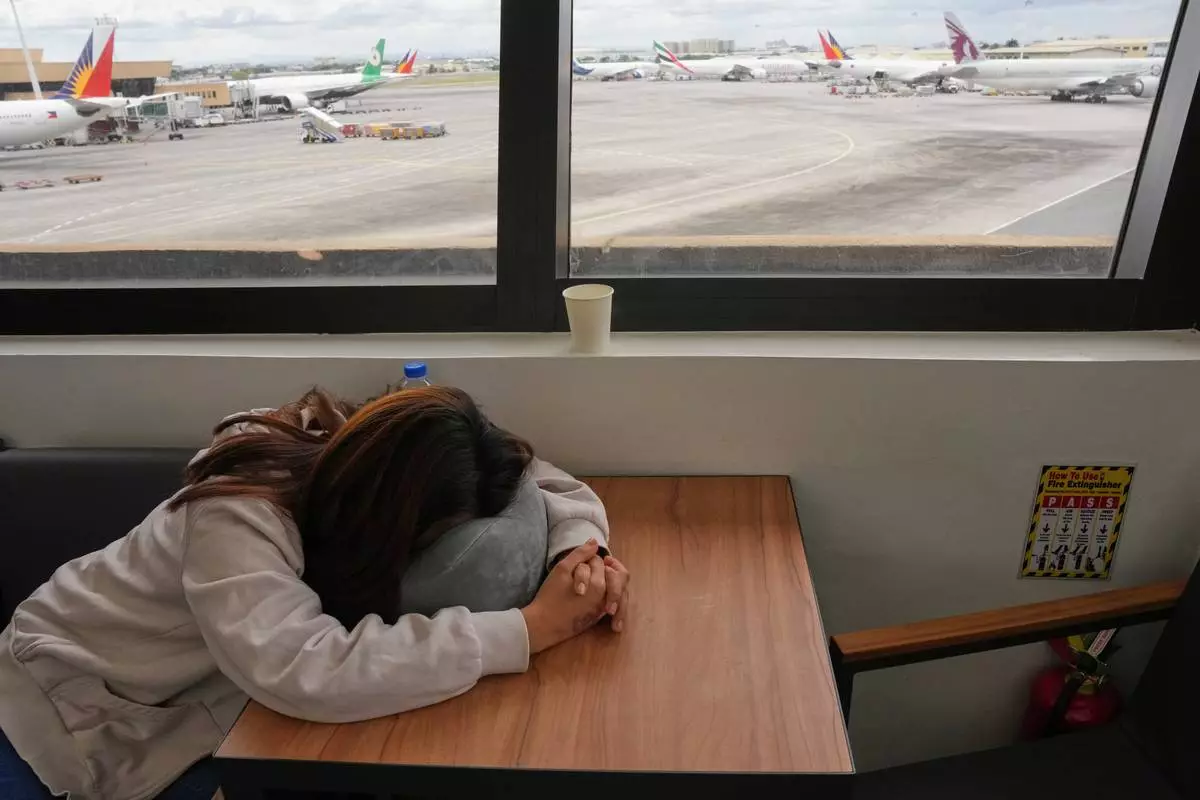
An overseas Filipino worker sleeps as she waits for updates on her cancelled flight to the Middle East at Manila's International Airport, Philippines on Monday, March 2, 2026. (AP Photo/Aaron Favila)
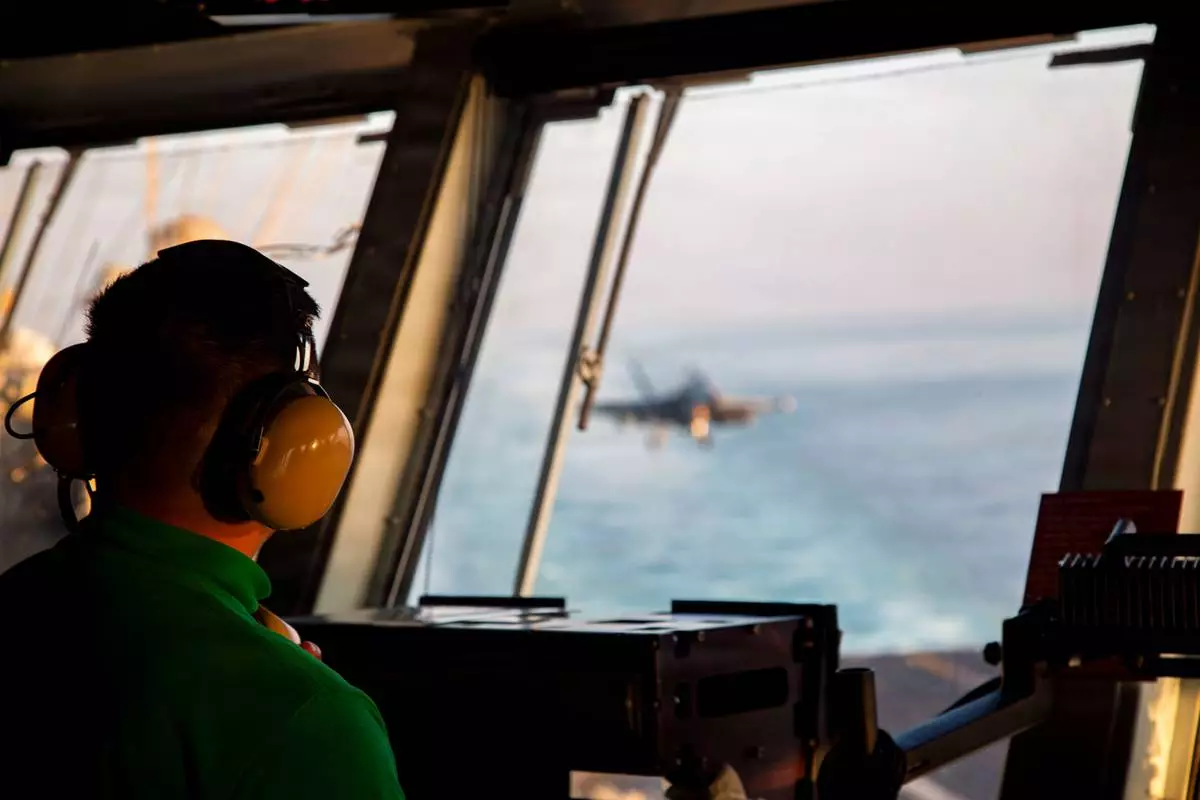
This image provided by U.S. Central Command shows a Navy sailor observing flight operations aboard the USS Abraham Lincoln (CVN 72)) in support of Operation Epic Fury, on Saturday, Feb. 28, 2026. (U.S. Navy via AP)
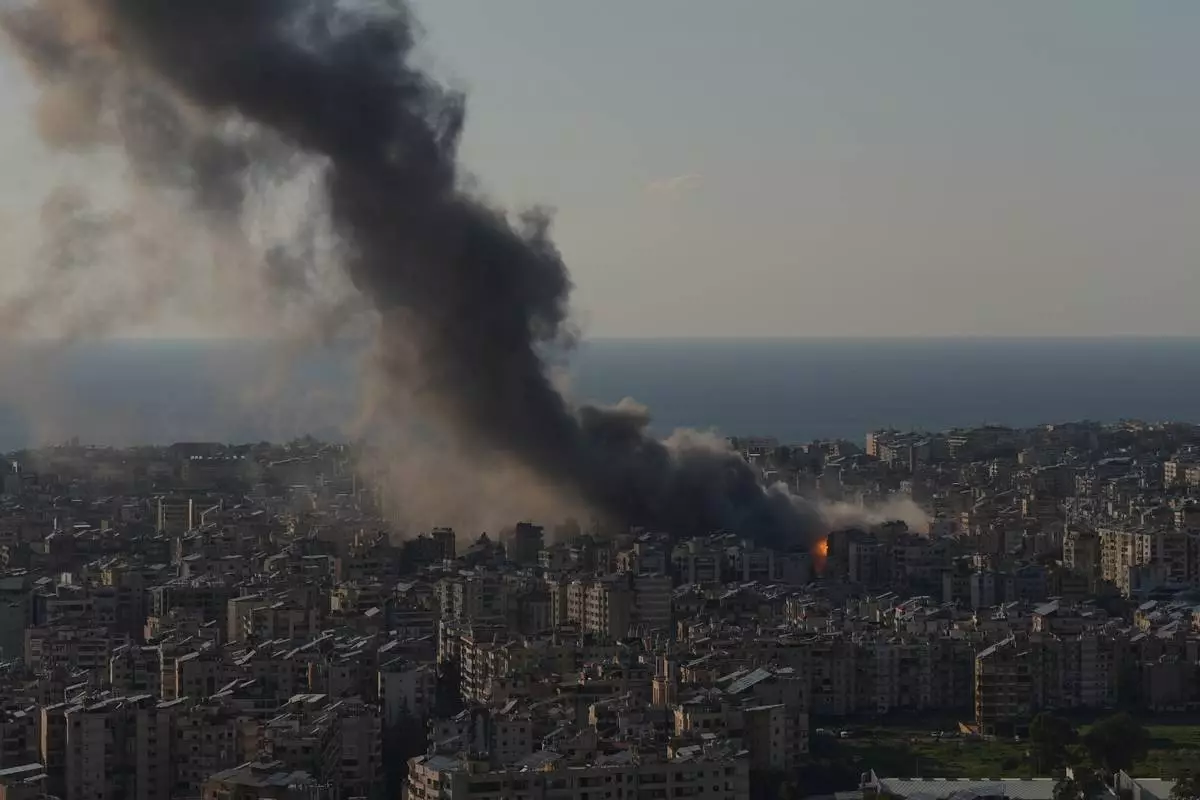
Flames and smoke rise from Israeli airstrikes on Dahiyeh, a southern suburb of Beirut, Lebanon, Monday, March 2, 2026. (AP Photo/Hassan Ammar)
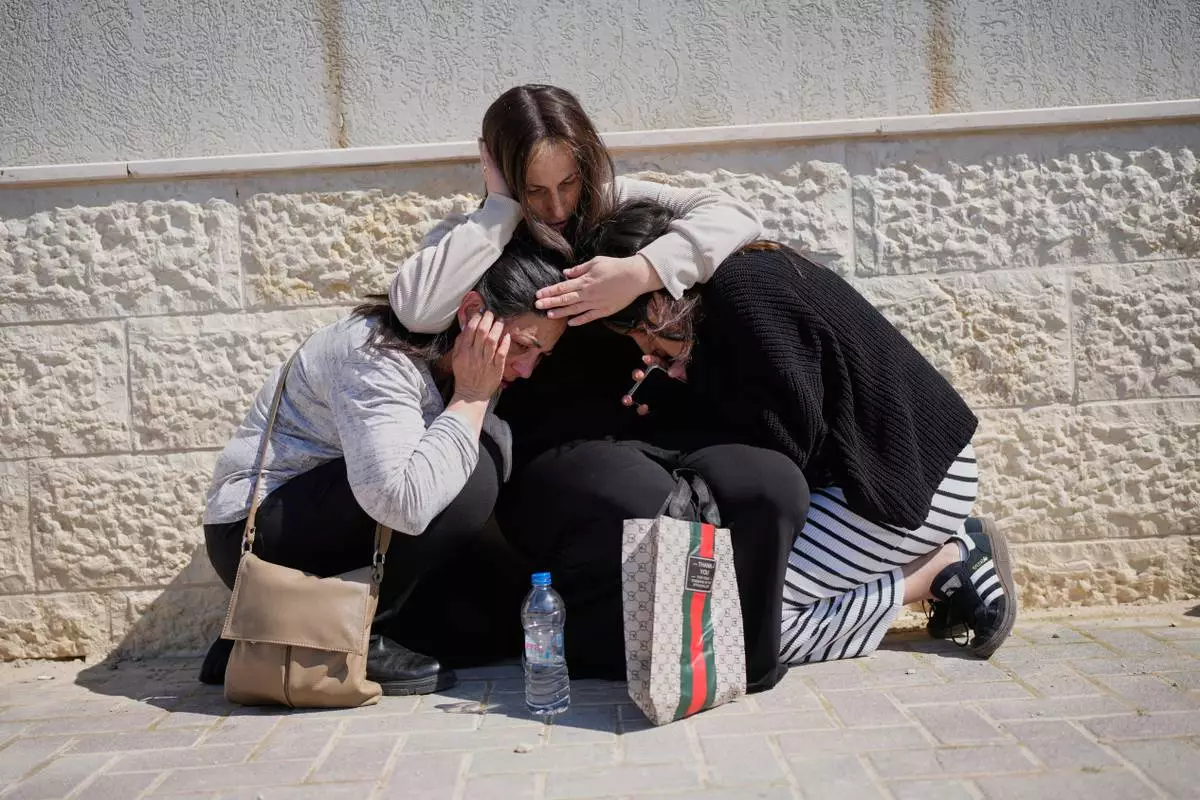
Mourners take cover while air-raid sirens warn of incoming missiles launched by Iran toward Israel during the funeral of Sarah Elimelech and her daughter Ronit who were killed in an Iranian missile attack, in Beit Shemesh, Israel, Monday, March 2, 2026. (AP Photo/Ohad Zwigenberg)
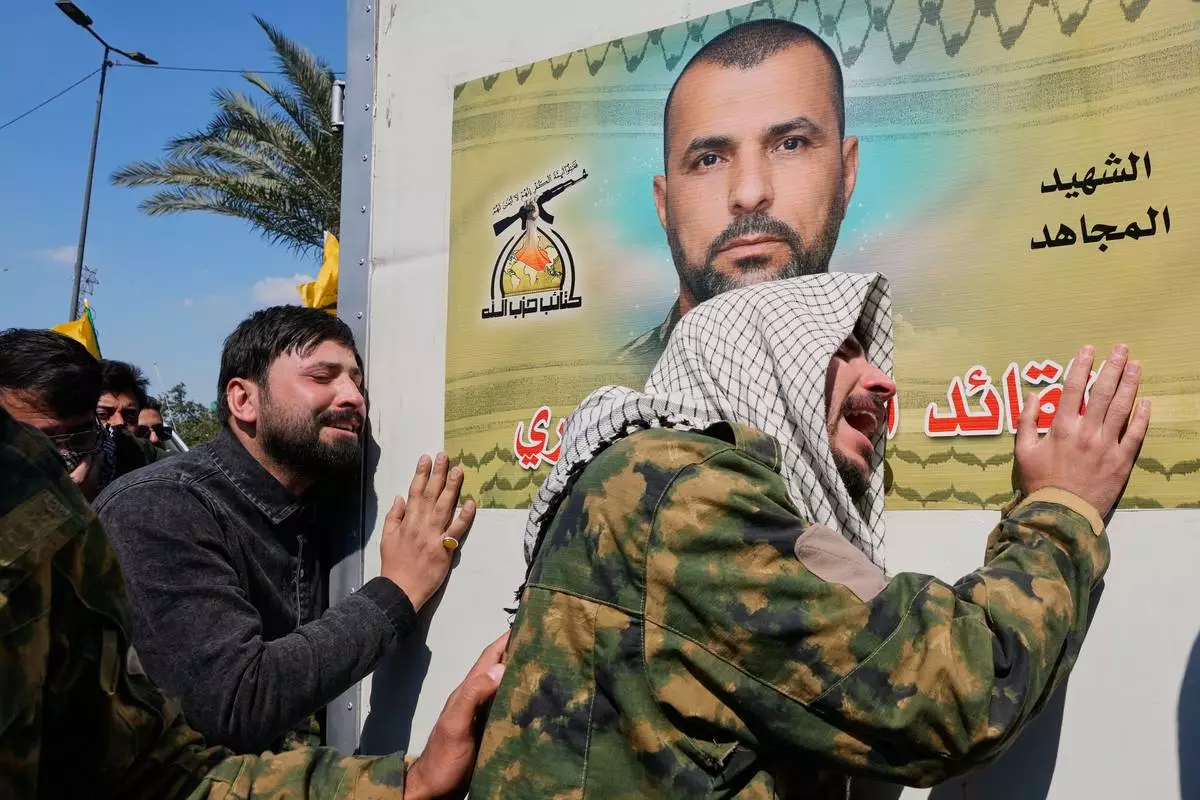
Relatives grieve during a funeral of a fighter with the Kataib Hezbollah, who was killed in a U.S. airstrike, in Baghdad, Iraq, Monday, March 2, 2026. (AP Photo/Hadi Mizban)
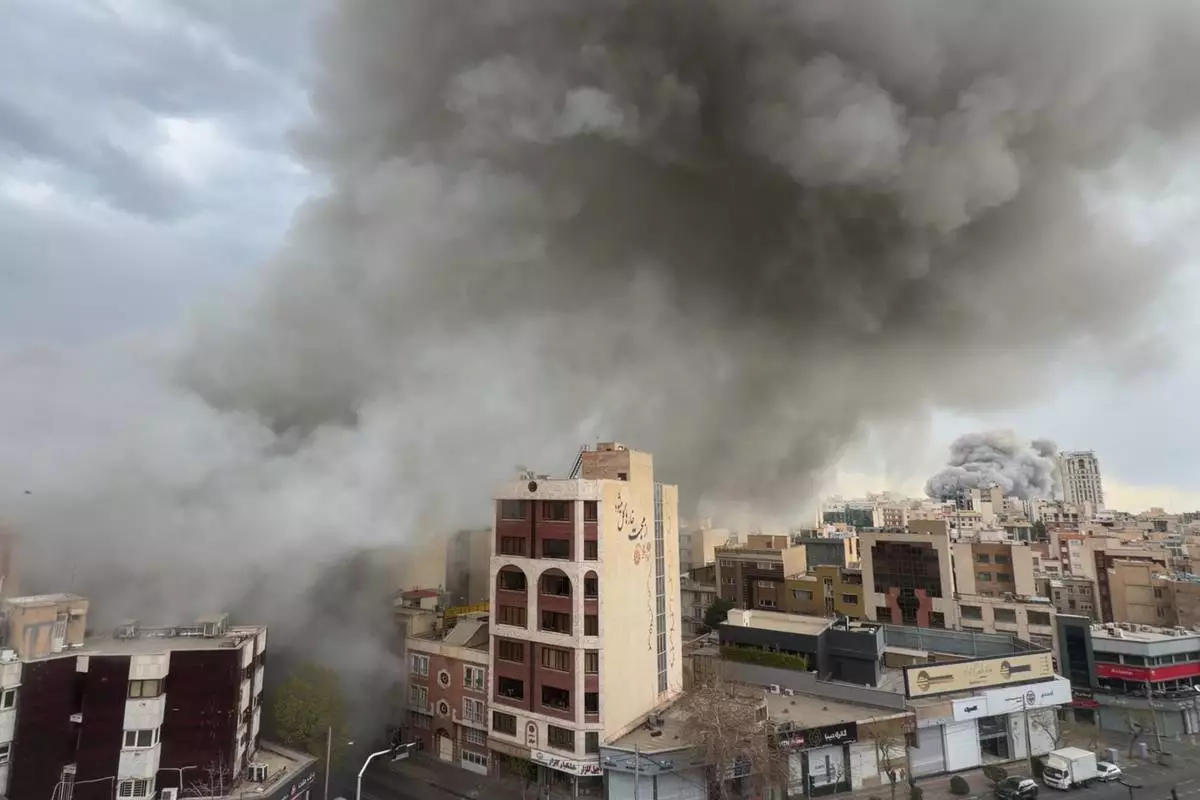
Plumes of smoke from two simultaneous strikes rise over Tehran, Iran, Monday, March 2, 2026. (AP Photo/Mohsen Ganji)
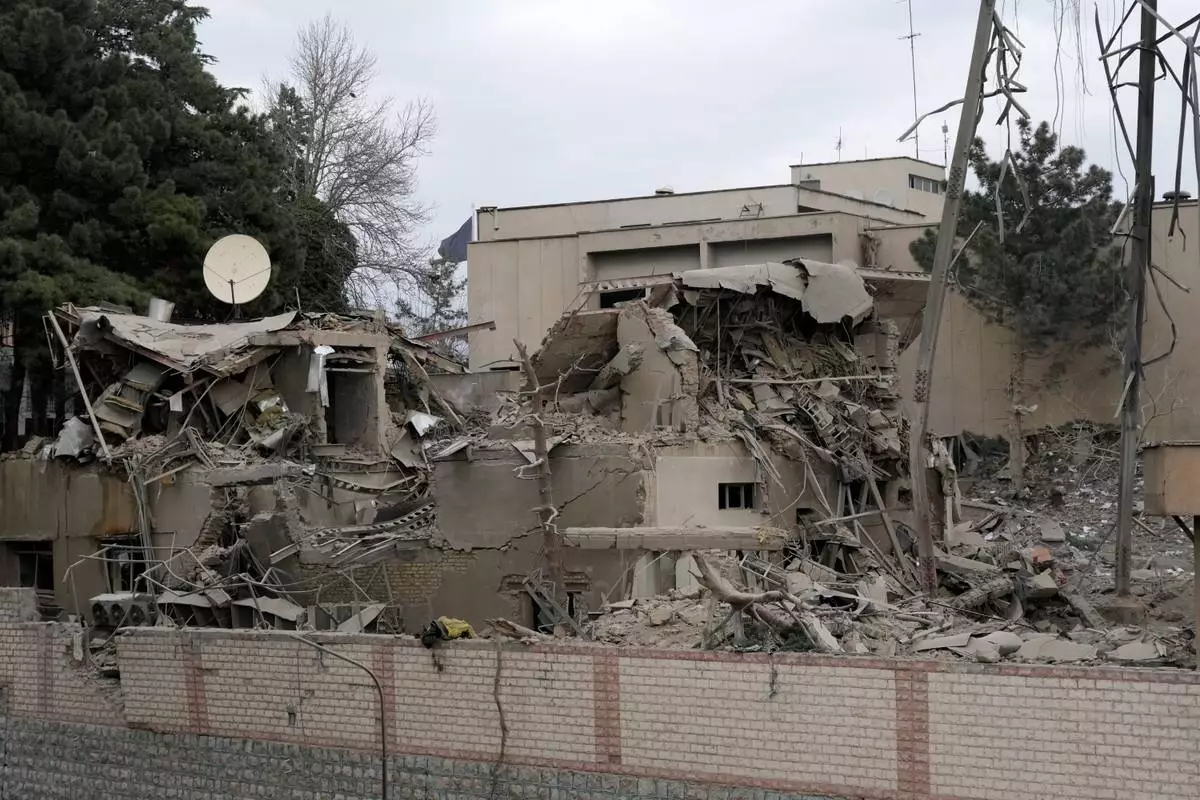
A state TV communications tower and building destroyed Sunday during a strike as part of the ongoing joint U.S.–Israeli military campaign are seen in Tehran, Iran, Tuesday, March 2, 2026. (AP Photo/Vahid Salemi)
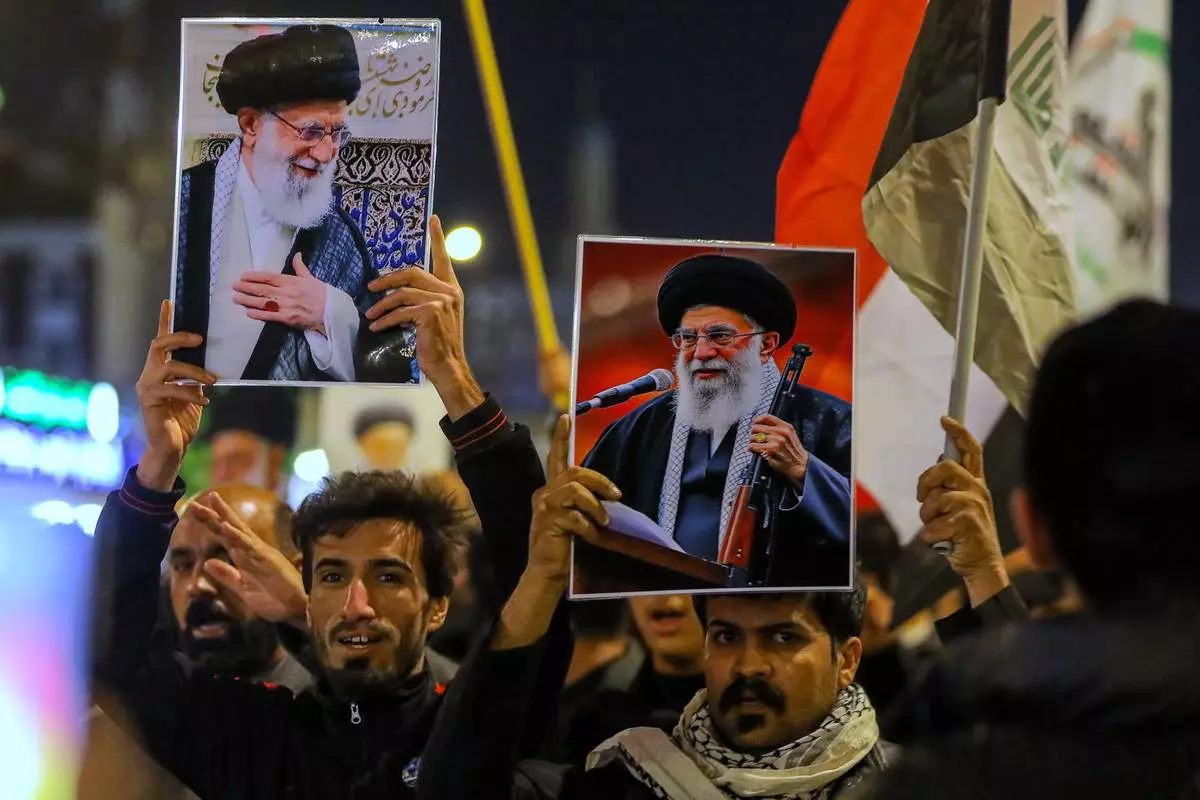
Iraqi Shiites hold pictures of Iranian Supreme Leader Ayatollah Ali Khamenei, who was killed by a U.S. airstrike in Tehran, during a symbolic funeral, in Najaf, Iraq, Sunday, March 1, 2026. (AP Photo/Anmar Khalil)
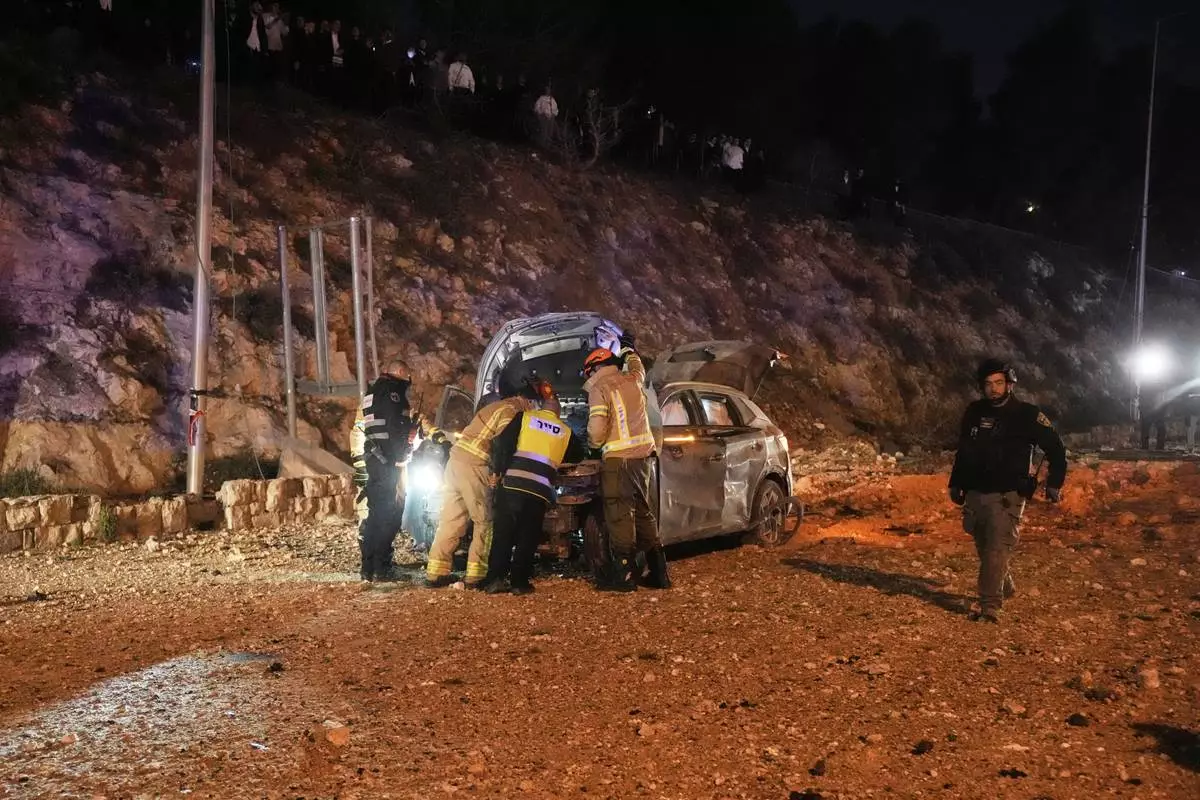
Israeli security forces inspect the scene of a direct hit on a road following an Iranian missile strike in Jerusalem, Sunday, March 1, 2026.(AP Photo/Mahmoud Illean)
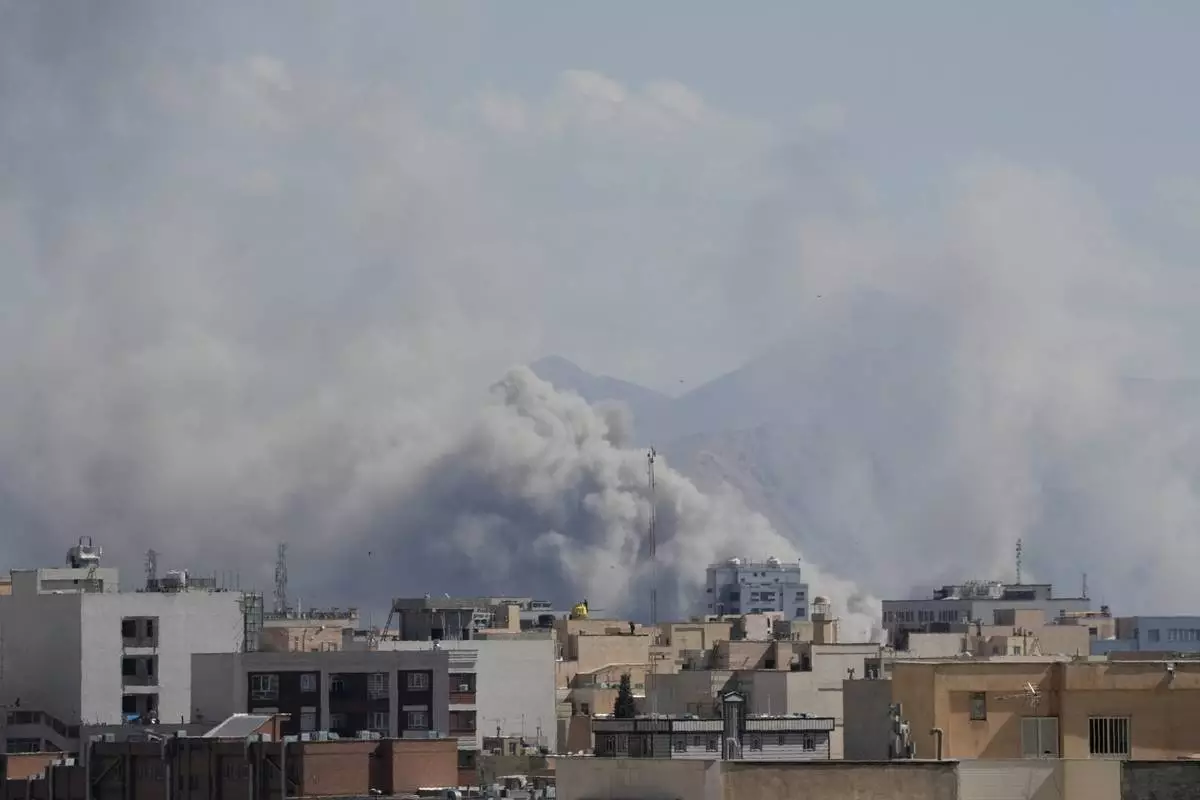
Smoke rises up after a strike in Tehran, Iran, Sunday, March 1, 2026. (AP Photo/Vahid Salemi)
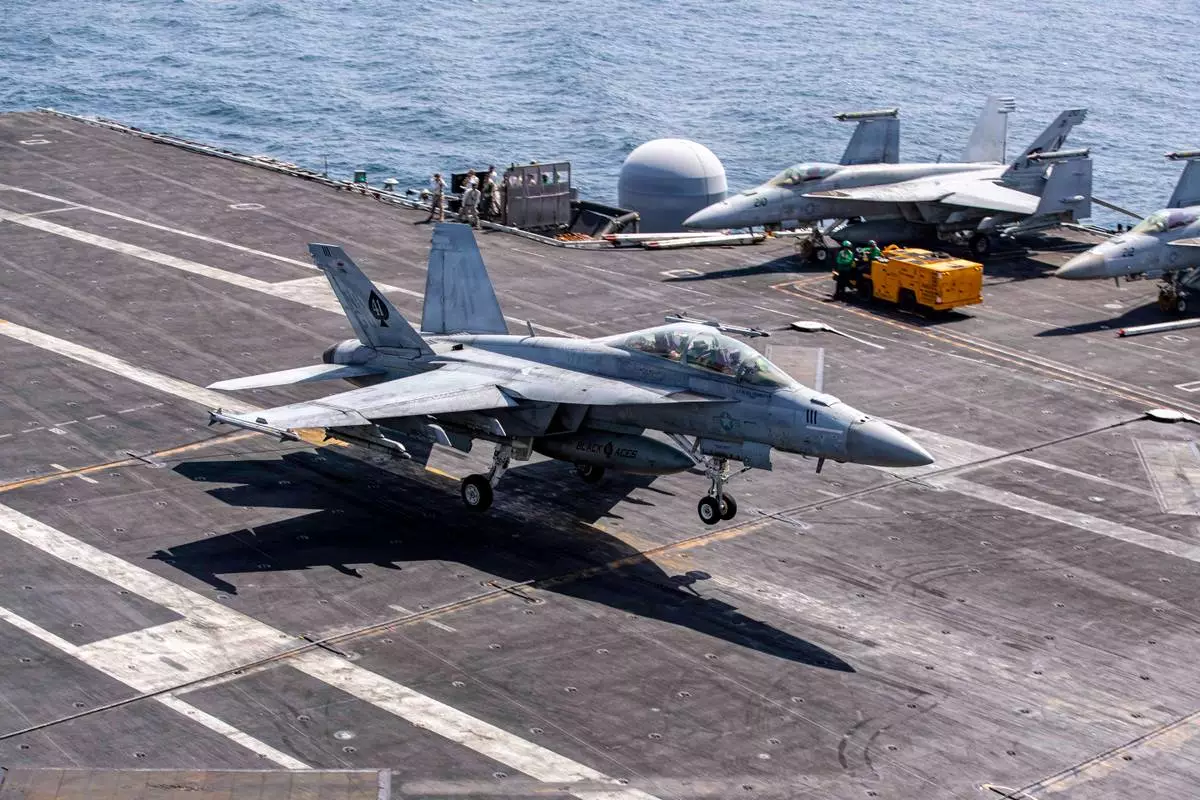
This image provided by U.S. Central Command shows a F/A-18E Super Hornet makes an arrested landing on the USS Abraham Lincoln (CVN 72) after a mission in support of Operation Epic Fury, on Saturday, Feb. 28, 2026. (U.S. Navy via AP)
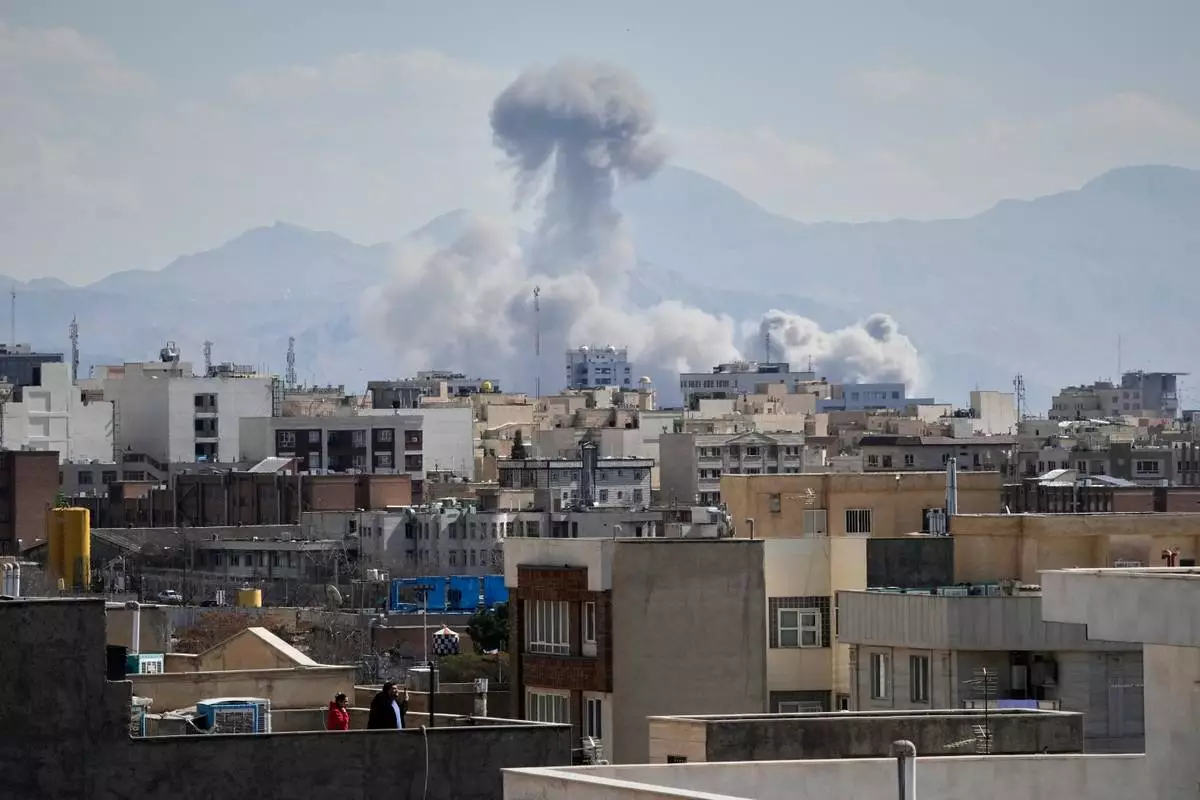
People watch from a rooftop as a plume of smoke rises after a strike in Tehran, Iran, Sunday, March 1, 2026. (AP Photo/Vahid Salemi)
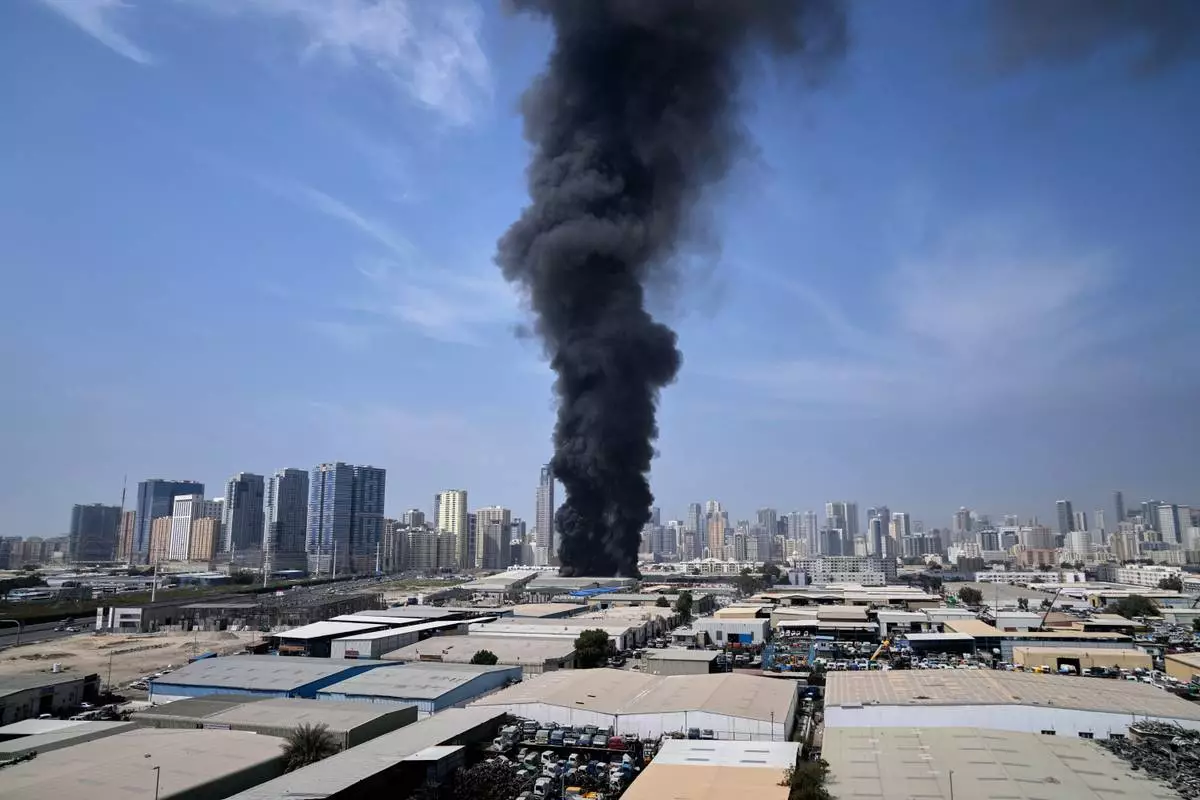
A black plume of smoke rises from a warehouse at the industrial area of Sharjah City in the United Arab Emirates following reports of Iranian strikes in Dubai, United Arab Emirates, Sunday, March 1, 2026. (AP Photo/Altaf Qadri)