WASHINGTON (AP) — The Supreme Court seemed likely Monday to loosen a federal law that bars marijuana users from owning guns in a case that crossed typical political lines.
A majority of justices appeared to lean toward a narrow ruling in favor of a Texas man who argued he shouldn’t have been charged with a crime just because he owned a gun and smoked marijuana a few times a week.
The Trump administration asked the high court to revive a criminal case against Ali Danial Hemani under a law that bans all illegal drug users from owning guns. But both liberal and conservative justices seemed skeptical.
“What is the government's evidence that using marijuana a couple of times a week makes someone dangerous?” said conservative Justice Amy Coney Barrett.
The Trump administration has asked the court to strike down other gun control laws in the past, but Principal Deputy Solicitor General Sarah Harris defended the illegal drug user law as a reasonable measure to keep firearms from potentially dangerous people. The law was also used in the case of Hunter Biden, who was convicted of buying a gun when he was addicted to cocaine. He was later pardoned by his father, then-President Joe Biden.
Cannabis, though, is now broadly legal in about half the country, though it remains illegal on a federal level. “What do we do with the fact that marijuana is sort of illegal and sort of isn’t, and that the federal government itself is conflicted on this?” Justice Neil Gorsuch said.
He was part of the conservative majority that expanded gun rights with a landmark case in 2022 known as New York State Rifle and Pistol Association v. Bruen. The court said that any gun laws must have a strong grounding in the nation’s historical traditions.
Liberal-leaning Justice Ketanji Brown Jackson said a ban on firearms for cannabis users didn't seem to have the required historical roots. “I think your argument sort of falls apart under the Bruen test,” she said.
The government pointed to historical laws that barred “habitual drunkards” from having guns, calling that clear historical evidence in favor of the law. But Gorsuch said that alcohol was more common in the nation's early days, including hard cider with breakfast for John Adams and a daily pint of whiskey for James Madison. “Are they all habitual drunkards who would be properly disarmed for life under your theory?” he said.
An attorney for Hemani, Erin Murphy, said those laws were for extreme cases and modern cannabis users aren't necessarily comparable. They regularly take gummies as sleep aids, for example, can also be quite capable of handling firearms safely, she argued.
The case made for some unusual political alliances. The American Civil Liberties Union and the National Rifle Association both supported Hemani’s case, as did cannabis legalization groups like NORML. On the other side were gun-safety groups like Everytown that usually oppose the Trump administration on Second Amendment issues.
Some justices, however, appeared concerned that a ruling for Hemani could allow more weapon possession by people who use more dangerous drugs, like methamphetamine or heroin. Moving away from the current ban could require courts to frequently make in-depth considerations about the level of dangerousness presented by a given substance.
“It just seems to me that this takes a fairly cavalier approach to the necessary consideration of expertise and the judgments we leave to Congress and the executive branch,” Chief Justice John Roberts said.
It's the second gun case the court is hearing this term in the wake of its 2022 decision. In the other, the justices appeared likely to strike down a Hawaii law restricting guns in stores and hotels.
The court is expected to decide the case by the end of June.
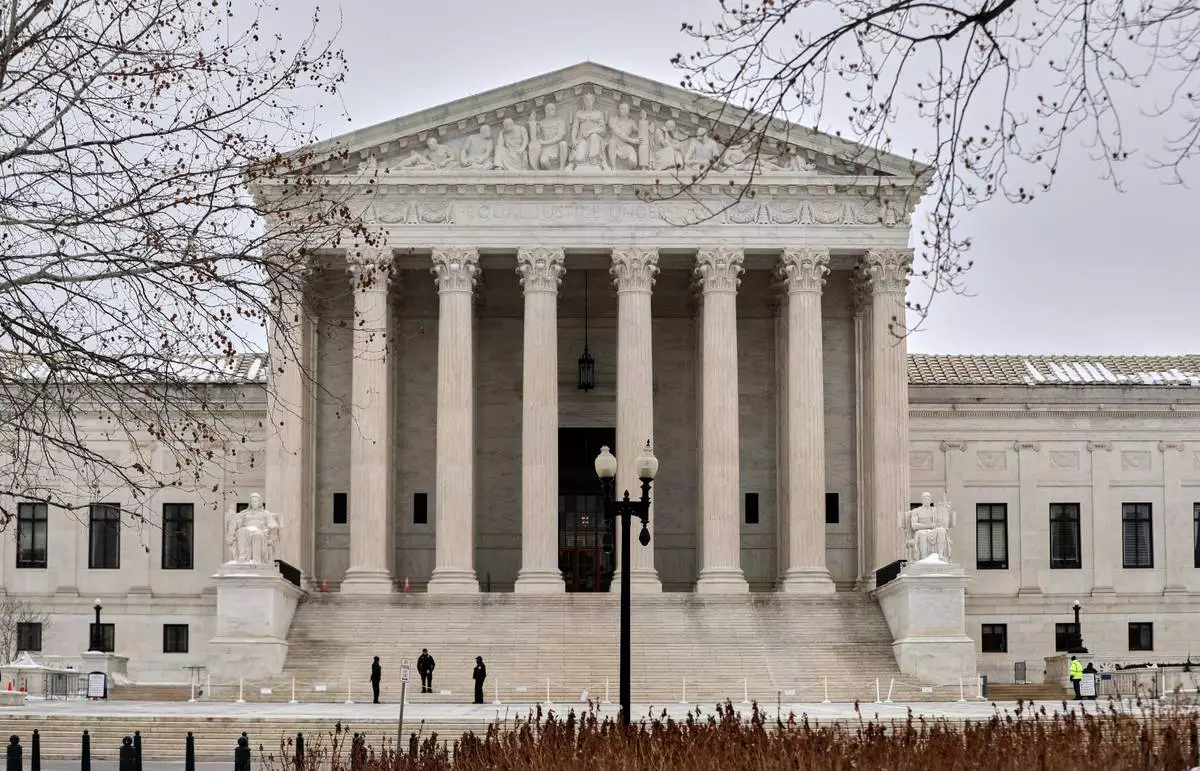
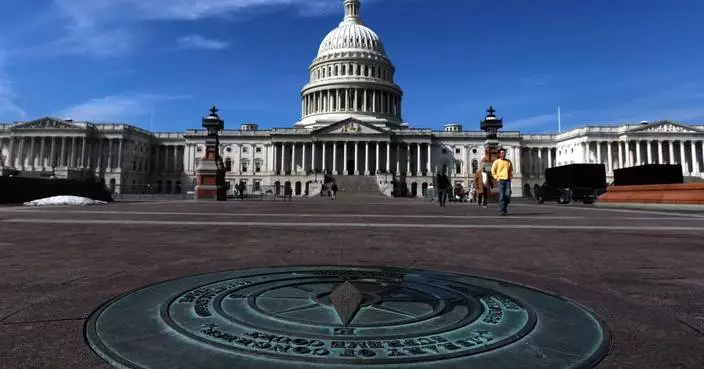
FILE - The Supreme Court is photographed, Feb. 6, 2026, in Washington. (AP Photo/Rahmat Gul, File)