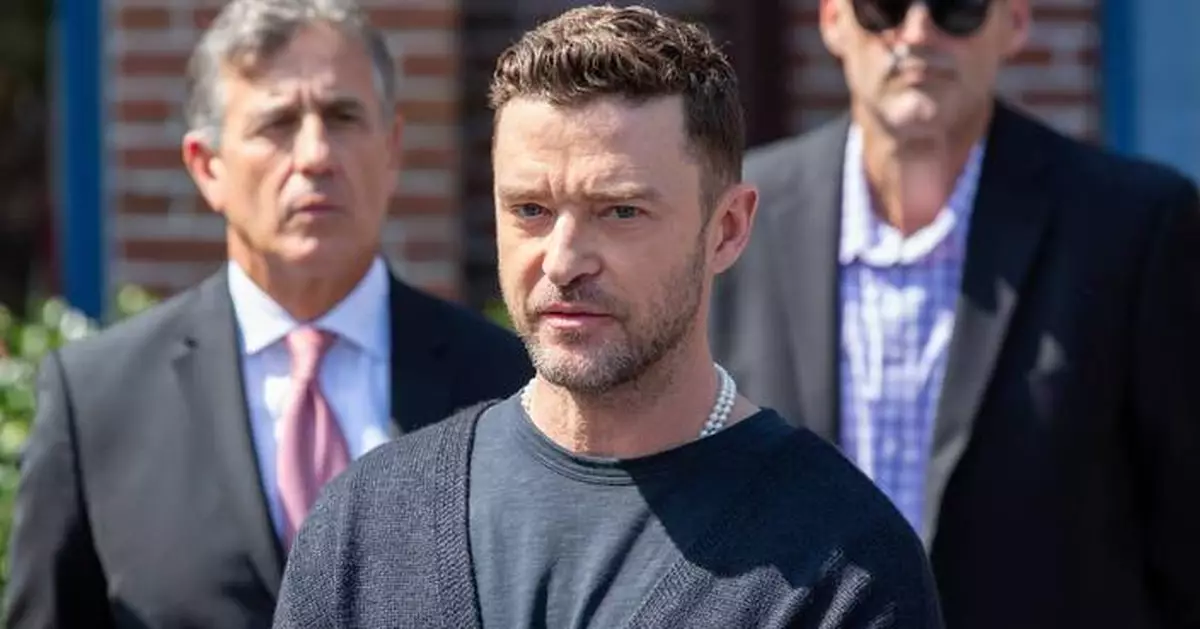
NEW YORK (AP) — Justin Timberlake is suing to block the release of police body camera footage from his drunken driving arrest in New York’s Hamptons in 2024.
The pop star's lawyers argued in a lawsuit filed Monday against the village of Sag Harbor and its police department that release of the video would “devastate” Timberlake's privacy by revealing “intimate, highly personal, and sensitive details.”
They also said it would cause “severe and irreparable harm” to his reputation by subjecting him to “public ridicule and harassment.”
“The footage at issue depicts Petitioner in an acutely vulnerable state during a roadside encounter with law enforcement, capturing intimate details of Petitioner’s physical appearance, demeanor, speech, and conduct during field sobriety testing, the subsequent arrest, and Petitioner’s confinement following arrest over the next several hours,” the lawsuit reads.
A judge didn't immediately rule following a Monday hearing in state court in Riverhead, according to Vincent Toomey, a lawyer for Sag Harbor. Instead, Judge Joseph Farneti asked the two sides to confer on a possible resolution and report back later in the week, he said.
Timberlake's lawyers didn't immediately respond to emails seeking comment.
The NSYNC singer-turned-solo artist and actor pleaded guilty to impaired driving in September 2024. Police said he ran a stop sign in the village center, veered out of his lane and got out of his BMW smelling of alcohol that June.
The Tennessee native told officers he had had one martini and had been following some friends home in Sag Harbor, a former whaling village among the affluent beach towns of the Hamptons, some 100 miles (160 kilometers) east of New York City.
Timberlake agreed to give a public safety announcement against the perils of drunken driving as part of the plea deal that knocked down his initial misdemeanor charge to a noncriminal traffic violation. He was also sentenced to a $500 fine, 25 hours of community service and a 90-day suspension of his license.
“Even if you’ve had one drink, don’t get behind the wheel of a car,” Timberlake said following his court appearance. “This is a mistake that I made, but I’m hoping that whoever is watching and listening right now can learn from this mistake. I know that I certainly have.”
In their suit, Timberlake’s lawyers say they were notified Sunday that village officials intended to release some of the footage, with certain redactions, to comply with public records requests.
They say the total footage runs roughly eight hours and includes Timberlake's initial stop, police questioning, the administration of field sobriety tests and his arrest.
The Associated Press was among several media outlets that filed a records request seeking the release of the video.
Sag Harbor Mayor Thomas Gardella said village officials have carefully reviewed the footage to ensure nothing would be released that could put police or the public at risk.
“We're trying to be as transparent as can be with this footage,” he said, noting that the state's public records law generally requires release of police body camera footage.
Follow Philip Marcelo at twitter.com/philmarcelo.
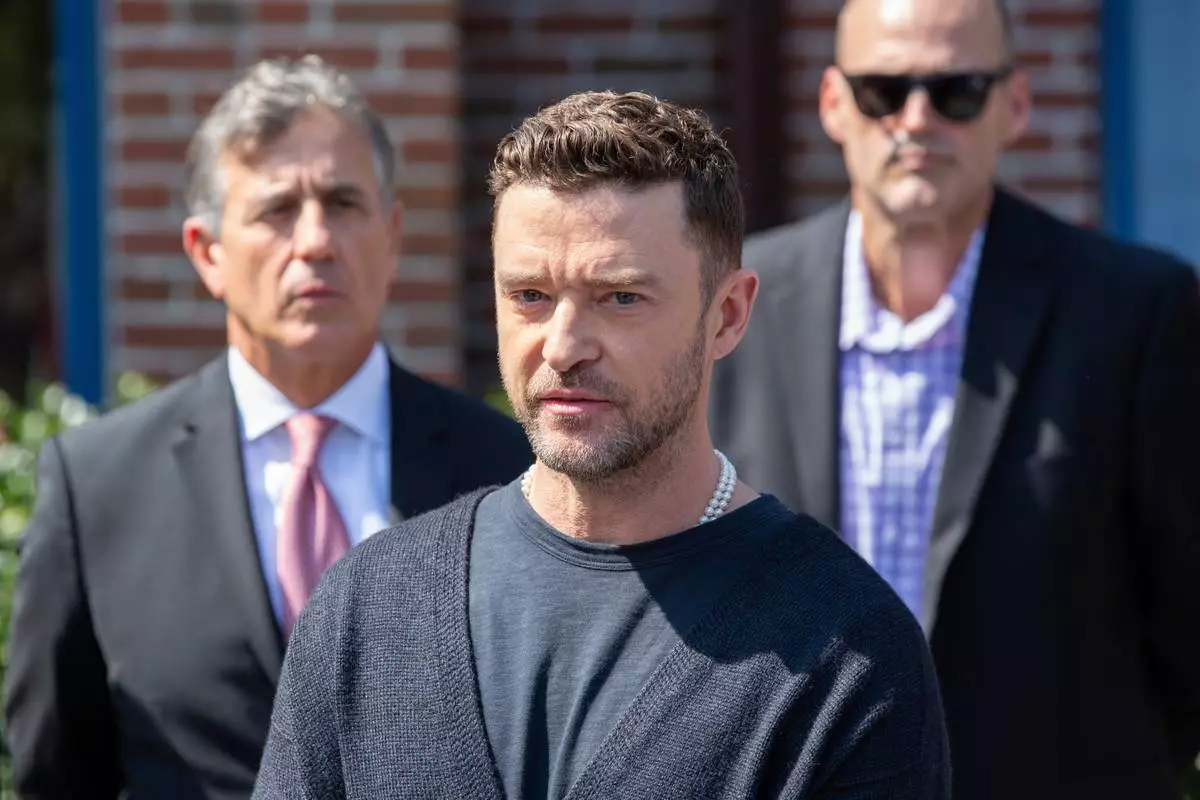
FILE - Justin Timberlake urges drivers not to get behind the wheel after even a single alcoholic drink in Sag Harbor, New York, Sept. 13, 2024, as part of his sentence for driving while impaired. (AP Photo/Ted Shaffrey, File)
WASHINGTON (AP) — For Democrats demoralized at being shut out of power in Washington, the past several months have offered reason for optimism.
A party often beset by ideological division has largely been unified in opposition to President Donald Trump's hardline immigration tactics, particularly after two U.S. citizens were killed in Minneapolis. Heading into a midterm election year in which they are just a few seats shy of reclaiming the U.S. House majority, Democrats have also kept the White House on defense with criticism of Trump's economic policies and ties to Jeffrey Epstein, the convicted sex offender.
But the U.S. and Israeli strikes against Iran could test the durability of that cohesion. Initially, Democrats balanced condemnation of Iran's supreme leader, Ayatollah Ali Khamenei, who was killed over the weekend, with calls for Congress to quickly pass a war powers resolution that would restrain Trump's attack options.
“As soon as our resolution comes to the floor, senators need to pick a side,” Senate Democratic leader Chuck Schumer said on Monday. “Stand with Americans who don't want war, or stand with Donald Trump as he singlehandedly starts another war.”
But some divisions are surfacing as a handful of Democrats, especially those who are strongly aligned with Israel, express reservations about the war powers measure. Rep. Greg Landsman, D-Ohio, won't back an Iran resolution. Before the strike, Rep. Josh Gottheimer, D-N.J., also said he would vote no.
Sen. John Fetterman, D-Pa., who backed a war powers vote tied to Venezuela in January, also has broken with Democrats over the Iranian measure and rejected arguments that the attack was illegal, spurring frustration among some party leaders.
“John Fetterman knows better,” House Democratic leader Hakeem Jeffries said Monday on CNN.
Republicans are also facing internal dissent. Trump, who did little to prepare Americans for the prospect of such a dramatic conflict, said Monday the operation could last four to five weeks. He hasn’t articulated a clear exit strategy and warns that American casualties could mount, which will pose a severe test of voter patience for the conflict.
The war could also lead to rising gas prices and economic volatility that may bolster Democratic arguments that the president is out of touch with the financial realities facing many Americans.
Still, Republicans see an opportunity to portray Democrats as reflexively opposed to Trump.
“For my Democratic colleagues, this is not about what's best for our national security or what's best for protecting the American people,” said Sen. John Kennedy, R-La. “This is about how to defeat Donald Trump.”
Democrats have undergone a searing internal debate over the party's relationship with Israel in the wake of the war in Gaza. Then-President Joe Biden's loyalty to Israel during the heat of the 2024 campaign was starkly at odds with younger generations outraged by the treatment of Palestinians in Gaza. By the time Kamala Harris rose to the top of the ticket that year, she struggled to win over some younger voters who are critical to Democratic success.
Paco Fabian, the political director for the progressive advocacy group Our Revolution, acknowledged that Democrats “aren’t monolithic.” But he also suggested a shift was underway, noting the results of a New Jersey special election last month.
During that campaign, the affiliated super PAC of the pro-Israel American Israel Public Affairs committee sought to thwart the moderate candidate, Tom Malinowski, after he questioned unconditional aid to the Israeli government. Those efforts appeared to backfire with the more progressive contender, Analilia Mejia, winning the primary.
“Given what's going on right now, I don't think the moment is doing AIPAC and Israel any favors,” Fabian said.
Sympathy toward Israel appears to be shifting. Three years ago, 54% of Americans sympathized more with the Israelis, compared with 31% for the Palestinians, according to Gallup polling released last month. Now, their support is about evenly balanced, with 41% saying their sympathies lie more with the Palestinians, and only 36% saying the same about the Israelis.
Americans’ initial reactions to airstrikes also appeared more negative than positive, early polling suggested. About 6 in 10 U.S. adults disapproved of the U.S. decision to take military action in Iran, according to a CNN poll conducted via text message over the weekend. A separate snap poll from The Washington Post conducted via text message on Sunday suggested that about half of those polled opposed the strikes, while 39% were in support. Roughly 1 in 10 were unsure.
Democrats and independents drove much of the disapproval in those early polls, while Republicans were much more supportive.
The initial political impact of the attacks in Iran could emerge as soon as Tuesday during the first primary elections of this year’s midterm campaign.
In North Carolina, Durham County Commissioner Nida Allam was already going into her bid to unseat two-term Rep. Valerie Foushee with backing from Our Revolution and other top progressives. After receiving support from groups tied to AIPAC during her 2022 campaign, Foushee’s campaign rejected such contributions this cycle. Over the weekend, she said she doesn’t support “Trump’s illegal war with Iran” and would back the war powers resolution.
Still, Allam, who would be the first Muslim elected to Congress from North Carolina, was quick to release a video ahead of Tuesday’s vote criticizing Trump for “starting another endless war” and promising to never accept support from “the pro-Israel lobby.”
In Texas, home to high-profile Senate primaries on Tuesday, Democratic voters expressed alarm at the attacks.
“It shouldn't have happened,” said Charles Padmore, 45, an independent contractor in Houston. “Affordability should be the top priority on Trump's list.”
Alex Diaz, 31, a biology high school teacher in Houston, called the bombing of Iran “uncalled for.”
“You’re trying to start World War III, and we don’t need that right now,” he said.
The fallout could spread to other contests this month. Ahead of the March 17 primary in Illinois, AIPAC-aligned groups have also criticized Daniel Biss, the Evanston mayor who is aiming to become the Democratic candidate to succeed the retiring Rep. Jan Schakowsky. In an interview, Biss spoke of the “backlash I'm hearing people have against AIPAC, their MAGA-aligned money and their Trump-aligned policy agenda.”
Asked about such predictions, Patrick Dorton, a spokesman for AIPAC’s affiliated super PAC, said “the key distinction will be between those who recognize that Iran is a murderous regime that tortures women for leaving their hair uncovered, hangs gay people, and executes peaceful democratic protestors, and those who will turn a blind eye to the regime’s atrocities.”
As Congress moves toward a potential war powers vote this week, Biss said there was a need for Democrats to act as a “strong, clear, vocal, united opposition party.”
“I also would like to see the Democratic Party united not just on the procedural argument but on the basic acknowledgment that this war is wrong,” he added.
On Capitol Hill, Sen. Richard Blumenthal of Connecticut, a Democrat on the Armed Services Committee, said he was less concerned about party unity than the prospect of achieving a bipartisan vote on the war powers resolution. Three Republicans ultimately backed the Venezuela resolution in January.
“What I want to see happen is the war powers resolution pass,” he said. “I'm not focused on what Democrats as a whole do. We're going to have differing opinions among Democrats and among Republicans.”
Associated Press journalists Linley Sanders in Washington and Juan Lozano in Houston contributed to this report.
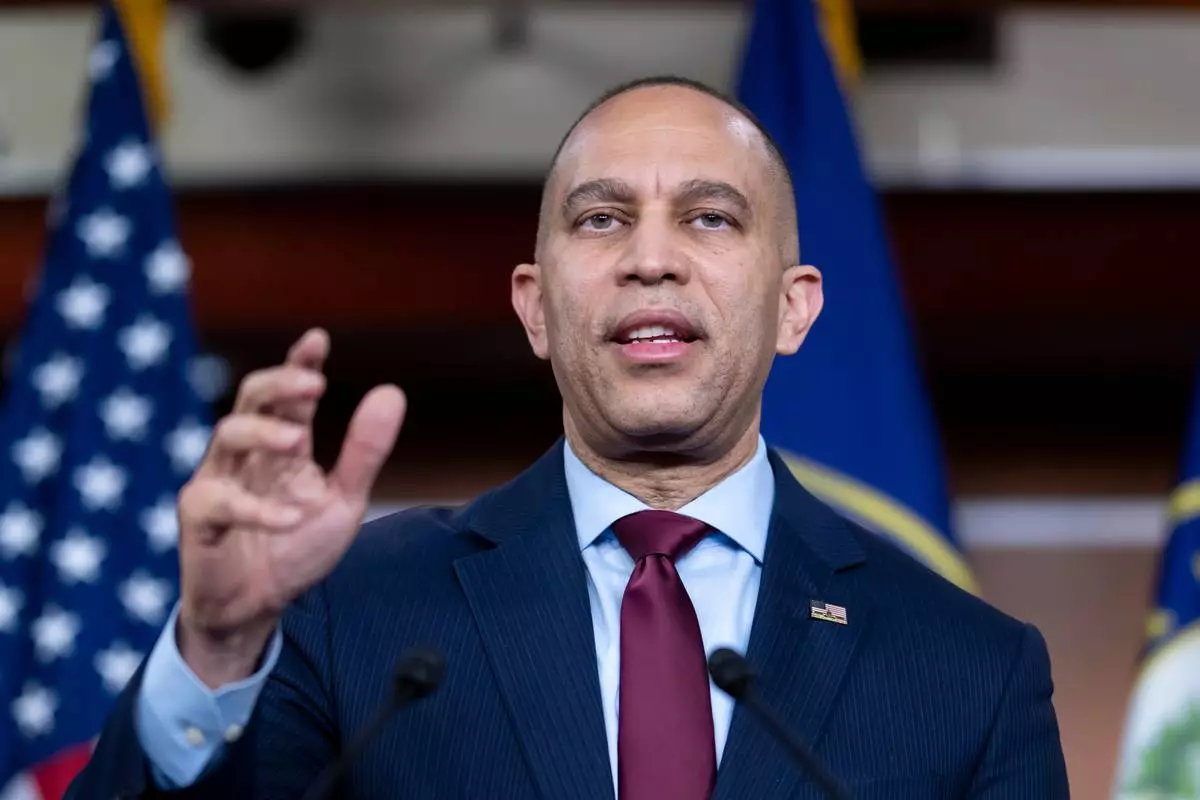
House Minority Leader Hakeem Jeffries, D-N.Y., speaks during a news conference at the Capitol in Washington, Wednesday, Feb. 18, 2026. (AP Photo/J. Scott Applewhite)
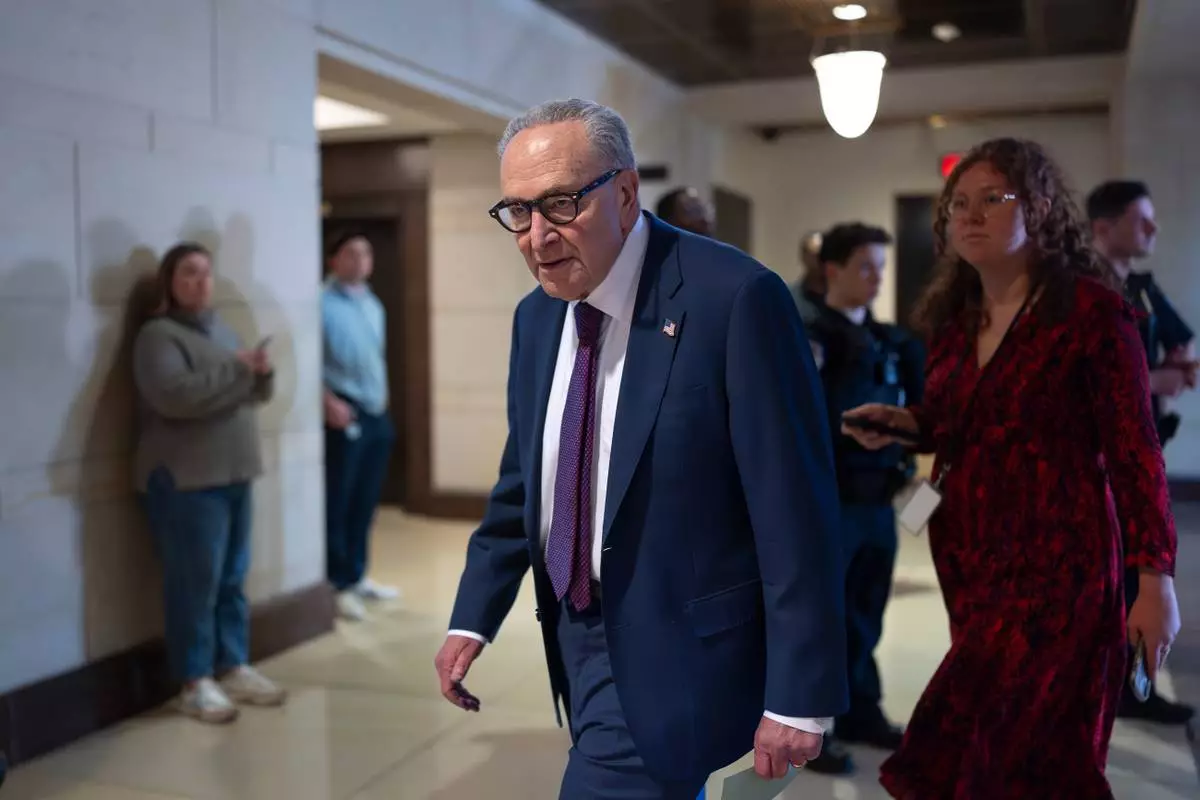
Senate Minority Leader Chuck Schumer, D-N.Y., arrives at a secure facility in the basement of the Capitol for an intelligence briefing with Secretary of State Marco Rubio on the Iran war in Washington, Monday, March 2, 2026. (AP Photo/J. Scott Applewhite)
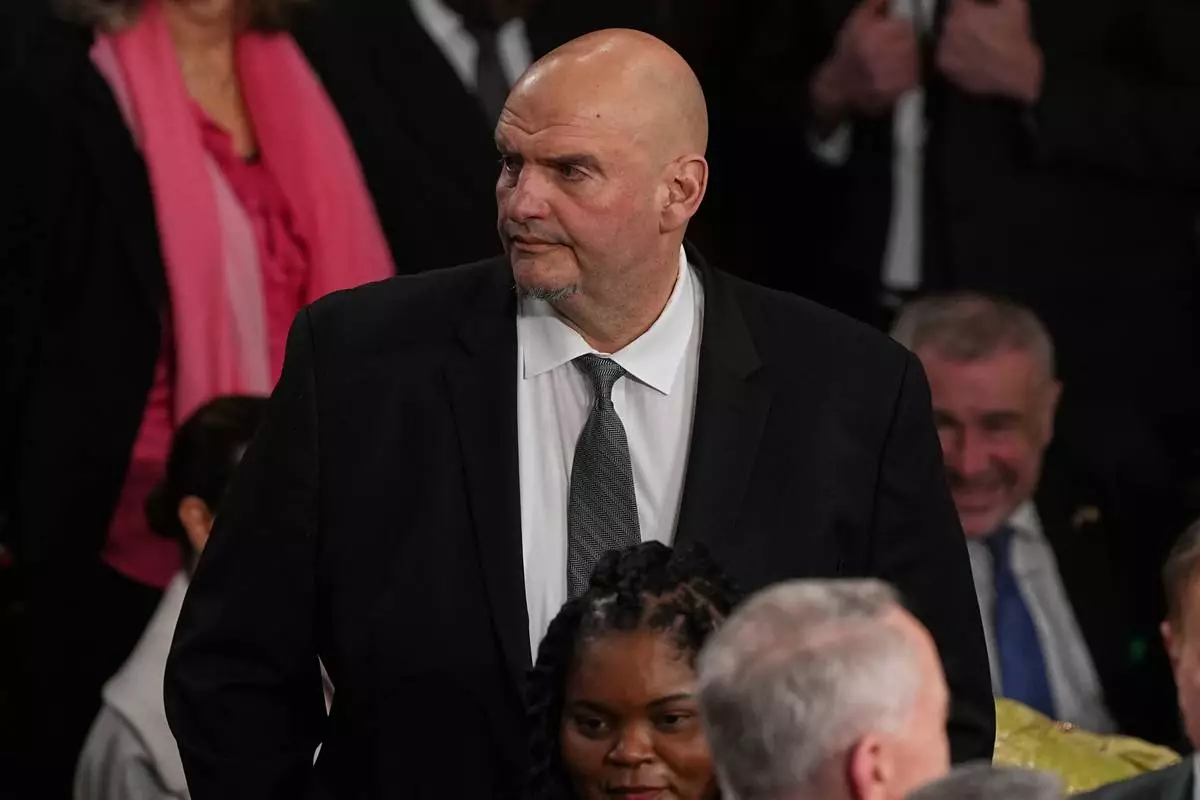
Sen. John Fetterman, D-Pa., arrives before President Donald Trump delivers the State of the Union address to a joint session of Congress in the House chamber at the U.S. Capitol in Washington, Tuesday, Feb. 24, 2026. (AP Photo/Matt Rourke)