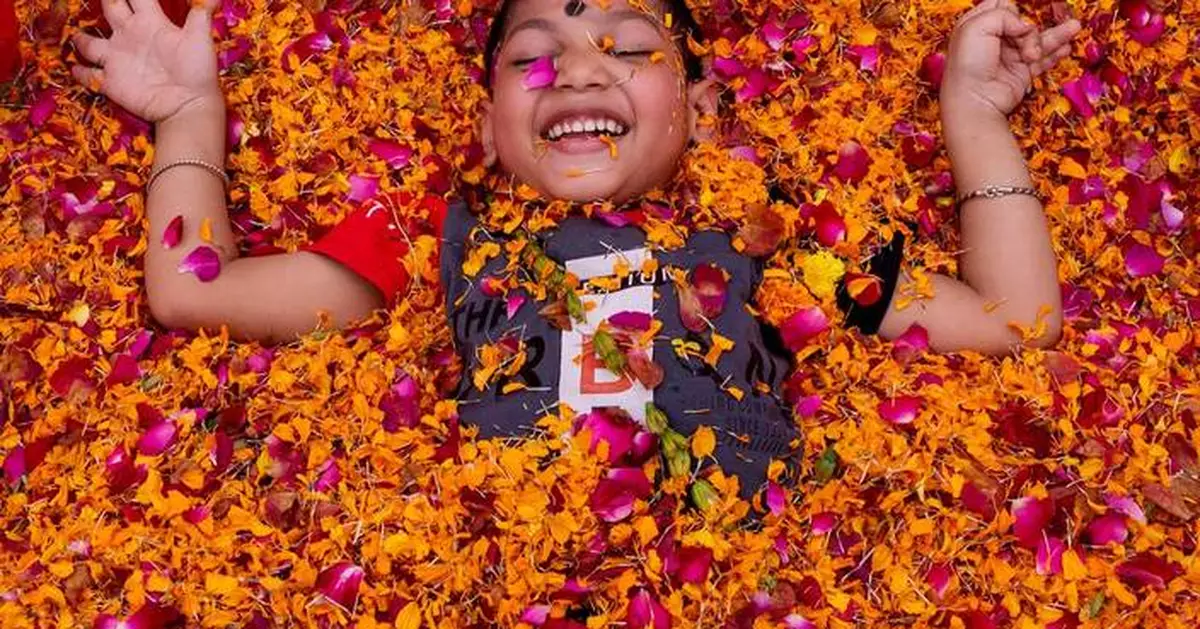
Holi, widely known as the Hindu festival of colors, is a joyful annual celebration at the advent of spring with cultural and religious significance.
Typically observed in March in India, Nepal, other South Asian countries and across the diaspora, the festival celebrates love and signifies a time of rebirth and rejuvenation — a time to embrace the positive and let go of negative energy.
Click to Gallery
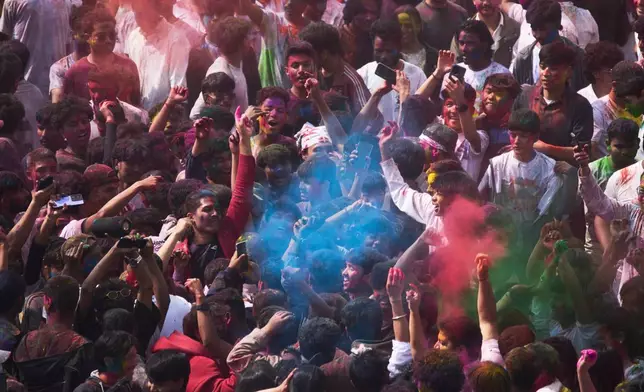
Nepalese people throw colored powders on each other as they celebrate Holi, the Hindu festival of colors at Basantapur Durbar Square in Kathmandu, Nepal, Monday, March 2, 2026. (AP Photo/Niranjan Shrestha)
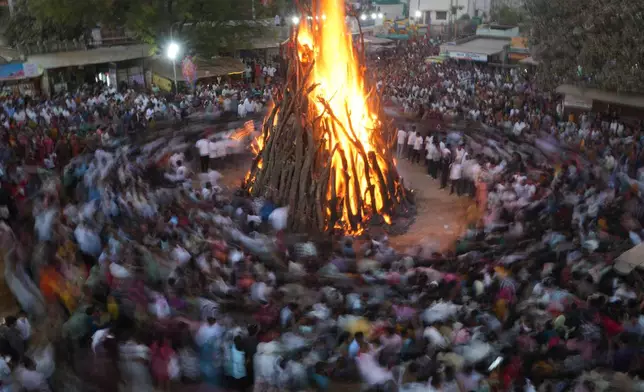
Indians perform rituals around a bonfire during Holi festival celebrations at Palaj village near Gandhinagar, India, Monday, March 2, 2026. (AP Photo/Ajit Solanki)
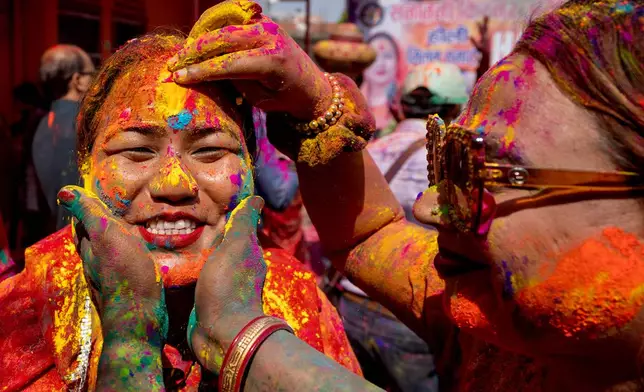
Third Gender members of Kinnar Akhara play with colored powder during celebrations marking Holi, the Hindu festival of colors, in Prayagraj, in the northern Indian state of Uttar Pradesh, India, Sunday, March 1, 2026. (AP Photo/Rajesh Kumar Singh)
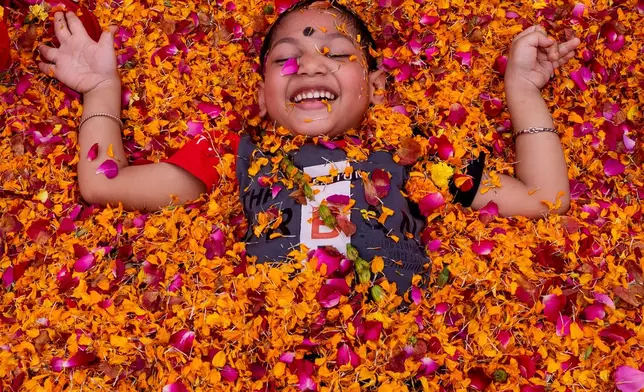
A child with cerebral palsy attends Holi, the Hindu festival of colors, at an event organized by the Trishla Foundation in Prayagraj, India,Sunday, March 1, 2026. (AP Photo/Rajesh Kumar Singh)
For one of Holi’s most well-known traditions, celebrants clad in all white, come out to the street and throw colored powders at each other, leaving behind a kaleidoscope of pigments and joy. Festivities with music, dancing and food ensue.
Holi is celebrated at the end of winter and the beginning of spring, on the last full moon day of the Hindu luni-solar calendar month of Falgun. The date of the festival varies depending on the lunar cycle. Typically, it falls in March, and will be celebrated this year on March 4.
In many parts of India, people light large bonfires the night before the festival to signify the destruction of evil and victory of good. Different mythological tales point to the reason behind this observance.
In one story, the king, Hiranyakashipu, ordered everyone in his kingdom to worship him and was irked when his own son Prahlad, a devotee of Lord Vishnu, disobeyed his command. So, he ordered his sister Holika who was immune from fire to take the child, Prahlad, into a bonfire while holding him in her lap. However, when the pyre was lit, the boy’s devotion to Lord Vishnu protected him and left him unscathed while Holika, despite her immunity, burned to death.
In another southern India tradition, the event is known as Kama Dahanam to commemorate Lord Shiva burning Kamadeva, the god of love, with his third eye. It symbolizes the destruction of lust and other earthly attachments for a higher spiritual purpose, preceding the joy of colors.
Some also consider Holi a reference to Lord Krishna and his love for his beloved, Radha, and his cosmic play with his consorts and devotees called “gopikas,” who are also revered for their unconditional love and devotion to Krishna.
On the day of Holi, entire streets and towns are filled with people who throw colored powder in the air. Some fling balloons filled with colored water from rooftops and others use squirt guns. For one day, it’s all fair game. Cries of “Holi hai!” which means “It’s Holi!” can be heard on the streets. Holi has also been romanticized and popularized over the decades in Bollywood films.
The colors seen during Holi symbolize different things. Blue represents the color of Lord Krishna’s skin while green symbolizes spring and rebirth. Red symbolizes marriage or fertility while both red and yellow — commonly used in ritual and ceremony — symbolize auspiciousness.
An array of special foods are part of the celebration, with the most popular food during Holi being “gujia,” a flaky, deep-fried sweet pastry stuffed with milk curd, nuts and dried fruits. Holi parties also feature “thandai,” a cold drink prepared with a mix of almonds, fennel seeds, rose petals, poppy seeds, saffron, milk and sugar.
In North America and in any country with a Hindu population, people of Indian descent celebrate Holi with Bollywood parties and parades, as well as a host of public and private gatherings. Several U.S. temples will observe Holika Dahan this year on Feb. 2 or Feb. 3 to coincide with the full moon day and a total lunar eclipse, which is rare.
It is also common for Hindu temples and community centers in the U.S to organize cultural programs, friendly cricket matches and other festivities around the holiday.
Associated Press religion coverage receives support through the AP’s collaboration with The Conversation US, with funding from Lilly Endowment Inc. The AP is solely responsible for this content.
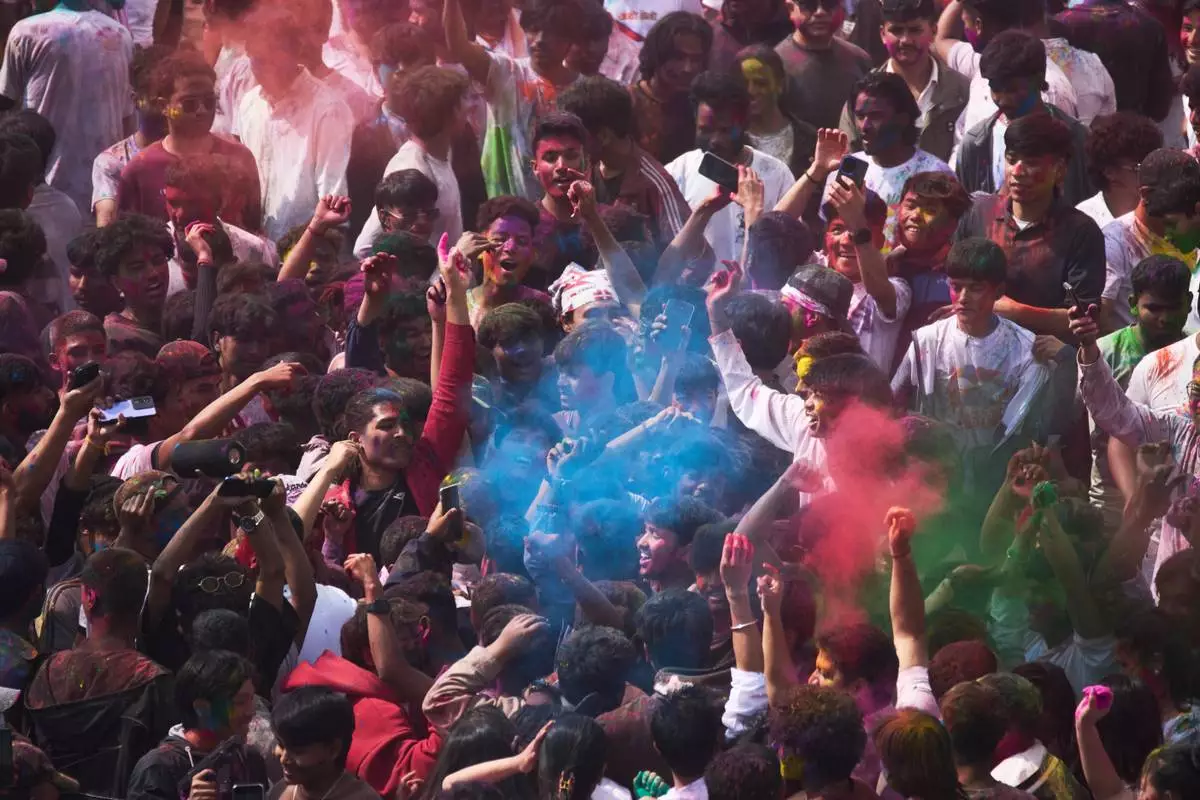
Nepalese people throw colored powders on each other as they celebrate Holi, the Hindu festival of colors at Basantapur Durbar Square in Kathmandu, Nepal, Monday, March 2, 2026. (AP Photo/Niranjan Shrestha)
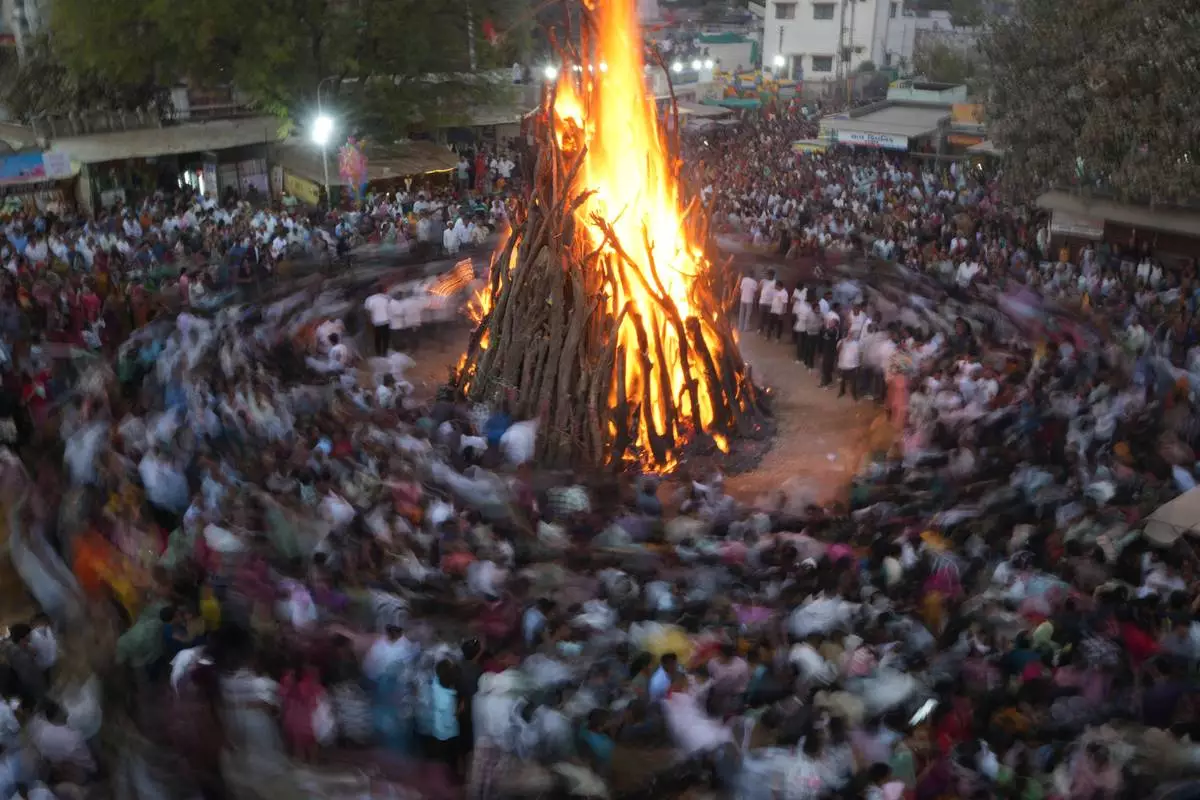
Indians perform rituals around a bonfire during Holi festival celebrations at Palaj village near Gandhinagar, India, Monday, March 2, 2026. (AP Photo/Ajit Solanki)
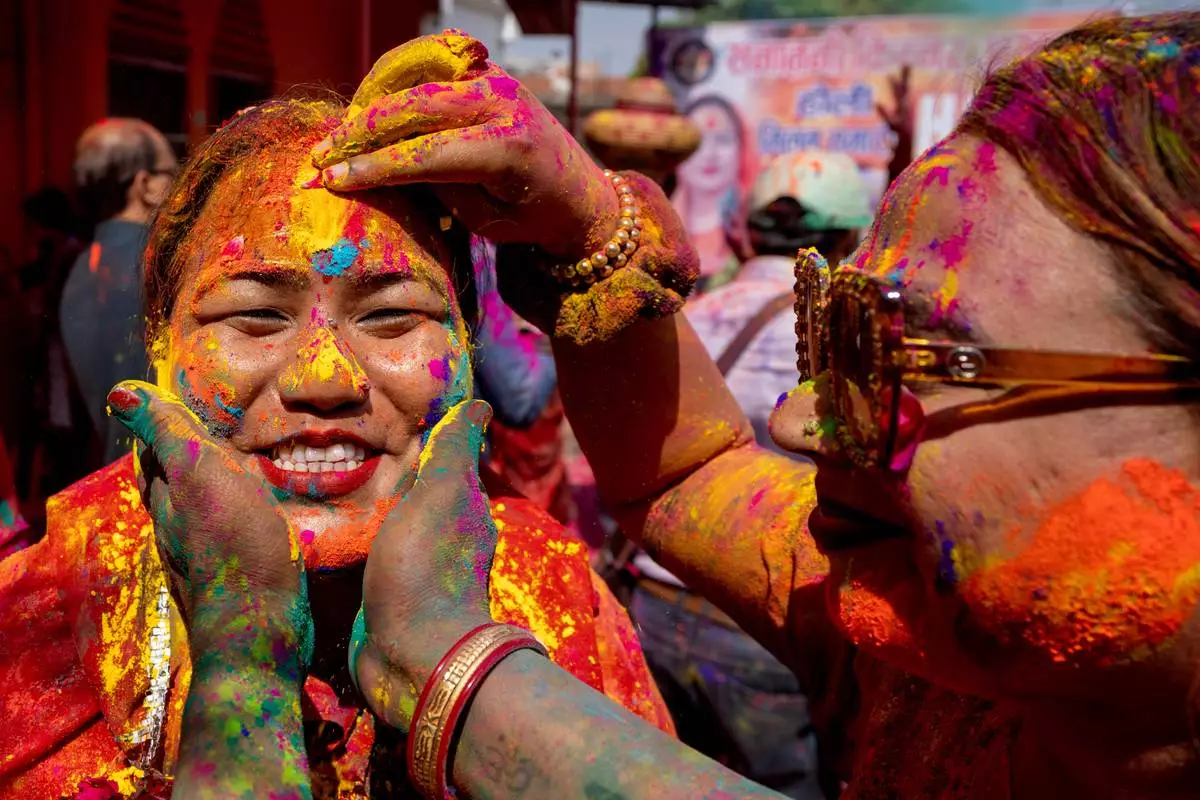
Third Gender members of Kinnar Akhara play with colored powder during celebrations marking Holi, the Hindu festival of colors, in Prayagraj, in the northern Indian state of Uttar Pradesh, India, Sunday, March 1, 2026. (AP Photo/Rajesh Kumar Singh)
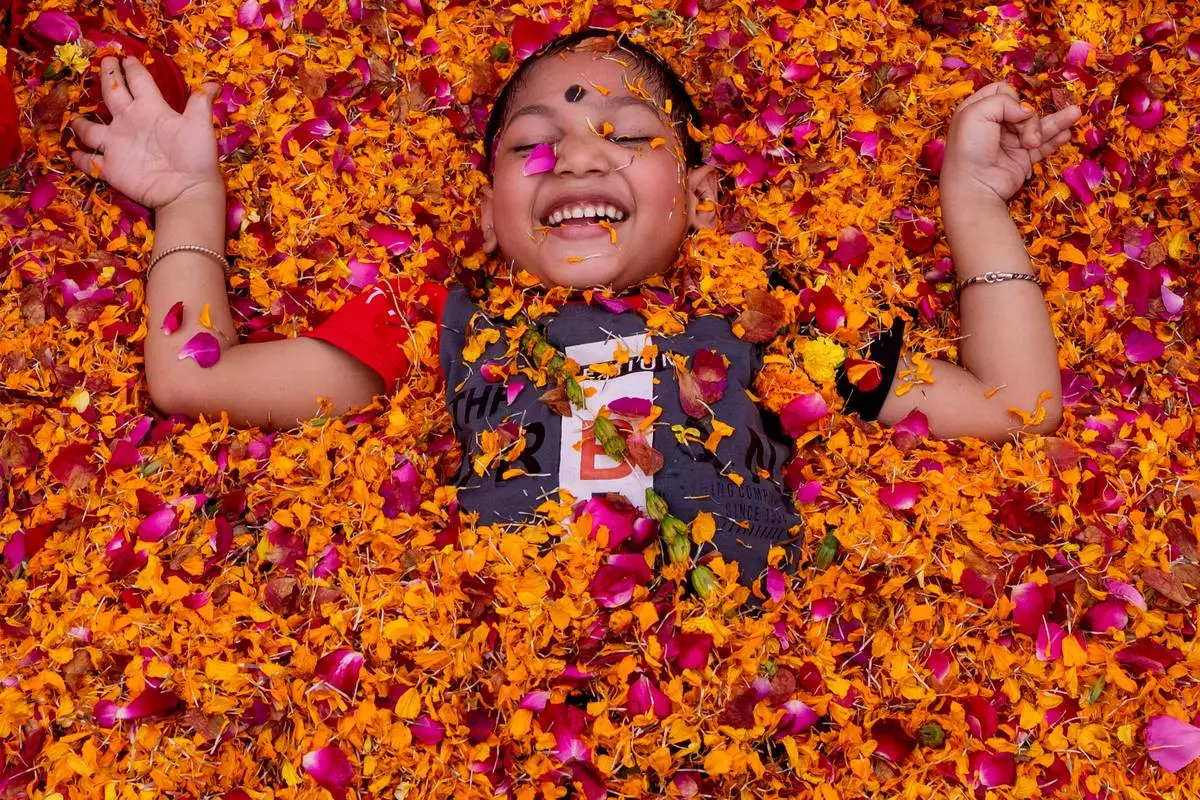
A child with cerebral palsy attends Holi, the Hindu festival of colors, at an event organized by the Trishla Foundation in Prayagraj, India,Sunday, March 1, 2026. (AP Photo/Rajesh Kumar Singh)

As the war in the Middle East intensifies, U.S. President Donald Trump said that the U.S. has “the capability to go far longer" than its projected four-to-five-week time frame for its military operations against Iran.
Across Tehran, the sound of explosions rang out through the night and into the early morning hours Tuesday, as the U.S. and Israel have continued to pound Iran since killing its Supreme Leader Ayatollah Ali Khamenei on Saturday.
Tehran and its allies have hit back against Israel, neighboring Gulf states, and targets critical to the world’s production of oil and natural gas.
The intensity of the attacks and the lack of any apparent exit plan set the stage for a prolonged conflict with far-reaching consequences. Israel and the U.S. have given conflicting answers about what exactly the war’s objectives are or what the endgame might be.
Israeli Prime Minister Benjamin Netanyahu late Monday defended the decision to go to war, contending in an interview on Fox News Channel’s "Hannity" that Iran was rebuilding “new sites, new places” that would make “their ballistic missile program and their atomic bomb program immune within months,” without providing evidence.
Satellite photos analyzed by The Associated Press showed limited activity at two nuclear sites in Iran before the war, with analysts saying it was likely Tehran was trying to assess damage from American strikes in June and possibly salvage what remained there.
Here is the latest:
Qatar Airways said it would remain grounded Tuesday over the war.
Amazon said Monday that two of its data centers in United Arab Emirates were hit by drones, while a drone strike near one of its facilities in Bahrain “caused physical impacts to our infrastructure.”
The tech giant said on its website that the strikes have caused structural damage and gotten in the way of power getting to infrastructure. The company did not say who was responsible for the strikes.
“We are working to restore full service availability as quickly as possible, though we expect recovery to be prolonged given the nature of the physical damage involved,” Amazon said.
Iran is continuing to threaten shipping in the Strait of Hormuz, the narrow mouth of the Perisan Gulf through which a fifth of all oil traded passes.
Brig. Gen. Ebrahim Jabbari, an adviser to the paramilitary Revolutionary Guard, issued the threat on Iranian state television on Monday.
“The Strait of Hormuz is closed. Anyone who wants to pass, our devotee heroes in the IRGC navy and the army will set those ships on fire,” he said. “Don’t come to this region.”
The Israeli military said Tuesday it was conducting “simultaneous targeted strikes against military targets in Tehran and Beirut,” without elaborating.
The U.S. State Department said it added Iraq to the evacuation list from its Mideast diplomatic outposts.
The U.S. State Department on Tuesday ordered the evacuation of non-emergency personnel and family in Bahrain and Jordan.
The State Department announcement online said the decision came “due to safety risks.” The department has urged Americans across the Mideast to leave over the ongoing war with Iran.
The U.S. Embassy in Saudi Arabia acknowledged coming under attack from Iranian drones Tuesday and urged Americans to avoid the diplomatic post for the time being.
The Saudi Defense Ministry earlier Tuesday said the embassy was attacked by two drones.
Across Iran’s capital, the sound of explosions rang out throughout the night into the early morning hours.
Witnesses described hearing aircraft overhead as well.
It wasn’t immediately clear what had been hit.
Iranian state television early Tuesday read a statement from the country’s paramilitary Revolutionary Guard, saying that it launched a missile and drone attack targeting an air base in Bahrain.
Israeli airstrikes hit the Lebanese capital Tuesday morning.
The Israeli military said it was targeting “Hezbollah command centers and weapons storage facilities in Beirut.”
Hezbollah also said it launched drones targeting an Israeli air base.
The Israeli military said it downed two drones.
Tokyo has told Japanese shipowners to have their ships stay away from the Persian Gulf to ensure the safety of their crew members.
Chief Cabinet Secretary Minoru Kihara told reporters Tuesday that the Transport Ministry has notified the Japanese Shipowners’ Association to do the utmost to protect crews on board the ships in the region.
Kihara said those already in the Gulf are urged to lie at anchor where it is safe to do so.
On Monday, Japan’s Foreign Minister Toshimitsu Motegi met with Iranian ambassador to Japan Peiman Seadat and conveyed Japan’s consistent stance that Iran must stop attacks on neighboring countries and other actions destabilizing the region.
Motegi also noted the importance of ensuring safety in the Strait of Hormuz, which is key to Japan’s energy security.
Iran’s top diplomat early Tuesday sought to turn the tables on the United States, describing it as entering “a war of choice on behalf of Israel.”
After Trump urged Iranians to take over their government, Foreign Minister Abbas Araghchi made the same call to Americans.
“Shedding of both American and Iranian blood is thus on Israel Firsters,” Araghchi wrote on X. “American people deserve better and should take back their country.”
This partially redacted image from video provided by U.S. Central Command shows a complex of structures in Iran being struck by missiles fired by U.S. forces on Sunday, March 1, 2026. (U.S. Central Command via AP)
President Donald Trump walks past Defense Secretary Pete Hegseth as he exist the East Room of the White House following the Medal of Honor ceremony, Monday, March 2, 2026, in Washington. (AP Photo/Mark Schiefelbein)
Rescue workers carry a dead body in a plastic bag from a building that was hit by Israeli strike, in Jnah neighborhood, south of Beirut, Lebanon, Monday, March 2, 2026. (AP Photo/Hussein Malla)
A poster of the late Supreme Leader Ayatollah Ali Khamenei, who was killed during the ongoing joint U.S.-Israeli military campaign, and the late Iranian Revolutionary founder Ayatollah Khomeini, right, lays on a motorcycle amid debris left by a strike in Tehran, Iran, Monday, March 2, 2026. (AP Photo/Vahid Salemi)
Plumes of smoke from two simultaneous strikes rise over Tehran, Iran, Monday, March 2, 2026. (AP Photo/Mohsen Ganji)