NEW YORK--(BUSINESS WIRE)--Mar 3, 2026--
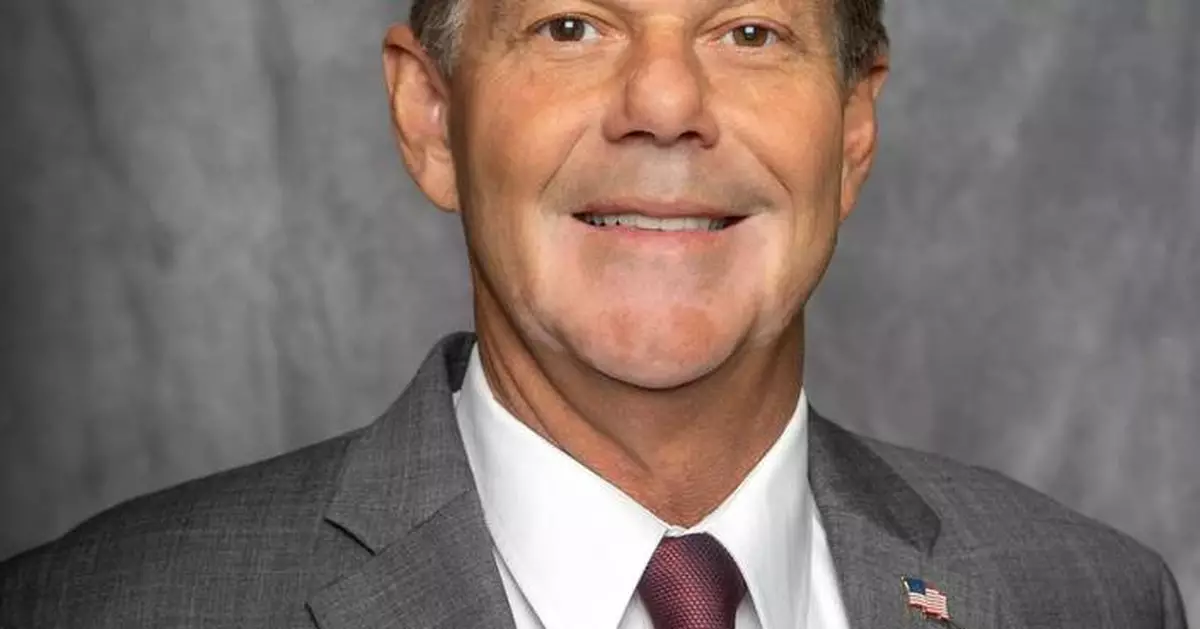
Tagup, a defense technology company delivering logistics decision advantage with next-generation AI, today announced the appointment of Lieutenant General Flem B. “Donnie” Walker Jr. (U.S. Army, Ret.) to its Defense Advisory Board. LTG Walker’s addition reinforces Tagup’s mission to deliver logistics decision advantage and strengthen military readiness amid growing sustainment challenges and increasingly contested operational environments.
This press release features multimedia. View the full release here: https://www.businesswire.com/news/home/20260303316239/en/
“Lieutenant General (Ret.) Walker has spent decades tackling some of the most complex logistics challenges in the U.S. military,” said Jon Garrity, CEO of Tagup. “As he joins Tagup’s Advisory Board, his perspective will sharpen how we build and scale our technology to deliver measurable readiness gains across supply, maintenance, and mobilization—especially for operations in contested environments.”
LTG Walker brings decades of senior leadership experience overseeing large-scale Army logistics and sustainment operations, including serving as the Deputy Commanding General of the United States Army Materiel Command, where he was responsible for enterprise-level logistics, readiness, and force support. His career has been defined by ensuring warfighters have what they need, when and where it matters most. This operational perspective strengthens Tagup’s mission to apply AI to logistics at enterprise scale, particularly as the U.S. military modernizes logistics operations for the modern, contested battlefield, where scale, speed, and adaptability increasingly define logistics success.
“Logistics determines whether forces are ready or not; there’s no margin for error,” said LTG Donnie Walker (U.S. Army, Ret.). “I’ve spent my career focused on sustainment and readiness at scale, and that challenge is only getting more difficult. Tagup is building the kind of decision advantage logisticians need: software that can reason under constraints, move at operational tempo, and improve readiness outcomes. I’m proud to join the Defense Advisory Board and support the team’s mission.”
Walker’s appointment builds on Tagup’s already distinguished Defense Advisory Board, which brings together retired flag officers across branches of service who have commanded, modernized, and sustained forces at the highest levels. The Defense Advisory Board includes Lieutenant General Brad Webb (U.S. Air Force, Ret.), Lieutenant General Neil Thurgood (U.S. Army, Ret.), and Rear Admiral John Neagley (U.S. Navy, Ret.), all leaders with deep expertise spanning logistics, operations, acquisition, and force readiness.
The Defense Advisory Board provides strategic guidance grounded in real-world operational experience. This expertise helps ensure Tagup’s AI solutions are deployable, trusted, and aligned with the realities of modern warfare, including contested supply chains, limited data visibility, and urgent decision timelines.
As the Department of War increasingly turns to AI to improve sustainment and readiness, Tagup continues to align advanced technology with the experience of leaders who understand what is at stake when logistics fails and what is possible when it succeeds.
About Tagup
Tagup is a defense technology company founded at MIT that is delivering logistics decision advantage with next-generation AI. The company’s platform, Manifest®, is an AI-powered multidimensional logistics decision engine that simulates and optimizes logistics courses of action under constraints and uncertainty, delivering a decisive operational advantage in contested and degraded environments. For more information on Tagup’s AI-powered logistics solutions or to request a demo of Manifest, email defense@tagup.ai.
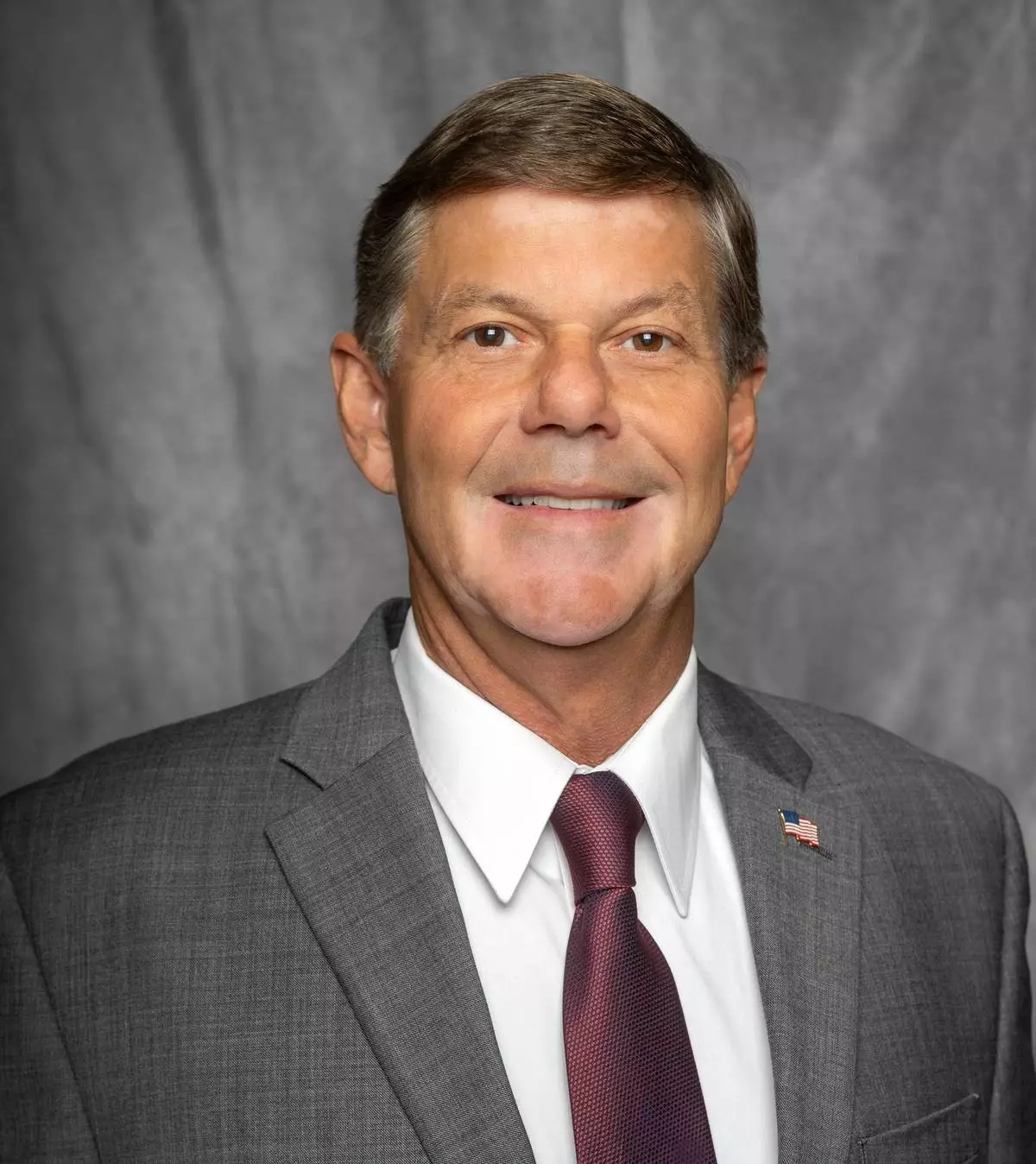
Lieutenant General Flem B. “Donnie” Walker Jr. (U.S. Army, Ret.)
OKLAHOMA CITY (AP) — Shai Gilgeous-Alexander isn't scoring the way he usually does, but the Oklahoma City Thunder are still winning the way they normally do.
Gilgeous-Alexander, the reigning NBA MVP, averaged 31.1 points during the regular season. In the Western Conference semifinals against the Los Angeles Lakers, he is averaging 20 points and taking only 14 shots per game.
Oklahoma City has still won the first two games by an average of 18 points. Gilgeous-Alexander and Chet Holmgren each scored 22 points, and the defending champion Thunder beat the Lakers 125-107 on Thursday night.
Ajay Mitchell, starting in place of injured Jalen Williams, is averaging 19 points on 50% shooting in the series for Oklahoma City.
“I think the coaching staff does a good job at just getting all of us ready,” said Mitchell, a second-year guard. "And we have a lot of competitors. Like, everyone’s a competitor on our team. So every time the lights are bright, everyone’s ready to go.”
Holmgren is the leading scorer for the Thunder in the best-of-seven series with 23 points per game. The 2026 All-Star also is averaging 10.5 rebounds and 2.5 blocks.
Jared McCain, a midseason acquisition from the Philadelphia 76ers, barely played in the first round against Phoenix but has averaged 15 points and made 8 of 10 3-pointers in the series.
“He goes in there, stays in character, stays aggressive," Thunder coach Mark Daigneault said. "He’s going to shoot the next shot. He makes the right plays, plays inside the team. He competes defensively, has had good defensive possessions for us. And he was huge tonight. You need that in a playoff series.”
The Lakers again were without scoring champion Luka Doncic, who is out indefinitely with a strained left hamstring. They also were missing forward Jarred Vanderbilt, the reserve forward who dislocated the pinkie on his right hand during the second quarter of Game 1. The Lakers had three players finish with five fouls, limiting their aggressiveness late in the game.
Los Angeles guard Austin Reaves, who struggled with his shot in Game 1, scored 31 points on 10-for-16 shooting in Game 2. LeBron James, coming off a 27-point effort in Game 1, followed that up with 23.
With the Lakers up 63-61 early in the third quarter, Gilgeous-Alexander got tied up with Reaves and was called for his fourth foul. Upon review, it was upgraded to a flagrant 1 for Gilgeous-Alexander's follow through. Oklahoma City's Alex Caruso was called for a technical foul as the situation was being sorted out.
Gilgeous-Alexander left the game with the Lakers up 65-61, but the Thunder rallied and took control without him. On a fast break, Holmgren found a trailing Jaylin Williams, who hit a 3-pointer and was fouled. His free throw put the Thunder up 85-74.
The Thunder outscored the Lakers 32-15 while Gilgeous-Alexander was out in the third quarter to take a 93-80 lead into the fourth.
“It was amazing," Gilgeous-Alexander said. “They strung together stops, they’re playing the right way offensively and things are going their way. Full confidence in those guys. They know how to win basketball games. And we've proven that. They’ve proven that no matter who’s on the floor, they know how to get the job done. And they just did it again tonight."
The Lakers cut Oklahoma City's lead to five in the fourth quarter before the Thunder pulled away again.
Los Angeles will host Game 3 on Saturday.
“We just stuck with it,” Holmgren said. “It’s the game of basketball. It’s not always going to go your way. It’s about how you respond. And this team has proven many times that we know how to respond. And we did so tonight.”
This story has been corrected to show that Shai Gilgeous-Alexander is averaging 20, not 19, points per game against the Lakers.
AP NBA: https://apnews.com/hub/NBA
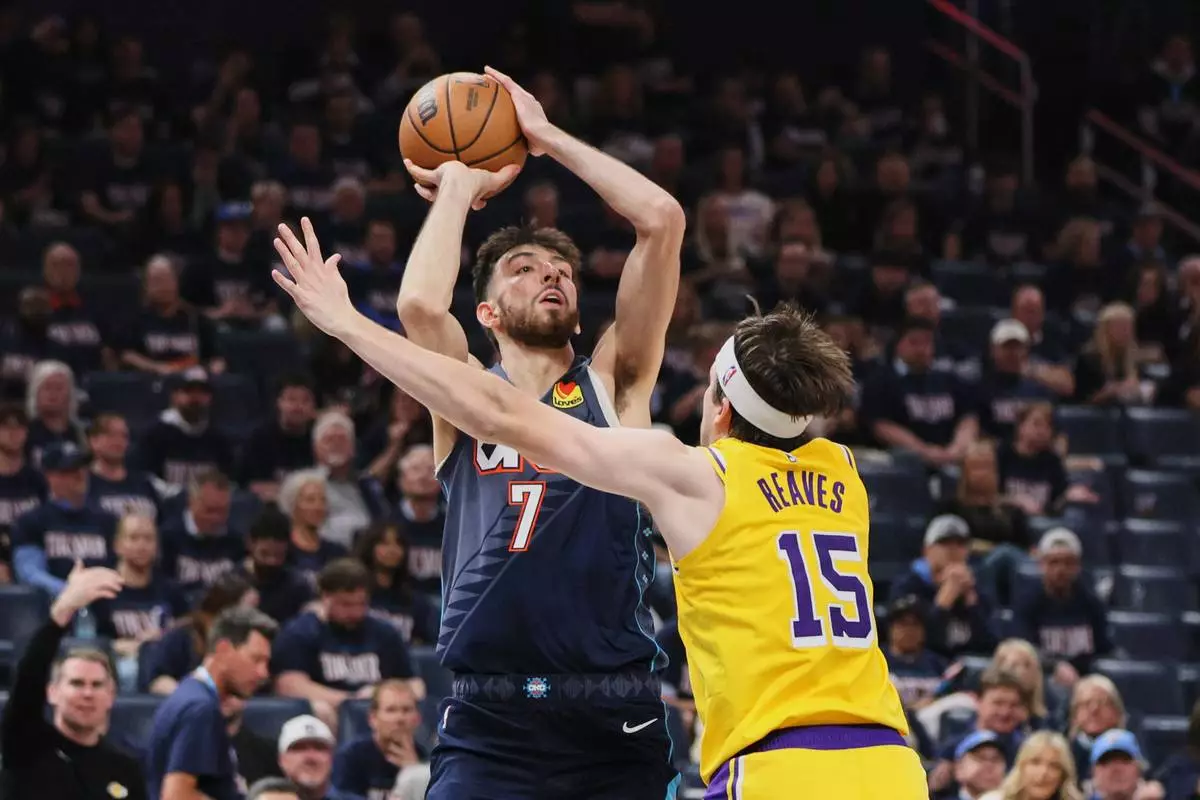
Oklahoma City Thunder's Chet Holmgren (7) shoots over Los Angeles Lakers' Austin Reaves (15) in the second half of Game 2 in a second-round NBA basketball playoffs series Thursday, May 7, 2026, in Oklahoma City. (AP Photo/Nate Billings)
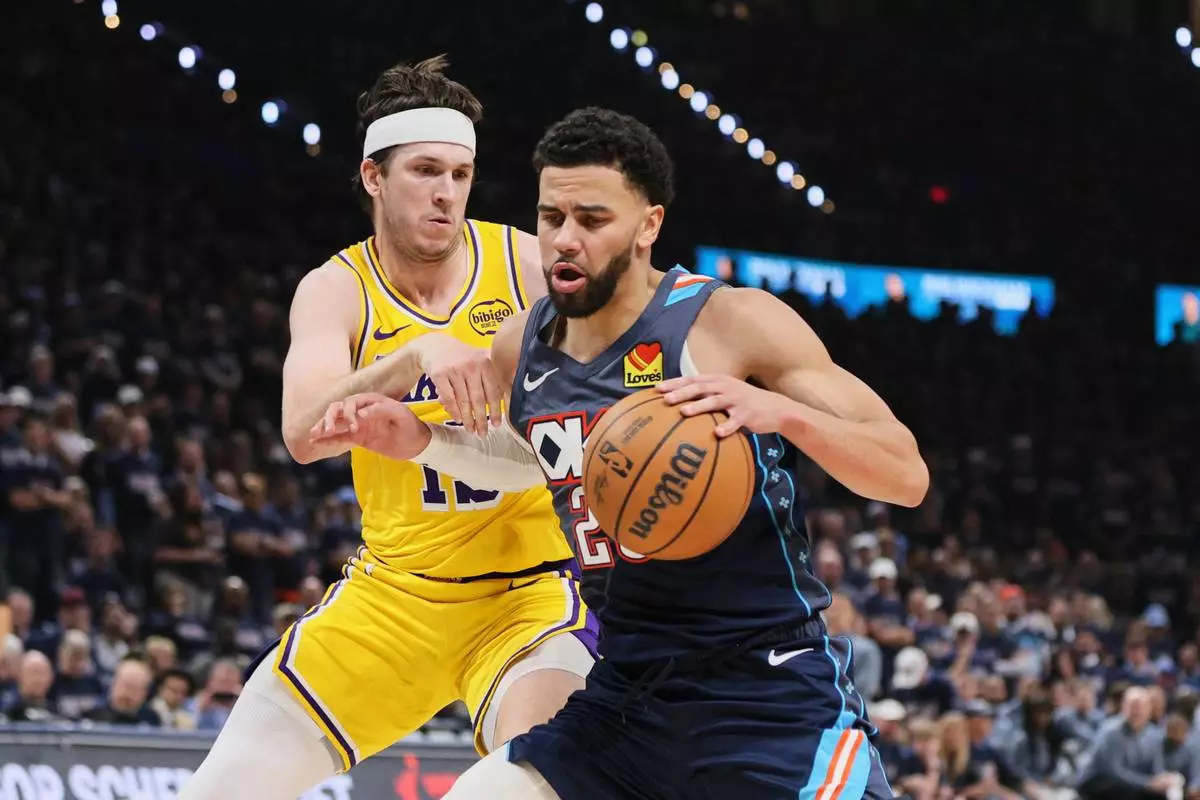
Oklahoma City Thunder guard Ajay Mitchell, front, works for a shot as Los Angeles Lakers' Austin Reaves, rear, defends in the second half of Game 2 in a second-round NBA basketball playoffs series Thursday, May 7, 2026, in Oklahoma City. (AP Photo/Nate Billings)
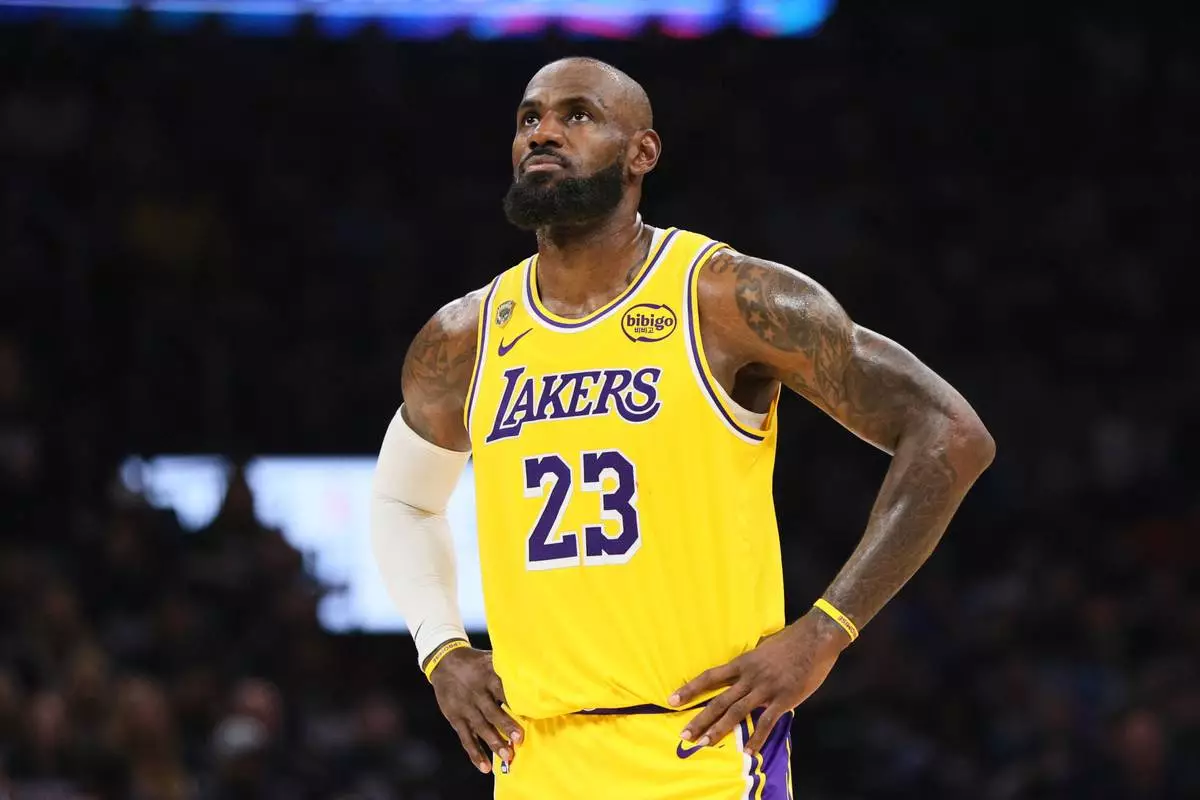
Los Angeles Lakers' LeBron James stands on the court in the second half of Game 2 in a second-round NBA basketball playoffs series against the Oklahoma City Thunder Thursday, May 7, 2026, in Oklahoma City. (AP Photo/Nate Billings)
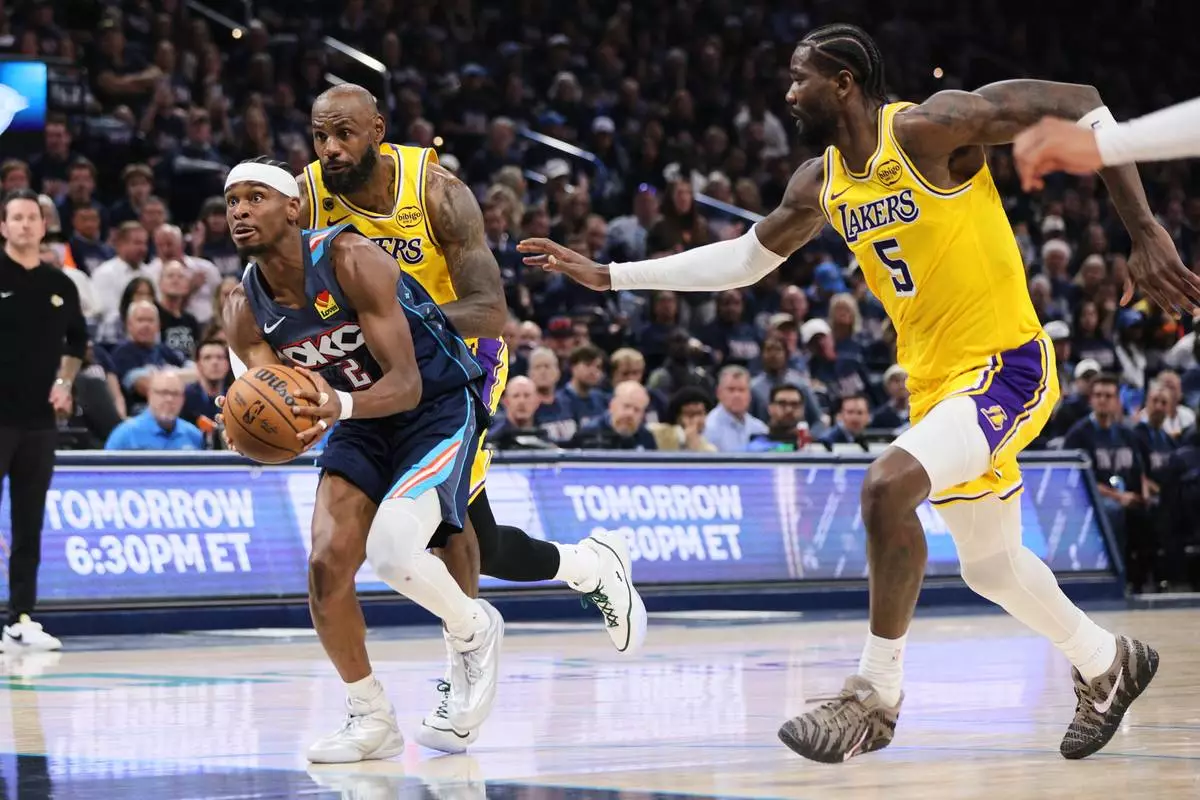
Oklahoma City Thunder guard Shai Gilgeous-Alexander (2) drives to the basket past Los Angeles Lakers' Deandre Ayton (5) and LeBron James, rear, in the second half of Game 2 in a second-round NBA basketball playoffs series Thursday, May 7, 2026, in Oklahoma City. (AP Photo/Nate Billings)
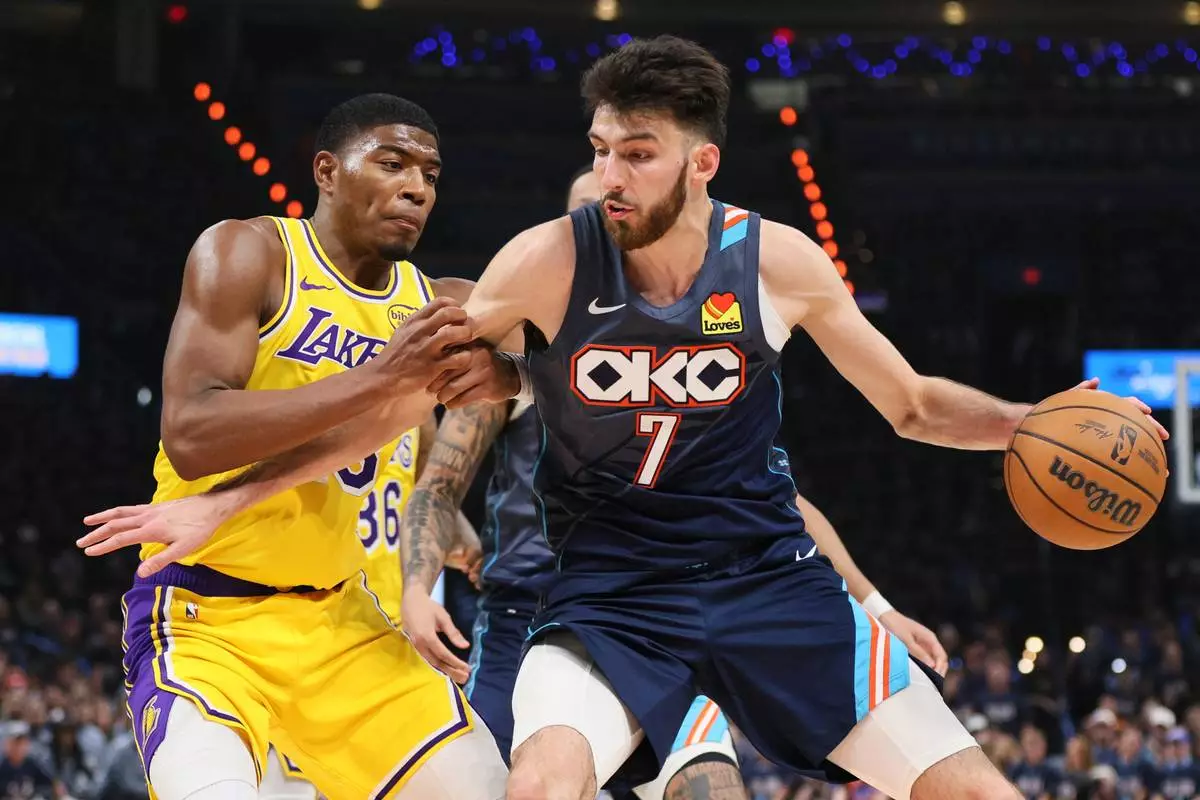
Oklahoma City Thunder center Chet Holmgren (7) works to the basket against Los Angeles Lakers forward Rui Hachimura (28) in the second half of Game 2 in a second-round NBA basketball playoffs series Thursday, May 7, 2026, in Oklahoma City. (AP Photo/Nate Billings)